Call Us
+86-15800763021
Send Us
Add
775 Chihua Road, Zhelin Town, Fengxian District, Shanghai
- All
- Product Name
- Product Keyword
- Product Model
- Product Summary
- Product Description
- Multi Field Search
Views: 0 Author: Site Editor Publish Time: 2026-08-09 Origin: Site

High-throughput food and beverage manufacturing faces a severe operational bottleneck when relying on manual sanitation. Facility managers constantly battle the tension between maximizing production uptime and meeting zero-tolerance food safety standards. Regulatory frameworks like FSMA and GFSI demand strict, verifiable sanitation protocols that manual scrubbing simply cannot guarantee. Inconsistent cleaning leaves facilities vulnerable to cross-contamination, product recalls, and audit failures, introducing escalating financial and regulatory risks.
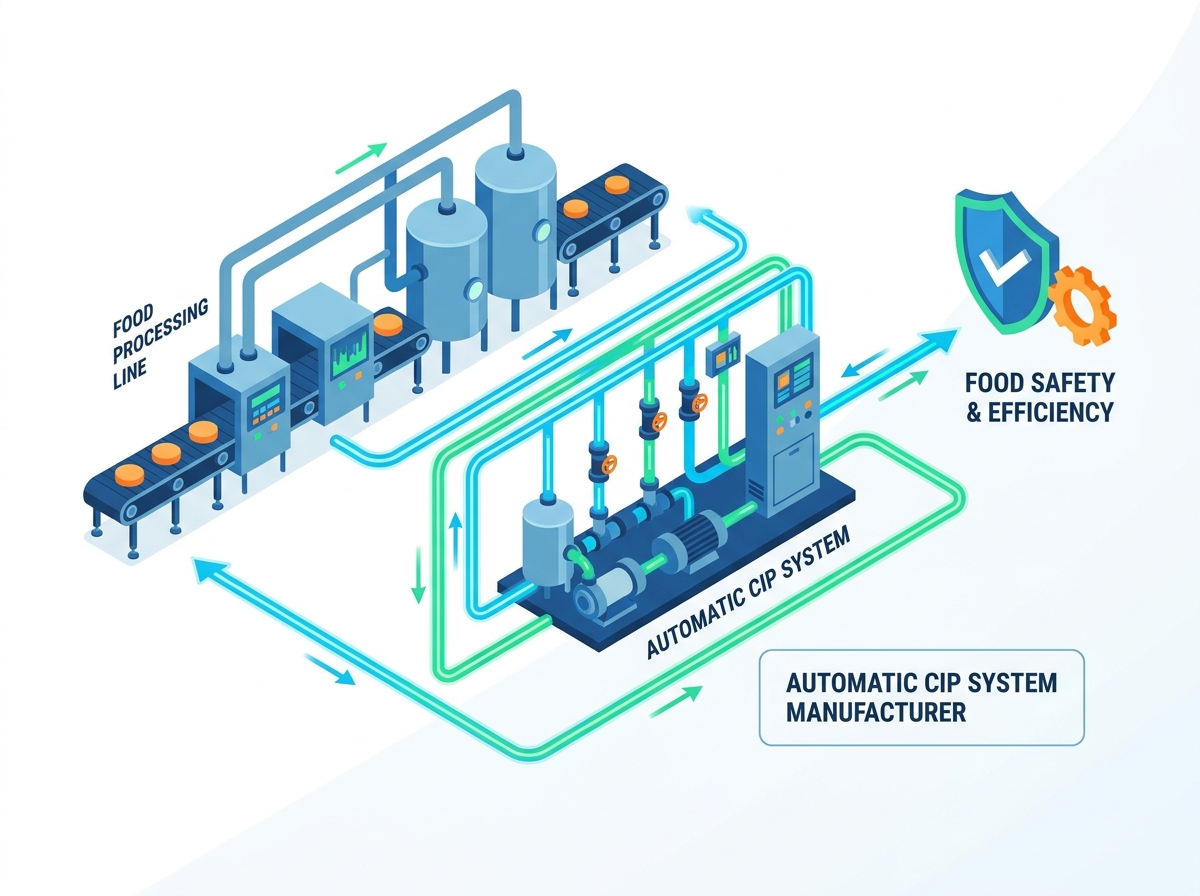
Transitioning to automated Clean-In-Place (CIP) technology is a fundamental requirement for modern production scaling. Automated systems replace unpredictable manual washdowns with validated, repeatable cycles. However, hardware alone does not guarantee compliance. Selecting a specialized automatic CIP cleaning system manufacturer is the defining factor in achieving compliant, verifiable, and cost-effective sanitation. A specialized partner ensures your system matches your specific soils, flow rates, and facility layout, preventing generic equipment failures.
Successful sanitation relies on four interdependent variables: Time, Action, Chemical, and Temperature (TACT). Manual cleaning processes struggle to hit these variables consistently. Operators often rush through cycles, apply incorrect chemical dilutions, or use water that loses heat too quickly. This inconsistency leaves microscopic residues behind, creating breeding grounds for pathogens.
Automated CIP systems master the "Action" variable through fluid dynamics. They generate high-velocity turbulent flow. A minimum velocity of 1.5 meters per second is required to systematically shear microbial contaminants from internal pipe surfaces. Manual washdowns simply cannot replicate this sustained mechanical force inside closed piping loops. Turbulent flow ensures chemicals reach every crevice, eliminating the physical blind spots inherent in manual scrubbing. When you rely on operators with hoses, you are guessing at the mechanical force applied to the inside of a heat exchanger. Automation removes the guesswork.
Clean-Out-of-Place (COP) and manual scrubbing require extensive equipment disassembly. This process carries severe hidden costs. Labor expenses skyrocket as sanitation crews spend hours taking apart valves, pumps, and heat exchangers. Frequent disassembly also accelerates wear-and-tear on sanitary fittings, gaskets, and threads. Damaged seals eventually leak, creating new contamination vectors.
The most significant cost is lost productivity. Shifting skilled operators from revenue-producing runs to physical equipment teardowns destroys facility efficiency. Every hour spent dismantling a production line is an hour of lost output. Automated systems keep equipment intact, converting historical sanitation downtime directly into profitable production hours. We often see plants lose up to 30% of their potential operating time simply because crews are busy unbolting flanges and soaking parts in buckets.
Manual washdowns carry a high statistical likelihood of cross-contamination. Operators moving between different facility zones can easily transfer pathogens on their boots, gloves, or tools. Inconsistent chemical dosing and inadequate temperature maintenance further compound this biological risk. If wash water drops below the active temperature threshold of the detergent, fats and proteins will not break down, leaving a microscopic film on the stainless steel.
This inconsistency leads directly to biofilm formation. Biofilms are complex matrices of bacteria that anchor themselves to hard-to-reach, non-disassembled internal surfaces. Once established, biofilms are incredibly resistant to standard sanitizers. Automated CIP eliminates human error by executing pre-programmed recipes. The system locks in the exact chemical concentration and temperature required to destroy biofilms before they form, ensuring every cycle performs exactly like the validated baseline.
The cycle begins with the physical removal of bulk product residue. Facilities use air blowdowns or pigging systems to push remaining product out of the lines. A pre-rinse with ambient or warm water follows. This step flushes heavy soils to the drain. Removing bulk residue is mandatory to prevent chemical bath overload. If too much organic matter enters the detergent tank, it neutralizes the active cleaning agents prematurely, wasting expensive chemicals and compromising the entire wash cycle.
The caustic wash is the heavy-lifting phase of the sanitation cycle. Systems circulate hot alkaline solutions, typically sodium hydroxide, through the equipment. The high pH and elevated temperatures break down tough organic soils. This step saponifies fats, dissolves proteins, and degrades complex carbohydrates. The caustic solution circulates for a specific duration to ensure complete soil removal from all wetted surfaces. In heavy soil applications like cheese manufacturing, this step might require concentrations up to 3% and temperatures exceeding 80°C.
Following the caustic wash, an intermediate rinse flushes the system with clean water. This phase purges residual alkaline chemicals from the piping and vessels. Removing the caustic solution is necessary before introducing acidic chemicals. Mixing caustic and acid directly causes dangerous exothermic reactions and neutralizes the cleaning power of both agents. Conductivity sensors monitor the return line to confirm all caustic has been flushed before the sequence advances.
The acid wash targets inorganic buildup. Systems circulate mild acid solutions, such as nitric or phosphoric acid. This step neutralizes mineral scale, milk stone, and hard water deposits. Scale mitigation is absolutely essential for any heavy-duty dairy plant cleaning system. Mineral deposits create rough surfaces where bacteria can hide and multiply, rendering subsequent sanitization efforts useless. Regular acid washing keeps the stainless steel passivated and smooth.
The final rinse clears all remaining traces of chemical agents from the production line. This step uses clean, high-quality water, often reverse osmosis (RO) or UV-treated water. The system flushes the lines until conductivity sensors confirm the water exiting the system matches the baseline purity of the water entering it. This guarantees no chemical residue will taint the next product batch, protecting consumer safety and product flavor profiles.
The final step renders the wetted materials completely sterile. Facilities use either chemical sanitizers (like peracetic acid) or thermal kill methods (circulating hot water or steam). This phase destroys any remaining vegetative microorganisms. The sanitizing rinse ensures the equipment is microbiologically safe and ready for immediate production. Thermal sanitization is often preferred in brewing and beverage applications to avoid any potential chemical off-flavors.
| Cycle Step | Primary Agent | Target Soil / Purpose | Typical Temperature |
|---|---|---|---|
| Pre-Rinse | Potable Water | Bulk organic residue removal | Ambient to 50°C |
| Caustic Wash | Sodium Hydroxide (1-3%) | Fats, proteins, carbohydrates | 70°C to 85°C |
| Intermediate Rinse | Potable Water | Flush residual caustic | Ambient |
| Acid Wash | Nitric/Phosphoric Acid (0.5-1.5%) | Mineral scale, milk stone | 60°C to 70°C |
| Final Rinse | RO / Purified Water | Clear all chemical traces | Ambient |
| Sanitization | Peracetic Acid / Steam | Microbial disinfection | Ambient (Chemical) / >85°C (Thermal) |
Not all processing equipment can be cleaned in place. Production line hardware must meet strict design requirements for automated CIP to be successful. Piping must be self-draining. Installers must implement zero-gravity line pitches, ensuring fluids flow naturally to low-point drains without pooling. The system must be entirely free of blind spots, crevices, and dead-legs where fluids stagnate. A standard rule of thumb is that any branch or dead-leg must have a length-to-diameter (L/D) ratio of less than 2.0 to ensure turbulent flow reaches the end cap.
An experienced CIP cleaning equipment supplier carefully assesses a facility's existing infrastructure. They evaluate tanks, heat exchangers, and process piping for automated compatibility. They check valve types, pump housing designs, and instrument connections. If existing hardware cannot support turbulent flow or complete drainage, it must be upgraded before connecting to an automated CIP skid. Trying to push CIP fluids through standard industrial ball valves, for example, will fail because the internal cavity of the valve cannot be flushed properly.
Process equipment surfaces must withstand aggressive chemical interactions. CIP cycles rely on harsh agents like nitric acid and caustic soda operating at high temperatures. Substandard materials will corrode, pit, and degrade under these conditions. Facilities must use high-grade alloys, typically 316L stainless steel, for all wetted components. 304 stainless steel is often insufficient for hot acid applications and will eventually show signs of rouge or pitting.
Surface finish is equally critical. Wetted surfaces require specific roughness ratings, typically Ra ≤ 0.8 µm. A smooth microscopic profile prevents microbial anchoring. If surfaces are too rough, bacteria and organic soils become trapped in the microscopic valleys of the metal. Aggressive chemicals and turbulent flow cannot reach these trapped contaminants, leading to persistent biological failures. Mechanical polishing followed by electropolishing provides the best defense against biofilm adhesion.
Facilities must choose between single-use and multi-use architectures based on their production volume and soil types. Single-use systems discharge water and chemicals to the drain after one cycle. They require lower initial capital expenditure (CapEx) but incur higher operational expenditure (OpEx). Single-use designs are ideal for facilities with high cross-contamination risks or heavy allergen changeovers, where reusing wash fluids is too dangerous. For example, a plant processing both dairy and soy products on the same line cannot risk recycling wash water.
Multi-use, or recovery, systems capture and recycle water, chemicals, and thermal energy. They require higher CapEx for additional tanks, sensors, and return pumps. However, they deliver significantly lower OpEx. In high-volume liquid processing plants, the ROI timeline for recovery systems is exceptionally short. Conserving heated caustic solutions and reusing final rinse water for the next pre-rinse drastically cuts utility bills. A well-designed recovery system can reduce water consumption by up to 40% compared to single-use setups.
Plant layout dictates the choice between centralized and decentralized configurations. A centralized CIP utility room houses large, multi-tank skids that service the entire facility. This setup centralizes chemical handling and utility connections, making bulk chemical delivery easier. However, it requires extensive piping networks. Long pipe runs increase thermal loss, requiring larger heat exchangers, and demand massive supply pumps to overcome the pressure drop across the plant.
Decentralized configurations deploy smaller, localized CIP skids near specific process areas. This reduces piping complexity and minimizes thermal loss. It also allows simultaneous cleaning of different production zones without hydraulic bottlenecking. Plant engineers must evaluate factory floor footprint, pipe routing limits, and simultaneous cleaning requirements when deciding between these two architectures. Often, a hybrid approach works best, with a central system for main process lines and decentralized mobile skids for isolated filling equipment.
Strict sanitary design separates professional manufacturers from generic fabricators. The necessity of 316L stainless steel, orbital welding, and FDA-compliant elastomers (like EPDM or PTFE) cannot be overstated. Orbital welding provides smooth, consistent joints free of the crevices common in manual welding. FDA-compliant elastomers ensure gaskets do not degrade and leach into the product stream under high temperatures.
Buyers must demand complete documentation from their chosen manufacturer. Request material test reports (MTRs) to verify steel grades. Review weld logs to ensure every joint meets sanitary standards. Demand boroscope inspection documentation to prove internal weld quality. A reputable manufacturer will provide this turnover package as a standard deliverable. If a vendor hesitates to provide MTRs, walk away immediately.
Robust automation is the brain of the CIP system. Industrial PLCs from brands like Rockwell Automation or Siemens execute validated, repeatable cleaning recipes. Intuitive HMIs allow operators to select cycles without altering critical background parameters. This prevents unauthorized changes to chemical dosing or cycle times, ensuring the validated state of the equipment is maintained.
Automated systems generate tamper-proof batch reports. They continuously track and record conductivity, flow rates, pressure, and temperatures. If a parameter drops below the validated setpoint, the system automatically alarms or restarts the phase. This immutable data logging effectively automates audit readiness. When FDA, USDA, or GFSI inspectors arrive, facility managers simply hand over the digital CIP logs, proving compliance without digging through stacks of paper records.
Generic CIP systems fail because they ignore product physics. Engineering requirements vary drastically across food sectors. High-fat protein soils in a dairy facility require entirely different flow rates and chemical concentrations than high-viscosity sugars in a beverage plant. Baked-on carbohydrates in a commercial bakery demand specialized spray impingement and longer soak times.
A competent manufacturer conducts site-specific soil analysis and hydraulic calculations before building the skid. They must calculate the exact pressure drops across your specific heat exchangers and pipe runs. This data dictates the sizing of supply pumps, return valves, and static or rotary spray balls. Off-the-shelf sizing leads directly to incomplete sanitation. You need a system engineered for your exact product matrix, not a generic box.
Automated CIP drives aggressive resource optimization. Modern systems utilize in-line conductivity sensors to manage phase separations precisely. The sensor detects exactly when the water-to-chemical interface passes, minimizing the amount of chemical sent to the drain. Chemical recovery tanks capture and reuse active detergents for subsequent cycles, maintaining concentration through automated dosing pumps.
These features yield measurable sustainability metrics. Facilities see expected reductions in total water usage and chemical waste. Lowering chemical waste directly reduces effluent discharge charges from municipal water authorities. By recycling thermal energy through insulated recovery tanks, plants significantly cut the steam and natural gas required to heat fresh wash water. This directly improves the bottom line while meeting corporate sustainability goals.
Regulatory compliance requires proof of control. Automated CIP features map directly to FSMA preventive control requirements and GFSI audit checklists. Dual-seat mixproof valves ensure absolute separation between CIP chemicals and active product lines, preventing catastrophic cross-contamination. Loop flow meters guarantee the required 1.5 m/s turbulent velocity is maintained throughout the circuit, proving mechanical action.
Calibration-certified temperature transmitters prove that thermal kill steps reached the required lethality thresholds. Every sensor and valve provides feedback to the PLC. This closed-loop control validates the sanitation process in real-time. Facilities transition from hoping a line is clean to proving it mathematically, eliminating the anxiety of unannounced regulatory inspections.
Retrofitting automated CIP into an existing facility carries significant risk. The primary danger is improper pipe routing. Poorly designed tie-ins create dead-legs—sections of piping where fluid stagnates because it sits outside the main flow path. Bacteria harbor in these dead-legs, surviving the CIP cycle and contaminating the next product batch. Even a small dead-leg can ruin an entire production run.
A competent supplier mitigates this risk through advanced engineering. They conduct 3D laser facility scanning to map existing infrastructure accurately. They perform hydraulic modeling on the proposed pipe routes. This modeling ensures turbulent flow velocities reach every corner of the CIP circuit, eliminating dead-legs before a single pipe is cut. Proper integration requires understanding both the new skid and the legacy piping.
Rigorous testing protocols protect your capital investment. Factory Acceptance Testing (FAT) occurs at the manufacturer's facility. It verifies that the skid is built to specification, the pumps operate correctly, and the PLC software executes the basic recipes. Site Acceptance Testing (SAT) occurs after installation at your plant, integrating the skid with your actual utilities.
Buyers must never accept delivery without a rigorous FAT. The FAT should simulate facility flow conditions, pressure drops, and software recipe execution as closely as possible. The SAT then validates the system against actual plant utilities and real product soils. These testing protocols ensure the system performs exactly as engineered before final handover, preventing costly startup delays.
Hardware upgrades require human upgrades. Transitioning sanitation crews from manual sweepers to automated food processing CIP system operators creates internal friction. Operators must learn to interact with HMIs, interpret sensor alarms, and perform basic troubleshooting on pneumatic valves. They move from physical labor to process monitoring.
Change management is critical. Detail the training requirements in your supplier contract. Negotiate for comprehensive on-site training sessions, calibration assistance, and clear standard operating procedures (SOPs). Establish ongoing technical support Service Level Agreements (SLAs). A successful implementation relies on operators who understand and trust the automated system, rather than fighting it or bypassing alarms.
An automated CIP system is a strategic asset that protects brand equity, secures food safety, and drives operational efficiency. Choosing the right manufacturer requires evaluating their custom engineering capabilities, FAT/SAT rigor, automation expertise, and post-installation support. Generic solutions cannot handle the hydraulic and chemical complexities of modern food processing. To begin your transition, take the following steps:
A: The typical payback period ranges from 12 to 24 months. This rapid ROI is driven by drastic reductions in labor costs, chemical usage, and utility conservation. Most importantly, eliminating manual teardowns converts historical sanitation downtime into profitable, revenue-generating production hours.
A: Dairy systems require highly specific cycle parameters to combat milk stone and mineral deposits. They rely heavily on frequent, concentrated acid washes to dissolve inorganic scale. Additionally, dairy CIP demands higher temperature thermal sanitation steps to ensure complete destruction of heat-resistant milk pathogens.
A: Yes, retrofitting is highly feasible. However, the manufacturer must thoroughly assess existing tanks and piping. They must verify sanitary design compliance, ensure self-draining pitches, and confirm that existing vessels can accommodate the correct static or rotary spray balls required for full coverage.
A: TACT stands for Time, Action, Chemical, and Temperature. These four interdependent variables dictate sanitation success. "Time" is cycle duration, "Action" is the turbulent flow velocity (minimum 1.5 m/s), "Chemical" is the detergent concentration, and "Temperature" is the thermal energy required to activate the chemicals.
A: 316L stainless steel provides superior corrosion resistance against the aggressive, high-temperature chemicals used in CIP cycles, such as nitric acid and sodium hydroxide. Its low carbon content also makes it ideal for sanitary orbital welding, preventing microscopic crevices where bacteria can hide.