Call Us
+86-15800763021
Send Us
Add
775 Chihua Road, Zhelin Town, Fengxian District, Shanghai
- All
- Product Name
- Product Keyword
- Product Model
- Product Summary
- Product Description
- Multi Field Search
Views: 0 Author: Site Editor Publish Time: 2026-08-06 Origin: Site

Scaling dairy operations from mid-tier or artisan production to a full-scale factory requires shifting focus from manual kits and basic tools to strict yield optimization, batch consistency, and sanitation control. Selecting mismatched or under-specced industrial equipment leads to workflow bottlenecks, inconsistent moisture levels in the final product, and severe compliance risks regarding food safety. Manual ladles, basic cutting knives, and rudimentary presses simply cannot handle the sheer volume and rigorous hygiene standards required in a modern dairy plant. To build a resilient production line, plant managers must evaluate equipment based on throughput capacity, automation capabilities, and integration with existing facility infrastructure. Upgrading your facility means adopting systems that eliminate human error, maximize the retention of valuable milk solids, and ensure every single batch meets exacting quality standards. Transitioning to automated systems requires a deep understanding of fluid dynamics, thermodynamics, and sanitary engineering.
Before procuring heavy machinery, plant operators must establish rigid success criteria. The foundation of a profitable dairy plant lies in matching the mechanical capabilities of the equipment directly to the biological and chemical realities of milk coagulation. Sizing and specifying Cheese Processing Equipment requires a holistic view of your daily operations, utility limits, and labor availability.
Establishing baseline requirements begins with calculating your daily milk volume. A facility processing 10,000 liters per day operates on a fundamentally different logistical scale than one processing 100,000 liters. Pipe diameters shift from 1.5 inches to 3 or 4 inches. Pump sizing changes from small centrifugal units to massive positive displacement pumps. Low-volume plants might utilize flexible, multi-purpose vats capable of switching between Gouda and Cheddar. High-volume plants require dedicated, continuous lines optimized for a single product profile.
You must also define your target cheese profiles. Hard cheeses require robust pressing and milling equipment capable of handling dense curd mats. Soft cheeses demand specialized draining belts and gentle handling mechanisms to prevent shattering the fragile curd matrix. If you try to run a delicate camembert curd through a heavy-duty cheddar mill, you will destroy the product and lose all your fat to the whey.
Factory profitability hinges on yield optimization. You must frame equipment return on investment around the machinery's ability to maximize fat and protein retention during the coagulation and cutting phases. Poorly designed agitators or blunt cutting knives tear the curd rather than slicing it cleanly. This tearing action releases valuable butterfat and casein proteins into the whey, reducing your final cheese yield and creating a wastewater treatment headache.
High-quality machinery ensures precise, clean cuts, trapping the maximum amount of solids within the curd structure. We measure this by analyzing the fines in the whey stream. If your whey separator is pulling excessive amounts of cheese dust out of the liquid, your vat agitators are likely running too fast or your knives are dull. Upgrading to precision-engineered cutting frames directly translates to more pounds of cheese per hundredweight of milk.
Industrial dairy processing is one of the most heavily regulated food sectors globally. Your chosen machinery must meet stringent regulatory standards, such as those outlined by the FDA, the Pasteurized Milk Ordinance (PMO), or regional equivalents like the European Hygienic Engineering and Design Group (EHEDG). Compliance means eliminating dead legs in piping where bacteria can harbor.
It also means ensuring all welds are ground smooth and polished to a specific roughness average, and utilizing sanitary tri-clamp fittings rather than threaded connections. Threaded pipes are a breeding ground for listeria and salmonella. Failing to meet these sanitary design standards invites product recalls, facility shutdowns, and severe brand damage. Inspectors will look at the radius of your tank corners and the drainability of your pipe runs. Equipment must be designed to drain completely by gravity to pass inspection.
Transforming raw milk into aged cheese at an industrial scale involves a sequence of highly specialized mechanical interventions. Each stage of production requires specific machinery engineered to handle the unique physical properties of milk, curd, and whey.
The first line of defense in quality control occurs at the reception bay. Raw milk must be rapidly cooled, standardized, and pasteurized before it ever reaches the cheese vat. High-Temperature Short-Time (HTST) continuous pasteurizers are the industry standard for medium to large factories. HTST systems use a series of corrugated stainless steel plates to rapidly heat milk to 72°C (161°F) for 15 seconds, followed by immediate cooling.
This continuous flow method is vastly superior to batch pasteurization for large volumes, offering significant energy recovery through regenerative heating sections. In a regenerator, the hot pasteurized milk pre-heats the incoming cold raw milk, recovering up to 90% of the thermal energy. Batch pasteurizers remain viable only for very small artisan operations or highly specialized micro-batches. The HTST skid must include a legal holding tube and a flow diversion valve that automatically redirects milk back to the balance tank if the temperature drops below the legal limit.
Beyond pasteurization, the reception line must integrate clarifiers to remove somatic cells and particulate matter. Centrifugal separators divide the raw milk into skim milk and cream. Standardizers then automatically blend these components back together to achieve the exact fat-to-protein ratio required for your specific cheese recipe. Consistent input milk composition is the only way to achieve consistent output.
The cheese vat is the heart of the production floor. This is where coagulation, cutting, and cooking occur. Selecting the right vat geometry and agitation system dictates the quality of your curd. Enclosed Double-O Vats represent the standard for high-volume, automated production. Designed primarily for cheddar and other hard cheeses, these vats feature two intersecting circular chambers. This geometry eliminates dead corners where curd can settle and overcook.
Enclosed vats protect the product from airborne contaminants and allow for fully automated cleaning integration. Conversely, Open Vats offer better manual access. They remain popular in specialty lines where operators need to physically assess curd firmness or manually assist in the whey drainage process. Modern industrial vats utilize advanced heating and cooling jackets. These jackets circulate steam or chilled water through dimple plates, providing rapid and uniform temperature transfer without scorching the milk.
Automated curd-cutting knives replace manual artisan tools, ensuring perfectly uniform curd cubes. Specialized variable-speed agitators, such as Stirring and Reversing (SR) agitators, are mandatory for yield control. In one direction, the sharp edge of the agitator cuts the coagulum. When reversed, the blunt edge gently stirs the curds and whey, preventing matting without causing shear damage.
Vat Geometry Comparison
| Feature | Enclosed Double-O | Open Rectangular |
|---|---|---|
| Ideal Production Scale | High-volume, continuous factory lines. | Small to medium specialty or artisan lines. |
| Sanitation | Fully automatable; highly protected from airborne microbes. | Requires more manual cleaning; exposed to factory air. |
| Curd Handling | Automated cutting and stirring via PLC controls. | Allows manual intervention and physical curd assessment. |
| Space Efficiency | High capacity footprint; utilizes vertical space effectively. | Requires larger horizontal floor space per liter processed. |
Once the curd reaches the desired pH and firmness, it must be separated from the whey. Continuous draining and matting conveyors provide a massive efficiency upgrade over traditional finishing tables and manual drip trays. These automated belts allow whey to drain through perforated screens while the curd mats together. The speed of the belt dictates the exact dwell time, ensuring consistent moisture reduction across every batch.
For milled cheeses like Cheddar, commercial curd mills are essential. Rotary mills use interlocking circular blades to slice the matted curd into uniform strips. Reciprocating mills use a punching action. Uniform curd sizing is critical for optimal salt absorption during the salting phase. Irregular curds absorb salt unevenly, leading to localized bacterial growth and flavor defects. High-throughput reliability in the milling stage prevents bottlenecks that can delay the pressing phase.
Soft cheeses, such as cottage cheese or ricotta, require entirely different handling. Specialized Drainer/Creamer units and automated whey drainage systems delicately separate the whey without crushing the fragile curds. These enclosed systems often feature gentle agitation and precise temperature controls to blend the final curds with cream dressings seamlessly.
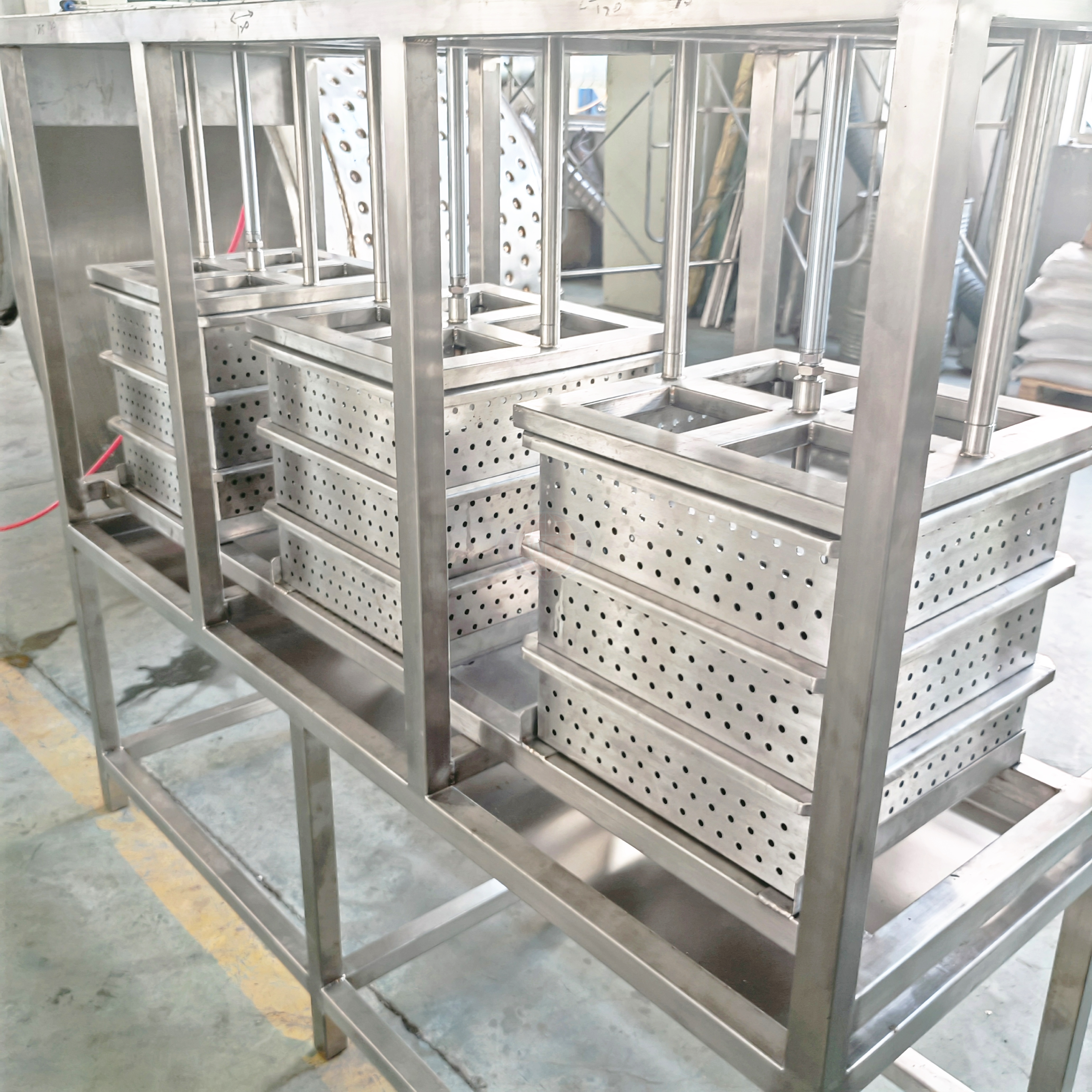
Pressing expels residual whey and forms the cheese into its final shape. Upgrading to industrial pressing systems yields massive efficiency gains over manual artisan presses. Pneumatic horizontal presses utilize compressed air cylinders to apply consistent, uniform pressure across a long row of cheese molds. This ensures every block in the batch achieves the identical moisture content and density.
Vertical mechanical presses are also common, utilizing stacked configurations to save floor space while applying targeted pressure. For high-volume cheddar plants, vacuum block formers pull the curd under a vacuum to remove air pockets, creating a perfectly dense 40-pound block ready for vacuum sealing. The evolution of molding technology has also changed factory operations. Micro-perforated molds eliminate the need for traditional cheese cloths. These rigid plastic or stainless steel molds feature thousands of microscopic holes that allow whey to escape while retaining the curd.
Many cheese varieties require submersion in a saline solution to develop rind, halt bacterial activity, and enhance flavor. Industrial brining requires dynamic systems. Automated gantry cranes or hydraulic lifts lower massive stainless steel cages filled with cheese into the brine vats. To maintain brine health across thousands of batches, factories employ continuous brine circulation and filtration systems.
UV filtration or cross-flow microfiltration removes yeast, mold, and physical particulates from the brine without stripping out the soluble calcium essential for rind formation. Aging and curing rooms demand industrial climate-control machinery. Standard commercial air conditioning is insufficient. You need HVAC systems specifically designed for precise humidity and temperature tolerances. These systems must manage the massive moisture load off-gassed by tons of curing cheese.
Procuring the right Cheese Making Machines requires looking beyond raw capacity. You must evaluate the specific technological features that drive operational outcomes, ensure sanitary compliance, and guarantee equipment longevity. A shiny stainless steel tank is useless if the automation behind it is flawed or the material degrades after six months of chemical exposure.
Modern dairy factories run on data and precise timing. Programmable Logic Controllers (PLCs) serve as the brain of the production line. By mapping automated recipe management to the PLCs, you guarantee batch-to-batch consistency. The PLC controls the exact speed of the agitator, the precise ramp-up of the heating jacket via PID loops, and the specific duration of the whey draw. This eliminates the variability inherent in manual cheese making, where a distracted operator might overcook a batch by three minutes, ruining the texture.
Human-Machine Interface (HMI) touch panels provide operators with real-time monitoring of all critical control points. These screens display temperature curves, pH levels, and valve statuses. Furthermore, PLCs handle automated data logging. This traceability is required for regulatory compliance, allowing quality assurance teams to track the exact processing parameters of any given batch if a defect is detected downstream.
Manual scrubbing of industrial tanks is dangerous, time-consuming, and prone to failure. Fully integrated CIP systems are mandatory for factory-scale operations. CIP systems automate the circulation of water, caustic detergents, and acid sanitizers through the vats, pipes, and pumps without requiring equipment disassembly. This drastically reduces downtime between batches, allowing for higher daily throughput.
Automated CIP mitigates the risk of bacteriophage contamination. Phages are viruses that attack starter cultures, causing dead batches where the milk fails to acidify. Eradicating phages requires flawless sanitation. A standard industrial CIP cycle involves specific, timed phases to ensure complete soil removal and bacterial destruction.
The dairy environment is highly corrosive. Lactic acid, caustic cleaning chemicals, and high-salinity brine will rapidly destroy inferior metals. Equipment must be constructed from specific grades of stainless steel to survive the daily abuse of a factory floor.
Capital allocation in a dairy plant requires balancing upfront expenditure against long-term operational efficiency. Plant managers must navigate several conceptual trade-offs when finalizing equipment specifications. Buying the cheapest vat often results in the highest operational costs due to poor yield and excessive maintenance downtime.
Engineering a bespoke production line allows for perfect optimization of your specific floor plan and unique cheese recipes. However, custom-built systems carry high upfront engineering costs and longer lead times. Conversely, off-the-shelf modular systems offer faster deployment and proven, standardized engineering. The trade-off often involves layout compromises. Modular skids might not fit perfectly into an existing room, requiring facility modifications. Buyers must weigh the speed and reliability of modular units against the tailored perfection of a custom build.
System Architecture Trade-offs
| Architecture Type | Installation Speed | Footprint Flexibility | Upfront Engineering |
|---|---|---|---|
| Custom-Built Systems | Slow (Requires field welding and custom piping) | High (Designed to fit exact room dimensions) | High (Requires extensive CAD and fluid dynamic modeling) |
| Modular Skids | Fast (Pre-wired and pre-piped from the factory) | Low (Fixed dimensions require facility adaptation) | Low (Standardized designs reduce engineering hours) |
Industrial dairy processing consumes massive amounts of energy. Evaluating the long-term operational costs of equipment regarding steam usage, chilled water requirements, and electrical draw is necessary. High-efficiency machinery often carries a premium price tag but pays for itself through utility savings. Look for pasteurizers with high-percentage regeneration sections.
Specify Variable Frequency Drives (VFDs) on all large pumps and agitator motors. VFDs allow motors to run only as fast as necessary, drastically cutting electrical consumption compared to single-speed motors controlled by throttling valves. A VFD on a 50-horsepower whey pump can save thousands of dollars in electricity annually.
Highly automated machinery requires significant capital expenditure. You must frame this ROI against the permanent reduction in manual labor. Automated milling, continuous draining belts, and pneumatic pressing eliminate the need for a large crew of manual operators. Furthermore, automation drastically reduces ergonomic injury risks.
Manually lifting heavy cheese molds and turning aging wheels leads to repetitive strain injuries and high worker turnover. Capital investment in automation stabilizes your workforce and ensures consistent production regardless of labor market fluctuations. When a machine handles the heavy lifting of 40-pound blocks, your staff can focus on quality control and process monitoring.
Purchasing world-class machinery is only half the battle. Integrating that machinery into your physical plant involves significant logistical and engineering challenges. Poor facility integration will cripple the performance of even the best equipment. You cannot drop a state-of-the-art vat into a room with inadequate drainage and expect good results.
Workflow bottlenecks are a primary risk during facility upgrades. Equipment must be sequenced logically. Whenever possible, layout optimization should utilize gravity flow. Pumping delicate curds through long runs of stainless steel piping causes shear damage, breaking the curds and losing fat to the whey. By elevating the cheese vats on platforms, operators can use gravity to drop the curds and whey directly onto the draining belts below.
If pumping is absolutely necessary, you must specify positive displacement pumps designed for gentle handling, rather than aggressive centrifugal pumps. Centrifugal pumps will puree your curd into a useless slurry. You must also account for maintenance clearances. A pump needs enough space around it for a mechanic to pull the rotor and replace the mechanical seal without dismantling the entire piping manifold.
Upgrading your processing capacity places massive strain on your facility's utility infrastructure. These upgrades are often overlooked during the budgeting phase. High-capacity floor drains are mandatory. A factory floor must handle thousands of liters of wash water and spilled whey daily. Drains must be constructed of acid-resistant materials, typically stainless steel trench drains, and the floor must be sloped at a minimum of 1/4 inch per foot to prevent pooling.
Specialized ventilation is required to manage moisture and whey off-gassing. Without adequate air makeup units and exhaust fans, condensation will form on the ceiling, creating a severe biological hazard if it drips back into open vats. Finally, ensure your boiler capacity and chilled water plants are sized to handle the peak loads demanded by the new pasteurizers and heating jackets. A drop in steam pressure during a critical cooking phase will ruin the batch.
Adopting complex, PLC-controlled machinery introduces the risk of operator error. Moving from manual processes to automated HMIs requires a fundamental shift in operator skill sets. Adopting complex machinery without securing comprehensive, vendor-supplied training will lead to immediate operational failures. Your staff must understand how to navigate the software, troubleshoot minor faults, and interpret alarm codes.
Industrial machinery requires rigorous upkeep. You must implement a strict preventative maintenance schedule. Seals, gaskets, and moving parts degrade over time due to heat and chemical exposure. Replacing a fifty-cent tri-clamp gasket during scheduled downtime prevents a catastrophic mid-batch failure that could cost thousands of dollars in ruined product. Establish a comprehensive spare parts inventory for all critical wear components, including pump stators, valve seats, and agitator seals.
The right cheese processing machinery balances immediate production needs with long-term scalability. Transitioning to a factory-scale operation means replacing manual bottlenecks with automated systems that enforce strict sanitation standards and guarantee batch consistency. By focusing on yield optimization, hygienic design, and robust material construction, plant managers can build a highly profitable and resilient production line. When shortlisting vendors, prioritize manufacturers who offer custom engineering support, seamless CIP integration, and reliable local maintenance availability. The best equipment in the world is useless if you cannot source replacement parts or technical support during a breakdown.
Take immediate action to advance your facility upgrade:
A: Artisan tools rely on manual labor, such as hand ladles, basic curd knives, and mechanical screw presses. Commercial equipment utilizes automated, continuous systems like PLC-controlled vats, pneumatic presses, and integrated Clean-in-Place capabilities to handle massive volumes, ensure strict sanitation, and eliminate human error.
A: A standard 10,000-liter enclosed Double-O vat typically requires a footprint of roughly 3 to 4 square meters for the vessel itself. However, you must factor in an additional 2 to 3 meters of surrounding clearance for maintenance access, piping manifolds, and elevated operator catwalks.
A: Standard 304 stainless steel degrades when exposed to high concentrations of chlorides. 316L stainless steel contains added molybdenum, which provides superior corrosion resistance. This makes 316L mandatory for brining tanks, salt dosing equipment, and any machinery operating in high-salinity environments.
A: Yes, but with limitations. Modern PLCs allow operators to program different heating and stirring recipes for various cheeses. However, physical limitations exist. A line optimized for hard cheddar utilizes heavy curd mills and high-pressure presses, which cannot process delicate soft cheeses like ricotta or brie.
A: A CIP system automates the cleaning process. It circulates pre-rinses, caustic detergents, acid washes, and final sanitizers through the internal pipes, vats, and pumps of the machinery. This achieves strict hygienic standards without requiring the manual dismantling of the equipment.
A: High-quality industrial dairy equipment constructed from 304 or 316L stainless steel typically boasts a lifespan of 15 to 30 years. However, this longevity is entirely contingent on executing rigorous preventative maintenance schedules, particularly regarding seals, gaskets, and moving mechanical components.