
Call Us
+86-15800763021
Send Us
Add
775 Chihua Road, Zhelin Town, Fengxian District, Shanghai
- All
- Product Name
- Product Keyword
- Product Model
- Product Summary
- Product Description
- Multi Field Search
Views: 0 Author: Site Editor Publish Time: 2026-08-28 Origin: Site

Commercial beverage manufacturing operates on razor-thin margins. A fractional percentage drop in extraction yield or a minor unexpected downtime event translates directly to significant revenue loss. Facility managers and plant engineers constantly battle operational realities that degrade overall plant profitability. These bottlenecks often stem from mismatched equipment, inefficient workroom layouts, excessive manual cleaning times, and poor raw material handling.
Solving these production challenges requires looking far beyond top-line throughput specifications. Evaluating a commercial juice processing machine demands a systemic evaluation framework. Plant operators must focus heavily on the underlying extraction methodology, continuous workflow integration, and automated hygiene systems. True operational success relies on engineering a continuous line where every mechanical component supports maximum yield and uninterrupted uptime.
Yield vs. Throughput: True efficiency requires balancing the speed of processing with the maximum percentage of juice extracted per ton of raw material.
System Integration is Critical: Standalone machines create bottlenecks; high-efficiency lines utilize aseptic buffers, optimized workroom routines, and integrated pre-processing (washing/milling) to maintain continuous operation.
Automated Hygiene Drives Uptime: Advanced Clean-In-Place (CIP) systems are non-negotiable for minimizing changeover times and ensuring strict microbiological compliance.
Efficiency in a commercial beverage facility extends well beyond basic gallons-per-hour metrics. To accurately measure performance, plant engineers rely on Overall Equipment Effectiveness (OEE). This metric evaluates the entire continuous production line by multiplying availability, performance, and quality. A machine that processes high volumes but frequently jams or requires excessive maintenance will yield a low OEE. True efficiency means the equipment runs consistently at its rated speed, produces a high-quality product, and experiences minimal unplanned downtime. We track OEE daily to identify micro-stops that operators might otherwise ignore.
Extraction efficiency directly dictates the bottom line. Leaving residual moisture in the pomace means leaving sellable product on the manufacturing floor. Engineering strategies for maximum yield are a primary focus when selecting a Juice Processing Machine. The mechanical force applied during extraction must rupture the maximum number of plant cells without extracting bitter compounds from the seeds or skins. Analyzing the moisture content of the discharged pomace provides a direct indicator of machine performance. A reduction in pomace moisture by just two percent can yield thousands of additional gallons of product over a production season. We regularly perform spin-down tests and Brix measurements on the waste stream to calibrate the pressing force.
The financial cost of downtime severely impacts production targets. Planned downtime for sanitation and changeovers is necessary, but unplanned downtime caused by mechanical failure or material jamming destroys margins. Continuous processing capabilities hold a massive advantage over batch processing limitations. In a continuous system, raw materials flow uninterrupted from the receiving hopper to the final filling station. This eliminates the start-and-stop delays inherent in batch pressing, stabilizes the flow rate through the pasteurizer, and ensures the packaging line remains fully supplied. Equipment must feature heavy-duty components capable of sustaining 24/7 operations during peak harvest seasons. We look for oversized bearings, direct-drive motors, and robust gearboxes to handle these continuous loads.
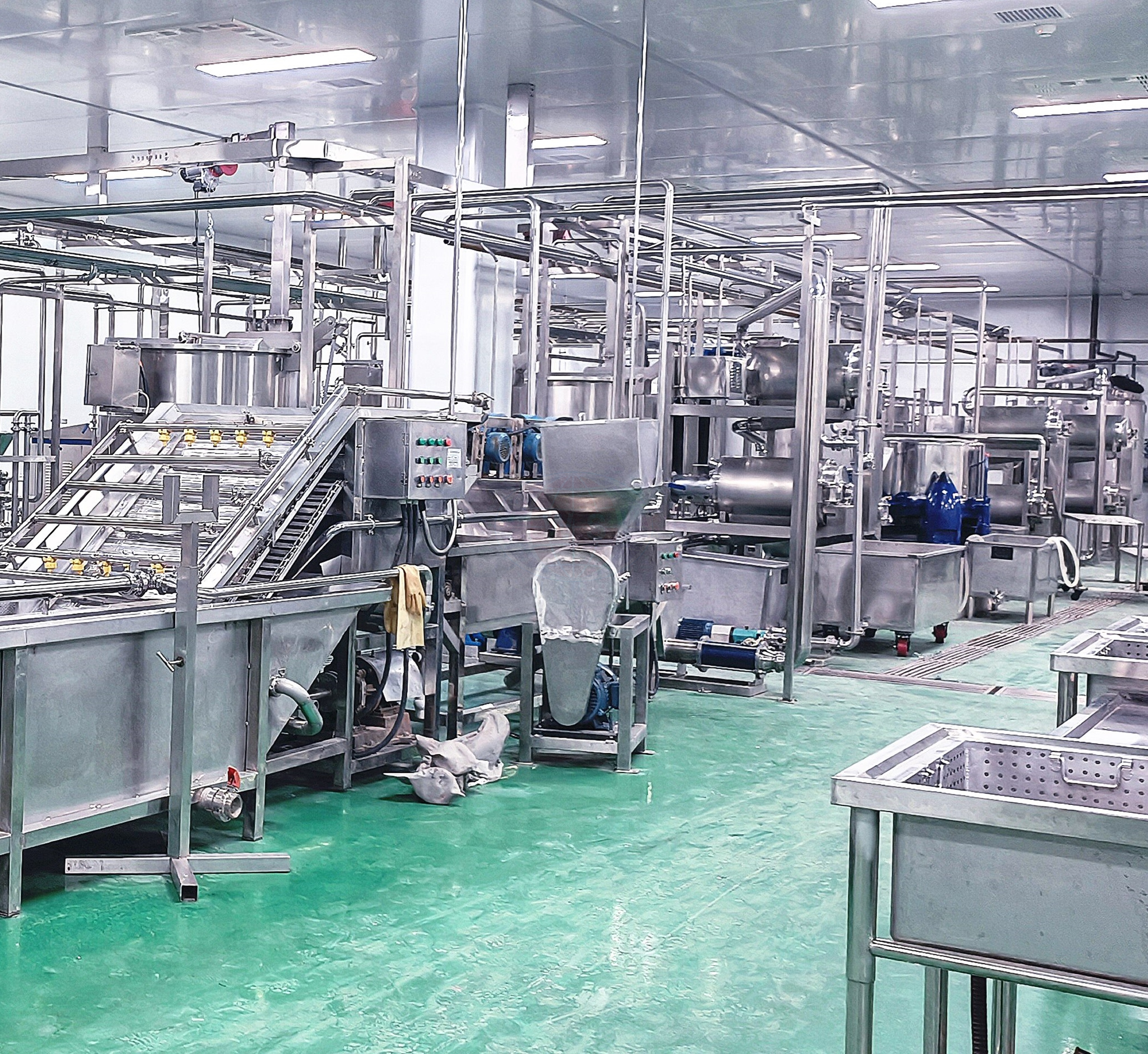
A complete production line consists of several highly specialized mechanical systems working in unison. Understanding the specific function and engineering requirements of each component helps optimize the entire workflow.
Raw material handling sets the pace for the entire facility. Standalone washing and milling stations require manual material transfer, introducing labor inefficiencies and potential contamination points. High-efficiency lines combine washing, vertical auger transport, and milling into a single, automated continuous feed system. Fresh produce enters a flume or brush washer to remove field debris and reduce microbial load. A vertical auger then elevates the clean fruit directly into the milling chamber. The milling process dictates downstream success. The equipment must grind the fruit into a precise mash size. If the mash is too fine, it blinds the extraction filters. If it is too coarse, the extraction yield plummets. Integrated pre-processing ensures a consistent, properly sized mash feeds directly into the extraction stage without human intervention.
The choice of extraction technology depends heavily on the target product, the required throughput, and the characteristics of the raw material. Selecting the right Fruit Juice Processing Equipment requires matching the mechanical reality of the press to the specific application.
Extraction Technology Comparison
| Technology Type | Mechanical Operation | Ideal Use-Cases | Yield Characteristics |
|---|---|---|---|
| Belt Press | Continuous pressing between tensioned porous belts over a series of rollers. | High-volume continuous processing of apples, carrots, and root vegetables. | High throughput with excellent continuous yield; requires precise mash sizing. |
| Industrial Cold Press | Hydraulic plates applying massive pressure to mash contained within filter bags. | Premium, low-oxidation juices, leafy greens, and citrus. | Maximum extraction yield and highest liquid quality; operates in semi-continuous batches. |
| Screw Press | A rotating screw inside a perforated screen that compresses material as it moves forward. | Grapes, berries, and high-moisture fruits. | Good continuous throughput; moderate yield depending on screen size and back-pressure. |
Facilities often need to pivot between different product lines to meet market demands. Machinery capable of handling varying produce densities and viscosities offers a significant operational advantage. A versatile system allows a plant to switch between extracting clear, low-viscosity liquids and processing thicker, high-fiber fruit purées without requiring entirely separate production lines. This requires adaptable screening mechanisms, variable speed drives on extraction motors, and robust positive displacement pumps capable of moving high-viscosity slurries without cavitation. Equipment versatility maximizes asset utilization and prevents machinery from sitting idle during off-season production shifts. We frequently swap out screen sizes and adjust rotor speeds to handle everything from thin apple juice to thick mango purée on the same base skid.
Moving liquid efficiently through a facility requires precise pump selection. Centrifugal pumps work well for clear, low-viscosity liquids like filtered apple juice. However, they cause cavitation and shear damage when handling thick purées or liquids with suspended solids. For these applications, we specify positive displacement pumps, such as rotary lobe or progressive cavity pumps. These units move highly viscous materials gently, preserving the cellular structure of the fruit pulp. Proper sizing of the pump and the associated sanitary piping prevents pressure drops and ensures a consistent flow rate into the pasteurizer. We calculate the total dynamic head for every piping run to ensure the selected pump operates at its peak efficiency curve.
Extending shelf life and ensuring microbiological safety requires precise thermal processing. High-Temperature Short-Time (HTST) pasteurization modules must integrate seamlessly with the extraction rate. If the pasteurizer processes liquid slower than the press extracts it, the entire line bottlenecks. HTST systems utilize highly efficient plate or tubular heat exchangers to rapidly heat the liquid to the required lethality temperature, hold it for a specific duration, and immediately chill it back down. This rapid thermal cycle destroys pathogens and spoilage organisms while preserving the sensory profile and nutritional integrity of the product. Proper integration ensures the thermal processing stage acts as a continuous conduit rather than a restrictive choke point.
Procuring high-quality individual machines does not guarantee an efficient facility. The true test of operational efficiency lies in how these machines communicate and function as a unified production line. System integration eliminates dead zones, prevents material staging delays, and ensures a smooth, continuous flow from raw fruit to finished package.
The physical placement of machinery within the facility dictates the flow of materials and personnel. An optimized workroom layout separates dry zones (raw material receiving) from wet zones (extraction and processing) to maintain strict hygiene boundaries. The correct use of the machinery, combined with optimized operator work routines, is vital for staging materials efficiently. Operators must have clear access to control panels, inspection ports, and maintenance access points. Poor layout design leads to excessive forklift traffic, delayed material staging, and increased risk of cross-contamination. We map out operator walking paths during the design phase to minimize wasted movement and ensure ergonomic access to all manual intervention points.
Continuous production lines are highly sensitive to downstream interruptions. If a filling machine experiences a minor jam, the upstream pasteurizer and press cannot simply stop instantaneously without risking product burn-on or line blockages. Aseptic buffer tanks solve this issue. Placing an aseptic buffer between the pasteurizer and the filling machines makes product filling smoother and increases overall production efficiency. The buffer tank absorbs the continuous output of the pasteurizer during minor downstream delays. Once the filler is back online, it draws from the buffer tank. This decoupling of the processing and packaging stages prevents upstream shutdowns, stabilizes flow rates, and drastically improves OEE. We utilize nitrogen blanketing in these tanks to prevent oxidation during holding periods.
Many commercial beverages require blending multiple ingredients, such as concentrates, fresh fruit pulp, water, and flavorings. Mixing tanks must be engineered for rapid, homogeneous blending without introducing excessive oxygen. Agitation efficiency dictates batch cycle times. High-shear mixers or scraped-surface agitators ensure thick pulps and viscous concentrates blend perfectly with lighter liquids. Furthermore, the design of the mixing tank must eliminate dead spaces where unmixed ingredients can accumulate. Conical bottoms and strategically placed baffles ensure a consistent formulation, preventing batch-to-batch variations that lead to product rejection. We mount these tanks on load cells to automate the batching process and eliminate manual measuring errors.
Modern facilities rely heavily on Supervisory Control and Data Acquisition (SCADA) systems. These platforms centralize the control of the entire processing line. Operators monitor tank levels, pump speeds, pasteurization temperatures, and CIP progress from a single interface. SCADA integration allows for historical data logging, which is invaluable for troubleshooting yield drops or identifying recurring mechanical faults. We program alarms to trigger before a tank overflows or a pump runs dry, preventing catastrophic failures. This level of automation reduces the physical burden on operators and shifts their role from manual labor to process oversight.
Food safety regulations govern every aspect of commercial beverage manufacturing. Equipment design directly impacts a facility's ability to maintain sanitary compliance. Inefficient cleaning protocols lead to microbiological contamination, product recalls, and massive financial losses. Hygiene must be engineered directly into the machinery.
Manual cleaning of industrial processing equipment is labor-intensive, time-consuming, and prone to human error. Advanced Clean-In-Place (CIP) systems are an absolute necessity for modern facilities. Automated CIP integration maintains product quality, prevents cross-contamination, and drastically reduces the labor hours required for sanitation. A properly designed CIP system circulates pre-rinses, caustic detergents, acid washes, and final sanitizers through the entire production line at specific flow rates and temperatures.
Standard CIP Sequence Parameters
Pre-rinse: Flushes residual organic material using ambient or slightly warm water to prevent protein baking.
Caustic Wash: Circulates a sodium hydroxide solution at 160°F to 180°F to break down fats, proteins, and stubborn organic deposits.
Intermediate Rinse: Removes all traces of the caustic detergent using clean water.
Acid Wash: Circulates a nitric or phosphoric acid solution to remove mineral scale and neutralize any remaining alkaline residue.
Final Sanitization: Applies a peracetic acid or similar food-safe sanitizer to eliminate remaining microorganisms before the next production run.
This automated process guarantees that every internal surface, pipe, and valve receives the exact chemical concentration and mechanical scrubbing force required to achieve strict microbiological compliance. By reducing changeover times from hours to minutes, CIP systems directly increase available production time. We rely on conductivity sensors to verify chemical concentrations automatically, removing operator guesswork.
Evaluating equipment against recognized sanitary design standards, such as FSMA, HACCP, and EHEDG, is a mandatory step in the procurement process. Machinery must feature crevice-free welding to prevent bacteria from harboring in microscopic joints. All internal surfaces must be self-draining to ensure no standing water remains after a CIP cycle. Seals, gaskets, and O-rings must be manufactured from food-grade materials that resist degradation from harsh cleaning chemicals. Dead legs—sections of piping where liquid can stagnate—must be completely eliminated from the system architecture. We specify orbital welding for all sanitary piping to guarantee smooth, consistent internal joints that will not trap organic material.
Upgrading an existing facility or installing a completely new production line carries inherent engineering and operational risks. Anticipating these challenges and implementing robust mitigation strategies ensures a smooth transition to high-efficiency manufacturing.
Integrating new machinery into legacy systems presents complex engineering challenges. Retrofitting requires matching the throughput of the new equipment with the limitations of existing pumps, piping, and downstream packaging lines. Programmable Logic Controllers (PLCs) from different manufacturers must be integrated to ensure seamless communication across the line. In contrast, greenfield installations allow for optimal layout and perfectly matched component sizing. When retrofitting, plant engineers must conduct thorough flow-rate analyses and pressure-drop calculations to prevent the new equipment from overwhelming the legacy infrastructure. We often install variable frequency drives on legacy pumps to help them match the flow rates of newly installed extraction equipment.
Agricultural products are inherently variable. Seasonal changes dictate fruit size, density, moisture content, and pectin levels. This variability introduces the risk of machine jamming, yield fluctuation, and inconsistent product quality. To mitigate this, operators must select adaptable milling and pressing equipment. Variable frequency drives (VFDs) on milling motors allow operators to adjust the mash size based on the firmness of the incoming fruit. Adjustable tensioning systems on belt presses accommodate varying moisture levels in the mash. Facilities processing high-pectin fruits like apples integrate inline enzyme dosing systems to break down pectin and maintain high extraction yields throughout the harvest season. We constantly monitor the incoming fruit temperature, as colder fruit requires different milling speeds than warm fruit to achieve the same mash consistency.
Standard Maintenance Intervals for Extraction Equipment
| Component | Inspection Frequency | Replacement Interval |
|---|---|---|
| Press Belts / Filter Bags | Daily visual check for fraying or tears. | Every 3 to 6 months depending on production volume. |
| Hydraulic Seals | Weekly check for fluid leaks or pressure drops. | Annually during scheduled preventative maintenance. |
| Milling Blades / Graters | Weekly check for dullness or chipped edges. | Every 1 to 2 months to maintain consistent mash sizing. |
| Pump Stators | Monthly check for flow rate degradation. | Every 6 to 12 months based on fluid abrasiveness. |
Request specific OEE data and pomace moisture analysis reports from the equipment manufacturer to verify performance claims.
Conduct physical pilot runs using your specific raw materials to validate yield percentages and throughput capacities.
Map your current workroom layout to identify potential staging bottlenecks and optimize the physical placement of new machinery.
Audit the manufacturer's aftermarket support network to guarantee rapid parts availability and technical assistance.
A: Yield varies significantly based on the raw material and extraction technology. Industrial belt presses typically achieve yields between 70% and 80% for apples and root vegetables. Hydraulic cold presses can achieve yields exceeding 80% for leafy greens and citrus. Proper milling and mash sizing are required to maximize these percentages.
A: A poor layout forces operators to travel longer distances to stage raw materials or access control panels, creating unnecessary delays. An optimized layout separates wet and dry zones, minimizes forklift traffic, and ensures operators can maintain a continuous feed of raw materials into the pre-processing systems without interruption.
A: Clean-In-Place (CIP) systems automate the sanitation process, eliminating the need for manual teardown and scrubbing. This drastically reduces changeover times between product runs, increases overall machine availability, and guarantees consistent microbiological compliance by applying precise chemical concentrations and temperatures.
A: Belt presses operate continuously, squeezing a uniform layer of mash between tensioned porous belts over a series of rollers, making them ideal for high-volume production. Cold presses operate in semi-continuous batches, applying massive hydraulic pressure to mash inside filter bags, which is ideal for premium, low-oxidation products.
A: An aseptic buffer tank sits between the pasteurizer and the filling machine. If the filler experiences a temporary jam, the buffer tank absorbs the continuous output from the pasteurizer. This prevents the upstream equipment from shutting down or entering a recirculation mode, thereby stabilizing the entire production line.
A: Yes, provided the equipment is engineered for versatility. Handling both requires adjustable screening mechanisms, robust positive displacement pumps capable of moving viscous slurries, and variable speed drives. This adaptability allows facilities to switch product lines without investing in entirely separate processing infrastructure.