
Call Us
+86-15800763021
Send Us
Add
775 Chihua Road, Zhelin Town, Fengxian District, Shanghai
- All
- Product Name
- Product Keyword
- Product Model
- Product Summary
- Product Description
- Multi Field Search
Views: 0 Author: Site Editor Publish Time: 2026-08-13 Origin: Site

Scaling up traditional feta cheese manufacturing presents a distinct operational challenge. Plant managers must maintain the authentic Greek textural and flavor profiles while managing industrial volumes and raw material variability. Traditional and semi-manual feta production frequently suffers from inconsistent moisture retention across batches. It also drives high labor costs, significant yield loss through fines and fat escaping into the whey, and extended cleaning downtimes. Transitioning to a high-efficiency feta cheese production line requires evaluating equipment beyond simple throughput metrics. Buyers must rigorously assess Overall Equipment Effectiveness (OEE), sanitary design, raw material adaptability, and precise curd handling capabilities. Modern automated systems address these historical bottlenecks directly. They provide controlled environments for coagulation, gentle mechanical handling to preserve curd structure, and integrated sanitation protocols. Understanding how these mechanical components interact optimizes facility output and maximizes raw material yield.
OEE is the Benchmark: True efficiency in feta production is measured by Overall Equipment Effectiveness, balancing availability, performance, and product quality (yield).
Curd Handling Dictates Yield: Automated, low-shear cutting and drainage systems are critical for minimizing fines and maximizing cheese yield per liter of milk.
Whey Valorization Boosts Profitability: The most efficient plants integrate whey recovery systems to produce secondary products (like Mizithra or Ricotta), turning waste streams into revenue.
CIP Integration is Non-Negotiable: Advanced Clean-in-Place (CIP) systems reduce changeover times, lower utility costs, and ensure strict microbiological compliance.
Scalability Requires Modularity: The most effective Cheese Processing Equipment allows for phased automation, from milk standardization to final block packaging, accommodating capacities up to and exceeding 50 tons of milk per day.
OEE provides a quantifiable metric for dairy manufacturing success. In feta production, OEE multiplies availability, performance, and product quality. Availability accounts for equipment uptime versus planned maintenance and unplanned breakdowns. Performance measures actual production speed against the manufacturer's designed capacity. Quality tracks the percentage of saleable cheese yield against total milk input. Plant engineers use this calculation to identify exactly where losses occur during a shift.
Common bottlenecks severely drag down OEE scores in traditional plants. Manual mold filling causes inconsistent batch timing and erratic production flow. Inefficient whey drainage slows down the entire processing line, forcing upstream equipment to idle. Packaging delays leave curd exposed on the floor, risking moisture loss and environmental contamination. Identifying and eliminating these specific bottlenecks is the first step toward industrial efficiency. Automated sensors and continuous flow designs keep the line moving without manual intervention, stabilizing the performance variable in the OEE equation.
Yield loss directly erodes facility profitability. Fat and protein lost to whey represent wasted raw materials that should have been converted into saleable cheese. Establishing strict tolerances for moisture content ensures regulatory compliance and textural consistency. Feta cheese is sold by weight, making moisture retention a primary financial metric. Block weight consistency prevents product giveaway during the final packaging stages, where even a 2% overfill per container results in massive annual losses.
High-efficiency systems capture and measure whey drainage accurately. Integrating secondary whey cheese production lines recovers lost proteins effectively. This creates profitable byproducts like Mizithra or Ricotta from the waste stream. Tracking whey recovery efficiency helps operators optimize the initial cutting and pressing phases. Adjusting the mechanical pressure during drainage directly influences the volume of recoverable solids. Plant managers monitor the fat content in the whey stream continuously; spikes indicate that the curd cutting process is too aggressive or the transfer pumps are generating excessive shear.
Milk composition fluctuates significantly across different seasons and agricultural regions. A well-engineered Feta Cheese Production Line handles these variations without requiring physical modifications to the machinery. Equipment must adapt to 100% sheep's milk, goat milk, or cow's milk blends. Sheep milk contains higher fat and protein ratios compared to cow milk, resulting in a firmer curd that requires different handling parameters. The system needs adjustable settings for coagulation time, heating curves, and cutting speed.
This mechanical flexibility prevents the final product's structural integrity from degrading. Operators must calibrate dosing systems to match the specific protein and fat ratios of incoming milk batches. Automated recipe management systems store these seasonal parameters in the PLC. Operators switch between milk types via the HMI, ensuring consistent curd formation regardless of the raw material source. The ability to adjust the recipe digitally eliminates the guesswork that traditionally leads to inconsistent batch quality.
Milk Composition Handling Parameters
| Milk Source | Average Fat Content | Average Protein Content | Required Coagulation Adjustment |
|---|---|---|---|
| Sheep | 6.0% - 7.5% | 5.0% - 6.0% | Shorter set time, lower rennet dose |
| Goat | 3.5% - 4.5% | 3.0% - 3.5% | Standard set time, careful temperature control |
| Cow | 3.5% - 4.0% | 3.2% - 3.4% | Longer set time, potential calcium chloride addition |
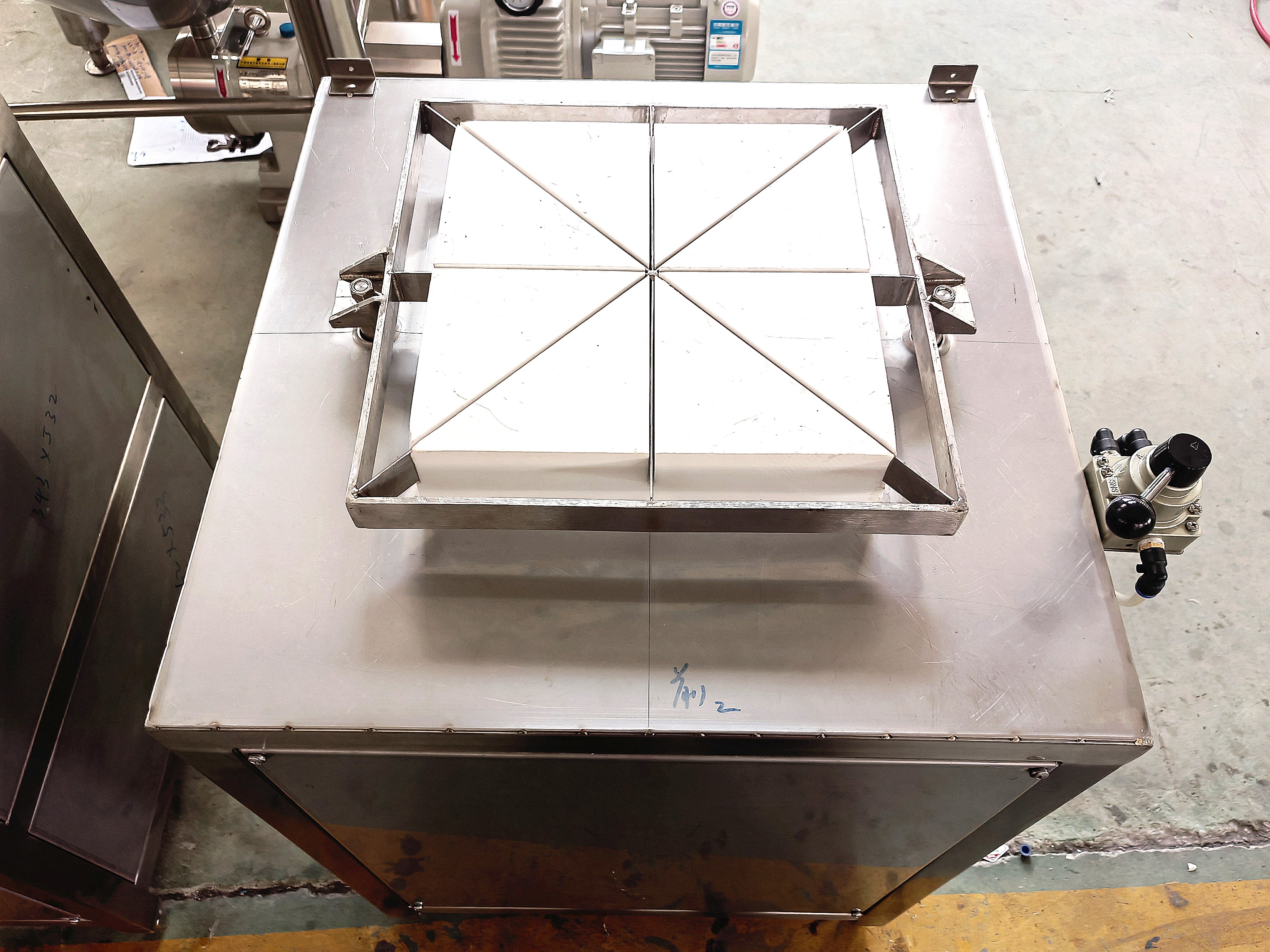
Choosing the right coagulation tank impacts hygiene, temperature stability, and overall yield. Enclosed vats provide superior temperature control compared to open traditional designs. They utilize insulated dimple heating jackets to maintain precise coagulation temperatures, usually around 32°C to 35°C. Enclosed designs also protect the vulnerable milk from airborne contaminants, wild yeast, and bacteriophages that can ruin an entire batch.
Precision dosing systems add rennet and bacterial cultures with high accuracy. This ensures consistent coagulation times across varying milk batches. Automated agitators distribute cultures evenly without damaging the forming curd network. The geometry of the vat dictates the efficiency of the cutting phase. Double-O or cylindrical vat designs prevent dead zones where milk might fail to coagulate properly. The agitator blades are specifically pitched to mix the milk gently during the culture addition phase and then reverse direction to cut the curd once it sets.
Authentic feta requires a specific crumbly, open texture. Mechanical low-shear curd cutting preserves this delicate internal structure. High-speed cutting shatters the curd, creating excessive microscopic fines that wash away into the whey drainage system. Specialized Cheese Processing Equipment utilizes custom wire grids or sharpened stainless steel blades for gentle, precise separation. The cutting tools move through the coagulated mass at highly controlled speeds, typically measured in single-digit RPMs.
Pump and piping specifications must transport fragile feta curd without degradation. Positive displacement pumps, specifically lobe or sine pumps, move the curd mass gently through the system. Centrifugal pumps are strictly avoided here because their high-speed impellers destroy the curd grains. Wide-radius pipe bends prevent structural damage during transfer to drainage stations. Maintaining the integrity of the curd grain during transport directly correlates to higher final cheese yields and the correct mouthfeel in the finished product.
Drainage dictates the final moisture profile and structural firmness of the cheese. Traditional block molds require intensive manual handling, stacking, and flipping. Fully automated, continuous drainage lines eliminate this physical labor entirely. They utilize perforated drainage belts or specialized micro-perforated block molds that allow whey to escape while retaining the maximum amount of curd solids.
Mechanisms for achieving uniform pressing guarantee consistent block dimensions. Pneumatic pressing plates apply even pressure across the entire mold surface, usually operating between 0.2 and 0.5 bar depending on the desired moisture content. Consistent dimensions minimize trim waste during the final portioning stages. Controlled drainage environments manage ambient humidity and temperature. This prevents the outer curd layer from drying out prematurely, which can cause hard edges on the final block and inhibit proper salt absorption during the brining phase.
Brining establishes the characteristic salty profile and acts as a primary preservative. Automated brining cages submerge cheese blocks uniformly into the solution. Overhead crane systems move these cages through temperature-controlled brine baths on a strict schedule. The brine concentration is typically maintained between 7% and 10% NaCl, with automated dosing systems adding salt as the cheese absorbs it. This ensures precise, repeatable salinity absorption across every batch.
Transition systems move the cheese from maturation rooms to final packaging lines without manual lifting. Automated block portioning uses ultrasonic blades to cut the cheese accurately without crumbling or sticking to the blade. Vacuum sealing extends shelf life and prevents oxidation. Traditional tin or plastic bucket filling stations accommodate different regional market preferences. Integrated conveyor systems move the packaged product directly to palletizing stations, keeping the production floor clear of bottlenecks.
Equipment choices must align strictly with daily milk processing volumes. Small artisanal producers might process 5 to 10 tons of milk per day using semi-automated systems. Industrial facilities often exceed 50 tons daily, necessitating fully automated continuous lines. Calculating the return on investment for fully automated lines requires analyzing the reduction in labor costs against the increase in daily output and yield retention.
Automation reduces batch cycle times significantly. It maximizes the utilization of existing floor space by increasing throughput velocity. High throughput requires synchronized continuous flow from pasteurization directly to packaging. Any manual intervention in a high-capacity line creates a bottleneck that compounds throughout the production day. If the packaging machine stops, the automated system must have buffer tanks or holding protocols to prevent the upstream curd from over-acidifying.
Manual feta production involves heavy, repetitive lifting in wet environments. Moving filled molds, stacking drainage trays, and hoisting brine cages increases workplace injury risks. Automation eliminates these severe ergonomic hazards. Facilities shift labor costs from manual operators to skilled technicians who monitor the process via control panels.
Personnel focus on quality control, recipe management, and system optimization instead of physical labor. This transition improves worker retention and reduces workers' compensation claims. A fully automated line requires fewer operators per shift, but demands higher technical literacy to manage the HMI and SCADA systems effectively. Maintenance teams must be trained in pneumatics, sensor calibration, and PLC troubleshooting to keep the automated line running.
Facility layout dictates equipment selection and installation feasibility. Linear automated drainage systems require significant continuous floor length, often exceeding 20 meters. Vertical or stacked traditional setups utilize vertical space but require robust structural support and specialized lifting equipment. Assessing spatial requirements prevents severe installation bottlenecks and ensures operators have enough clearance for maintenance access.
Upgraded automation increases specific utility demands. Facilities must evaluate their capacity for three-phase power, clean water, and food-grade compressed air. Proper utility integration ensures the machinery operates at peak efficiency. Inadequate compressed air supply will cause pneumatic pressing plates to fail, ruining batch consistency. The compressed air must meet ISO 8573-1 Class 1.2.1 standards to ensure it is dry and oil-free, preventing contamination of the pneumatic cylinders and valves.
Automation Level Comparison
| Production Scale | Typical Daily Capacity | Labor Requirement | Footprint Characteristics |
|---|---|---|---|
| Manual / Artisanal | Up to 5 Tons | High (Physical Labor) | Compact, Vertical Stacking |
| Semi-Automated | 10 to 30 Tons | Medium (Supervisory & Transfer) | Moderate, Segmented Zones |
| Fully Automated | 50+ Tons | Low (Technical/QC Only) | Large, Linear Continuous Flow |
Dairy processing demands rigorous, uncompromising sanitary design standards. Specifying equipment that meets EHEDG or 3-A standards ensures regulatory compliance and protects public health. Evaluating surface finishes prevents bacterial adhesion and biofilm formation. Smooth, polished 316L stainless steel with a surface roughness (Ra) of less than 0.8 µm is mandatory for all product-contact surfaces.
Weld quality must be flawless, ground flush, and passivated to prevent corrosion. Piping layouts must eliminate dead-legs where stagnant milk or cleaning fluids can accumulate. The standard engineering rule dictates that any branch in the piping must have a length-to-diameter (L/D) ratio of less than 2. Any crevice or sharp internal corner provides a breeding ground for Listeria or Coliform bacteria. Sanitary design minimizes these risks at the engineering level, making the equipment inherently safer to operate.
Cross-contamination ruins entire production batches and triggers costly product recalls. Zoning establishes strict physical separation within the production line. Raw milk handling must be completely isolated from pasteurized processing areas. Personnel movement between these zones must be restricted and monitored, often requiring separate locker rooms and color-coded uniforms.
Air filtration systems maintain clean environments in critical exposure areas. Positive pressure requirements in the drainage and packaging zones push airborne contaminants outward when doors are opened. This prevents mold spores and wild bacteria from settling on the exposed cheese blocks. Dedicated HVAC systems with HEPA filtration are standard in modern feta facilities, controlling both particulate matter and ambient humidity.
Cleaning accounts for a significant portion of facility downtime and utility usage. Automated CIP reduces this downtime between production runs. It delivers precise concentrations of cleaning chemicals at optimal temperatures and flow velocities. Fluid velocity must exceed 1.5 meters per second to provide adequate mechanical scouring inside the pipes. Slower flow rates fail to remove protein deposits and fat films.
Evaluating systems for chemical recovery lowers operational expenses. Modern CIP systems capture and reuse caustic and acid solutions, reducing chemical purchasing costs. They also reduce overall water consumption through efficient final rinse protocols. Programmable wash cycles guarantee consistent sanitation without relying on manual scrubbing. Automated conductivity sensors verify that all cleaning chemicals are completely flushed before production resumes, preventing chemical contamination of the milk.
Standard CIP Cycle Parameters
| CIP Phase | Chemical Agent | Target Temperature | Primary Function |
|---|---|---|---|
| Pre-Rinse | Warm Water | 40°C - 50°C | Flush loose milk soils and fat |
| Caustic Wash | Sodium Hydroxide (NaOH) | 75°C - 80°C | Break down protein deposits and saponify fats |
| Intermediate Rinse | Cold Water | Ambient | Remove caustic residue |
| Acid Wash | Nitric Acid (HNO3) | 65°C - 70°C | Remove mineral scale and milk stone |
| Final Rinse | Sterilized Water | Ambient | Flush all chemicals, verify via conductivity |
Installing new machinery disrupts existing production schedules and revenue flow. Strategies for phasing installation minimize this disruption. Facilities upgrade individual modules during scheduled weekend maintenance windows. Careful project management ensures that old equipment is only decommissioned when the new module is ready for immediate tie-in to the utility headers.
Factory Acceptance Testing (FAT) prior to delivery identifies mechanical, electrical, and software issues before the equipment leaves the manufacturer's facility. This prevents costly modifications and extended downtime on the factory floor. Buyers test the equipment using actual production parameters during the FAT. Following delivery, Site Acceptance Testing (SAT) verifies that the equipment performs identically once connected to the plant's specific utility supplies.
Advanced machinery introduces a steep learning curve for existing staff. Operators adapt to complex HMI screens and centralized SCADA systems instead of manual valves. Overcoming this learning curve requires structured, mandatory education. Procurement contracts mandate comprehensive vendor training requirements on-site during the commissioning phase.
Hands-on training ensures operators troubleshoot minor issues independently. Clear standard operating procedures accelerate system adoption across all shifts. Alarm management training teaches operators how to respond to system warnings before they escalate into mechanical failures. Proper training directly protects the machinery investment and prevents operator error from causing unnecessary downtime.
Equipment downtime halts revenue generation immediately. Evaluating the vendor's Service Level Agreement (SLA) secures guaranteed response times for technical support. Remote diagnostic capabilities allow vendor engineers to troubleshoot PLC and software issues instantly via secure network connections. This eliminates waiting days for a technician to arrive on-site for a simple coding error.
Identifying critical wear parts is vital for continuous operation. Facilities establish on-site inventory protocols for sanitary seals, cutting blades, pneumatic valves, and pump stators. Immediate access to spare parts prevents minor component failures from causing major production delays. Preventive maintenance schedules replace these parts based on operating hours before they fail during a live production run.
Audit existing floor space and utility capacities, specifically chilled water, compressed air, and electrical load, to determine facility readiness for automation.
Define exact daily tonnage requirements and seasonal milk volume fluctuations to specify the correct modular capacity for the processing equipment.
Request detailed technical specifications, sanitary design certifications, and verifiable yield calculations from shortlisted equipment manufacturers.
Establish a mandatory Factory Acceptance Testing (FAT) protocol within the procurement contract to verify performance metrics prior to shipment.
A: Capacities vary widely based on modularity, ranging from small-scale 5-ton systems to industrial lines capable of processing 50 to 100+ tons of milk per day.
A: Automated drainage provides consistent, controlled pressure and timing, reducing the loss of curd fines and fat into the whey, thereby maximizing the final cheese weight per batch.
A: Yes, high-quality processing equipment features adjustable parameters in the coagulation and cutting phases to accommodate the distinct protein and fat structures of sheep, goat, and cow's milk.
A: OEE (Overall Equipment Effectiveness) provides a quantifiable metric that combines equipment availability, production speed, and product quality, allowing buyers to measure the true return on investment of the machinery.
A: Yes, modern automated lines use low-shear pumps, precise temperature controls, and specialized cutting grids designed specifically to mimic traditional handling and preserve the crumbly texture and moisture profile of authentic Greek feta.
A: Efficient production lines integrate secondary whey cheese processing equipment to capture remaining proteins and fats, creating profitable byproducts like Mizithra or Ricotta.
A: Depending on the scale and complexity, installation and commissioning can take anywhere from 4 to 12 weeks, requiring careful phased planning to minimize facility downtime.