
Views: 0 Author: Site Editor Publish Time: 2026-08-19 Origin: Site


The transition from semi-manual batch processing to fully automated continuous operations is a hard threshold for dairy manufacturers aiming to scale output without compromising product consistency. Processed cheese manufacturing involves precise thermal and mechanical treatments. Manual interventions introduce batch-to-batch variability, increase the risk of sanitary compliance failures, and expose workers to repetitive strain injuries during material handling.
Automating a processed cheese production line requires a strategic integration of sanitary hardware, including cookers, mixers, and pumps, alongside advanced process control software. This guide breaks down the technical architecture, equipment evaluation criteria, and implementation realities for modernizing dairy processing facilities. We will look at exact equipment specifications, control system integration, and the physical realities of running these lines on the factory floor.
System Integration is Paramount: Successful automation relies on the seamless communication between physical Cheese Processing Equipment and centralized control systems (PLCs/SCADA) for precise recipe management.
Sanitary Design Dictates Uptime: Automated Clean-in-Place (CIP) and Sterilize-in-Place (SIP) capabilities must be native to all selected equipment to minimize changeover times and ensure compliance.
Risk Mitigation Requires Phased Rollouts: Transitioning to an automated line involves inherent risks regarding production downtime and operator adoption, necessitating rigorous vendor SLAs, specialized control system integrators, and phased integration plans.
ROI Extends Beyond Labor: While reducing repetitive manual tasks (like box cutting and lifting) lowers labor costs and injury rates, the primary financial drivers of automation are increased yield, reduced product giveaway, and energy efficiency.
The foundation of a consistent end product begins at the raw material intake phase. Automated de-boxing, de-casing, and cutting systems replace labor-intensive manual unpacking. Industrial vacuum lifters and pneumatic stripping stations handle incoming natural cheese blocks or solid cheese wheels, removing packaging materials without cross-contamination. Operators guide the lifters to place 20kg blocks onto the intake conveyor. Once unpackaged, automated cutting guillotines reduce large blocks into uniform 5kg chunks. This uniformity prevents mechanical strain on downstream grinding equipment and ensures an even feed rate.
Automated grinding and conveying systems then prepare the cheese base. Heavy-duty grinders force the chunks through extrusion plates, typically ranging from 5mm to 10mm depending on the desired melt profile. This consistent particulate size accelerates the melting process later in the line. Enclosed screw conveyors or sanitary belt systems transport the ground cheese to mixing stations, eliminating manual cart transport across wet factory floors.
Precision is maintained through load cell integration. Hoppers equipped with high-accuracy load cells facilitate the exact dosing of the cheese base, emulsifying salts, water, and added fats. This gravimetric feeding ensures that every batch adheres strictly to the formulated recipe, often achieving accuracy within 0.1% of the target weight. Facility engineers must evaluate continuous versus batch blending configurations based on throughput requirements. Continuous blending suits high-volume, single-recipe operations, while automated batch blending provides the flexibility needed for facilities running multiple product SKUs with frequent changeovers.
Thermal processing dictates the final texture, safety, and shelf life of the product. Automated steam cookers utilize both direct and indirect steam injection mechanisms for precise temperature control. Direct steam injection rapidly heats the cheese mass by introducing culinary-grade steam directly into the product. This steam must pass through a 5-micron filter to remove boiler scale and impurities. Indirect heating uses steam-jacketed vessels to gently raise the temperature without adding moisture. Automated control valves modulate steam flow based on real-time temperature feedback from RTD probes, preventing localized scorching.
The integration of inline mixers and homogenizers achieves target emulsion stability and texture. This mechanical treatment differentiates spreadable from sliceable products. Cheese Processing Equipment equipped with high-shear stator-rotor mixers ensures that emulsifying salts are evenly distributed. These mixers often operate at speeds up to 3000 RPM, binding proteins, fats, and water into a stable matrix.
Shear rate control automation prevents protein degradation during the melting phase. Excessive mechanical shear can break the emulsion, leading to oiling off or a grainy texture. Automated systems utilize Variable Frequency Drives (VFDs) on mixer motors, adjusting agitation speeds dynamically as the viscosity of the cheese mass changes during the cooking cycle. When the cheese reaches the target temperature of 85°C to 90°C, the VFD automatically ramps down the RPM to maintain the emulsion without over-shearing.
Post-cooking, the molten cheese must be held at specific temperatures before packaging. Design specifications for buffer storage require jacketed, agitated special storage tanks. These tanks, often ranging from 500 to 2000 liters, maintain product viscosity and prevent premature cooling or skin formation. Automated sweep agitators fitted with food-grade Teflon scrapers turn at low speeds (10 to 15 RPM) to keep the product moving gently. Jacket temperature controls circulate warm water to ensure the cheese remains in an optimal fluid state for pumping.
Selection criteria for transfer pumps focus heavily on positive displacement technology. Lobe pumps or twin-screw pumps are standard in dairy automation because they handle high-viscosity cheese without causing structural damage. Twin-screw pumps offer the added advantage of handling both highly viscous product transfer at low speeds (e.g., 100 RPM) and high-velocity CIP fluid circulation at high speeds (e.g., 1500 RPM). This dual functionality eliminates the need for secondary bypass cleaning pumps.
Automated flow rate regulation must be synchronized with downstream packaging demands. Variable speed pumps communicate directly with filling machines via analog signals or industrial network protocols. For spreadable products, the system often includes passing the product through an inline mixer or homogenizer during the final transfer to packing. This final mechanical action ensures a smooth, glossy finish just before the product enters the consumer container.
The final phase integrates automated filling machines with the upstream processing systems. Whether the facility produces tubs, individually wrapped slices, blocks, or portion-sized wedges, filling equipment must operate seamlessly with the product feed. Volumetric or mass flow fillers execute precise dosing, minimizing product giveaway while maintaining high operational speeds. A well-calibrated volumetric piston filler can dose 500g tubs with a standard deviation of less than 2 grams.
Following filling, continuous cooling systems, such as cooling belts or forced-air tunnels, stabilize the product. Automated temperature profiling within these tunnels ensures the cheese cools at a controlled rate. For example, a cooling tunnel might utilize forced chilled air at 4°C with a residence time of 45 minutes. This prevents condensation inside the packaging and ensures proper structural setup for sliceable formats.
End-of-line operations conclude with robotic palletizing and automated boxing. Articulated robotic arms or gantry systems pack finished units into secondary cartons and stack them onto pallets. These robots handle payloads of up to 50kg, eliminating repetitive lifting and material handling tasks. This significantly reduces the physical strain on the facility workforce while maintaining the high throughput generated by the automated processing line.
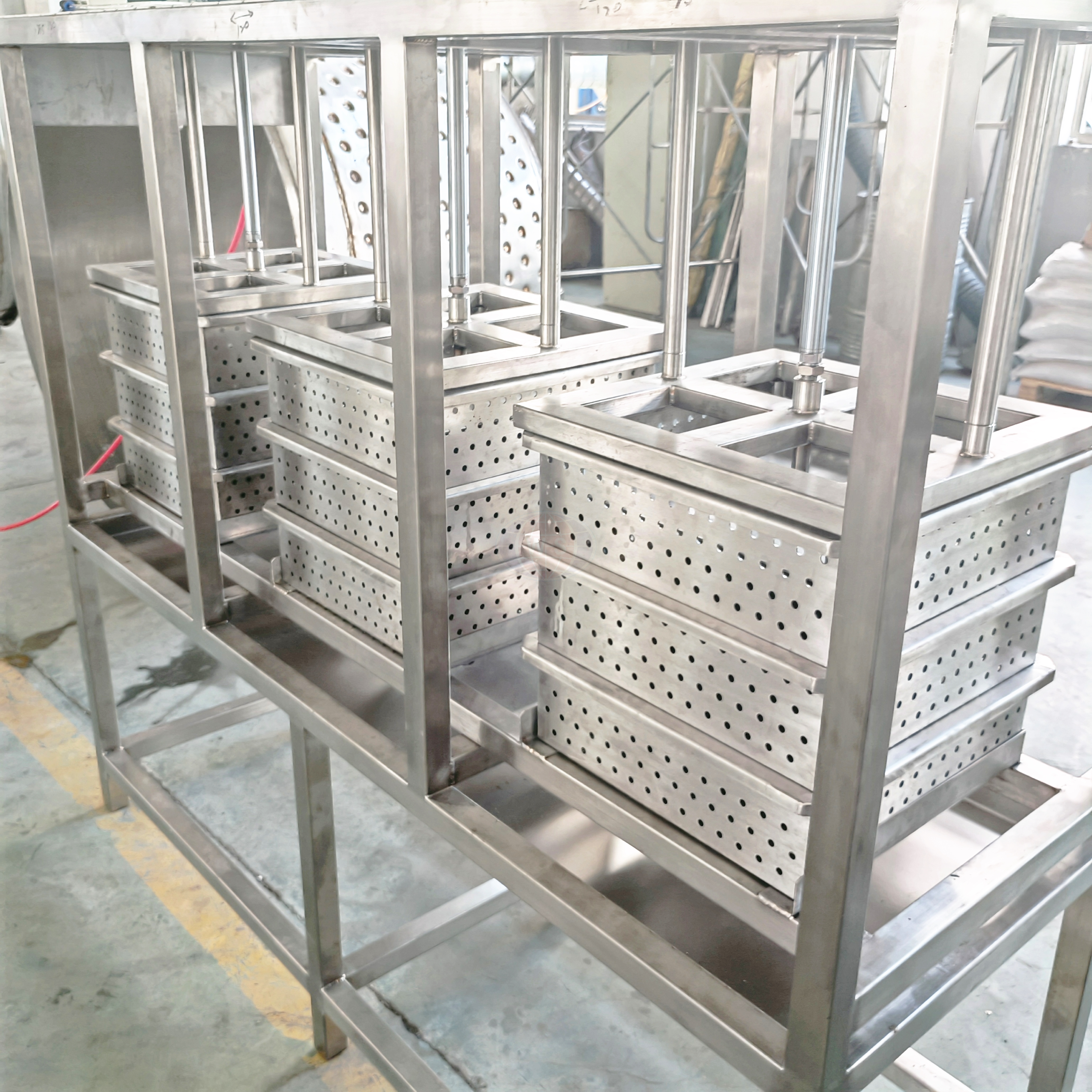
The intelligence of an automated Processed Cheese Production Line resides in its control architecture. Programmable Logic Controllers (PLCs) execute localized equipment commands. These ruggedized industrial computers read inputs from field sensors, such as temperature probes and level switches, and trigger outputs to actuators like pneumatic valves and motors. PLCs operate with scan times in the milliseconds, providing instantaneous control over production parameters. If a temperature drops below the setpoint, the PLC adjusts the steam valve position before a human operator could even register the change.
Above the PLC layer operates the Supervisory Control and Data Acquisition (SCADA) system. SCADA provides facility-wide visibility through graphical Human-Machine Interfaces (HMIs). Modern HMIs utilize high-performance graphics—often using grayscale backgrounds with bright colors reserved exclusively for active alarms—to reduce operator fatigue. SCADA aggregates data from multiple PLCs, offering central alarm management, process visualization, and historical data logging. Operators monitor the entire line from a control room, identifying bottlenecks or deviations before they impact product quality.
Manual recipe execution relies on operator memory and manual logbooks, introducing human error. Automated recipe management systems download specific parameters directly to the PLCs. This automates parameter adjustments, including target temperatures, steam pressure, and agitation speeds, based on pre-programmed product recipes. When a production run switches from a high-moisture jalapeño spread to a low-moisture mild cheddar block, the system automatically reconfigures the equipment setpoints without manual valve turning.
Version control for recipes ensures traceability and compliance with food safety standards. Any modification to a recipe requires authorized credentials, and the system logs who made the change and when. This electronic batch record provides undeniable proof that the batch was processed according to validated safety parameters, which is mandatory during quality audits or product recalls.
Quality control shifts from retrospective lab testing to proactive, real-time monitoring. Inline sensors provide continuous measurement of critical control points (CCPs) and quality parameters. Instruments installed directly in the piping measure temperature, pH, viscosity, and mass flow rate without interrupting production. Coriolis mass flow meters, for instance, measure the exact density and flow of the cheese mass as it moves to the filler.
Automated feedback loops utilize this sensor data to adjust mechanical or thermal inputs dynamically. If an inline viscometer detects that the cheese mass is too thick, the control system automatically increases the jacket heating temperature or adjusts the shear rate of the inline mixer. This closed-loop control ensures the product remains within tight quality specifications, drastically reducing out-of-spec batches and rework.
Common Automated Line Faults and Resolutions
| Fault Condition | Sensor Input | Automated Resolution |
|---|---|---|
| Low Melt Temperature | RTD Probe reads < 82°C | PLC increases steam valve opening by 5% increments. |
| High Product Viscosity | Inline Viscometer detects high resistance | VFD increases stator-rotor RPM to increase shear. |
| Buffer Tank Low Level | Ultrasonic level sensor reads < 15% | Transfer pump speed reduced to prevent cavitation. |
| CIP Flow Rate Drop | Magnetic flow meter reads < 1.5 m/s | CIP supply pump RPM increased to restore turbulent flow. |
Equipment Evaluation Criteria Matrix
| Evaluation Criteria | Manual / Legacy Systems | Automated / Modern Systems |
|---|---|---|
| Sanitary Compliance | Requires manual tear-down and visual inspection. | EHEDG/3-A certified with native CIP/SIP integration. |
| Data Connectivity | Isolated operation; analog gauges. | EtherNet/IP or PROFINET enabled for SCADA integration. |
| Throughput Scaling | Limited by operator speed and physical labor. | Modular design allowing 20-30% capacity expansion. |
| Cleaning Verification | Manual swabbing and manual chemical dosing. | Automated flow verification and temperature validation. |
When selecting hardware, assessing equipment for EHEDG (European Hygienic Engineering & Design Group) or 3-A sanitary standards compliance is non-negotiable. These standards dictate that product contact surfaces must have a roughness average (Ra) of less than 0.8 µm. Welds must be ground flush and polished, and all piping runs must be sloped for complete drainability. Equipment failing these standards will harbor bacteria, neutralizing the benefits of automation.
Evaluating the automation maturity of Clean-in-Place (CIP) systems is equally critical. Modern equipment must support automated dosing of cleaning agents, flow verification, and temperature validation. The control system must sequence the cleaning cycles automatically without human intervention. A standard automated CIP sequence includes:
Pre-rinse with warm water to remove loose cheese soils and flush the lines.
Caustic wash at 80°C using a 1.5% sodium hydroxide solution to break down fats and baked-on proteins.
Intermediate water rinse to flush out the caustic chemicals and neutralize the system.
Acid wash at 65°C using a 0.8% nitric acid solution to remove mineral scale and milkstone buildup.
Final sanitary rinse with cold, sterile water to prepare the line for the next production run.
Sensors verify that the cleaning fluid reaches the required turbulent flow velocity (typically above 1.5 meters per second) and temperature, logging the data to prove sanitary compliance before production resumes.
Capital expenditure in dairy automation requires forward-looking capacity planning. Facility managers must match equipment capacity to current production targets while allowing a 20-30% buffer for future scale. Undersized equipment leads to bottlenecks, while massively oversized equipment causes product degradation due to extended residence times in cookers or pipes. Engineers must calculate the correct pipe diameters—often choosing between 2-inch and 3-inch sanitary tubing—to balance flow rates and pressure drops.
Analyzing the modularity of the equipment is vital. Decision-makers must determine if additional steam cookers, buffer tanks, or packaging lanes can be integrated into the existing control architecture without requiring a complete system overhaul. Modular skids allow facilities to expand throughput incrementally as market demand dictates, adding a second filler or an additional cooling tunnel when volume requires it.
New hardware rarely operates in a vacuum; it must communicate with existing plant infrastructure. Assessing the communication protocols of new equipment against legacy systems is a mandatory engineering step. Industrial Ethernet protocols, such as EtherNet/IP or PROFINET, are standard for high-speed, reliable data exchange between PLCs, motor control centers, and the plant network.
Procurement teams must avoid proprietary software. Some manufacturers lock their control logic, restricting third-party integration or future upgrades. Open-architecture platforms utilizing standards like OPC UA ensure that plant engineers can troubleshoot, modify, and expand the control system without being permanently tethered to a single vendor's proprietary software ecosystem.
Hardware alone does not create an automated facility. Selecting an integration partner with extensive, specific experience in sanitary process control automation for the dairy and cheese industry is a strict requirement. Generalist integrators often lack the nuanced understanding of fluid dynamics, CIP sequencing, and dairy-specific thermal treatments. They might write clean ladder logic but fail to understand why a twin-screw pump is cavitating on a high-viscosity cheese blend.
Evaluating an integrator's track record involves assessing their ability to bridge the gap between mechanical equipment and high-level ERP (Enterprise Resource Planning) or MES (Manufacturing Execution Systems) software. A competent integrator ensures that a production order generated in the ERP flows seamlessly down to the SCADA system, executes on the PLC layer, and reports finished goods data back to inventory management automatically.
The physical toll of manual dairy processing is severe. Quantifying the reduction in manual lifting, heavy box cutting, and manual ingredient loading provides a clear justification for automation. Vacuum lifters and automated guillotines remove the need for operators to wrestle with 20kg blocks of cold cheese shift after shift.
This reduction in physical labor directly impacts worker compensation claims, health, and safety metrics. In harsh manufacturing environments characterized by wet floors, chemical washdowns, and extreme temperature variations, automating material handling improves employee retention. Skilled operators are reallocated from physically punishing tasks to supervisory roles, managing HMIs, monitoring trends, and optimizing process flows.
Profit margins in dairy processing are highly sensitive to yield. Automated dosing and precision filling reduce ingredient waste and ensure exact package weights. When manual operators overfill containers to avoid underweight penalties, the facility suffers from product giveaway. Volumetric fillers controlled by high-speed PLCs hit target weights with gram-level accuracy, saving thousands of kilograms of product over a fiscal year.
Calculating the yield improvement from automated recovery systems reveals rapid ROI. Modern pipework design includes automated product push-out sequences using sterile water or compressed air (pigging systems). Instead of flushing residual cheese down the drain during CIP pre-rinses, the system recovers this product, pushing it into the final packaging phase and maximizing the yield of every single batch.
Thermal processing consumes vast amounts of energy. Optimizing steam consumption through automated valve control and heat recovery systems drastically lowers utility bills. Automated systems only supply the exact volume of steam required to reach the setpoint, eliminating the energy waste associated with manual valve throttling. Condensate return lines capture residual heat and route it back to the boiler feed water.
Automated CIP cycles reduce water and chemical usage. Sensor-driven CIP systems monitor the conductivity of the return water. Once the sensor detects that the chemical concentration has dropped to baseline, the system automatically terminates the rinse cycle. This prevents the over-consumption of heated water and harsh cleaning chemicals, lowering both utility costs and wastewater treatment burdens.
Installing a new automated line inherently disrupts existing operations. The financial risk of extended installation periods can quickly erode the projected ROI of the project. Unplanned downtime during commissioning often stems from control logic errors, network communication failures, or mechanical misalignments discovered too late in the process.
Mitigation strategies rely heavily on pre-installation validation. Utilizing digital twin technology allows engineers to simulate the PLC code against a virtual model of the plant. Conducting rigorous off-site Factory Acceptance Testing (FAT) ensures that equipment performs to specification before it ever ships to the facility. This validates control logic and mechanical function, condensing the on-site Site Acceptance Testing (SAT) and commissioning timeline.
Upgrading technology introduces the risk of operator error when transitioning from manual controls to HMI screens. Operators accustomed to listening to machinery and manually turning valves may struggle to interpret digital alarms, PID loop tuning, and SCADA trends. Without proper change management, the new system will underperform and operators will attempt to run the line in manual override.
Mitigation requires mandating comprehensive, role-based training programs. Facility managers must develop standard operating procedures (SOPs) alongside the integration partner. Training should utilize the actual HMI screens in a simulation mode, allowing operators to practice startup, shutdown, CIP initiation, and emergency fault recovery in a risk-free environment before the line goes live.
Automated systems introduce complex electronic and pneumatic components. The risk of prolonged unplanned downtime due to complex automated system failures is a major concern for plant managers. If a proprietary PLC module fails, or a VFD faults out, and the vendor lacks local support, production halts entirely.
Mitigation involves negotiating strict Service Level Agreements (SLAs) during the procurement phase. These contracts must include remote diagnostic support via secure VPNs, allowing vendor engineers to access the plant network and troubleshoot PLC faults off-site. SLAs should also guarantee spare parts availability for critical components, ensuring that replacement pump seals, sensors, and drives are kept in the on-site maintenance crib.
Initiate a comprehensive site audit to identify current production bottlenecks and manual handling risks on the factory floor.
Develop a detailed Request for Proposal (RFP) that clearly defines throughput requirements, required sanitary standards, and existing software infrastructure.
Establish a cross-functional project team including quality assurance, maintenance, and IT personnel to evaluate vendor proposals and equipment specifications.
Schedule off-site Factory Acceptance Testing (FAT) for all major equipment to validate mechanical and software integration prior to delivery.
A: A steam cooker applies precise thermal treatment to ground cheese and ingredients. It utilizes direct or indirect steam injection to melt the cheese mass rapidly while inline mixers create a stable emulsion, dictating the final texture and shelf life of the product.
A: Automated Clean-in-Place (CIP) systems sequence chemical dosing, temperature control, and flow rates without manual intervention. This reduces changeover time between batches, minimizes chemical and water waste, and provides verifiable data logs to ensure sanitary compliance.
A: Positive displacement pumps, specifically lobe or twin-screw pumps, are optimal. They handle highly viscous molten cheese gently, preventing structural damage or excessive shear that could break the fat emulsion, while maintaining consistent flow rates to packaging machines.
A: Yes, legacy machines can often be retrofitted. Control system integrators can install modern sensors, PLCs, and industrial Ethernet communication modules on older equipment, allowing them to feed data into a centralized SCADA system for facility-wide monitoring.
A: Inline homogenizers apply high mechanical shear to the molten cheese mass. This action breaks down fat globules and ensures emulsifying salts are perfectly distributed, resulting in the smooth, glossy texture and stable emulsion required for spreadable cheese products.
A: Load cells are highly accurate electronic weighing devices installed under mixing hoppers. They provide real-time gravimetric feedback to the control system, ensuring that precise amounts of cheese base, water, and fats are dosed according to the programmed recipe.