Call Us
+86-15800763021
Send Us
Add
775 Chihua Road, Zhelin Town, Fengxian District, Shanghai
- All
- Product Name
- Product Keyword
- Product Model
- Product Summary
- Product Description
- Multi Field Search
Views: 0 Author: Site Editor Publish Time: 2026-08-07 Origin: Site

In commercial beverage manufacturing, raw material costs dominate the balance sheet. Even fractional percentage increases in yield directly and permanently impact bottom-line profitability. Suboptimal extraction processes leave usable liquid in the pomace waste stream. They also degrade product quality through excessive mechanical force. This effectively caps the return on investment of the entire facility. Evaluating juice extraction equipment requires moving beyond basic throughput metrics. Operators must analyze mechanical force application, capacity system efficiency, and pre-processing compatibility. You also have to weigh the trade-offs between maximum volume extraction and premium product quality. Upgrading your machinery transforms waste into sellable product while protecting the delicate flavor profiles demanded by today's consumer market.
Establishing baseline metrics for yield evaluation determines the financial viability of your operation. Success criteria go far beyond simply measuring the volume of liquid extracted per ton of raw material. You must weigh that raw volume against strict quality parameters, specifically Brix levels, titratable acidity, and color profile. If a machine extracts higher volumes but dilutes the total soluble solids, the resulting product loses value. True yield optimization means extracting the maximum amount of high-Brix liquid without pulling bitter compounds from the skins or seeds. Plant managers track these metrics hourly to ensure the extraction floor operates at peak efficiency.
Moisture left in the waste stream represents direct lost revenue. The cost of residual humidity is the primary financial driver for equipment upgrades. When pomace exits the press feeling wet, you are throwing away sellable product and paying by the ton to dispose of heavy, water-logged waste. Minimizing residual humidity directly increases your output volume while simultaneously lowering your waste disposal fees. A reduction of just a few percentage points in pomace moisture translates to hundreds of thousands of liters of recovered product annually. Process engineers often use moisture analyzers on the floor to test pomace samples directly off the discharge belt.
Advanced machinery substantially cuts down on manual prep work. Modern systems handle whole or minimally processed fruits, which reduces operational overhead. Older setups often require extensive coring, peeling, or fine chopping before the fruit can enter the press. Upgrading to robust extractors allows facilities to feed bulk bins directly into the hopper. This eliminates dedicated prep stations, reduces labor dependency, and accelerates the overall processing speed. You can reallocate floor staff to quality control or packaging rather than manual fruit preparation.
Balancing capital expenditure against operational savings requires a strict calculation framework. When integrating a new machine into a Fruit Juice Production Line, follow these specific evaluation steps:
Different raw materials require entirely different mechanical approaches. Selecting the wrong extraction methodology guarantees poor yield, excessive waste, and frequent equipment breakdowns. Understanding the physical mechanics of each system allows operators to match the machine to the specific cellular structure of their target fruit. A facility processing hard root vegetables needs a completely different mechanical action than a plant handling soft berries or citrus.
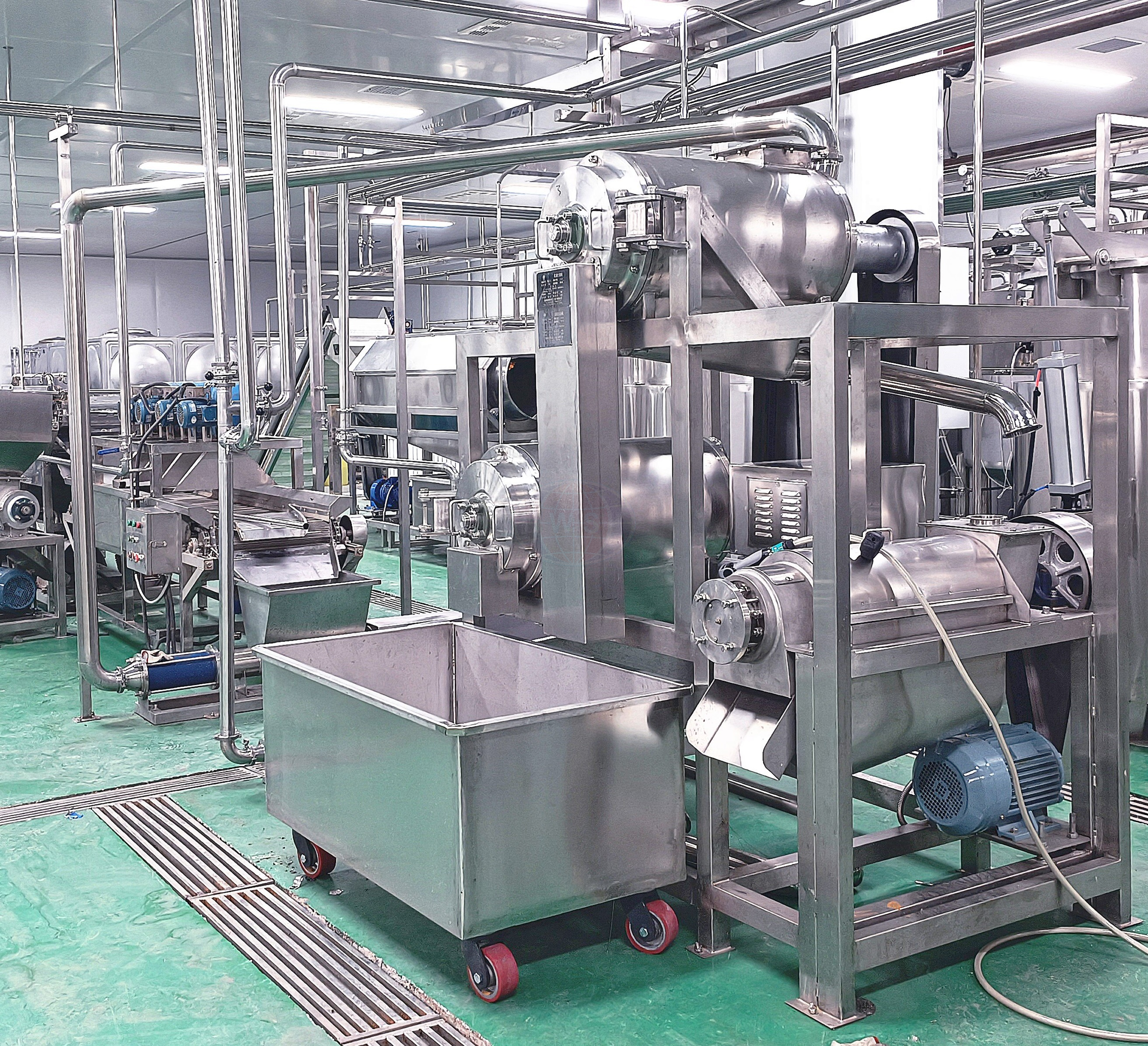
Screw presses utilize a heavy-duty rotating auger housed inside a specialized cylindrical screen. As the fruit moves along the auger, the pitch of the screw tightens, progressively crushing and pressing the material against the screen. The liquid escapes through the perforations, while the compressed pomace is pushed out the discharge end. This mechanism applies immense, sustained pressure. Manufacturers often machine these augers from solid stainless steel billet to withstand the extreme torque required to crush dense fibers.
This method delivers exceptional yield capabilities for fibrous fruits and vegetables. It maintains better qualitative characteristics, such as total soluble solids, because the slow rotation minimizes heat generation and aeration. For example, liquid extracted with a screw-type machine and processed at controlled temperatures, like 65 °C for 15 minutes, shows superior nutrient retention and color stability. The low-oxidation environment protects delicate enzymes. Operators can swap out screens with different perforation sizes—ranging from 0.5mm to 2.0mm—to adjust the amount of suspended solids in the final product.
The best use cases for screw-type extractors include high-viscosity purees, citrus fruits, dense root vegetables like carrots, and premium nutrient-dense green juices. They excel where cellular breakdown requires sustained mechanical grinding rather than simple surface pressure.
Belt presses operate continuously, sandwiching fruit mash between two porous belts that weave through a series of increasingly tight rollers. Pneumatic presses operate in batches, inflating an internal membrane to press the mash against a perforated drum. In belt systems, the paving thickness—the depth of the mash spread onto the belt—is a critical variable. If the paving is too thick, the inner layers of mash retain moisture; if too thin, throughput plummets. Plant operators must constantly adjust the belt speed and tension to match the incoming mash consistency.
These presses highlight exceptional performance in minimizing residual humidity in waste. They offer high scalability for industrial volumes, processing dozens of tons per hour. The pressure is applied evenly across a wide surface area, which prevents the localized cellular shearing that releases bitter tannins. Pneumatic presses typically operate at pressures between 1.5 and 2.0 bar, gently squeezing the mash to extract clear liquid without damaging the seeds or stems.
Belt and pneumatic presses are the industry standard for apples, grapes, berries, and high-volume clear operations. They are highly efficient at separating clear liquid from dense, pulpy mash. Facilities running continuous shifts rely heavily on belt presses for their uninterrupted throughput capabilities.
Centrifugal systems rely on a high-speed spinning blade positioned at the base of a mesh basket. The blade shreds the fruit, and centrifugal force throws the pulp against the mesh, forcing the liquid through the screen while the solid waste is ejected upward and out of the basket. These machines operate at extremely high RPMs, often exceeding 3,000 revolutions per minute, to generate the necessary G-force for separation.
While incredibly fast, centrifugal extractors generally offer lower overall yield compared to masticating or pressing methods. The high-speed spinning introduces significant aeration, leading to a higher risk of oxidation, foaming, and nutrient loss due to friction-induced heat. The resulting liquid often separates quickly on the shelf. The high oxygen incorporation requires immediate deaeration downstream to prevent browning and flavor degradation.
The best use case for centrifugal machines is lower-budget, rapid-turnaround operations. They fit well in environments where immediate consumption is expected, and premium extended shelf-life is not the primary market differentiator.
Extraction Methodology Comparison
| Extraction Method | Mechanical Action | Primary Advantage | Ideal Raw Materials | Oxidation Risk |
|---|---|---|---|---|
| Screw-Type (Masticating) | Rotating auger compression | High nutrient retention, handles dense fibers | Citrus, root vegetables, purees | Low |
| Belt / Pneumatic Press | Surface area pressure (continuous/batch) | Maximum volume, lowest residual humidity | Apples, grapes, clear liquids | Low to Medium |
| Centrifugal | High-speed shredding and spinning | Rapid processing, lower initial capital cost | Hard fruits for immediate consumption | High |
Maximum yield potential is often locked in—or entirely lost—before the fruit ever reaches the extraction stage. The physical condition of the fruit fundamentally alters mechanical efficiency. Ripeness, firmness, and storage time dictate how the cellular structure responds to pressure. If apples are stored too long and become mealy, they will not press cleanly. Instead of releasing liquid, the soft flesh turns into a thick paste that blinds the screens of the press, dropping yield dramatically and forcing maintenance shutdowns. Fresh, firm fruit provides the structural resistance necessary for the press to squeeze out the liquid. Starch-to-sugar conversion during storage must be monitored closely by the quality control team.
Milling and mashing prepare the fruit for the press. Achieving a uniform particle size is an absolute necessity. If the mill shreds the fruit too coarsely, the press cannot access the internal cellular moisture, leaving liquid trapped inside large chunks. If the mill pulverizes the fruit into a fine mush, the material will slip through the press screens, resulting in high suspended solids and a clogged machine. Proper milling maximizes the surface area available for the extraction equipment while maintaining enough structural integrity for the press to grip the mash. Operators typically use hammer mills with 6mm to 8mm screens to achieve the ideal mash matrix for firm fruits.
Enzymatic treatment acts as a chemical catalyst for mechanical extraction. Introducing pectinases during the mash stage breaks down the rigid cell walls of the fruit. This enzymatic breakdown reduces the mechanical force required by the machinery to achieve maximum yield. By degrading the pectin, the mash becomes less viscous, allowing the liquid to flow freely through the press screens. This step is particularly critical for high-pectin fruits, as it directly increases output volume and reduces wear and tear on the press components. Dosing pumps inject the enzymes directly into the mash line, followed by a holding period in maceration tanks to allow the chemical reaction to complete before pressing.
Evaluating Juice Extraction Equipment requires analyzing how technical specifications translate into tangible production outcomes. The primary dimension is balancing extraction force against cellular rupture. A high-quality machine applies sustained, heavy pressure to extract liquid without rupturing seeds, stems, or extracting bitter skin compounds. Apple seeds contain amygdalin, which imparts bitterness, while grape stems release harsh tannins. The equipment must be precise enough to squeeze the flesh completely dry while leaving the seeds intact. Engineers look for machines with adjustable pressure profiles that can be fine-tuned for different varietals.
Capacity system efficiency determines how the equipment behaves under stress. You must evaluate how the machinery sustains optimal extraction force during peak harvest loads. Many lower-tier machines perform well at half capacity but fail to maintain pressure when fully loaded. This results in wet pomace and increased residual humidity in the waste during the busiest production weeks. High-efficiency systems utilize automated tensioners and pneumatic pressure regulators to ensure the force remains constant regardless of the feed rate. If a belt press is rated for 10 tons per hour, it must maintain its target yield percentage at that exact throughput without slipping or blinding.
Temperature control directly impacts nutrient retention and product classification. Evaluate cold-press capabilities versus thermal processing requirements. Processing temperatures impact shelf-stability and nutrient degradation. True cold-press equipment utilizes water-cooled jackets or slow-moving mechanics to prevent friction heat. If the machine generates too much heat during extraction, it degrades heat-sensitive vitamins and alters the fresh flavor profile, forcing you to reclassify the product away from the premium tier. Monitoring the temperature differential between the incoming mash and the outgoing liquid is a standard operational procedure on the floor.
Waste management capabilities dictate continuous operational flow. Analyze how the equipment handles the ejection of pomace. Does the machine allow for secondary extraction passes? Can the byproduct be immediately packaged for secondary revenue streams, such as animal feed or dietary fiber supplements? Efficient pomace ejection prevents internal blockages and ensures the machine can run continuously without manual clearing. Some facilities implement water extraction (leaching) on the ejected pomace to recover remaining sugars, requiring the primary press to discharge the waste cleanly into a secondary auger system.
Pushing equipment to its absolute maximum yield limits introduces severe risks to product quality. The over-extraction risk occurs when operators increase pressure to squeeze out the last remaining drops of moisture. This extreme force extracts undesirable tannins, heavy metals from soils trapped in the skins, and excessive suspended solids. The resulting liquid becomes cloudy, bitter, and highly astringent. Furthermore, high suspended solids complicate downstream filtration, blinding filter membranes rapidly and causing costly production bottlenecks. Maximum volume does not equal maximum revenue if the product requires heavy dilution or excessive filtration to become palatable. You must find the exact pressure setpoint where yield peaks just before quality degrades.
Consumer market trends dictate equipment choices. Demand for health-focused, clean-label beverages favors machines that balance maximum yield with superior nutrient retention. Consumers willingly pay premium retail prices for cold-pressed, unoxidized liquids that retain their natural color and vitamin content. Upgrading to machinery that protects these delicate compounds allows facilities to command higher margins. Sacrificing a small percentage of total volume to maintain a premium flavor profile is often the most profitable long-term strategy. The equipment must support the specific marketing claims printed on the final retail packaging.
Operators must weigh speed against efficiency. Continuous extraction methods, like belt presses, offer massive throughput and high operational speed. However, they generally yield slightly lower marginal volumes compared to batch processing. Batch pressing, via pneumatic membrane presses, achieves absolute maximum yield and exceptional clarity, but it suffers from lower throughput and higher labor and time costs due to the fill-press-empty cycles. The choice depends entirely on whether your facility prioritizes sheer volume output or artisanal product recovery. High-capacity plants often run multiple continuous presses in parallel to maximize both speed and total daily volume.
Integrating new machinery into an existing facility presents significant engineering challenges. Line integration risks occur when the new extractor does not align seamlessly with upstream milling capacities or downstream filtration flow rates. If the new press processes mash faster than the mill can produce it, the press runs dry, causing uneven wear on the belts and rollers. If the press outputs liquid faster than the pasteurizer or filtration system can handle, you create a dangerous backlog of raw, unpasteurized liquid prone to rapid fermentation. Flow rates must be synchronized across the entire facility using buffer tanks and variable frequency drives (VFDs) on all transfer pumps.
Maintenance realities and the cost of wear parts must be factored into production planning. High-friction environments degrade equipment rapidly. Address the lifespan and replacement costs of critical wear parts like stainless steel screens, heavy-duty augers, and porous press belts. Abrasive raw materials, such as fruits with heavy soil loads or hard pits, accelerate this wear. Facility managers must keep critical spares on-site. Waiting for a replacement belt during peak harvest season results in catastrophic product loss. Preventative maintenance schedules must be strictly enforced to inspect screen tolerances and bearing lubrication.
Sanitation and compliance dictate operational uptime. Automated Clean-in-Place (CIP) integration is necessary to prevent microbial buildup. Equipment with complex internal geometries, blind corners, or inaccessible screens can cause severe downtime if manual cleaning is required. If a machine takes four hours to tear down and sanitize manually, you lose half a shift of production. Modern extractors feature automated spray balls and self-cleaning screen cycles that maintain sanitary compliance without halting the production schedule. CIP systems require a minimum flow velocity of 1.5 meters per second to achieve the turbulent flow necessary to scour the internal surfaces of the press.
A: Paving thickness dictates how effectively pressure reaches the center of the mash. If the mash layer is too thick, the inner core retains moisture, dropping yield. If it is too thin, the press operates inefficiently, severely reducing hourly throughput. Optimal thickness balances maximum pressure penetration with high volume processing.
A: Maintaining a controlled temperature, often around 65 °C for 15 minutes during specific thermal extraction phases, helps maintain qualitative characteristics like total soluble solids. For cold-pressed premium products, temperatures must remain as close to ambient as possible to prevent nutrient degradation and flavor alteration.
A: The most accurate measure is testing the residual humidity of the ejected pomace. Weigh a sample of waste, dehydrate it completely in an industrial oven, and weigh it again. The percentage of weight lost is your residual humidity. Lower moisture percentages indicate higher extraction efficiency.
A: Every percentage point of moisture left in the pomace represents sellable liquid that you failed to extract. Furthermore, waste disposal is billed by weight. High residual humidity means you are losing product revenue while simultaneously paying higher fees to haul away heavy, water-logged waste.
A: No. Pushing extraction force to the absolute maximum often ruptures seeds and stems, releasing bitter tannins and toxins into the liquid. It also extracts harsh compounds from the skins and increases suspended solids, which degrades the flavor profile and complicates downstream filtration.
A: The physical structure of the fruit dictates mechanical resistance. Firm, fresh fruit presses cleanly, yielding high volumes. Overripe, mealy fruit lacks structural integrity. Instead of releasing liquid under pressure, it turns into a thick paste that blinds the press screens and halts production.