Call Us
+86-15800763021
Send Us
Add
775 Chihua Road, Zhelin Town, Fengxian District, Shanghai
- All
- Product Name
- Product Keyword
- Product Model
- Product Summary
- Product Description
- Multi Field Search
Views: 0 Author: Site Editor Publish Time: 2026-08-02 Origin: Site

Many mid-to-large scale dairy processors eventually hit a hard operational ceiling where consumer demand outpaces current factory throughput. Scaling up production introduces severe risks if not managed correctly. Pushing existing equipment beyond its engineered limits often compromises product texture, disrupts overrun consistency, and threatens strict hygiene standards. Facilities find themselves caught in a frustrating friction point, attempting to maintain established, artisanal-level quality while achieving high-volume industrial output.
Simply multiplying ingredient quantities in a batch process fails at scale. This approach inevitably leads to structural failures in the final product, such as large ice crystal formation or fat separation during freezing. Transitioning to continuous processing systems is a strategic engineering decision. It requires partnering with a specialized ice cream production line manufacturer to audit current bottlenecks, optimize facility footprint, and integrate automated solutions that scale output without sacrificing structural integrity.
Facilities rarely outgrow their infrastructure overnight. The transition is marked by specific operational indicators that signal the current setup is failing. You might notice excessive labor costs tied to manual material handling and ingredient staging. Inconsistent batch quality often leads to higher scrap rates, while warehouse staging delays become frequent. Energy consumption per liter of product spikes as older compressors run continuously to maintain temperatures. Identifying these friction points within your industrial ice cream plant is the first step toward meaningful capacity expansion.
Large-scale batch processing carries inherent inefficiencies that compound as volume increases. Significant time is lost during the manual transfer of mixes between heating, aging, and freezing tanks. Temperature fluctuations occur frequently during these transfers, and the lack of continuous shear affects the final emulsion stability. Legacy continuous lines also present problems if they rely on outdated programmable logic controllers (PLCs). These aging systems cause micro-stoppages, erratic pump speeds, and noticeable throughput variance throughout a single shift.
| Processing Metric | Batch Processing | Continuous Processing |
|---|---|---|
| Throughput | Low to medium; limited by tank volume and transfer times. | High; continuous flow maximizes L/h output efficiently. |
| Overrun Control | Variable; heavily dependent on operator skill and timing. | Precise; automated mass flow meters ensure consistency. |
| Labor Dependency | High; requires manual ingredient transfer, cleaning, and monitoring. | Low; automated PLCs handle primary operations and CIP. |
| Footprint Efficiency | Poor; requires multiple large staging and aging tanks. | High; streamlined piping and inline processing save space. |
| Energy Usage | Spiky; high draw during batch heating and cooling phases. | Optimized; regenerative heating and steady-state cooling. |
Scaling ice cream production is never a linear mathematical equation. You cannot simply double the inputs and expect the same output quality. Raw materials behave differently under high-shear industrial conditions. Fats, sugars, stabilizers, and emulsifiers require precise recalibration to function correctly in a continuous flow. The physics of fat crystallization shift dramatically during continuous freezing. Air cell stabilization happens much faster under continuous shear compared to traditional batch freezing. Formulations must be engineered specifically for the mechanical forces of the new equipment to prevent buttering out or rapid meltdown.
Production schedules often struggle to cope with seasonal demand spikes. Without advanced capacity planning tools, facilities either overproduce and incur storage costs or miss market opportunities entirely. Warehouse staging and cold storage frequently become the ultimate bottlenecks. Fast freezing at the extrusion point must align perfectly with your hardening capacity. If downstream logistics fail to keep pace, pallets back up on the factory floor, leading to thermal shock, ice crystal growth, and severe product degradation before it ever reaches the delivery truck.
Modernizing your facility involves eliminating bottlenecks at specific processing stages. An automatic ice cream production line addresses inefficiencies from initial mix preparation all the way to final palletizing. Breaking down these solution categories reveals exactly where capacity gains are realized and how mechanical upgrades translate to higher daily yields.
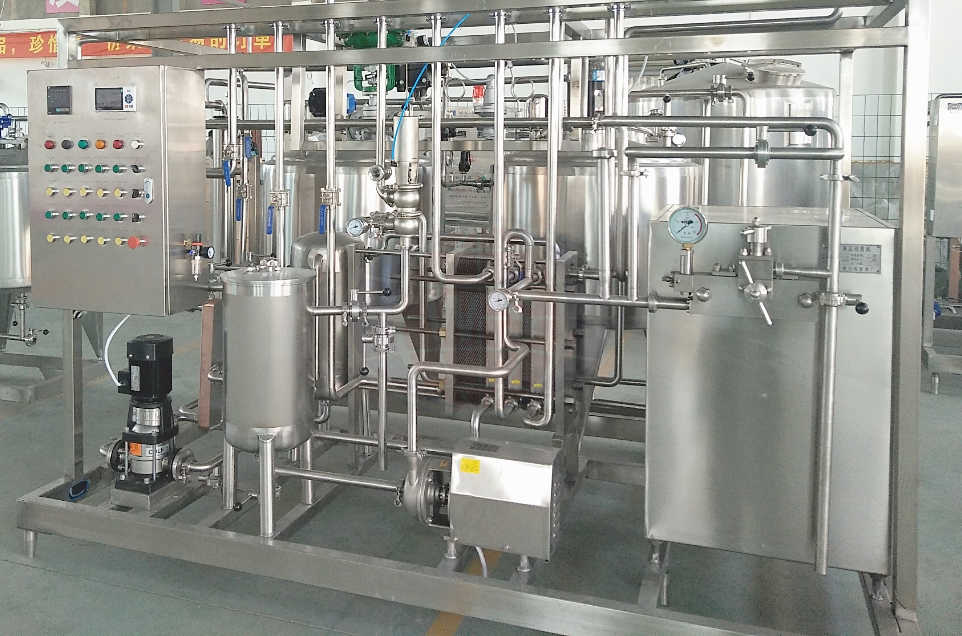
High-Temperature Short-Time (HTST) pasteurizers drastically accelerate the mix preparation phase. They process large volumes quickly, typically heating the mix to 85°C for 15 seconds, while maintaining strict thermal compliance. Automated homogenizers then ensure uniform fat globule distribution. Operating at pressures between 150 and 200 bar, they reduce globules down to 1-2 microns at very high flow rates. This microscopic consistency is critical for downstream texture and stable overrun. Additionally, modern mix recovery systems minimize raw material waste by pushing residual mix through the pipes with water during shutdown, separating the phases accurately.
The aging process cannot be rushed, but it can be optimized for continuous flow. Automated ripening tanks utilize precise temperature control loops, holding the mix steadily at 4°C. These loops ensure that fat crystallizes and proteins hydrate uniformly over 4 to 24 hours before the mix ever reaches the freezer. Consistent ripening prevents downstream processing delays, stops air pockets from forming, and ensures the mix pumps smoothly through the continuous lines without fluctuating viscosity.
The continuous freezer is the heart of the operation. Modern units utilize automated mass flow meters and precise dasher speeds to maintain exact overrun percentages. This mechanical precision reduces product giveaway and ensures structural stability. By controlling the exact ratio of filtered compressed air to liquid mix, facilities maximize their yield per batch while delivering a consistent mouthfeel to the consumer. Scraper blades inside the barrel continuously remove the frozen film from the cylinder wall, ensuring optimal heat transfer and microscopic ice crystal formation.
Downstream equipment must match the speed of the continuous freezer to prevent backups. Synchronized extrusion lines, rotary fillers, and inclusion feeders operate in perfect mechanical harmony. They handle nuts, chocolate chips, and fruit sauces without jamming or crushing the inclusions. High-capacity hardening tunnels then rapidly drop core temperatures to -18°C or lower within 45 to 90 minutes. This rapid freezing maximizes shelf life, prevents ice crystal growth, and stabilizes the product structure immediately before palletization and stretch wrapping.
Procurement and operations teams need a strict framework when assessing potential equipment vendors. Upgrading your ice cream processing equipment is a complex integration project. Vendor selection dictates the long-term success of the installation, the reliability of daily operations, and the safety of the final food product.
One-size-fits-all solutions rarely work in existing dairy facilities. A qualified manufacturer engineers lines that fit your specific floor plan, navigating around existing pillars, drains, and ceiling heights. They must allow for future modular additions, such as adding ingredient feeders or enrobing stations later without tearing out the main line. A comprehensive utility audit is mandatory before finalizing the plant configuration. You must assess your current power supply, steam capacity (kg/h), cooling water loops, and compressed air pressure (bar) to ensure compatibility with the new machinery.
Sanitary design is critical for food safety and operational uptime. Evaluate the manufacturer’s approach to equipment construction. Look for crevice-free robotic welding, self-draining surfaces pitched at the correct angle, and strict compliance with EHEDG or 3-A sanitary standards. Integrated, automated CIP and SIP (Sterilize-in-Place) systems are essential. They drastically reduce the turnaround time between flavor changeovers, utilizing precise chemical dosing and high-velocity spray balls to ensure optimal line hygiene without heavy manual labor.
Equipment will eventually require maintenance, and parts will wear out. Service Level Agreements (SLAs) regarding remote diagnostics and software troubleshooting are vital for modern PLC-driven lines. Assess the vendor's global or regional footprint. They must be capable of rapid deployment for spare parts, such as mechanical seals, scraper blades, and sanitary valves. Waiting weeks for a proprietary component during peak summer production causes catastrophic downtime and severe revenue loss.
Scaling capacity involves balancing initial capital investments with long-term operational efficiencies. The focus must remain on how new equipment improves yield, reduces waste, and lowers daily running costs across the entire facility.
Calculating ROI requires looking beyond the initial equipment invoice. Factor in the reduced raw material waste and the optimized overrun achieved through mass flow meters. Decreased labor dependency and lower scrap rates contribute heavily to the financial return. Modern line performance optimization directly impacts margins by reducing product giveaway. Precise portioning ensures every tub, cone, or stick contains exactly the right volume, protecting your bottom line over millions of units produced annually.
Modern processing lines are engineered for resource efficiency. They utilize heat recovery systems during the pasteurization phase, using the heat from the outgoing pasteurized mix to pre-heat the incoming raw mix, significantly lowering boiler fuel costs. Highly efficient, variable-speed refrigeration cycles in the hardening tunnels reduce electrical draw by adjusting fan speeds based on the thermal load. Lowering energy consumption per liter of ice cream produced significantly reduces daily operational expenditure and improves facility sustainability metrics.
Installing heavy machinery in an active food processing facility introduces friction. Acknowledging these risks early allows engineering and production teams to develop robust mitigation strategies that protect current revenue streams.
You cannot halt production entirely to install new equipment without losing market share. Strategies for phased implementation are necessary. Utilize factory acceptance testing (FAT) at the vendor's site to resolve software bugs, verify pump capacities, and check weld quality before delivery. Run parallel systems where possible, keeping the old line operational while the new line is piped, wired, and commissioned, ensuring market supply is not disrupted during the critical upgrade window.
New technology requires new skills on the factory floor. Advanced PLCs and HMI (Human-Machine Interface) panels demand operator upskilling. Do not leave this to chance or assume operators will figure it out. Negotiate comprehensive on-site training programs with the equipment manufacturer prior to final commissioning. Your staff must understand how to navigate the software, troubleshoot minor faults, replace wear parts safely, and execute CIP protocols flawlessly to maintain production schedules.
A: The transition point from artisanal batch freezing to industrial continuous freezing typically begins around 150 to 300 liters per hour. High-efficiency industrial lines can easily scale up to 2,500+ L/h depending on the facility's requirements and downstream packaging capabilities.
A: Automatic lines utilize mass flow meters, precise backpressure valves, and automated air injection systems. These components are integrated directly into the continuous freezer to maintain an exact, consistent ratio of filtered air to liquid mix, regardless of viscosity changes.
A: Yes, but it requires modular engineering. The core mix prep and continuous freezing stages remain the same, but you need specialized, interchangeable downstream attachments and bypass valves to switch between extrusion lines and molding carousels.
A: The ROI timeline typically ranges from 3 to 7 years. This depends heavily on the scale of the operation, the labor savings achieved, waste reduction, improved overrun control, and the energy efficiency of the new equipment.
A: Automated CIP systems eliminate the need to manually dismantle equipment for cleaning. This drastically shortens the downtime required for daily sanitation and flavor changeovers, keeping the line running longer and increasing overall daily yield.
A: Yes. Stabilizers, emulsifiers, and fat contents must be recalibrated. The ingredients must withstand the high-shear processing dynamics, continuous pumping, and faster freezing curves inherent to continuous industrial equipment to prevent texture defects.
A: High-capacity lines demand robust utilities. You will need three-phase electricity, high-pressure steam for pasteurization, dedicated glycol or ammonia refrigeration lines for the freezers, and clean, dry compressed air for pneumatic valves and overrun injection.