Call Us
+86-15800763021
Send Us
Add
775 Chihua Road, Zhelin Town, Fengxian District, Shanghai
- All
- Product Name
- Product Keyword
- Product Model
- Product Summary
- Product Description
- Multi Field Search
Views: 0 Author: Site Editor Publish Time: 2026-11-22 Origin: Site

Investing in a new beverage manufacturing facility or scaling up an existing brewery, winery, or juice plant represents a massive financial decision. I have seen factory owners lose months of production because a filler and a labeler from different vendors simply refused to communicate. Piecing together industrial equipment from dozens of different suppliers frequently leads to integration nightmares, delayed product launches, and skyrocketing capital budgets. That is exactly where a complete beverage production line turnkey solution comes into play. By consolidating the engineering, manufacturing, and installation processes under one provider, businesses can mitigate severe mechanical risks. But the most pressing question for any stakeholder remains: What is the actual cost?
In this comprehensive guide, we will break down the true empirical cost of a comprehensive setup. We will explore the hidden operational expenses you need to budget for and explain exactly what you are paying for, from the initial floor plan preparation to the final staff education. Whether you are bottling purified water, brewing craft beer, or packing aseptic juices, this guide will help you budget accurately, avoid unexpected financial pitfalls, and choose the right manufacturing partner for your facility.
Key Takeaways
In the industrial manufacturing sector, the term turnkey refers to a project constructed so that it can be turned over to a buyer as a completed, fully functional operation. When applied to the beverage industry, it means that a single supplier designs, manufactures, installs, and tests the entire production facility. You essentially turn the key to start commercial production. This shifts the heavy burden of equipment compatibility and software testing from your shoulders to a specialized manufacturer.
Traditionally, investors might purchase a water treatment system from one vendor, a filling machine from another, and labeling equipment from a third. While this approach might appear to save money initially, it frequently leads to severe integration issues. Imagine the frustration when your high-speed filler outpaces the labeling machine, causing a bottleneck of hundreds of bottles crashing on the conveyor belt. A unified system from one supplier ensures that conveyor speeds match perfectly. Programmable Logic Controllers communicate seamlessly, and production flows without unnecessary interruptions. Consequently, this single-source responsibility mitigates technical risk and simplifies overall project management.
This comprehensive engineering approach is highly ideal for startup brands looking to scale up efficiently from manual operations to their first automated facility without maintaining an expensive in-house engineering team. Furthermore, it is equally valuable for established commercial brands expanding into new beverage categories. A bottled water company introducing carbonated craft beer or aseptic juices is a prime example. Institutional investors building entirely new facilities from the ground up also rely heavily on these integrated solutions to ensure predictable timelines and guaranteed output capacities.
Before diving into the numbers, it is crucial to understand the broader market dynamics shaping these investments. Looking at the beverage manufacturing landscape today, the industry is experiencing a massive shift toward end-to-end automation. Rising global labor shortages, coupled with increasingly stringent food safety regulations, are driving a surge in demand for fully integrated, touchless systems. Plant managers are moving away from piecemeal setups. Instead, there is a surging demand for flexible lines and aseptic cold-filling technology that extends shelf life without artificial preservatives.
Consequently, while raw material prices for stainless steel and electronic components have experienced volatility, the overall cost-efficiency of procuring a unified system has actually improved. Modern investors are increasingly willing to absorb a higher initial capital expenditure to secure guaranteed output capacities and minimize long-term operational risks.
Providing a single exact figure is challenging because manufacturing costs vary wildly based on production capacity, measured in Bottles Per Hour or BPH, and the specific physical properties of the beverage. However, analyzing current industrial market data reveals realistic cost brackets for strategic planning purposes.
| Production Scale | Target Capacity | Beverage Types | Estimated Cost Range USD |
|---|---|---|---|
| Small-Scale & Entry-Level | 2,000 - 5,000 BPH | Still Water, Craft Beer, Basic Juice | $100,000 - $300,000 |
| Mid-Range Automated | 5,000 - 15,000 BPH | Carbonated Soft Drinks, Kombucha, Hot-Fill Juice | $300,000 - $1,500,000 |
| High-Speed & Specialized | 20,000+ BPH / 6000-7500 Cartons/Hr | Aseptic Carton Milk/Juice, Large-Scale Brewery | $1,500,000 - $5,000,000+ |
These setups are typically engineered for regional water bottling plants or craft beverage startups. Operating at speeds between 2,000 and 5,000 BPH, these lines feature basic automation. While the core washing, filling, and capping processes are automated, tasks such as loading empty bottles onto the unscrambler or manually stacking finished cartons onto pallets may require human intervention. They offer a highly cost-effective entry point into commercial manufacturing.
Representing the industry standard for established regional producers, these fully automated systems efficiently handle more complex liquids. With capacities ranging from 5,000 to 15,000 BPH, they are equipped for carbonated soft drinks that require isobaric pressure filling. Juices that demand hot-filling technology and subsequent cooling tunnels also fall into this tier. These lines minimize manual labor, ensuring consistent product quality and strict sanitation.
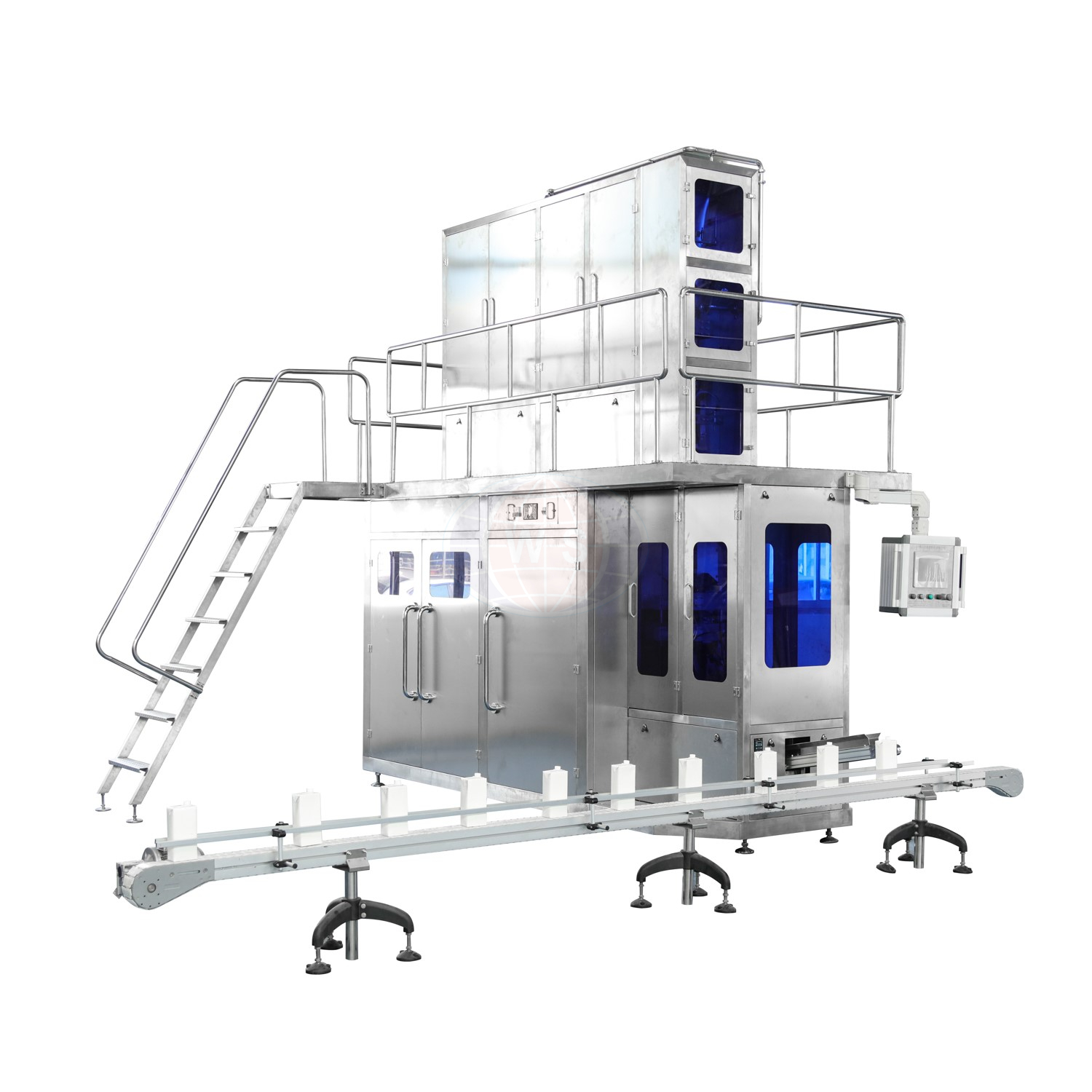
Designed for national brands and large-scale contract manufacturers, these robust systems easily exceed 20,000 BPH and demand exceptional engineering precision. This premium tier also includes highly specialized aseptic carton juice beverage production lines. For instance, advanced aseptic systems running at 6000 to 7500 packs per hour utilize paper-aluminum-PE composite materials and UHT sterilization. This technology allows preservative-free juices and dairy products to be packaged at room temperature without spoilage, requiring pharmaceutical-grade sterilization modules and automatic CIP cleaning systems.
When you invest in a comprehensive solution, you are purchasing a sequence of interconnected technological systems. Understanding the anatomy of this machinery helps clarify exactly where your capital is being deployed across the factory floor.
The foundation of any commercial beverage is its liquid base. Before any product is bottled, the raw ingredients must be meticulously processed. For water plants, this involves heavy-duty Reverse Osmosis systems for molecular purification, active carbon filters to eliminate odors, and UV sterilizers. For flavored drinks, this processing phase expands to include high-shear syrup blending tanks, double-jacketed pasteurizers for thermal product safety, and carbonators for injecting CO2 into sparkling beverages.
The absolute heart of the production floor is the filling station. Modern facilities utilize advanced 3-in-1 monoblock systems that integrate bottle rinsing, liquid dispensing, and cap sealing into a single enclosed machine structure. Empty bottles are gripped by the neck, inverted, and rinsed with sterile water before star-wheels transfer them to filling valves that dispense liquid with millimeter precision. This compact design drastically reduces the risk of airborne cross-contamination and saves valuable factory floor space.
Once the liquid is securely sealed, the rhythmic clinking of bottles moves down the conveyor to secondary packaging. This crucial phase includes blow dryers to remove exterior condensation, ensuring labels adhere correctly. Next, labeling machines apply branding using either steam shrink tunnels or hot melt glue. Date coders utilize laser technology for consumer traceability. Finally, shrink wrapping machines group the bottles into multi-packs, and robotic arms automatically stack the heavy cases onto pallets for warehouse distribution.
A frequent and costly mistake in industrial project planning is assuming the equipment invoice represents the final project cost. To transform crated metal into a functional, compliant factory, several essential infrastructural preparations are absolutely necessary.
You cannot simply place heavy machinery on a warehouse floor randomly. Optimizing the factory space is a critical preliminary expense. Paying for or negotiating a custom, professional beverage plant layout design ensures efficient material workflow. It accounts for raw material entry and finished goods exit, and plans for proper drainage. A meticulous spatial arrangement prevents costly structural modifications later and complies with strict occupational safety standards.
Sophisticated machinery cannot run without the proper building infrastructure. Your capital budgeting must account for facility industrial utilities, which encompass heavy-duty electrical wiring and transformers to handle high kilowatt loads. Specifically, PET bottle blowing machines require specialized high-pressure air compressors. You will also need industrial steam boilers for pasteurization and sophisticated wastewater management systems to meet local environmental regulations. Preparing these utilities is universally the responsibility of the factory owner.
Once the machinery arrives at your facility, it must be assembled, calibrated, and tested. Transforming static equipment into a synchronized production organism requires expert engineering intervention. Factory equipment commissioning involves flying the manufacturer’s technicians to your site. You are typically responsible for their travel, accommodation, and a daily labor allowance. During this phase, engineers run test batches, fine-tune the PLC programming, and prove the line can consistently achieve the promised output speeds.
The most advanced machinery in the world is useless without skilled personnel to operate it safely. Allocating funds for structured operator training programs ensures your local staff deeply understands the software interface, mechanical adjustments, and daily sanitation procedures. Proper operational education at the onset drastically reduces the likelihood of operator-induced breakdowns, thereby extending the lifespan of your capital investment.
Why might two production lines that look identical on the surface carry vastly different price tags? The answer lies in the underlying technical specifications and engineering variables. As an engineer, I always advise clients to look under the hood before comparing quotes.
Your liquid's physical and chemical properties dictate the exact filling technology required. Bottling still water relies on simple gravity filling. This is highly cost-effective. In contrast, carbonated drinks require complex isobaric fillers to maintain pressure and prevent foaming. Juices necessitate either thermal hot-fill technology, requiring robust heat-resistant valves and long cooling tunnels, or highly expensive aseptic systems to prevent bacterial spoilage without artificial preservatives.
Mechanical speed directly correlates with manufacturing cost. A machine engineered to fill 2,000 bottles per hour might feature 12 filling valves, whereas a 24,000 BPH machine requires 70 or more valves. Higher speeds demand larger rotary carousels, robust servo motors, and heavier stainless steel frames to absorb the immense vibrations generated during rapid operation.
The degree of human intervention directly affects the initial purchase price. You can save capital upfront by opting for semi-automated end-of-line packaging, where workers manually place bottles into cardboard boxes. However, upgrading to fully automated wrap-around carton packers and robotic palletizing arms requires a larger initial investment. This upgrade offers superior long-term efficiency by drastically reducing labor expenses.
Equipment durability depends heavily on raw materials. Standard beverage lines use SUS304 stainless steel, offering excellent corrosion resistance for water. However, handling high-acid juices or utilizing harsh chemical cleaning agents requires premium SUS316L stainless steel, which is significantly more expensive. Furthermore, utilizing internationally recognized electronic components, such as Siemens PLCs or SEW motors, costs more than budget alternatives but guarantees global spare parts availability.
The container type strongly influences the mechanical handling mechanisms. PET plastic bottles are lightweight and efficiently conveyed by the neck using air conveyors. Glass bottles, being heavy and fragile, require flat modular conveyors and gentle handling to prevent dangerous breakage. Aseptic cartons require specialized forming and ultrasonic sealing technology. Lines designed to handle multiple formats flexibly will inherently cost more to engineer.
For corporate investors comparing individual machine quotes against a unified system, the upfront cost of investing in a comprehensive turnkey beverage production line may seem daunting. However, evaluating the long-term Return on Investment clearly justifies the initial capital expenditure.
When one company designs the entire line, the electrical and mechanical systems are native to each other. There is no risk of the labeling machine running faster than the filler. The supplier is solely responsible for ensuring all components work together harmoniously. This entirely eliminates costly integration delays and ensures high Overall Equipment Effectiveness from day one.
Coordinating delivery and installation schedules across five different vendors is a logistical nightmare that naturally extends project timelines. A unified approach streamlines manufacturing, shipping, and installation phases. Quicker facility setup means your plant becomes operational much faster. You can start producing, selling to distributors, and generating revenue sooner.
Routine maintenance is inevitable in industrial manufacturing. If a multi-vendor line breaks down, diagnosing the root cause can be frustrating as different suppliers blame each other's equipment. With a unified system, you have a single point of contact. One phone call initiates troubleshooting, expedites spare parts shipping, and deploys technicians, drastically reducing costly production downtime.
To receive a realistic, actionable, and binding proposal rather than a vague estimate, buyers must prepare highly specific project details in advance.
Technical clarity is essential. Before reaching out to suppliers, document your exact beverage formulation, such as pH levels and carbonation. Specify the container material and volume, like 500ml PET or 200ml Aseptic Carton, and your target production speed. Providing these exact specifications allows the engineering team to select the correct machine models.
Manufacturers cannot quote the necessary length of conveyor belts without knowing your spatial constraints. Provide an AutoCAD drawing or detailed dimensions of your factory floor. Note the location of structural pillars, ceiling heights, and utility access points so the supplier can draft an optimized layout.
Finally, select a manufacturer with a documented history of successful international installations. Partnering with experts who offer transparent pricing and reliable engineering ensures your capital is protected. By consulting with specialists, you gain access to vital consultation services, ensuring your factory is designed for maximum profitability and strict compliance standards.
Conclusion
Investing in a new beverage manufacturing facility is a complex endeavor that requires meticulous financial planning. As detailed in this guide, the cost of a complete beverage production system varies significantly based on production speed, beverage type, and the level of automation required. While the upfront capital expenditure is substantial, the unified approach remains the most efficient and risk-averse strategy for building a profitable factory. By partnering with a single supplier, you eliminate integration nightmares, accelerate your time-to-market, and ensure reliable after-sales support.
Crucially, investors must remember to budget beyond the core machinery. Allocating funds for professional layout design, facility utilities, rigorous testing, and comprehensive staff education is non-negotiable for long-term operational success. If you are ready to transition from the planning phase to execution, prepare your technical specifications and facility floor plans. Visit WFOOD Machinery at https://www.wfoodmachinery.com to explore our aseptic carton lines, PET bottling systems, and request a customized layout and quotation today to take the first step toward launching your state-of-the-art beverage plant.
FAQ
Typically, the mechanical installation and testing phases take 30 to 90 days. This timeline heavily depends on the technical complexity of the production line, the readiness of the facility's utilities, and the extent of operator training required. The total lead time, from formal order placement to the commencement of commercial production, usually ranges from 4 to 6 months.
Yes, modular upgrades are entirely possible. A well-planned, professional layout design allows for future capacity expansions. If you anticipate growth, inform your supplier during the design phase. They can allocate physical space and configure software to accommodate future additions, such as a faster filling block or automated robotic palletizers, without requiring you to tear down the existing infrastructure.
Generally, no. The machinery supplier will provide exact technical specifications, electrical load requirements, and consumption rates for all utilities. However, the factory owner is strictly responsible for hiring local, certified contractors to install the necessary electrical wiring, water piping, and compressed air lines, bringing them directly to the machine connection points prior to the commissioning phase.
Reputable suppliers typically include a specified period of operator training as part of the on-site commissioning phase within the initial contract. However, international travel expenses, visa fees, lodging, and daily allowances for the dispatching engineers conducting the training are often billed separately. It is vital to clarify these exact terms and inclusions in your final purchasing contract to avoid unexpected expenses.
Annual maintenance costs typically range from 2% to 5% of the initial equipment purchase price. This budget covers consumable wear parts like seals, O-rings, and lubrication, as well as routine software updates and preventative maintenance checks. Investing in high-quality components initially, such as SUS316L stainless steel and premium servo motors, significantly reduces these long-term maintenance expenses.
Space requirements vary drastically based on capacity and automation. A basic 3,000 BPH water line might fit comfortably in a 300 to 500 square meter facility. In contrast, a fully automated 15,000 BPH line with blow molding, hot-filling, cooling tunnels, and robotic palletizing will easily require 1,500 to 3,000 square meters. Always secure a professional layout design before signing a warehouse lease.