Call Us
+86-15800763021
Send Us
Add
775 Chihua Road, Zhelin Town, Fengxian District, Shanghai
- All
- Product Name
- Product Keyword
- Product Model
- Product Summary
- Product Description
- Multi Field Search
Views: 0 Author: Site Editor Publish Time: 2026-10-05 Origin: Site

A tiny milk leak might look harmless on the factory floor, but it causes massive financial losses over time. Yield loss simply means less packaged product leaves your plant than the raw volume that originally entered the receiving bay. While a 1% or 2% daily drop might seem like a standard operational hiccup on a shift report, it translates into a devastating blow to your bottom line over a fiscal year.
The journey from barn to bottle is highly complex. Farm-level issues like seasonal variations in cow lactation or feed quality certainly affect the global supply chain. However, the most controllable and immediate volume drops happen right inside the manufacturing plant. Equipment inefficiencies, outdated machinery, and poorly managed transfer processes usually cause this exact problem.
In this comprehensive guide, you will learn exactly why these leaks occur and how to fix them. Yield loss in a modern Dairy Processing Line is primarily driven by mechanical wear, maintenance oversights, and processing errors. Fortunately, with rigorous system audits and targeted machinery upgrades, these invisible losses can be drastically minimized.
Key Takeaways
Understanding the true financial ramifications of yield loss requires looking beyond daily puddles on the factory floor. You must calculate the compounding annual cost. In a standard dairy facility, the difference between the volume of raw milk entering the receiving bay and the finished product heading to the loading dock is your yield loss. It silently drains profitability day after day.
Consider a mid-sized facility processing 100,000 liters of milk per day. A 1.5% yield loss equates to 1,500 liters of milk lost daily. Over a 300-day operational year, this facility loses 450,000 liters of milk. If the wholesale value of processed milk is calculated at a conservative market rate of $0.60 per liter, this minor percentage translates to $270,000 in lost revenue annually.
Recent industry trend analyses reveal a harsh reality for plant operators. As raw milk prices fluctuate and environmental sustainability mandates tighten globally, mid-to-large scale facilities can no longer afford to simply out-produce their waste. The global dairy sector is shifting aggressively toward yield recovery, smart sensor integration, and precision processing as primary growth drivers. Profit margins are already razor-thin across the board. Therefore, optimizing your infrastructure is no longer just a routine maintenance task. It is a critical revenue protection strategy.
Furthermore, the financial impact extends well beyond the physical liquid. When processed milk is lost, the thermal energy used to heat and cool it is also completely wasted. Labor hours spent managing that specific volume yield zero return. Additionally, milk washed down the drain significantly increases the Biological Oxygen Demand and Chemical Oxygen Demand of the facility wastewater, leading to hefty municipal treatment surcharges.
Yield loss often begins before the milk even enters the primary pasteurization phase. The intake and receiving bays are common areas where minor operational inefficiencies lead to immediate, measurable volume drops.
During the transfer from transport trucks to the receiving silos, physical spillage frequently occurs due to worn hose connections, improper coupling, or operator error. Picture an operator rushing to manually swap a receiving hose during a busy morning delivery. A sanitary clamp tightened just a fraction too loose can result in a slow, steady drip that pools under the grating. This silently drains hundreds of dollars of premium raw milk before anyone even notices the issue.
Specifically, air entrainment is another critical issue during intake. When receiving pumps operate inefficiently or draw from nearly empty tanker trucks, they suck ambient air along with the raw milk. This air entrainment leads to wildly inaccurate volume measurements at the intake flow meters. Consequently, the facility pays for milk it did not actually receive. Moreover, air in the lines causes severe foaming. When foamy milk is transferred to holding silos, it expands and often triggers spillover events through the tank vents.
Quality degradation during transit also contributes to yield loss. If raw milk experiences temperature abuse during transport, bacterial loads increase rapidly. If a batch spoils before it successfully enters the processing circuit, the entire volume is rejected. A rejected intake batch represents a total yield loss for that specific delivery, heavily skewing the plant overall efficiency metrics.
The core machinery of a facility dictates its overall efficiency. When equipment is outdated, poorly calibrated, or inadequately maintained, it creates bottlenecks and physical leak points that drain profitability.
A significant amount of yield loss occurs passively inside holding vessels. Raw and processed milk contains fat and suspended solids that naturally adhere to stainless steel surfaces. Plant engineers often refer to this as the cling factor. In unoptimized systems lacking proper agitation, this cling factor results in valuable product coating the inner walls rather than moving smoothly down the line.
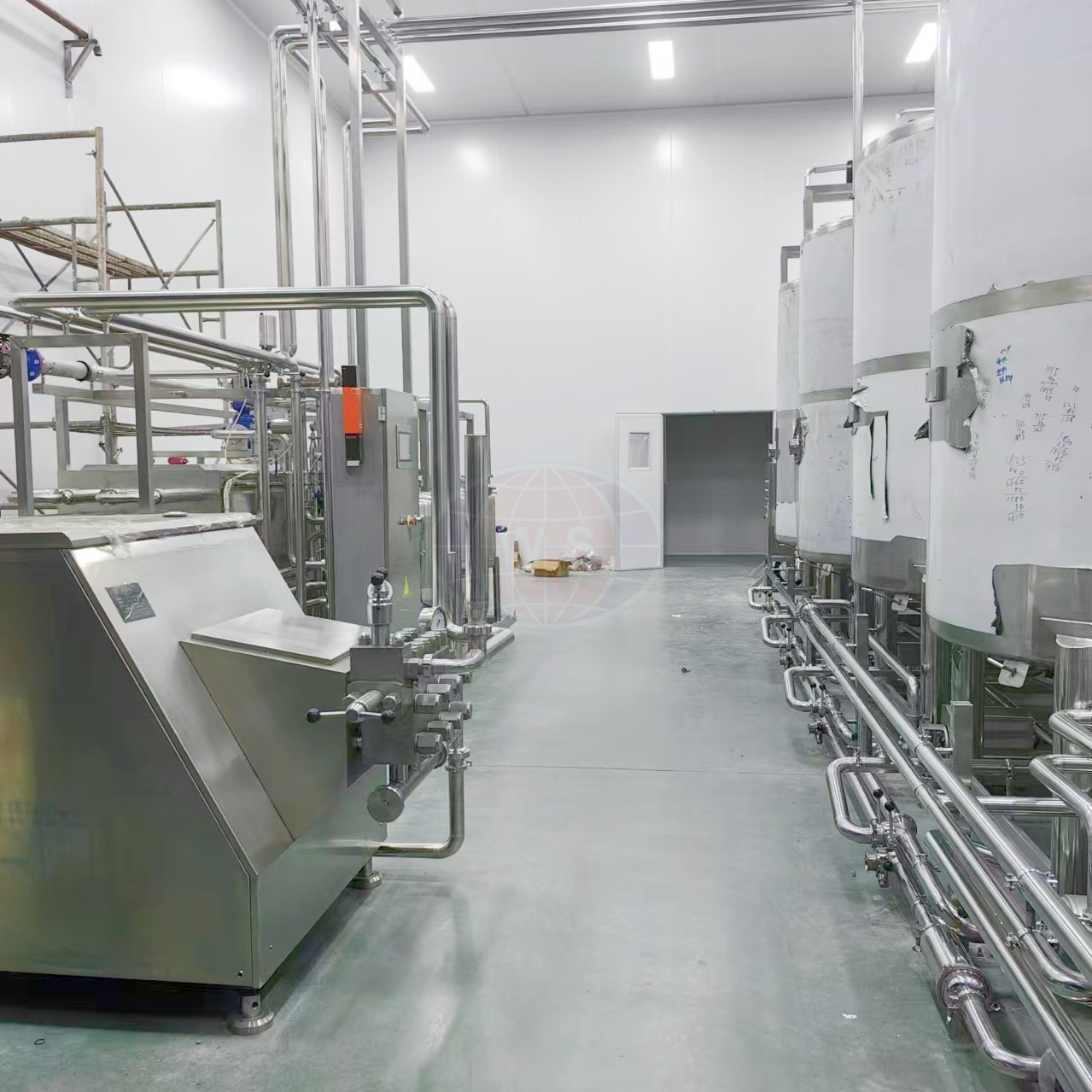
Drainage issues further exacerbate this problem. Older flat-bottom tanks or systems with improper piping slopes physically cannot drain completely. When the transfer pump runs dry, a residual pool of liquid is left behind at the base. By upgrading to a modern Milk Storage Tank built from SUS304 or 316L food-grade stainless steel, facilities can solve this. These modern tanks feature steep conical bottoms and low-shear agitation, ensuring complete gravitational drainage and preventing daily volume loss during cleaning cycles.
Pasteurization is the most energy-intensive phase of dairy processing. It is also a primary site for invisible product loss. Thermal inefficiencies occur when the heating plates are not optimally regulated. If the temperature differential between the heating medium and the milk is too high, heat-sensitive whey proteins denature rapidly.
This denaturation causes the proteins to burn and bake onto the stainless steel plates. Upgrading to a highly efficient Milk Pasteurizer equipped with PID intelligent temperature control and optimized plate corrugation prevents this fouling. Fouling physically traps product inside the machine, directly reducing liquid yield. Consequently, the buildup of burned proteins narrows the flow channels, forcing centrifugal pumps to work harder and wasting electrical energy.
The packaging phase is the final hurdle, and it is where silent yield killers thrive. Overfilling is a massive contributor to lost profit. If an outdated Milk Filling Machine is poorly calibrated and overfills every standard 1-liter bottle by just 10 milliliters, the facility experiences a baseline 1% yield loss on all packaged goods. Because the product is given away for free inside the bottle, this loss never appears as a spill on the floor. It directly impacts the financial audit.
In contrast, modern filling equipment utilizes precision load cells and mass flow meters to achieve aseptic filling accuracy of ±1%. Physical spillage and splashing also occur during packaging with older units. Dispensing nozzles that drip between cycles, improper pressure settings that cause foaming, or misaligned conveyor belts result in milk splashing onto the exterior of the bottles. This wastes product and requires additional labor to clean the packaged goods before boxing.
Beyond mechanical leaks, process control failures lead to substantial product downgrades and disposal. Temperature fluctuations are a primary culprit. If the cooling section of the pasteurizer underperforms, or if holding tanks fail to maintain a consistent chilling temperature, the milk becomes highly susceptible to rapid bacterial growth. Souring and spoilage force plant managers to discard entire batches into the wastewater system.
Cross-contamination is another critical processing error. Modern facilities often process various products like whole milk, skim milk, and heavy cream through the exact same pipe networks. If valve matrices leak or fail to seat properly, different batches can mix. When high-value whole milk is accidentally diluted with skim milk, the product no longer meets regulatory fat content standards. The batch must either be downgraded to a lower-priced product category or completely disposed of.
Testing and sampling protocols, while strictly necessary for quality control, also contribute to waste when mismanaged. Taking excessively large manual samples at multiple stages of the process drains product volume unnecessarily. Transitioning from manual sampling to automated inline sensory testing recovers this lost volume while providing real-time quality data.
The transition phase is the exact moment when milk processing halts and the Clean-in-Place cycle begins. This phase is highly vulnerable to yield loss. To clean the internal pipework, water is introduced to push the remaining milk through the system and into the final holding tanks.
The critical challenge is managing the water-to-milk interface. Many older facilities rely on operators timing the flush by eye, or using basic time-based sensors to determine when the milk has been fully pushed out. Because flow rates vary, timing sensors are inherently inaccurate. To avoid diluting the packaged milk with water, operators often program the system to divert the flow to the drain prematurely. This safety margin results in hundreds of gallons of perfectly good milk being flushed away during every single cleaning cycle.
Additionally, chemical residue poses a severe spoilage risk. If the cleaning system fails to fully rinse the caustic or acidic cleaning agents from the pipes, the first batch of the subsequent milk run will become chemically contaminated. This contaminated milk must be thrown away, drastically reducing the yield for that production day and increasing disposal costs.
Even in highly mechanized facilities, the human element remains a significant variable in overall operational efficiency. Relying heavily on manual interventions rather than automated sequences consistently increases the risk of physical spills, incorrect fluid routing, and unnecessary product degradation.
In older facilities, operators are often required to manually open and close valves to direct the flow of milk. A delay of just a few seconds during a manual valve changeover can cause hundreds of liters of milk to overflow or be misdirected into the drain.
Operational bottlenecks are also frequently tied to suboptimal production scheduling. The most efficient processing line runs continuously for long durations, maintaining a steady-state flow. However, alternating frequently between different product types requires the system to undergo multiple start-and-stop operations. Every time production stops for a changeover, the pipes must be cleared and flushed. A facility that schedules five short production runs will experience exponentially more transition waste than a facility that consolidates its schedule into two long, continuous runs.
Addressing yield loss requires a systematic, empirical approach. Dairy plant managers must move beyond assumptions and rely on hard data to identify exactly where product is disappearing. By combining rigorous auditing frameworks with targeted equipment upgrades, facilities can significantly reduce waste.
The first step is to audit your current system by conducting a comprehensive mass balance analysis. This involves installing high-precision flow meters at every critical junction. By measuring exactly what mass of butterfat and solids enters the facility versus what exits in the finished bottles, management can pinpoint the exact locations of mechanical or operational leaks.
Once the leak points are identified, upgrading to advanced machinery is the most effective solution to permanently eliminate the waste. When evaluating a professional-grade Milk Production Line, you must look for systems that offer synchronized precision. High-quality lines typically feature processing capacities ranging from 500 to 10,000 liters per hour, utilizing robust PLC control systems to automate routing and minimize human error.
Yield loss in dairy processing is a complex, multi-faceted issue. It spans from the moment raw milk enters the intake bay to the final sealing of the consumer package. Hidden leaks, thermal inefficiencies, and manual handling errors compound daily, quietly eroding your profit margins.
However, losing profits to outdated machinery is entirely preventable. Modern equipment upgrades and automated routing systems recover lost milk volume effectively and sustainably.
Take action today by evaluating your current facility to identify major leak points. Conduct a mass balance audit, consolidate your production schedules, and upgrade your processing machinery. For plant managers looking to eliminate yield loss and modernize their infrastructure, exploring the high-efficiency equipment solutions at WFoodMachinery is the ideal next step. Choosing the right customized production line ensures a fast return on investment, protects your revenue, and positions your dairy plant for long-term success in a competitive market.
In the dairy processing industry, world-class facilities aim for a yield loss of less than 1% to 2%. This minimal loss accounts for unavoidable factors such as minor moisture evaporation during thermal processing and trace amounts of residual fat left in pipes. However, older plants utilizing outdated machinery might experience yield losses ranging from 3% to 5%. Any sustained yield loss above the 2% threshold strongly signals the need for a comprehensive equipment audit to identify mechanical leaks, overfilling issues, or inefficient cleaning protocols.
A milk pasteurizer primarily causes yield loss through a biochemical process known as fouling, commonly referred to as burn-on. When raw milk is subjected to high temperatures, heat-sensitive whey proteins can denature. If the heating plates are poorly regulated or have localized hot spots, these denatured proteins bake onto the stainless steel surfaces. This physical buildup traps a portion of the milk inside the machine, directly reducing the volume of liquid that exits the pasteurizer while also restricting flow rates.
Spillage during the packaging phase is typically caused by a combination of mechanical wear and improper calibration. The most common reasons include worn-out dispensing nozzles that fail to shut off cleanly, resulting in post-fill dripping. Improper pressure settings can force milk into the bottles too rapidly, causing the liquid to splash out before the cap is applied. Additionally, if there is air entrained in the processing lines, the milk will foam as it enters the bottle, causing it to overflow. Misaligned conveyor belts can also cause bottles to jerk or tip during the filling process.
Preventing milk waste during cleaning operations relies heavily on accurate phase separation. When a production run ends, water is used to push the remaining milk through the pipes. To prevent operators from prematurely flushing good milk down the drain, facilities should install automated turbidity sensors or conductivity meters in the piping. These optical and electrical sensors accurately detect the exact millisecond the fluid transitions from high-density milk to water, allowing automated valves to divert the flow precisely.
Yes, upgrading your storage infrastructure has a direct and measurable impact on yield recovery. Older tanks often feature flat bottoms or inadequate drainage slopes, causing a pool of milk to remain trapped at the base after the pumps have stopped. Modern tanks are engineered with steep conical bottoms that utilize gravity to ensure complete liquid evacuation. Additionally, they feature smooth, sanitary welds and efficient automated agitators that keep milk solids perfectly suspended, ensuring valuable milk fat is not left behind clinging to the interior walls.
Calculating yield loss requires a strict mass balance approach. You must measure the total mass of raw milk, including specific butterfat and non-fat solids, received at the intake bay. Then, you compare this incoming mass against the total mass of the finished, packaged product ready for distribution. The difference between the input mass and the output mass, expressed as a percentage of the total input, is your true yield loss. Utilizing high-precision inline flow meters at both ends of the facility provides the most accurate data for this calculation.
In modern dairy packaging, the standard tolerance for high-quality milk filling machines is typically ±1% of the target volume, or roughly ±2 milliliters for a standard one-liter bottle. Outdated or purely mechanical fillers often struggle to maintain this precision, frequently fluctuating by 3% or more. Upgrading to equipment featuring advanced load cells or mass flow meters ensures the filler stays within this strict ±1% tolerance, drastically reducing product giveaway and protecting plant profitability.