Call Us
+86-15800763021
Send Us
Add
775 Chihua Road, Zhelin Town, Fengxian District, Shanghai
- All
- Product Name
- Product Keyword
- Product Model
- Product Summary
- Product Description
- Multi Field Search
Views: 0 Author: Site Editor Publish Time: 2026-10-15 Origin: Site

Are you consistently losing profits to messy bottling spills? For beverage manufacturers, a production line that continuously overflows presents a severe operational nightmare. Product waste directly slashes profit margins. Meanwhile, the resulting sticky machinery necessitates frequent, labor-intensive cleaning cycles that lead to costly production downtime. Bottling carbonated soft drinks requires a vastly different engineering approach compared to handling still liquids like flat water or juice. The presence of dissolved carbon dioxide creates a highly volatile environment within the liquid. This makes the entire bottling process incredibly susceptible to even the most microscopic environmental and mechanical shifts.
In this comprehensive guide, we will explore the specific physical, chemical, and mechanical variables that cause a Carbonated Beverage Filling Line to overflow. By understanding the underlying mechanics of isobaric filling, plant managers and line engineers can effectively troubleshoot these persistent issues. Implementing the correct diagnostic procedures will not only stabilize the production environment but also minimize product loss and maximize overall operational efficiency.
To truly grasp why overflow occurs, one must first understand the foundational differences between carbonated lines and standard gravity fillers. Still liquids can rely on simple gravity to flow peacefully into a container. Carbonated beverages, however, contain dissolved gas under high pressure. When exposed to standard atmospheric pressure, this gas naturally seeks to expand and escape. As it rushes upward, it carries the sticky liquid with it in the form of thick foam.
To keep the carbon dioxide suspended in the liquid during the bottling process, manufacturers utilize a counter-pressure, also known as isobaric, filling method. This highly engineered sequence ensures that the liquid is never exposed to a pressure drop while moving from the holding tank to the bottle. The process typically unfolds in four distinct steps.
First, the empty bottle is sealed against the dispensing valve, and gas is injected until the internal pressure exactly matches the pressure inside the filler bowl. Once equilibrium is achieved, the liquid valve opens. The beverage flows down into the container by gravity, while the displaced gas travels back up into the bowl through a vent tube. After the liquid reaches the designated level, a brief settling period allows the turbulence to subside. Finally, a snifting phase slowly and carefully reduces the internal pressure to match the ambient room pressure before the seal is broken. Overflow strikes whenever any microscopic variable disrupts this delicate dance.
When troubleshooting an overflowing line, operators should always evaluate product temperature first. Temperature instability remains the most common and impactful culprit behind excessive foaming on the factory floor. It is an absolute physical law that cannot be bypassed by mechanical tweaks.
The relationship between temperature and gas solubility is governed by physical laws dictating that colder liquids hold considerably more gas. For carbonated soft drinks, the ideal filling temperature typically hovers between 34 degrees and 38 degrees Fahrenheit, roughly 1 to 3 degrees Celsius. If a carbonated beverage warms up by even a mere one or two degrees, its capacity to hold dissolved gas decreases significantly. During the filling phase, this thermal instability manifests as rapid expansion. As the liquid enters the bottle, the gas violently breaks out of the solution. This creates a geyser of foam that spills over the top as soon as the valve lifts.
Plant managers must guarantee their chilling equipment is sized correctly for their peak production volume. A glycol chiller that operates flawlessly at lower speeds might completely fail to maintain optimal temperatures when the line is pushed to maximum capacity.
Consider the physical layout of the production floor, which plays a crucial role. Picture the machinery after a minor 15-minute line stoppage. The liquid sitting idle in the uninsulated transfer pipes absorbs ambient facility heat. When the operator restarts the line, this slug of warm soda enters the carousel. It instantly foams over the bottle necks, creating a hazardous mess that requires immediate cleanup. Insulating all transfer lines is a simple yet highly effective mitigation strategy.
While strict temperature control forms the baseline of stability, the internal pressure dynamics of the system are equally vital. A counter-pressure layout relies on absolute equilibrium. Any deviation inevitably results in product loss.
The filler bowl acts as the central reservoir for both the pressurized liquid and the head pressure of the gas. This pressure must be precisely calibrated to match the target carbonation level of the specific beverage being bottled. If the bowl pressure is set too low, the liquid lacks the necessary counter-force to keep the gas in solution during the transfer. This causes it to foam upon entry. Conversely, if the pressure is excessively high, the liquid is forced into the bottle at a reckless velocity. This turbulent entry agitates the beverage, generating kinetic energy that knocks the carbonation out of the solution.
The final step of the isobaric cycle is the controlled venting process, frequently the most vulnerable point for overflow. Snifting is the gradual release of the pressurized gas from the headspace of the bottle before the mechanical seal is broken. Mechanical valves utilize a snift cam to open a tiny exhaust port for a fraction of a second. If this cam is worn down, or if the snift block is damaged, the valve may release the pressure instantaneously. This sudden, violent drop from high pressure to atmospheric pressure causes the dissolved gas to expand instantly. Severe foaming occurs before the bottle can even be transferred to the sealing station.
Even with perfect thermal and pressure parameters, bottling equipment operates under extreme physical stress. Standard mechanical wear and tear will inevitably compromise the isobaric environment if left unmonitored.
Counter-pressure technology requires a completely airtight seal between the bottle and the valve. This seal is typically achieved using food-grade elastomers, such as EPDM or Viton O-rings. Over time, these seals degrade due to constant mechanical compression and harsh daily exposure to Clean-In-Place chemicals like caustic soda. When a seal develops a micro-leak, the Bottle Filler cannot achieve full pressurization during the initial cycle step. Because the bottle pressure remains lower than the bowl pressure, the liquid rushes in at an uncontrolled speed. This triggers massive turbulence and immediate foaming.
The centering bell is the mechanical component responsible for guiding the bottle neck perfectly into the valve and compressing the seal. Precise alignment is absolutely mandatory. If the internal springs of the centering bell become fatigued, they fail to apply enough downward force to maintain the seal against the internal pressure. In addition, a misaligned centering bell causes the bottle to sit at a slight angle. This breaks the airtight environment, allowing gas to escape prematurely and drastically throwing off the accuracy of the liquid volume dispensed.
The dispensing process does not exist in a vacuum. It is deeply interconnected with the subsequent sealing phase. How a bottle is filled, and how smoothly it travels down the line, directly dictates whether the product stays inside the container or ends up pooling on the floor.
In carbonated beverage manufacturing, hitting the exact target Fill Height is not just about giving the consumer the correct volume. It is a critical safety and quality parameter. Modern valves utilize specifically measured vent tubes to establish this height. As the liquid rises, it eventually covers the tip of the vent tube, cutting off the gas escape route and halting the flow.
If a mechanical failure causes the bottle to overfill, the critical headspace between the liquid and the cap is entirely eliminated. Headspace is necessary to absorb the natural expansion of the gas. Without it, the pressure has nowhere to go, resulting in a messy overflow the moment the bottle is released from the valve.
The physical journey from the filling carousel to the sealing station is a notorious danger zone. Once the bottle leaves the dispensing area, it is fully exposed to atmospheric pressure. If the starwheels and guide rails transferring the bottles are misaligned, the bottles will experience jerky, erratic movements. This mechanical agitation shakes the liquid, accelerating gas breakout. To mitigate this vulnerability, modern production facilities often utilize a synchronized Capping Machine integrated directly into a monoblock system. This drastically reduces transfer time and ensures smooth, continuous motion, trapping the gas before it can escape.
Recent market data reveals a sharp increase in consumer demand for functional sparkling waters, energy drinks, and low-sugar sodas. Occasionally, the machinery operates flawlessly, but the overflow persists due to the chemical and physical composition of these new beverages. Plant managers must analyze the actual liquid being pumped into the system.
The density and viscosity of a beverage significantly alter how it behaves under pressure. Beverages with high sugar content, measured in Brix, are denser and retain foam much longer than diet sodas or sparkling water. More importantly, beverages containing particulates like fruit pulp, fibers, or flavor emulsions are highly prone to foaming. These tiny particles act as nucleation sites. In fluid dynamics, a nucleation site provides a physical surface for dissolved gas molecules to gather and rapidly form bubbles. Bottling highly pulpy products requires heavily customized profiles and slower production speeds.
These complex recipes behave unpredictably under pressure. Consequently, the industry is rapidly shifting away from isolated mechanical stations toward synchronized automated systems capable of dynamic recipe adjustments.
The presence of Dissolved Oxygen in the product water is a hidden enemy of carbonation stability. Before water is mixed with syrup and carbonated, it must pass through a deaeration system to strip out oxygen. If the deaerator is underperforming, the water retains high oxygen levels. When carbon dioxide is subsequently injected, the gases compete, resulting in large, unstable bubbles. This phenomenon, known in the industry as fobbing, causes the beverage to foam uncontrollably regardless of perfect temperature or pressure settings.
Understanding the root causes of overflow is merely the first step. To protect the bottom line and maximize operational efficiency, facilities must implement rigorous optimization strategies and seriously consider technological upgrades.
A reactive approach to equipment maintenance guarantees downtime and product waste. Facilities must transition to a strict preventive maintenance schedule. By systematically checking critical components before they fail, operators can maintain the exacting tolerances required for isobaric environments. Routine tasks should include inspecting valve O-rings weekly to prevent micro-leaks, calibrating snift cams monthly for gradual depressurization, and checking chiller glycol levels daily to guarantee stable temperatures.
As beverage manufacturers grapple with rising raw material costs, minimizing product waste is no longer just an operational goal. It is a financial necessity. Facilities upgrading to smart isobaric systems with real-time pressure monitoring experience significantly fewer overflow events compared to those relying on legacy mechanical valves.
| Feature | Legacy Mechanical Fillers | Modern 3-in-1 Monoblock Systems |
|---|---|---|
| Transfer Method | Separate standalone machines via long conveyors | Integrated rinsing, filling, and capping via starwheels |
| Pressure Control | Manual gauge adjustments | Automated Programmable Logic Controller monitoring |
| Snifting Accuracy | Fixed mechanical cam timing | Electro-pneumatic valves with recipe-specific venting |
| Material standard | Standard steel or mixed metals | Food grade SUS304 or 316 stainless steel |
| Yield Rate | Prone to high waste during start/stop | High precision, minimal overflow and product loss |
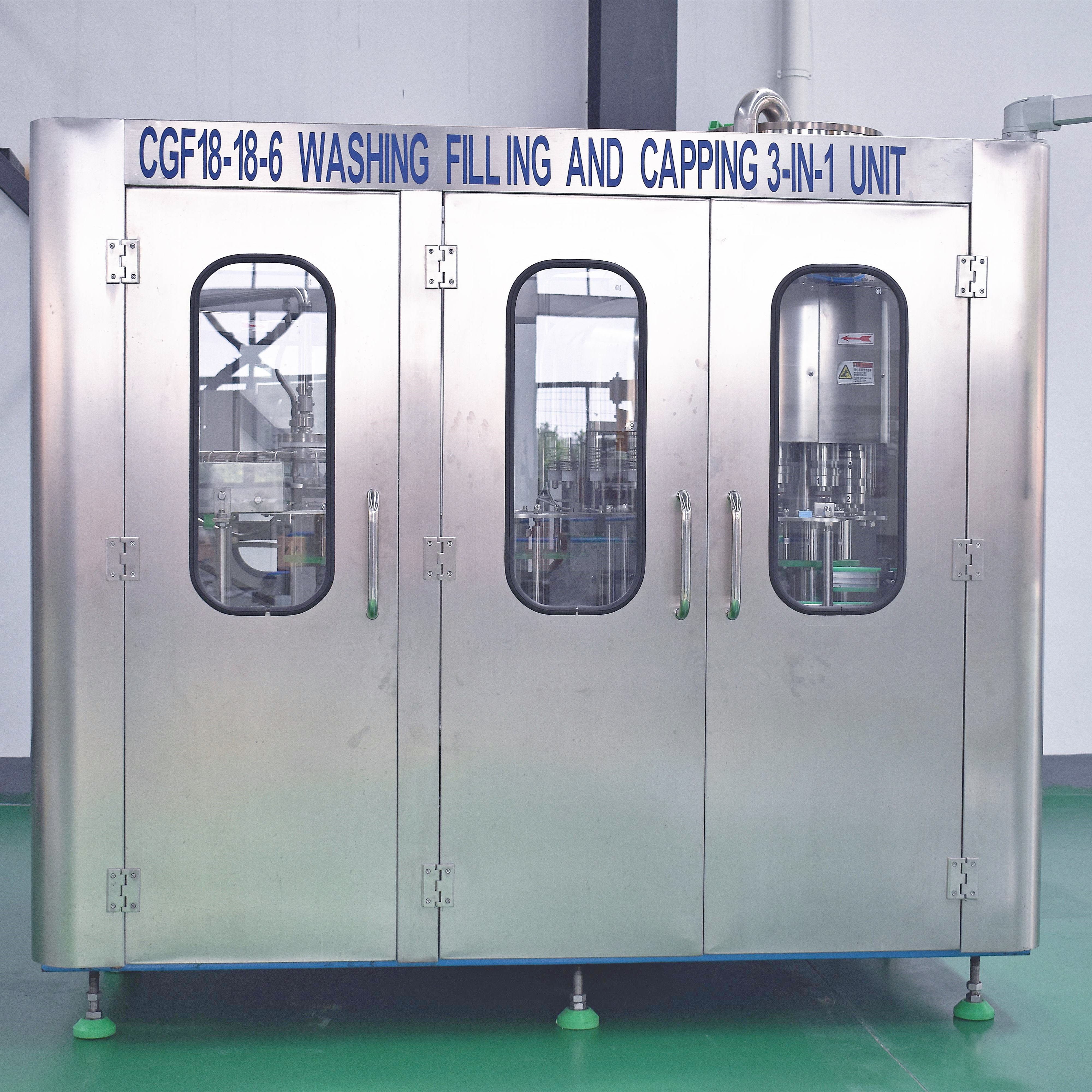
Modern equipment has largely transitioned to electro-pneumatic valves. Unlike mechanical counterparts, these advanced systems use Programmable Logic Controller software to manage the CSD Filling cycle with millisecond accuracy. Featuring integrated 3-in-1 designs, these machines handle washing, filling, and capping in one compact unit. They are constructed with high-grade SUS304 or SUS316 stainless steel to withstand harsh cleaning chemicals. Furthermore, they allow operators to save specific recipe profiles via a touch screen interface, automatically adjusting snifting durations based on the exact beverage being bottled.
Preventing overflow on a carbonated beverage line requires a perfect, uninterrupted harmony of temperature control, precise pressure dynamics, mechanical integrity, and exact timing. While routine maintenance and diligent troubleshooting can resolve immediate foaming issues, they are often just temporary fixes for aging machinery. Upgrading to modern, automated monoblock equipment represents the most intelligent long-term strategy for maximizing yield and protecting your profit margins. We strongly encourage plant operators to evaluate their current setup, identify potential vulnerabilities, and consult with equipment specialists to explore high-efficiency upgrades tailored to your specific production needs. Discover advanced machinery solutions at wfoodmachinery.com today to stabilize your line and eliminate costly waste.
Generally, isobaric filling is executed at very cold temperatures, typically ranging between 34 degrees and 38 degrees Fahrenheit. Keeping the liquid consistently cold ensures the gas remains securely dissolved within the fluid, significantly reducing the risk of sudden expansion and overflow.
Inconsistent levels across a batch are usually caused by worn vent tubes, damaged elastomer seals, or sudden fluctuations in product temperature and filler bowl pressure. Systematically replacing degraded O-rings and stabilizing the glycol chiller temperature usually resolves this common discrepancy.
Foaming is the rapid, internal expansion of gas bubbles within the liquid itself. Overflow is the physical, external result of that excessive foaming escaping the confines of the bottle. Both issues are fundamentally triggered by sudden pressure drops, high temperatures, or poor deaeration.
Absolutely. If the sealing equipment cannot keep pace with the dispensing carousel, the filled bottles sit open and exposed to atmospheric pressure for far too long. The trapped gas will naturally seek to escape, causing the liquid to foam up and spill over the neck before the cap can be securely applied.
While it heavily depends on your specific production volume and cleaning chemical usage, most manufacturers strongly recommend inspecting seals weekly. Replacing them every 3 to 6 months as part of a dedicated preventative maintenance schedule is standard practice to ensure an airtight, leak-free counter-pressure environment.
Controlling foam requires a multi-layered approach. First, ensure the product is chilled to near freezing. Second, verify that the deaerator is stripping oxygen effectively before carbonation. Finally, rely on electro-pneumatic valves to execute a slow, controlled snifting phase that gently equalizes pressure without shocking the liquid.
Short fills occur when the liquid stops flowing before reaching the target height. This is typically caused by premature gas shut-off due to a bent vent tube, or a micro-leak in the bottle seal that prevents the container from reaching the required counter-pressure to allow gravity flow.