Call Us
+86-15800763021
Send Us
Add
775 Chihua Road, Zhelin Town, Fengxian District, Shanghai
- All
- Product Name
- Product Keyword
- Product Model
- Product Summary
- Product Description
- Multi Field Search
Views: 0 Author: Site Editor Publish Time: 2026-11-17 Origin: Site

In commercial cheese manufacturing, profitability ultimately comes down to a single, unforgiving metric: yield. Raw milk quality and robust bacterial cultures certainly form the foundation of any dairy operation. However, the mechanical and chemical interventions applied to the curd strictly dictate the final volume of sellable product. Among these interventions, curd washing acts as the unsung hero of moisture and acidity control. By systematically replacing whey with water, plant operators effectively halt lactose fermentation. This targeted action results in a sweeter, softer, and significantly heavier cheese.
The overall efficiency of your facility relies heavily on the exact execution of this washing phase. Mastering this strict mass transfer process prevents devastating yield loss. Furthermore, it optimizes safe moisture retention and ensures precise mechanical synchronization with downstream processing equipment.
In a commercial plant setting, curd washing is far more than a simple dilution step. It is a highly controlled biochemical intervention. The procedure involves draining a specific percentage of whey from the vat and immediately replacing it with precisely tempered water. Plant operators use this fundamental technique to manipulate the chemical composition of the developing cheese, rather than merely altering the batch temperature.
From an engineering perspective, introducing water dilutes the lactose concentration within the mixture. Starter cultures rely heavily on lactose as their primary food source to produce lactic acid. Consequently, removing a significant portion of this sugar effectively starves the bacteria. This deliberate starvation halts the acidification process at an exact target pH. Without this mechanical intervention, the bacteria would continue to metabolize sugars, fundamentally destroying the intended texture and functionality of the final block.
Recent market analyses indicate a sharp pivot in the global dairy sector. With raw milk prices facing unprecedented volatility, plant managers are moving away from brute-force volume scaling. Instead, the industry focus has shifted entirely to micro-optimizations within the vat. Current market data reveals that refining the washing protocol offers the highest return on investment for semi-hard cheese lines. It acts as a reliable buffer against fluctuating input costs. This specific technique remains the absolute industry standard for producing semi-hard and semi-soft varieties such as Gouda, Edam, Havarti, and Colby. These cheeses are renowned for their pliable, elastic textures that are physically impossible to achieve without precise lactose dilution.
The primary objective of any dairy processing facility is maximizing the output of sellable product from expensive raw milk inputs. Proper washing safely increases the moisture content of the final cheese. This directly boosts the overall production yield without compromising structural integrity or violating strict regulatory compliance.
Think of the curd matrix as a porous network. When warm water enters the vat, it interacts with the protein network. This interaction causes the curd to swell slightly and bind more water. In commercial operations, safely retained water directly translates to higher product weight. Even a fractional percentage increase in moisture retention yields thousands of additional pounds of sellable cheese annually. For a mid-sized plant, this represents a massive increase in baseline revenue.
Specifically, this phase is critical for preventing curd shattering. Curds remain incredibly fragile during the early stages of cheesemaking. Rushing the wash phase or applying excessive mechanical agitation instantly shatters these fragile curds into microscopic particles known as fines. These fines are typically lost during the liquid drainage phase, washing straight down the drain and permanently destroying your yield. Gentle and controlled handling preserves the physical integrity of the curd. This ensures that maximum solid mass safely makes it to the final pressing stages.
Achieving high yield during the washing phase requires synchronized, high-performance equipment. The entire process is highly sensitive to timing and mechanical handling. Isolated machines must work together flawlessly to protect delicate protein structures.
Effective washing begins long before the operators actually add water. It starts with the initial coagulation and cutting. Once the milk sets into a solid gel, a precision-engineered high-precision Curd Cutter must slice the mass into uniform, identical cubes. Modern cutting tools often feature dual-directional planetary motion to ensure clean cuts without tearing. The sharpness and mechanical action of these blades are paramount. If the resulting curds vary wildly in size, the subsequent washing effect becomes erratic. Smaller curds release too much whey and absorb water rapidly, turning mushy. Conversely, larger curds retain too much lactose in their dense centers and continue to acidify. This uneven moisture distribution inevitably leads to severe structural defects in the final block.
The transition phase between cutting and washing relies heavily on robust liquid separation. Before introducing fresh water, pumps must remove a precise volume of lactose-heavy liquid. Modern facilities utilize advanced automated Whey Drain systems designed to extract this liquid rapidly but gently. If the drainage process is too slow, the curds begin to mat together prematurely at the bottom of the vessel. This prevents the wash water from reaching individual particles. If the suction is too violent, it creates shear stress that forces valuable fat and protein solids right through the filtration screens.
Acidity control is a critical factor in determining the final weight and quality of a cheese block. Failing to wash away lactose properly allows the starter cultures to continue metabolizing it. This drives the pH level down too far and results in severe over-acidification.
When cheese becomes excessively acidic, the chemical bonds within the casein protein network begin to degrade rapidly. The calcium phosphate that holds the proteins together dissolves. This chemical breakdown leads to a brittle, crumbly texture. From a production standpoint, crumbly cheese equates directly to lost revenue. Brittle blocks are highly susceptible to mechanical damage. They break apart, crumble, and shatter during automated packaging, slicing, and grating processes. This generates unacceptably high volumes of unsellable scrap.
Precise washing mitigates this risk by hitting the exact pH sweet spot. By utilizing accurate temperature controls and strictly measured water volumes, cheesemakers ensure the maximum structural integrity of the product. A structurally sound block slices cleanly, packages efficiently, and minimizes downstream waste on the cutting floor.
To fully grasp the economic impact of curd washing, plant engineers must contrast this methodology with the traditional milled process. Both techniques are foundational to modern dairy manufacturing. Yet, they yield entirely different structural and financial outcomes for the facility.
| Production Metric | Washed Curd Process | Milled Curd Process |
|---|---|---|
| Core Objective | Halt acid development early via lactose dilution | Sustain acid development for full flavor profile |
| Moisture Retention | High moisture yield, softer texture | Lower moisture yield, firmer texture |
| Key Equipment | Automated Vats, Precision Water Dosing | Cheddaring Tables, Curd Mills |
| Ideal Cheese Types | Gouda, Edam, Havarti, Colby | Cheddar, Red Leicester, Double Gloucester |
| Yield Impact | Higher baseline weight due to bound water | Lower baseline weight due to whey expulsion |
The washed process focuses on halting lactic acid development early in the manufacturing cycle. This deliberate intervention creates a sweeter, more pliable matrix that inherently holds a higher volume of water. By contrast, the milled process relies on sustained acid development. Operators allow the curd to continuously ferment, converting lactose into lactic acid over an extended period. This prolonged acidification fundamentally alters the protein structure, causing the curd to contract and expel significantly more moisture.
In a facility producing cheddar or similar varieties, the workflow diverts significantly after the initial liquid separation. Instead of undergoing a water wash, transfer pumps move the curds to a specialized Cheddaring Table. Here, operators or automated turning machines allow the curds to mat together into large, solid slabs. The machinery repeatedly stacks and flips these slabs. This mechanical pressure, combined with ongoing acid development, forcefully expels interstitial moisture from the protein matrix before the cheese is milled and salted.
The journey of the curd does not end once the washing phase is complete. The true test of a successful wash manifests in the final pressing stages. How the curd behaves during consolidation is directly dependent on the moisture and acidity parameters established earlier in the vat.
Once separated from the liquid, pneumatic systems transport the washed curds into the vacuum-assisted Block Former. This sophisticated piece of equipment is responsible for consolidating individual curd grains into a uniform, dense block. Industrial block formers are typically capable of processing 1,000 to 1,500 kilograms per hour. They maintain a precise 40-pound block weight with less than one percent deviation. The performance of this machinery is deeply intertwined with the success of the preceding wash phase.
Curds that have been washed correctly possess a specific pliability and surface moisture optimal for fusion. When subjected to the highly controlled sequence of vacuum and mechanical pressure inside the forming chamber, they fuse together seamlessly. The retained moisture acts almost as a binding agent. This allows the protein structures to interlock without leaving mechanical holes or microscopic gaps. If the washing process was flawed, leaving the curds too acidic or too dry, they will resist fusion. This inevitably results in brittle blocks prone to cracking under vacuum pressure.
Even in advanced facilities, slight deviations in the washing protocol result in severe financial losses. Human error or poorly calibrated equipment directly degrades the final product volume on a daily basis.
The thermodynamic shock applied to the curd dictates its ability to expel or retain moisture. Applying water that is too hot causes the exterior of the curd grains to contract rapidly. This physical phenomenon creates an impermeable, cooked skin on the outside of the particle. It traps unwanted whey and lactose inside the core. As the cheese ages, this trapped whey ferments unpredictably, leading to off-flavors and premature spoilage. Conversely, using water that is too cold rapidly drops the internal temperature. This paralyzes the starter cultures and leaves the curd completely waterlogged and mushy.
Furthermore, the physical movement of the curds must be precisely calibrated. If stirring paddles operate at too high a velocity, the mechanical shear forces will shatter the fragile curd grains into a cloudy suspension of cheese dust. Losing these fines is the most direct and preventable form of yield destruction in a dairy plant. On the other hand, insufficient agitation allows the curds to clump together into large, uneven masses. This prevents the wash water from diluting the lactose uniformly across the batch.
For plant managers and dairy executives looking to optimize their facilities, addressing vulnerabilities in the washing phase represents a high-return opportunity. Relying on legacy equipment or manual interventions for a process this sensitive is a massive operational liability. Selecting the right machinery is the only way to guarantee consistent yield.
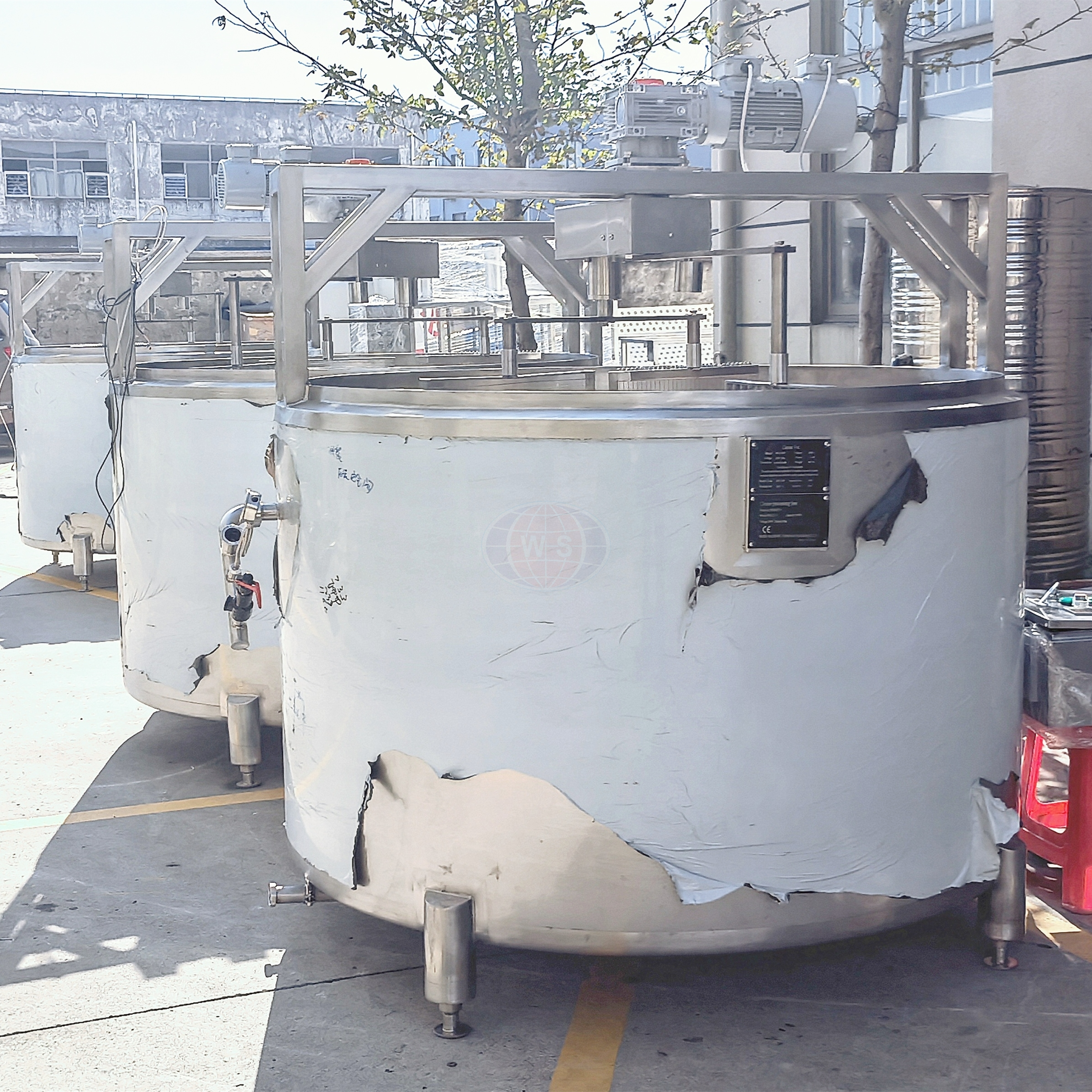
The variables involved in optimal washing are simply too complex to manage manually at a commercial scale. Upgrading to a fully enclosed Cheese Vat equipped with programmable logic controllers eliminates the guesswork that traditionally plagues this phase. When selecting a vat, facilities should look for capacities ranging from 500 liters for specialty batches up to 10,000 liters for continuous industrial lines. Modern systems utilize highly accurate electromagnetic flow meters to measure the precise volume of whey extracted and the exact dosage of wash water introduced.
An upgraded facility also ensures that mechanical components interact flawlessly. Automated temperature control valves dynamically blend hot and cold water feeds to hit the target wash temperature within a fraction of a degree. This engineering upgrade entirely eliminates the risk of thermal shock. Integrating programmable agitators with variable frequency drives allows the system to apply the exact amount of kinetic energy required. This keeps the curds suspended without causing shear damage.
Curd washing is not merely a flavor-enhancing step. It is a fundamental yield-deciding factor in modern dairy manufacturing. By meticulously controlling moisture retention and halting acid growth, plant engineers can safely maximize the weight and quality of every single batch.
Realizing these financial benefits requires system-wide equipment compatibility. A high-performing production line relies on the precise interaction of advanced cutters, efficient drains, and vacuum forming equipment. By replacing manual guesswork with automated machinery, dairy processors can transform raw milk into maximum commercial revenue.
If you are looking to upgrade your dairy processing facility and eliminate yield loss, exploring advanced automated solutions is the critical first step. Visit WFOOD Machinery to configure the ideal cheese production line equipment tailored to your specific capacity and yield targets.
This process is primarily utilized for semi-hard and semi-soft cheese varieties characterized by a mild, sweet flavor profile and a smooth, pliable texture. Common industry examples include Gouda, Edam, Havarti, Colby, and Monterey Jack. The washing step specifically prevents these varieties from developing the sharp, acidic bite associated with traditional aged cheeses.
Water temperature acts as the primary thermodynamic control for moisture and texture. Warm water assists in shrinking the protein matrix slightly, which helps expel excess whey while diluting the lactose. Cooler water relaxes the protein structure, allowing the curd to retain a higher percentage of moisture. If the applied water is too hot, it creates a hardened skin on the exterior of the curd, trapping unwanted whey inside and causing severe quality defects.
While exact temperatures vary depending on the specific cheese recipe, standard commercial wash water is typically tempered between 30 to 38 degrees Celsius. Engineers utilize automated blending valves to ensure the water matches or slightly exceeds the current curd temperature, preventing thermal shock while effectively washing away residual lactose.
The volume of wash water depends strictly on the target pH and moisture level of the final product. Generally, operators drain 20 to 40 percent of the original whey volume and replace it with an equal or slightly lesser volume of tempered water. Advanced facilities use electromagnetic flow meters to control this ratio down to the exact liter.
Absolutely. Improper execution directly destroys yield. If the curds are agitated too aggressively during the wash phase, the mechanical shear breaks them into microscopic fragments. These fines are subsequently washed down the drain during liquid separation, directly reducing the total weight of your final product. Inaccurate washing also leads to inconsistent moisture retention, causing finished blocks to be rejected by quality assurance.
To achieve commercial consistency, a facility requires an enclosed, automated vat equipped with programmable agitators. It also requires a highly precise cutting mechanism to ensure uniform curd geometry. Crucially, the system must integrate automated drainage valves, electromagnetic flow meters, and dynamic temperature blending valves to measure and execute exact water-to-whey replacement ratios without manual intervention.
Indirectly, proper washing contributes to product stability. By precisely controlling the dilution of lactose, the process prevents the overproduction of lactic acid, which helps stabilize the biochemical environment of the cheese. However, because washed-curd varieties inherently possess a higher moisture content, they must be perfectly consolidated in a forming chamber to eliminate oxygen pockets and stored in strictly climate-controlled environments to prevent premature spoilage.