
Call Us
+86-15800763021
Send Us
Add
775 Chihua Road, Zhelin Town, Fengxian District, Shanghai
- All
- Product Name
- Product Keyword
- Product Model
- Product Summary
- Product Description
- Multi Field Search
Views: 0 Author: Site Editor Publish Time: 2026-10-30 Origin: Site

The global demand for processed tomato products remains consistently robust. Tomatoes play a foundational role in international cuisines and staple food manufacturing. For the agricultural and food production sectors, this steady demand presents a substantial commercial opportunity. Transitioning from harvesting raw, highly perishable tomatoes to producing export-grade, shelf-stable puree requires complex engineering. It demands significant capital expenditure and deep technical knowledge. Historically, project managers attempting to build a facility by piecing together equipment from multiple independent vendors have faced severe integration delays. They often encounter incompatible machinery and crippling budget overruns.
To mitigate these operational and financial risks, serious investors turn to a comprehensive, unified solution. Investing in a Turnkey Tomato Paste Processing Plant serves as the ultimate bottom-of-funnel decision for large-scale agricultural processing. A turnkey approach means a single, specialized contractor assumes full responsibility for the entire project lifecycle. This spans from initial architectural blueprints and equipment manufacturing to on-site installation and final handover. This article explores the macroeconomic forces driving these investments, the core technologies required for high-yield production, and what stakeholders should expect during the critical final testing phases.
Recent industry market reports highlight a definitive macroeconomic shift. Unpredictable weather patterns and geopolitical friction have exposed the fragility of globalized raw agricultural trade. Consequently, institutional capital and large corporations are aggressively pivoting towards localized value-addition. By funding regional processing hubs, stakeholders hedge against fresh produce price volatility. They secure predictable revenue streams. Furthermore, growing consumer demand for clean-label, traceable food products forces brands to control their supply chains from farm to packaged drum. This push for food security and supply chain sovereignty makes localized processing assets highly lucrative.
In heavy industrial manufacturing, a turnkey facility is a project where a single provider designs, constructs, and equips a manufacturing plant. The contractor delivers it to the buyer in a fully operational condition. The buyer essentially only needs to turn the key to start a revenue-generating factory. This approach eliminates the need to navigate the complex integration of individual fluid dynamics and thermodynamic systems.
Specifically, the scope of work in a standard contract is exhaustive. It begins with a comprehensive site evaluation and customized engineering design based on the buyer's target capacity. Following the design phase, the contractor handles the fabrication of all specialized equipment. They manage international logistics and oversee rigorous on-site installation. For buyers at the decision stage of their investment journey, this model fundamentally shifts the risk. The manufacturer is contractually bound to deliver a plant that meets specific performance guarantees, yield metrics, and strict international food safety standards.
The capital required to construct a commercial-scale processing facility means buyers are typically well-funded organizations looking for long-term strategic assets. The primary entities driving this localized processing trend fall into four distinct categories.
During peak harvest seasons, tomato yields frequently outpace the immediate capacity of local fresh produce markets. This glut leads to devastating post-harvest rot. Large-scale agricultural cooperatives commission processing plants to eliminate this waste. They convert perishable field tomatoes into a stable commodity, gaining absolute control over their supply chain. This enables them to store inventory and sell it year-round.
Institutional investors frequently view a commercial Tomato Paste Line as a high-yield, recession-resistant asset class. Food staples experience constant global demand regardless of economic downturns. A well-managed processing facility offers highly predictable cash flows. Investors typically commission these facilities in regions with favorable climates and lower labor costs, ensuring the plant is built to rigorous export standards.
Established brands that produce ketchup, pasta sauces, and vegetable juices consume thousands of tons of raw ingredients annually. To protect themselves from sudden commodity price spikes, many multinational brands commission their own processing facilities. This vertical integration ensures absolute supply chain security and strict quality control over raw material viscosity.
In developing nations with strong agricultural sectors, governments often step in to commission processing plants. These localized projects boost rural economies, create sustainable industrial jobs, and reduce a country's reliance on imported processed foods. Integrated solutions are particularly favored here because they include critical technical training to upskill the local workforce.
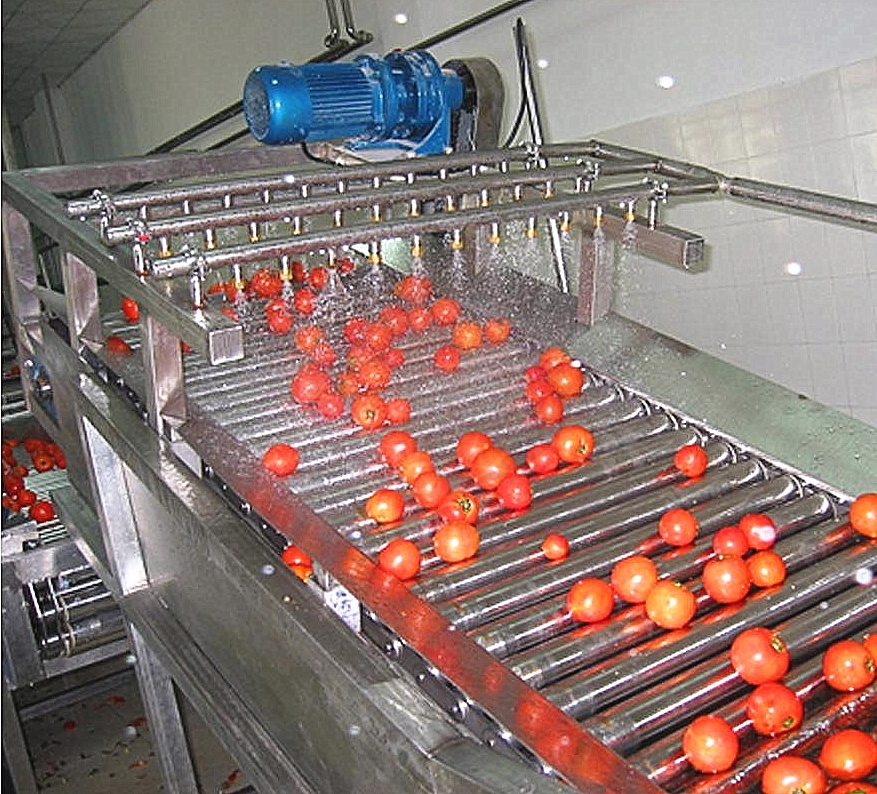
Producing export-grade puree is a highly controlled scientific process. It relies on advanced thermodynamics and aseptic engineering. The machinery ecosystem must extract water efficiently without degrading the product color, flavor profile, or nutritional integrity.
At the intake station, tons of freshly harvested field tomatoes cascade into turbulent water flumes. This hydrodynamic transport cushions the delicate fruit against bruising and initiates the pre-washing phase. Elevators then lift the tomatoes through high-pressure spray washers before depositing them onto roller sorting tables. Optical laser sorters meticulously remove green or spoiled fruit. Ensuring that only the highest quality raw material enters the crushing stage is vital for international market compliance.
The core of the entire operation is the evaporator. Fresh tomatoes consist of approximately 95 percent water. This immense volume of moisture must be removed to create a thick commercial-grade paste. Modern industrial plants utilize multi-effect forced circulation vacuum systems. Operating under a strict vacuum lowers the boiling point of the tomato juice. Water boils off at much lower temperatures, typically between 65°C and 75°C. High-end equipment is engineered to handle raw processing capacities ranging from 150 tons to 1500 tons per day. These systems precisely concentrate the juice to a standard 28-30 percent or 36-38 percent Brix level. This low-temperature concentration prevents natural sugars from caramelizing, preserving the vibrant crimson color and the essential antioxidant lycopene.
Once the paste reaches the exact targeted Brix level, it must be sterilized and packaged. The thick liquid is pumped through a high-pressure tube-in-tube sterilizer. It is rapidly heated to a precise temperature window of 105°C to 115°C to eradicate any microbial life, then immediately cooled. The final stage relies on aseptic filling technology. In a highly controlled steam-flushed environment, the machine fills a pre-sterilized 220L aluminum foil bag housed inside a steel drum. Because the filling environment is completely sealed from ambient air, the resulting product can be transported globally and stored at room temperature for up to two years.
Mechanical installation is only part of the journey. Bolting machines to the factory floor and welding stainless steel pipes must be followed by rigorous system verification. The transition from a static construction site to a dynamic factory is governed by the commissioning phase.
This phase is far more complex than simply flipping the main power breaker. Engineers first conduct dry runs to check motor rotations and electrical continuity. This is followed by water runs where the entire plant processes clean water to test pump pressures and identify piping leaks. Finally, actual product runs are conducted using fresh tomatoes. During these live runs, engineers meticulously adjust the vacuum pressure, monitor forced circulation pumps, and calibrate temperature sensors.
Professional engineering contractors rely on two major testing milestones. Factory Acceptance Testing occurs at the manufacturer assembly facility before the heavy equipment is shipped. Site Acceptance Testing occurs at the buyer factory site after complete installation. During Site Acceptance Testing, the plant must run under real-world conditions to prove it can meet the guaranteed daily yield.
Specialized software and mechanical engineers remain on-site to conduct intensive hands-on training for the local staff. Operators learn how to safely start up the massive boilers, perform automated Clean-in-Place chemical sanitation routines, and maintain the delicate sterile heads of the packaging machinery. This empowerment of the local maintenance team safeguards against future operational downtime.
Commissioning an industrial facility requires careful financial modeling. Understanding the delicate balance between initial setup costs and ongoing operational efficiency is essential for calculating an accurate Return on Investment.
The initial Capital Expenditure is driven primarily by the raw processing capacity of the plant. In addition, the level of automation, such as fully automated PLC touchscreen systems versus semi-manual valve controls, heavily influences the upfront cost. Investors must also allocate significant capital for civil works, industrial steam boilers, cooling towers, and wastewater treatment infrastructure.
The evaporation process is highly energy-intensive. Modern facilities are engineered with aggressive utility efficiency in mind. Advanced multi-effect evaporators capture and recycle steam vapor from the first stage to heat the second stage. This drastically reduces boiler fuel consumption. Furthermore, water used in the initial washing flumes is continuously filtered and recirculated. By minimizing daily utility drains, engineered efficiencies lower the Operating Expenses.
Selecting the right engineering partner is unequivocally the most consequential decision of the entire project. The chosen manufacturer serves as a long-term technological partner.
Investors must rigorously evaluate a manufacturer empirical track record. A manufacturer that has successfully built and optimized a plant in a remote agricultural zone demonstrates robust logistical capabilities. They must possess the engineering depth required to handle grid instability and varying raw material quality.
To highlight the stark contrast in project execution, consider the following technical and commercial evaluation standards.
| Evaluation Criteria | Fragmented Multi-Vendor Sourcing | Unified Turnkey Solution |
|---|---|---|
| System Integration Risk | High. Frequent pipe mismatch and PLC communication failures. | Zero. Pre-engineered as a cohesive thermodynamic ecosystem. |
| Project Timeline | Unpredictable. Prone to severe delays due to vendor conflicts. | Contractually guaranteed delivery and installation schedule. |
| Yield Guarantee | None. Vendors blame each other for capacity shortfalls. | Strictly enforced through Site Acceptance Testing protocols. |
| After-Sales Support | Complicated. Requires contacting multiple different manufacturers. | Single point of contact for spare parts and remote diagnostics. |
The harvest window may only last 60 to 90 days. The plant must run continuously 24 hours a day during this period. Immediate access to critical spare parts, such as mechanical pump seals and sensor probes, is non-negotiable. Buyers must ensure their contract includes comprehensive Service Level Agreements and remote diagnostic capabilities.
Investing in a comprehensive processing facility is a highly strategic financial decision. It enables agricultural cooperatives, institutional investors, and food brands to capture immense value from raw commodities. Transitioning from volatile fresh produce markets to shelf-stable global exports secures long-term profitability and supply chain resilience.
However, the success of such an undertaking relies entirely on choosing an experienced machinery partner. The right partner provides robust technology from the initial sorting flumes to the final sterile packaging lines. For organizations ready to make this transition, selecting field-proven equipment is paramount. We strongly recommend evaluating technical specifications and requesting a customized architectural layout tailored to your regional capacity needs. Explore the high-performance turnkey solutions at wfoodmachinery.com to secure a reliable, high-yield processing future.
Typically, the entire project timeline spans between 6 to 12 months. This duration accounts for customized equipment fabrication, international ocean freight, local civil engineering works, mechanical installation, and the final rigorous testing and calibration phases.
Processing capacities vary widely based on the specific strategic needs and capital availability of the investor. Options range from small-scale regional plants processing 150 tons of fresh tomatoes per day, to massive industrial export operations capable of handling up to 1500 tons every 24 hours.
Commercial tomato paste is strictly categorized by its sugar concentration, known as Brix. The global market standard typically requires a 28-30 percent Brix level for cold break paste, while hot break paste is often concentrated to a denser 36-38 percent Brix level. Achieving these precise metrics requires high-efficiency vacuum evaporators.
Utility consumption depends heavily on the daily processing capacity. However, modern turnkey facilities are designed to minimize waste. Advanced multi-effect evaporators capture and recycle steam vapor to drastically reduce electricity and boiler fuel consumption. Additionally, the water used in the initial intake flumes is continuously filtered and recirculated to lower overall water usage.
The evaporator is tasked with removing the exceptionally high water content from fresh tomatoes. By operating under a strict vacuum, the system boils off water at significantly lower temperatures. This thermodynamic efficiency concentrates the juice into a thick paste without burning the natural sugars, ensuring high sensory quality and vibrant red color.
This is an advanced industrial packaging method where flash-sterilized tomato paste is injected into pre-sterilized foil bags within a completely sterile, steam-flushed chamber. This technology permanently prevents bacterial contamination, allowing bulk drums of paste to be shipped globally and stored at room temperature for up to two years without cold-chain logistics.
Generally, the buyer assumes responsibility for securing the land, obtaining local permits, and executing the physical civil construction of the factory building. This is guided by precise architectural and foundational layouts provided by the machinery manufacturer. The manufacturer then assumes full responsibility for delivering all processing machinery, internal stainless steel piping, electrical integration, and final operational testing.