
Call Us
+86-15800763021
Send Us
Add
775 Chihua Road, Zhelin Town, Fengxian District, Shanghai
- All
- Product Name
- Product Keyword
- Product Model
- Product Summary
- Product Description
- Multi Field Search
Views: 0 Author: Site Editor Publish Time: 2026-10-14 Origin: Site

The texture, quality, and ultimate yield of commercial cheese rely heavily on a delicate synergy between pressing equipment and the forming containers utilized. Transitioning from artisanal production to large-scale manufacturing requires a fundamental shift in how these elements interact. Many plant managers eagerly upgrade to an industrial cheese press machine only to discover immediate operational bottlenecks. Legacy containers often shatter under intense pneumatic pressure. They might fail to align with automated handling systems or provide inadequate moisture expulsion.
This engineering guide explores how selecting the correct containment vessel optimizes moisture removal and prevents costly equipment downtime. We will delve into material science, geometric configurations, pressure compatibility, and maintenance protocols to help facility managers make informed purchasing decisions.
Compatibility is Key: Not all containers are built to withstand the high pneumatic or hydraulic force generated by commercial equipment. Matching pressure ratings is essential to prevent structural cracking and product loss.
Material Dictates Durability: Food-grade high-density plastics and stainless steel remain the industry standards. They offer the necessary balance of durability, flexibility, and strict sanitation compliance.
Drainage Design Matters: Micro-perforated designs offer superior liquid expulsion without the need for traditional cheesecloths. This modern approach streamlines industrial production and reduces contamination risks.
Shape Determines Yield: Choosing between rectangular block configurations and traditional round wheel formats directly impacts packaging efficiency, palletizing logistics, and the final presentation.
Unlike manual presses that apply inconsistent force, an industrial system utilizes automated pressure profiling. Advanced pneumatic cylinders or hydraulic rams gradually increase the force over several hours. This gradual escalation ensures optimal moisture expulsion without prematurely sealing the curd matrix. Because these machines generate significant force, the structural integrity of the forming container becomes a primary operational concern.
Looking at recent shifts within the dairy processing sector, facilities are rapidly moving toward fully automated closed-loop pressing environments. Market data shows a pronounced departure from standalone containers. Plants now favor integrated micro-perforated cassette systems. Stringent food safety mandates and persistent labor shortages drive this evolution. As processing plants scale up to meet global demand, the focus has shifted from raw pressure application to precise data-driven moisture control. This industry-wide pivot makes the exact engineering of your forming equipment more critical than ever.
The interface between the pressing hardware and the containment vessel is a critical failure point if not properly matched. Pressing plates must distribute downward force evenly across the cheese surface. Consequently, the lid of the container, commonly known as the follower, must fit perfectly within the internal dimensions of the base. If the follower is too small, immense pressure causes the curd to squeeze out the sides. This defect is known as lipping. Lipping wastes valuable product and creates uneven edges that severely complicate automated slicing downstream.
Furthermore, modern dairy facilities rarely process single wheels individually. Industrial setups are frequently integrated with multi-cavity cassettes or automated conveyor systems. This integration mandates specific external dimensions, standardized stacking capabilities, and interlocking features. A slight misalignment with automated handling arms can jam the machinery and lead to costly downtime.
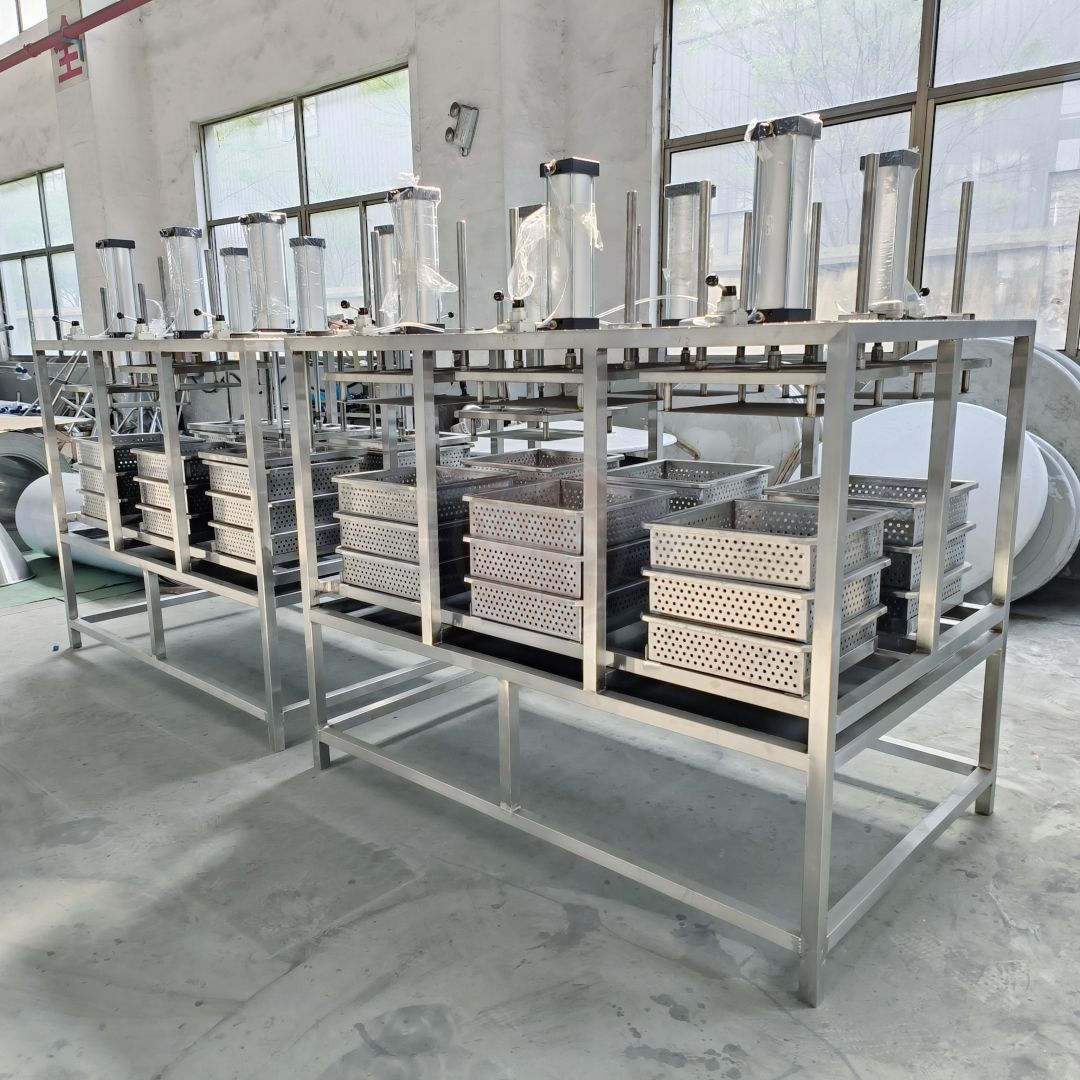
Selecting the correct architecture dictates your daily throughput and labor requirements. Understanding the operational differences between various designs is crucial for plant optimization.
Engineered with thousands of tiny precision-drilled holes, micro-perforated options are currently the top choice for high-volume setups. The primary advantage of this technology is the complete elimination of cheesecloths. In a bustling commercial setting, removing cloths saves countless hours of manual labor. It also eliminates the recurring cost of replacing worn fabrics. More importantly, it significantly reduces the risk of bacterial cross-contamination. The exceptionally smooth internal surface leaves a pristine professional rind ready for immediate brining.
While micro-perforated solutions dominate modern facilities, traditional lined vessels are still utilized for specific heritage varieties. These containers feature larger drainage holes and require a reusable cloth liner to prevent curd loss. However, they present distinct limitations when paired with a high-speed pressing system. Operators must manually adjust the cloths to prevent severe wrinkles from forming on the rind. This manual intervention creates a noticeable bottleneck in fast-paced production lines.
To maximize daily throughput, industrial facilities press multiple cheeses simultaneously using cassette systems. A multi-cavity cassette groups several individual forming units into a single rigid block. This spatial optimization allows a single pneumatic pressing head to apply uniform force to dozens of cheeses at once. Designed to be lifted by automated hoists, these cassettes move seamlessly from the pressing station to the brining vats.
| Container Type | Drainage Method | Automation Compatibility | Best Application |
|---|---|---|---|
| Micro-Perforated | Precision micro-holes | High | High-volume commercial blocks |
| Traditional Lined | Large holes with cloth | Low | Heritage and specialty wheels |
| Cassette Systems | Micro-perforated grid | Maximum | Automated continuous production lines |
The material construction dictates lifespan, reaction to extreme pressure, and compatibility with harsh industrial cleaning protocols.
High-density Polyethylene and Polypropylene are the most prevalent materials utilized in modern commercial cheesemaking. These plastics are exceptionally lightweight. This makes them highly ergonomic for operators to handle when automation is not fully implemented. They are cost-effective and easily injection-molded into complex designs. The defining characteristic of these polymers is their slight structural flexibility. When subjected to the immense force of an industrial machine, these plastics flex on a microscopic level without shattering. This micro-flexibility distributes mechanical stress evenly across the structure to prevent catastrophic cracking.
Stainless steel boasts a long history in dairy processing and remains highly relevant for specific high-pressure applications. It offers ultimate longevity and extreme pressure resistance. Under standard commercial pressing conditions, steel is virtually indestructible. It provides impeccable hygiene because it is largely impervious to scratching and chemical degradation. In contrast, steel units are significantly heavier. This weight increases operator fatigue in manual-assist setups. They are also considerably more expensive to manufacture and lack intricate micro-perforation capabilities.
Effective moisture control is the absolute cornerstone of commercial cheesemaking. The physical design of the container directly dictates how efficiently moisture leaves the compressed curd.
When downward force is applied, curd grains compress and force trapped liquid outward. The design must facilitate this escape rapidly and evenly. If pressure escalates faster than the liquid can drain, the outer layer of the cheese seals prematurely. This phenomenon traps moisture deep inside the core. Trapped moisture leads to rapid spoilage, unwanted mechanical holes, and a highly inconsistent texture.
The pattern of drainage holes is a meticulously engineered feature. Perforations must be strategically placed to prevent liquid from pooling at the bottom. An optimal design features a higher density of holes near the base and lower corners. This layout aligns perfectly with where gravity and applied pressure naturally force the liquid.
Beyond simple perforations, the internal texture plays a crucial role. Many industrial designs feature internal micro-grooves. These microscopic channels guide expelled liquid down the sides to the drainage holes with remarkable efficiency. Inadequate Whey Drainage inevitably leads to uneven moisture content. This creates highly acidic sour spots that result in a flawed final product failing commercial grading standards.
Geometric shape influences much more than visual appeal. It dictates downstream processing efficiency and global packaging logistics.
Rectangular formats are highly favored in industrial production for their unparalleled downstream efficiency. A rectangular Cheese Block can be fed into automated slicing machines with zero edge waste. This is a critical factor for producing consumer-packaged sandwich slices profitably. Furthermore, the industry standard for commercial trade is the Euro-block. Moulds engineered for Euro-blocks ensure the final product fits perfectly into standard vacuum-seal bags and shipping cartons. This standardization optimizes palletizing and international export logistics.
Round formats remain essential for traditional varieties like Gouda and Parmesan. The cylindrical shape promotes even rind development and uniform aging within climate-controlled caves. However, processing round wheels in an industrial setting presents unique engineering challenges. The press often requires custom pressing heads or centering guides. These guides guarantee the pneumatic cylinders apply force perfectly to the center of the follower. Even minor misalignment can cause the wheel to press lopsidedly.
Understanding the mechanical relationship between your pressing equipment and forming containers is critical. The physical force exerted is immense. It is designed to expel moisture rapidly and bind curds into a solid uniform structure. If the chosen container cannot withstand this specific force, the results range from poor product quality to catastrophic equipment failure.
Modern automatic cylinder pressing machines utilize advanced pneumatic systems to apply precise force. For example, high-end automated presses feature adjustable pressure ranges typically between 0.1 and 0.6 MPa. A common misconception among facility operators is confusing the line pressure of the machine with the actual pressure applied to the cheese curd.
Specifically, line pressure dictates how much force the cylinder generates. However, the actual pressure on the cheese depends entirely on the surface area of the follower. A cylinder pushing with maximum MPa onto a small area creates a much higher pressure per square inch than the same force applied to a large multi-block cassette. You must verify the maximum pressure rating of the plastic against the specific output of your equipment. Exceeding these tensile strength limits causes the material to warp, bow, or ultimately fracture.
The specific recipe dictates the pressing profile. Different moisture targets demand vastly different mechanical approaches. Hard cheeses require aggressive moisture expulsion applied over many hours. Therefore, containers used for hard cheeses must feature thick reinforced walls and heavy-duty followers. A standard thin-walled unit will simply buckle under sustained force.
Conversely, semi-hard cheeses retain more moisture and require a gentler graduated pressing profile. The primary goal is to consolidate the curd and shape the rind without forcing out excessive butterfat. While the pressure is considerably lower, the equipment must still be robust enough to handle the repetitive high-frequency cycling of an automated press.
Pairing a heavy-duty press with an inadequate container is a remarkably costly operational error. If a plastic unit shatters inside the pressing chamber, the sudden release of mechanical resistance causes the pressing cylinder to overextend or slam downward violently. This aggressive motion can bend pneumatic cylinder rods, destroy internal seals, or severely misalign pressing heads. Repairing such damage requires specialized technician intervention and leads to expensive production downtime.
Even the most durable industrial equipment requires rigorous maintenance to ensure operational longevity and hygienic safety. In a bustling commercial dairy environment, these items are subjected to extreme mechanical stress, thermal shock, and harsh chemical exposure daily.
Modern dairy facilities rely heavily on automated Clean-In-Place systems to sanitize equipment efficiently. This completely eliminates the need for manual scrubbing. Industrial containers must be fully compatible with these aggressive cleaning cycles.
A standard automated cycle involves high-temperature alkaline solutions followed by acidic washes to remove mineral scale. When purchasing a Cheese Mould, it is imperative to confirm thermal and chemical resistance. High-quality food-grade plastics are engineered to withstand these harsh environments without degrading. Utilizing lower-grade plastics results in warping or brittleness when exposed to standard thermal shocks. A warped unit will no longer fit its follower tightly, leading to uneven pressing and extrusion.
Routine physical and tactile inspections are a non-negotiable aspect of dairy plant maintenance. Over time, the repetitive stress of high-pressure cycling causes microscopic fractures in plastics or stress fatigue in stainless steel welds.
Micro-cracks are particularly hazardous in food processing. These tiny fissures are often invisible to the naked eye but harbor dangerous pathogens. Because these cracks protect bacteria from the mechanical flushing action of cleaning fluids, standard protocols may fail to sanitize the equipment completely. Facility managers must implement a scheduled inspection protocol. Any compromised units must be immediately removed from service before a micro-crack propagates and causes a burst under pressure.
Maximizing the return on investment for your dairy facility requires pairing your pressing machinery with the exact right forming equipment. This vital decision means carefully factoring in material science, verified pressure ratings, and advanced drainage capabilities.
The right selection not only ensures a highly consistent premium-quality product but also significantly streamlines your daily production throughput and sanitation routines. Operating with mismatched or inadequate equipment is a risk that modern high-volume facilities simply cannot afford.
We strongly encourage plant engineers and facility managers to evaluate their current production demands and equipment compatibility today. By sourcing an automated Cheese Press and perfectly matched forming accessories from trusted industrial manufacturers, you can eliminate bottlenecks. Upgrade your facility safely and ensure decades of reliable high-yield dairy production.
No, compatibility is highly specific and rarely universal. Forming units must precisely match the internal dimensions, pressing plate surface area, and maximum pressure capabilities of the machine. Automated industrial presses often utilize proprietary multi-cavity cassettes or standardized Euro-block formats to function correctly with their conveyor and pressing head systems. Using an incorrectly sized unit results in uneven pressure distribution. This causes the pressing cylinder to tilt, which may damage the internal pneumatic seals of the machine and ruin the entire batch.
Micro-perforated plastic designs are widely considered the absolute industry standard for optimal liquid expulsion in commercial settings. These units are engineered with thousands of microscopic holes and internal grooved textures. This advanced engineering provides highly efficient escape routes for expelled moisture without the need for traditional cheesecloths. Consequently, it significantly reduces manual labor costs, minimizes the risk of bacterial cross-contamination, and allows for seamless integration into automated washing systems.
Industrial pressing pressure varies entirely based on the cheese variety and moisture target. Soft and semi-hard cheeses may only require 0.1 to 0.2 MPa of pneumatic line pressure to gently consolidate the curds. In contrast, hard aging cheeses demand aggressive moisture expulsion, often requiring prolonged pressing at 0.4 to 0.6 MPa. It is critical to calculate the actual pressure per square inch applied to the cheese surface, which depends on the diameter of the pneumatic cylinder and the surface area of the follower lid.
Lipping or edge cracking occurs when there is a mechanical mismatch between the follower lid and the base container, or when pressure is applied too rapidly. If the follower is too small, curds extrude through the gap under high pressure, creating a lip. If pressure ramps up too fast, the outer rind seals prematurely, trapping whey inside the core. This trapped moisture eventually causes the block to fracture or crack during the aging process. Utilizing a programmable automated press with gradual pressure escalation eliminates this issue.
Generally, no. While wooden vessels hold significant historical value and are still utilized in artisanal low-pressure cheesemaking, they are entirely unsuitable for modern industrial environments. Wood simply cannot withstand the extreme pneumatic or hydraulic force generated by commercial equipment and will splinter instantly. Furthermore, wood is inherently porous. It cannot meet the strict sanitation and high-temperature automated cleaning requirements mandated by modern industrial dairy safety regulations.
High-density food-grade plastic models are exceptionally durable and can last for many years if properly maintained. However, their actual operational lifespan depends heavily on daily production variables. Factors such as the maximum pressing force applied, the frequency of pressing cycles, the harshness of cleaning chemicals, and physical handling procedures all impact polymer longevity. Routine inspections for stress whitening or micro-cracks are essential to determine when a unit has reached the end of its safe operational life.
Sizing is a precise mathematical calculation that depends heavily on the target moisture content and specific curd density of your unique recipe. Because curds shrink significantly as liquid is expelled during the pressing phase, the initial volume of unpressed curd is much larger than the final 20kg solid block. Generally, manufacturers provide detailed volume-to-weight conversion charts specific to different cheese categories. Additionally, you must verify that your pressing equipment has sufficient vertical clearance and cylinder stroke length to fully accommodate the container when it is completely full of unpressed curd.