Call Us
+86-15800763021
Send Us
Add
775 Chihua Road, Zhelin Town, Fengxian District, Shanghai
- All
- Product Name
- Product Keyword
- Product Model
- Product Summary
- Product Description
- Multi Field Search
Views: 0 Author: Site Editor Publish Time: 2026-11-29 Origin: Site

Water is the lifeblood of the beverage industry. Yet, it remains one of the most significant expenses and sustainability hurdles for plant operators. In modern manufacturing, minimizing resource consumption is no longer just an environmental goal; it is a critical lever for profitability. If you are upgrading your industrial fruit juice production line, understanding exactly where fluid savings occur can dramatically boost your return on investment. From intelligent cleaning protocols to advanced filtration, today’s automated facilities turn every drop into a measurable asset.
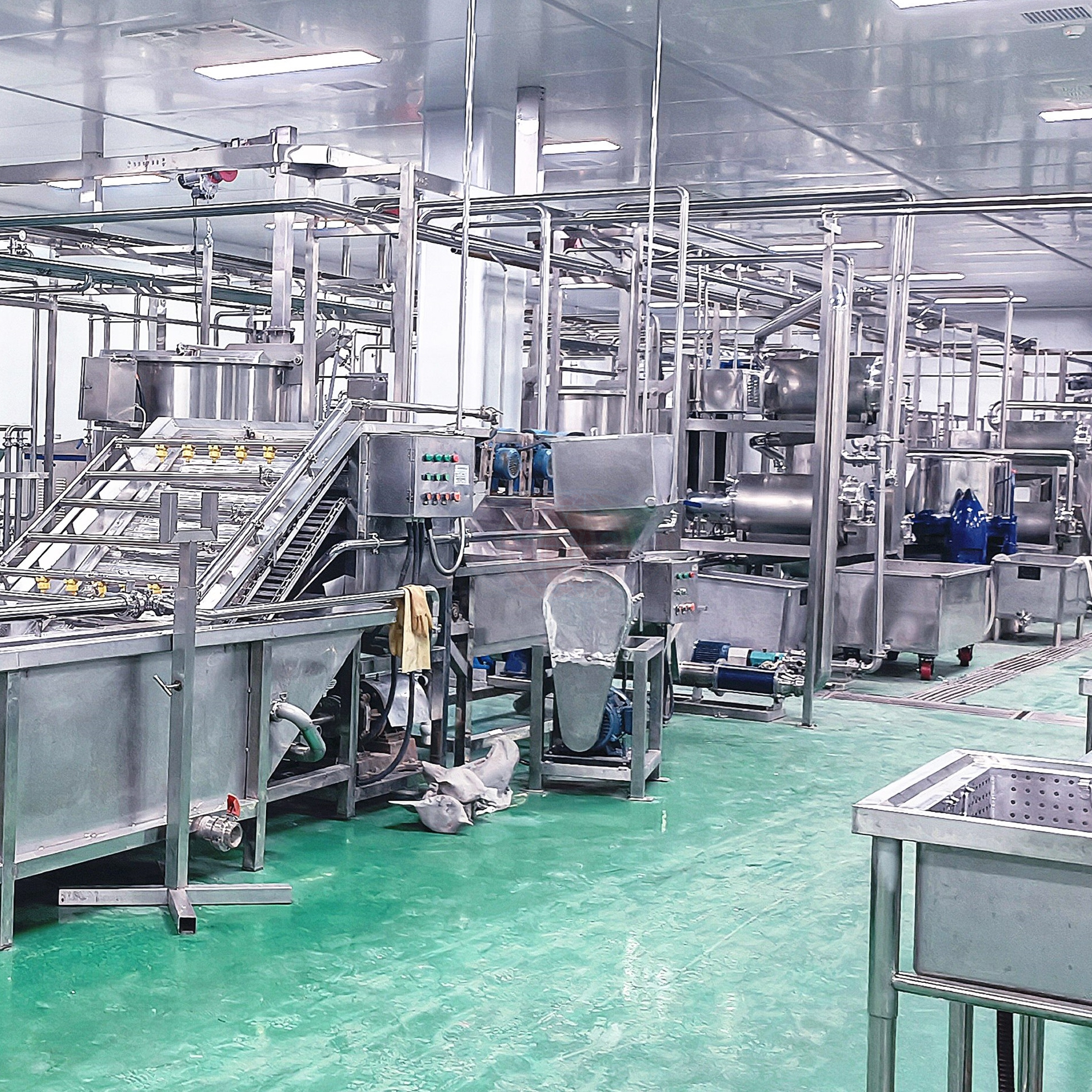
Global beverage manufacturing is undergoing a significant transformation. Driven by regional water scarcity and stricter environmental compliance, the industry is moving away from the "take-make-dispose" model. Market analysis confirms that facilities failing to optimize their water-to-product ratios face increasing operational risks. Today, adopting a circular approach is not just a green initiative; it is a prerequisite for long-term competitiveness. Traditional plants often bleed capital through inefficient washing and sanitation. By upgrading to a fully automated fruit juice production line, operators can eliminate human error, prevent costly leaks, and optimize fluid dynamics through precise, real-time sensor control.
Clean-In-Place (CIP) systems are essential for safety, but they are often the primary source of water waste. A modern production line manages this through advanced CIP Recovery protocols. When transitioning between juice flavors, the system intelligently captures the final rinse liquid instead of discharging it.
This lightly soiled rinse is stored and deployed as the pre-rinse for the next cycle. Beyond the volumetric savings, this method retains residual heat and chemical activity. Consequently, the boiler requires less energy to reach the desired temperature for the subsequent sanitation phase, effectively lowering utility overheads.
Pasteurization and UHT sterilization are energy-intensive stages that require immediate, heavy-duty cooling to preserve juice quality. Older, legacy lines often utilize "once-through" cooling, where fresh municipal water is used once and discarded. This is an unnecessary financial liability.
Engineers now prioritize a Cooling Tower integration. In this closed-loop setup, the cooling medium absorbs heat from the juice and releases it into the air via evaporation, then cycles back to the heat exchanger. This constant recirculation can reduce cooling-related water consumption by up to 95 percent.
During the concentration of fruit juices, significant amounts of liquid are extracted from the raw produce. Smart plants treat this condensate as a valuable resource rather than waste. By channeling this vapor through a high-efficiency Reverse Osmosis system, the liquid is stripped of residual sugars and organic impurities.
The resulting permeate is clean enough to be reused as boiler feed or equipment sanitation spray. This transition effectively lowers the facility’s dependence on municipal freshwater intake, strengthening the overall sustainability profile of the production line.
The initial wash cycle is where high volumes of water are typically lost to soil and debris removal. Rather than providing fresh water to every stage of the washing process, modern lines employ a counter-current Water Reuse strategy. Clean water enters only at the final rinse stage, then flows backward toward the dirtier intake areas.
In addition, integrated mechanical filters continuously remove organic matter like peels and twigs. This creates a sustainable flow where the same water provides extended cleaning duty, drastically cutting total consumption during the fruit intake phase.
Even with strict conservation, industrial lines produce some wastewater. However, progressive managers now treat Effluent as a potential power source. High-sugar wastewater is rich in energy, which can be captured via on-site anaerobic digesters.
As bacteria break down the organic load, they generate biogas. This can be scrubbed and fed into plant boilers to provide renewable thermal energy. Post-treatment water, if processed correctly, can then be utilized for secondary purposes like irrigation or facility cleaning, ensuring that almost nothing is truly wasted.
Investing in high-end, automated processing equipment is a logical business decision centered on risk mitigation. Modern PLC-driven systems utilize precision flow meters and pneumatic valves to ensure liquids are used only when needed. This removes the "run-to-waste" mentality often associated with manual factory operations.
Data-driven dashboards allow managers to track consumption in real-time. By identifying micro-leaks and pressure drops instantly, plants avoid the accumulation of minor inefficiencies that lead to major utility costs. Ultimately, the financial gain from lower discharge fees and energy savings provides a swift and measurable return on investment.
Achieving these goals requires machinery designed for durability and seamless integration. When selecting equipment, prioritize partners who offer modular fluid management that adapts to your specific production volume. A system that integrates heat recovery, filtration, and automated recovery as part of the primary architecture will always outperform retrofitted solutions. Focus on foundations that treat water conservation as an engineering standard, ensuring long-term operational resilience.
Resource conservation has moved from a secondary environmental goal to a foundational element of industrial success. By leveraging cascading wash cycles, thermal loops, and smart membrane filtration, beverage manufacturers can significantly reduce overheads. Upgrading to a fully automated line ensures that your facility is prepared for future regulatory requirements while securing immediate gains in operational efficiency.
Depending on the number of daily flavor changeovers and the size of your piping, a recovery system can typically reduce total cleaning water consumption by 30 to 50 percent by repurposing final rinse stages for initial pre-rinses.
It can be safely used for non-potable applications such as cooling tower makeup, floor cleaning, or equipment external washing. While it is not used in the product itself, on-site treatment ensures it meets the safety standards required for facility-wide auxiliary use.
A closed-loop system is essential because it eliminates the continuous "once-through" discharge of water. By recirculating the cooling medium and releasing heat through evaporation, you avoid massive municipal supply costs and reduce the overall environmental footprint of your thermal processing.
Automation eliminates the human element of "forgotten" hoses and over-rinsing. Precision sensors ensure that flow is strictly regulated and timed to the second, which stabilizes consumption patterns and makes it easy to monitor and reduce waste via software dashboards.
For most mid-to-large scale facilities, the combination of lower water intake costs, reduced wastewater surcharges, and energy recovery results in a full return on investment within two to four years.