Call Us
+86-15800763021
Send Us
Add
775 Chihua Road, Zhelin Town, Fengxian District, Shanghai
- All
- Product Name
- Product Keyword
- Product Model
- Product Summary
- Product Description
- Multi Field Search
Views: 0 Author: Site Editor Publish Time: 2026-10-07 Origin: Site

The food and beverage industry is evolving at breakneck speed. Manufacturers face intense pressure today. You must scale operations while keeping overhead costs aggressively low. Picture a hot summer day on the warehouse floor. Retail orders for your flagship sparkling drink are flooding in. Yet manual processing causes severe bottlenecks. Pallets sit half-empty. Delivery trucks wait. These daily operational hiccups severely hurt profit margins. They stifle brand expansion.
Implementing an Automation Upgrade offers a scalable, long-term solution to these exact pain points. This comprehensive guide explains exactly when to transition from manual to automated processes. We explore the core equipment involved in modernization. You will also get actionable frameworks for calculating your return on investment.
Looking at recent market trajectories, the beverage manufacturing sector is undergoing a massive transformation. Industry 4.0 principles drive this shift. Supply chain volatility and changing consumer preferences for functional, health-oriented drinks force brands to adapt rapidly. SKU proliferation means facilities must switch bottle sizes and flavors multiple times a day. Industry analysts consistently note that reliance on manual labor is no longer sustainable for mid-to-large scale facilities. Instead, the focus has entirely shifted toward predictive maintenance, automated sanitation, and data-driven throughput. Facilities embracing mechanical integration survive market fluctuations. Furthermore, they actively capture significant market share from competitors refusing to modernize legacy systems.
Knowing exactly when to transition requires careful observation of your current operations. Upgrading is fundamentally about recognizing symptoms of an outdated system before it compromises your market position. Look closely at your daily floor metrics.
Human speed dictates maximum output in semi-manual facilities. This creates severe imbalances across production stages. For example, liquid preparation and mixing phases often finish faster than your manual packaging team can bottle the product. You now have a critical bottleneck. Manual processes inherently slow down the entire line. Staged liquids sit idle in holding tanks. Production volume plateaus despite adding more manual shifts. This is a primary indicator that mechanical intervention is required to synchronize and accelerate the workflow.
The manufacturing sector consistently faces challenges in recruiting and retaining reliable manual labor. High turnover rates lead to continuous cycles of hiring, training, and onboarding. These cycles drain facility resources. Manual labor costs continuously rise due to inflation and wage demands. Introducing smart machinery stabilizes these operational costs. Facilities insulate themselves from the volatility of the labor market by replacing highly repetitive manual tasks with automated systems. This strategy maintains predictable, fixed overhead costs.
Brand reputation relies entirely on consistency. Consumers expect the exact same flavor profile, carbonation level, and mouthfeel in every single bottle. Human error during manual mixing or filling inevitably leads to frustrating inconsistencies. A slight miscalculation in syrup dosing alters the product entirely. Inconsistent pressure during carbonation ruins the mouthfeel. Quality control audits often reveal fluctuating Brix levels or varying taste profiles between batches. Manual handling is almost always the root cause.
Stop bleeding profits on the factory floor. Faulty manual valves leak expensive flavor concentrates daily. Outdated semi-automatic filling stations are notoriously inefficient for liquid conservation. Operators frequently overfill bottles without precise sensor-driven controls. This leads to costly spillage. Underfilling leads to rejected products. Manual capping and handling also increase the risk of damaged packaging and broken glass. Automation becomes a financial imperative when raw material waste accounts for a noticeable percentage of daily production costs.
Turning down lucrative retail contracts is a frustrating scenario for a growing beverage brand. Large wholesale orders slip away simply because current output capacity is maxed out. Your manual processes actively restrict revenue growth if your sales team outpaces your production floor. An automated system provides the rapid scalability required. You can confidently accept larger orders and expand into new regional distribution channels.
To make an informed purchasing decision, you must understand the specific machinery constituting a modern system. Investing in highly efficient infrastructure involves integrating several specialized components. Each machine optimizes a distinct phase of the manufacturing process.
The foundation of any flavored beverage is liquid preparation. An automated Syrup Mixer plays a critical role in precisely blending water, liquid sugar, flavorings, and chemical concentrates. Modern automated mixers utilize advanced digital mass flow meters. They continuously monitor and maintain perfect Brix levels, or sugar content, and fluid temperature. The mixer ensures completely uniform formulation by automating the dosing process. This eliminates the risk of human error and standardizes the baseline taste.
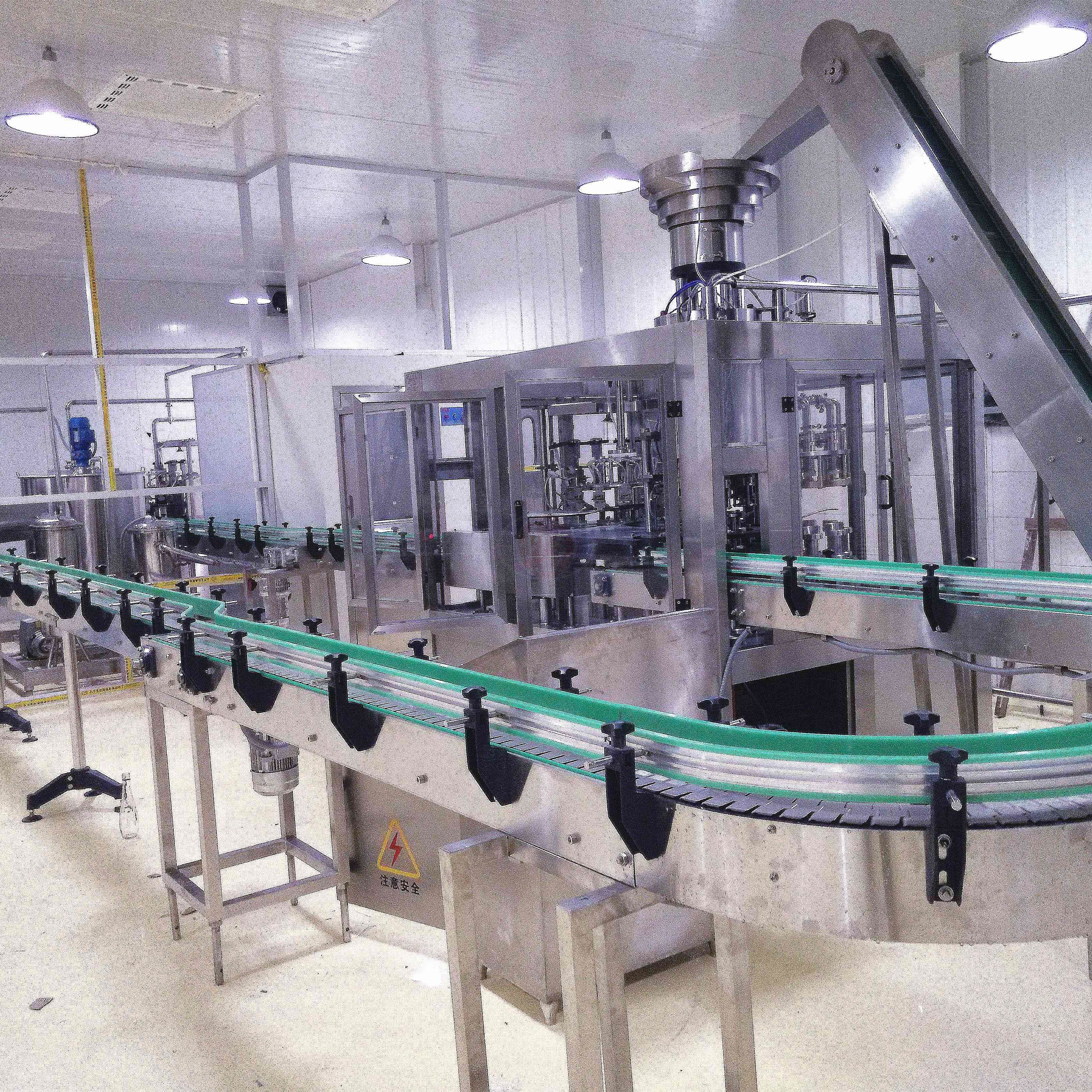
The filling phase determines true production speed. Modern systems often feature a 3-in-1 monoblock design. This integrates washing, filling, and capping into a single compact unit. Equipment built with SUS304 or SUS316L food-grade stainless steel ensures maximum hygiene. Depending on your configuration, high-speed rotary fillers process anywhere from 3,000 to 24,000 bottles per hour. Gravity filling systems handle still beverages like juice or water. Isobaric pressure filling systems are mandatory for carbonated drinks to prevent foaming and CO2 loss. A modern Beverage Filling Machine uses advanced Programmable Logic Controller touch screens. Operators adjust fill levels with millimeter precision, automatically shutting off valves the millisecond the target volume is reached.
The final stage secures the product for distribution. An end-to-end Bottling Line moves bottles seamlessly via conveyors. Automated cappers apply exact magnetic torque to prevent leaks. Optical sensors ensure labels align perfectly. Finally, bottles group and pass through shrink-wrapping or case-packing machines. This entire sequence occurs continuously without direct human intervention. Throughput increases drastically.
| Equipment Component | Primary Function | Key Automation Benefit |
|---|---|---|
| Syrup Mixer | Blends raw ingredients, water, and flavorings. | Maintains exact Brix levels and eliminates recipe variance. |
| Beverage Filling Machine | Washes, fills, and caps containers. | Ensures precise volume control and supports 3,000 to 24,000 BPH speeds. |
| Automated Bottling Line | Labels and packages the final product. | Maximizes throughput and ensures uniform packaging presentation. |
Modernizing your facility provides significant financial relief to human resources departments. The transition redefines how labor is utilized within a facility. It fundamentally shifts the cost structure of production.
A common misconception is that automation solely exists to eliminate jobs. In reality, it elevates the workforce. Workers are removed from physically demanding, highly repetitive tasks. They transition into supervisory, maintenance, and quality control roles. Operators monitor Supervisory Control and Data Acquisition systems. They manage machine parameters and conduct advanced quality audits. This shift reduces physical fatigue and workplace injuries. It maximizes the value of human intellect on the factory floor.
Manual production lines are bound by human limitations. Workers require breaks, shift changes, and overtime pay when production runs long. In contrast, an automated system operates 24 hours a day, 7 days a week, with minimal supervision. Facilities eliminate costly overtime pay and shift differentials by removing the dependency on large manual crews. Continuous operation drastically lowers the overall cost-per-unit. This makes the business far more competitive in retail pricing.
Hygiene is absolutely non-negotiable in the food and beverage industry. Regulatory bodies impose strict standards to prevent contamination. Automation directly addresses these critical industry standards by engineering risk entirely out of the production process.
Modern automated lines are meticulously designed as closed systems. They isolate the beverage from the external environment. Clean-in-Place technology, known as CIP, is a vital feature. Operators simply initiate a digital sequence from the control panel. The system automatically circulates specialized cleaning agents, acidic solutions, and sterile water through the mixing tanks, piping, and filling valves. Manual disassembly is unnecessary. CIP systems use precise temperature and flow-rate controls to guarantee sanitization. This effectively prevents microbial growth between production runs.
Human interaction is the highest risk factor for product contamination. The risk of introducing pathogens increases exponentially every time a worker manually handles a bottle or mixing tool. Fewer human hands interact with the product by utilizing automated conveyor networks. This automated isolation ensures strict compliance with Food Safety Modernization Act regulations and global ISO 22000 standards. It protects the brand from catastrophic product recalls.
Facility managers must determine the most logical implementation strategy based on operational budget and immediate needs. Upgrading does not always require a massive, immediate capital expenditure. Evaluate your specific engineering constraints.
A phased approach is highly effective for facilities with constrained capital. Identify the single largest bottleneck. Upgrade that specific machine first. A facility might install a new high-speed filler while temporarily maintaining manual packaging processes downstream. Once the filling bottleneck clears and revenue increases, the facility reinvests profits to automate the downstream packaging section. This method spreads out capital investment and minimizes facility-wide downtime.
A full turnkey solution is optimal for businesses experiencing explosive demand. It is also ideal for building a new facility from the ground up. This involves installing a completely new, integrated Beverage Production Line from scratch. The primary benefit is seamless integration. Every machine communicates via the same network. Purchasing a full line from a single manufacturer ensures a uniform warranty. It provides centralized technical support and synchronized operational speeds across all production phases.
| Upgrade Strategy | Ideal Candidate | Primary Advantage | Potential Drawback |
|---|---|---|---|
| Phased Approach | Facilities with limited initial budgets. | Lower upfront cost; solves immediate bottlenecks. | Integration challenges with older legacy equipment. |
| Turnkey Solution | High-growth brands or new facility builds. | Seamless software integration; single accountability point. | High initial capital expenditure; longer installation time. |
Executing a large-scale equipment purchase requires clear financial justification. Buyers must objectively calculate how quickly the new machinery pays for itself through increased efficiency and aggressive cost reductions.
The most straightforward way to assess ROI is analyzing the cost per bottle before and after the upgrade. Take the total daily overhead, including labor, energy, and raw materials. Divide it by the number of units produced. Automation drastically increases units produced per hour while lowering manual labor costs. The overall cost of producing a single beverage drops significantly. This wider profit margin per unit dictates the speed of your ROI.
Financial calculations must account for material savings. Precise mixing technologies ensure expensive flavor concentrates are never over-dosed. Non-spill filling valves prevent liquid loss. This ensures 100 percent of the prepared beverage makes it into the final product. Saving a few milliliters of liquid per bottle translates to thousands of dollars in reclaimed raw material costs over a fiscal year. Furthermore, the reduction in mechanical downtime associated with modern, reliable equipment accelerates the payback period.
Selecting the appropriate equipment supplier extends far beyond the initial purchase price. You are investing in a long-term operational partnership. The manufacturer you choose directly impacts your facility Overall Equipment Effectiveness and ability to scale.
No two beverage manufacturing facilities operate under identical conditions. Differences in floor space, utility supply, and product portfolios dictate that off-the-shelf machinery is rarely sufficient. Partner with a supplier possessing robust customization capabilities. They tailor the line to your specific operational parameters. A competent manufacturer conducts a thorough engineering audit of your products before proposing a machine design. They adjust configurations to accommodate various bottle shapes, sizes, and specific liquid viscosities.
The true cost of industrial machinery is calculated over its entire lifecycle. Even meticulously engineered equipment experiences wear and tear. Emphasize the necessity of a robust technical support framework. This includes access to remote troubleshooting diagnostics and rapid spare parts availability. Comprehensive on-site training for your staff is crucial. Empowering your operators to handle minor adjustments and preventative maintenance ensures long-term reliability.
| Feature Category | Standard Off-the-Shelf Equipment | Customized Automation Upgrade |
|---|---|---|
| Footprint & Layout | Fixed dimensions; requires costly facility modifications. | Engineered to match existing floor plans and custom configurations. |
| Product Flexibility | Optimized for a single liquid viscosity and bottle type. | Features adjustable filling valves and programmable recipes. |
| Integration | Standalone operation with limited data-sharing capabilities. | Seamless integration with existing enterprise resource planning systems. |
Transitioning to automated systems is no longer a luxury. It is a fundamental requirement for survival and growth in today highly competitive beverage market. Upgrading your equipment solves major production bottlenecks swiftly. It ensures consistent product quality while driving down operational costs. Act now before outdated manual systems stifle your future expansion. Whether you need a single piece of machinery or a full facility overhaul, we encourage you to visit wfoodmachinery.com. Evaluate your current setup, find the exact matching equipment for your brand, and request a quote to start your modernization journey today.
Small facilities often wonder when the investment makes financial sense. Generally, if your facility produces more than 2,000 bottles per hour and struggles to keep up with orders, mechanical intervention is justified. At this volume, the cost of manual labor and product waste quickly outpaces the financing costs of an entry-level automated system.
Flexibility is a core feature of modern manufacturing equipment. Advanced systems utilize adjustable guide rails, interchangeable star wheels, and programmable logic controller recipes. Operators switch from a 500-milliliter round PET bottle to a 1-liter square glass bottle in less than thirty minutes. This rapid changeover capability allows brands to diversify product offerings without purchasing separate machines for every SKU.
The capital investment required varies significantly based on several foundational variables. Costs are dictated by required production capacity, beverage complexity, and whether the facility opts for a phased upgrade or a full turnkey solution. A targeted upgrade might range from tens of thousands to a hundred thousand dollars. A fully automated, high-speed aseptic line requires a multi-million dollar expenditure. Factoring in reduced labor and waste, most facilities see a favorable ROI within 24 to 36 months.
Yes, integrating modern automated machinery into an existing legacy system is a highly practical strategy. Modern machines are equipped with advanced control systems allowing the new equipment to adjust its operating speed. This matches the throughput of your older upstream or downstream machines. Your engineering team must assess mechanical compatibility, such as conveyor belt heights, and ensure correct communication protocols between different machine brands to ensure a seamless retrofit.
An upgrade is a complex engineering project demanding meticulous planning. The timeline typically spans anywhere from 4 to 8 months from initial consultation to full commercial production. This timeline includes consultation and engineering design, custom manufacturing and assembly, Factory Acceptance Testing, shipping and physical installation, and finally, Site Acceptance Testing and comprehensive staff training.
The primary distinction lies in precision, consistency, and technological intervention. Operators manually weigh and add raw ingredients in a standard manual scenario. This is highly susceptible to human error and temperature fluctuations. An automated system eliminates these variables through inline blending and continuous digital monitoring. It utilizes high-precision mass flow meters and automated dosing valves to inject exact quantities of ingredients. The mixture automatically adjusts in real-time to guarantee absolute uniformity.
Automation will not alter the fundamental recipe or intended flavor profile of your beverage. Upgrading to automated processing equipment is the most effective way to protect and standardize your product taste. Manual processes are prone to minor human errors causing noticeable shifts in flavor. Automated systems operate with mathematical precision. They completely eradicate the inconsistencies of manual production, resulting in a perfectly reliable and uniform taste across every single production run.