
Views: 182 Author: Site Editor Publish Time: 2025-06-24 Origin: Site


In the modern beverage and packaging industry, the Water Production Line is the backbone of efficiency, precision, and safety. But what exactly does a water filling production line entail? This advanced system refers to a series of interconnected machines and processes that handle the purification, bottling, capping, labeling, and packaging of drinking water. Whether it’s for mineral water, purified water, or spring water, this fully automated line transforms raw water into ready-to-market bottled products.
Understanding the intricacies of a water production line is essential for manufacturers aiming to optimize output, ensure hygiene, and comply with global standards. This article delves into its key components, workflow, technical aspects, benefits, and common industry concerns.
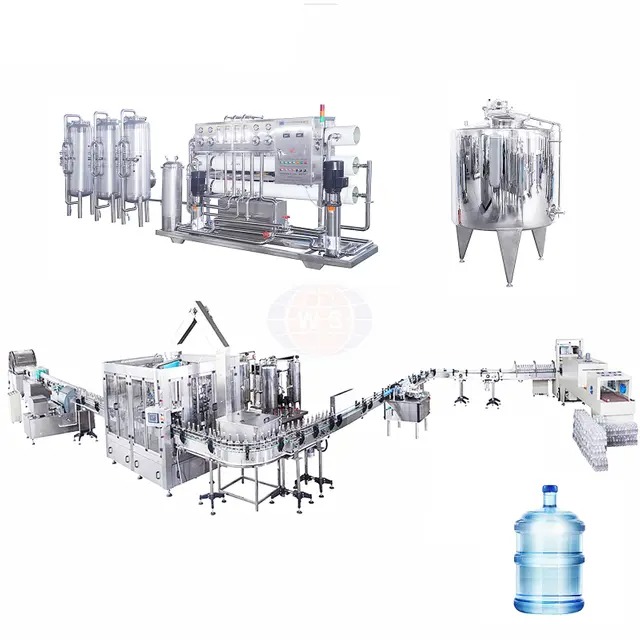
The water production line comprises a systematic flow of operations that begins with water treatment and ends with final product packaging. Each stage plays a vital role in ensuring product integrity.
Water Purification Unit
The process begins with raw water—either from groundwater, municipal supply, or natural sources—being filtered to remove impurities. Typical equipment includes sand filters, carbon filters, reverse osmosis (RO) membranes, and UV sterilizers. This stage ensures the water meets drinking standards.
Water Storage Tank
After purification, the treated water is stored in stainless steel tanks. These tanks are designed to prevent bacterial growth and contamination, maintaining water purity until bottling.
Rinsing and Bottle Sterilization
Empty PET or glass bottles are passed through a rinsing machine that uses purified water or disinfectant to clean them internally and externally.
Filling Station
The rinsed bottles are then transferred to the filling station. Here, the purified water is precisely filled using mechanical or pneumatic filling valves. This part is designed to avoid spillage and maintain speed.
Capping Machine
Once filled, bottles are capped automatically using caps made from food-grade plastic or aluminum. The machine ensures air-tight sealing to prevent leakage and contamination.
Labeling and Coding
Bottles move to the labeling section where automated machines attach brand labels and print production dates or batch codes.
Packaging and Palletizing
Finally, bottles are packed into shrink wraps, cartons, or crates and then palletized for transport.
This seamless automation not only boosts productivity but also minimizes human contact, reducing contamination risks.
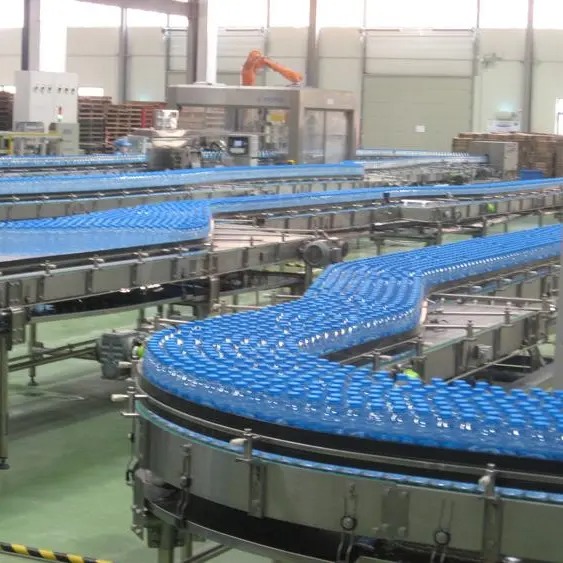
Below is a concise table summarizing the key components and their functions in a typical water filling production line:
| Component | Function |
|---|---|
| Water Purifier | Removes contaminants and adjusts pH/odor/taste |
| Storage Tank | Stores purified water temporarily |
| Bottle Rinser | Cleans and sterilizes empty bottles |
| Filling Machine | Dispenses exact quantity of water into bottles |
| Capping Machine | Seals bottles to prevent contamination |
| Labeling Machine | Attaches branding labels and prints manufacturing info |
| Packaging Unit | Wraps or boxes the final bottled products |
Each element must be configured based on bottle type, plant capacity, and production volume.
A fully functional water production line brings a multitude of advantages to manufacturers aiming for scalable and compliant production.
Automated lines can fill thousands of bottles per hour, drastically improving throughput compared to manual or semi-automated systems. These machines are equipped with servo motors, PLC control systems, and sensors that maintain consistency, speed, and low energy consumption.
With integrated sterilization units and contactless filling, water production lines help manufacturers meet WHO and ISO standards. They are designed to comply with Good Manufacturing Practices (GMP), thereby ensuring the water remains safe throughout processing.
Although the initial setup may be capital-intensive, automation leads to labor cost reduction, fewer human errors, minimal product wastage, and reduced downtime. Over time, this leads to a high return on investment (ROI).
Modern water filling systems are adaptable and can switch between various bottle volumes—such as 250ml, 500ml, 1L, or even 5-gallon bottles—without major downtime.
Establishing a new water production line requires careful planning and understanding of several technical and operational parameters.
How many bottles do you aim to fill per hour or day? This will determine whether you need a small-scale semi-automatic line or a high-capacity fully automated plant capable of 12,000–36,000 BPH (bottles per hour).
The chemical composition of your water source influences the filtration methods and purification technologies required. For example, high-salinity sources demand advanced RO filtration.
Your production space must accommodate not only the equipment but also allow for future expansion, maintenance access, and utility integration (power, water supply, drainage, etc.).
Many countries require health certifications, sanitation reports, and regular audits for bottled water production. Ensure the line can meet regional food and beverage compliance.
Despite their efficiency, water production lines are not without challenges. Here’s a look at common pain points and how they can be addressed.
Solution: Regular maintenance schedules and predictive diagnostics can help prevent breakdowns. Installing filtration alarms and spare part inventories can reduce unplanned outages.
Solution: Upgrade to vision-based camera systems for real-time detection of incorrect labels. Use automatic rejection arms to remove faulty bottles from the line.
Solution: Use high-precision electronic flow meters or volumetric filling systems to ensure accuracy. Frequent calibration and software monitoring also help.
Most systems can handle purified, mineral, spring, alkaline, and even flavored waters. However, specialized lines may be needed for carbonated or vitamin-enhanced waters.
Depending on the scale, installation and commissioning may take 4 to 12 weeks, including layout design, equipment shipping, and training.
Yes, modular machines often support different molds and settings for various bottle shapes and volumes, though changeover time should be considered.
In today’s competitive landscape, the Water Production Line stands as a critical investment for beverage companies of all sizes. From ensuring the hygienic handling of drinking water to enhancing production throughput and reducing costs, these lines represent the fusion of mechanical engineering, automation, and food safety science.
Investing in a well-designed water filling production line is not just a matter of meeting demand—it’s about delivering quality, consistency, and consumer trust. Whether you're a startup entering the bottled water market or an established brand expanding operations, understanding and optimizing your production line is key to long-term success.