
Call Us
+86-15800763021
Send Us
Add
775 Chihua Road, Zhelin Town, Fengxian District, Shanghai
- All
- Product Name
- Product Keyword
- Product Model
- Product Summary
- Product Description
- Multi Field Search
Views: 0 Author: Site Editor Publish Time: 2026-10-05 Origin: Site

Investing in a commercial beverage facility requires massive capital. You are either upgrading aging infrastructure or building a new processing environment from the ground up. Your most critical operational decision is selecting the right equipment partner. How do you separate reliable engineering partners from vendors merely looking to make a quick sale? Absolute transparency is the answer. A reputable Juice Production Line Manufacturer functions as an open book. They must provide exhaustive disclosures regarding technical parameters, regulatory compliance standards, hidden operational costs, and long-term support. In this technical guide, we break down the exact empirical data your supplier must disclose. This rigorous approach ensures your processing project remains profitable, strictly compliant, and engineered to last.
Complete Technical Transparency: Exact, measurable specifications for all core processing equipment are mandatory to guarantee production stability.
Food Safety Compliance: Full disclosure of Hazard Analysis and Critical Control Points compatibility, sanitary designs, and material grades is non-negotiable.
Strategic Spatial Planning: Top-tier suppliers offer transparent insights into physical footprints, ergonomic workflows, and utility mapping.
Total Cost of Ownership: Demand clear disclosures on ongoing operational expenses like energy consumption and maintenance frequencies.
After-Sales Commitment: Binding guarantees regarding installation timelines and regional spare parts availability must be outlined in the contract.
Accepting vague equipment descriptions poses a major operational risk. The manufacturer must disclose exact mechanical tolerances and throughput limits. Specifically, the Juice Extractor must come with empirical yield data based on your specific raw materials. Extracting citrus oils requires completely different pressures compared to pressing hard root vegetables.
Furthermore, thermal processing details dictate product safety and flavor retention. The supplier must disclose precise temperature control ranges. A high-quality tubular sterilizer should clearly state its operating parameters, such as reaching 137 degrees Celsius for 3 to 5 seconds for Ultra-High Temperature processing. Disclosures for the packaging block must include volumetric accuracy margins, maximum operational speeds ranging from 2000 to 24000 bottles per hour, and mechanical compatibility with PET or glass substrates.
To make an informed procurement decision, you need a clear baseline of what a standard vendor offers versus a true engineering partner. Use the following technical comparison to evaluate your potential suppliers.
| Evaluation Parameter | Standard Vendor Disclosure | Premium Engineering Partner Disclosure |
|---|---|---|
| Material Specifications | Generic "Stainless Steel" descriptions | Certified SUS304 or SUS316L for all direct product contact zones |
| Extraction Yield Data | Vague marketing promises | Empirical testing data categorized by specific fruit types |
| Thermal Control | Basic analog thermostats | PLC-controlled automated data logging with precision sensors |
| Facility Planning | Basic 2D spatial sketches | Comprehensive 3D CAD modeling and utility connection mapping |
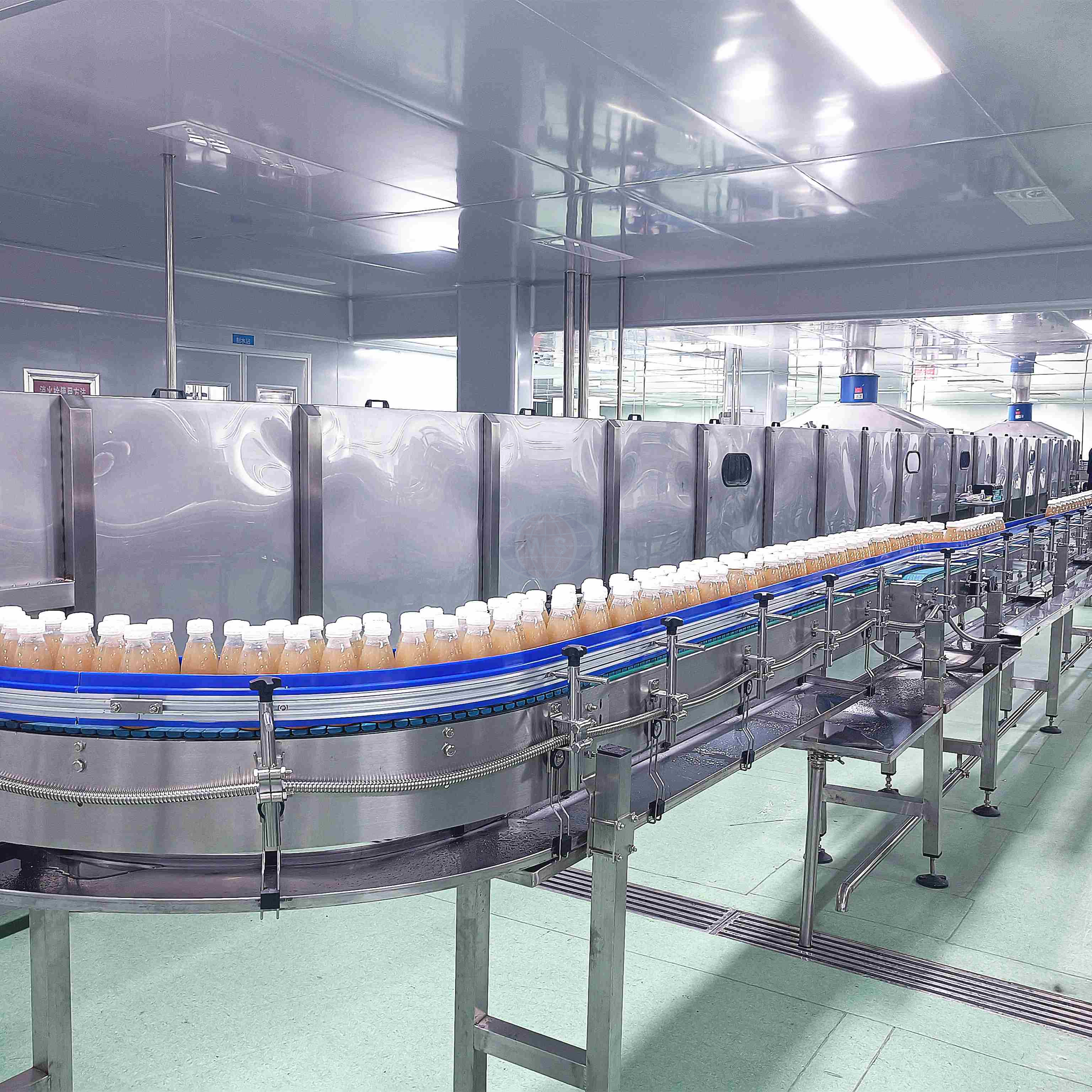
A reliable industrial manufacturer actively assists you in integrating complex systems into your infrastructure. They should disclose exactly how their machinery adapts to your spatial constraints. This includes providing the exact three-dimensional footprint of the entire line. Proper spatial planning ensures the equipment fits safely while adhering to local occupational safety regulations regarding walkway clearances.
Moreover, the workflow must be ergonomically optimized. The layout must actively prevent cross-contamination. Raw fruit receiving zones should be physically separated from the sterile Filling Machine environment. Clear engineering blueprints must detail where industrial utilities need to be positioned. Mapping out chilled water, three-phase electricity, compressed air, and boiler steam connections prevents costly post-delivery modifications.
Food safety is the backbone of commercial beverage production. A single contamination event leads to catastrophic recalls and irreversible brand damage. Therefore, your supplier must disclose how their engineering meets strict food safety regulations. You need documented proof that all food-contact surfaces use high-grade SUS304 or SUS316L stainless steel. All seals and gaskets must comply with FDA standards.
Additionally, the equipment architecture must support your facility's hazard control plan. Does the Pasteurizer feature automated temperature data logging for compliance audits? Detailed explanations of the automated Clean-In-Place infrastructure are also mandatory. You must know the duration of standard cleaning cycles, chemical concentration requirements, and total water consumption metrics.
The initial quotation is only a fraction of what a Juice Plant costs to operate over a fifteen-year lifespan. A trustworthy manufacturer proactively discloses long-term operational expenses. Demand estimated hourly usage metrics for electricity, fresh water, and steam at maximum capacity. Inefficient thermal systems quietly destroy profit margins through inflated utility bills.
In contrast, highly optimized systems justify a higher upfront cost through substantial daily savings. You should receive a documented schedule of expected routine maintenance. Access to empirical data on extraction efficiency is equally vital. Higher fruit yields directly correlate with lower raw material waste. This significantly accelerates your return on investment and minimizes daily operational friction.
Consumer tastes and regulatory landscapes evolve rapidly. Recent industry analyses highlight a massive shift towards smart manufacturing and sustainable processing within the beverage sector. Modern producers face stringent environmental regulations and rising energy costs. Consequently, buyers increasingly demand data-driven insights. Features like real-time Internet of Things monitoring for predictive maintenance and high-efficiency motors that reduce carbon footprints are becoming standard.
A forward-thinking manufacturer should disclose how their machinery aligns with these trends. They must explain their energy recovery systems during thermal processing or water recycling capabilities within the sanitation loop. Staying ahead of these trends ensures your facility remains competitive and compliant for the next decade.
Can the exact same processing line handle both highly filtered clear juices and highly viscous liquids with heavy pulp? You need to know if the system easily switches from processing soft fruits to dense fruits without requiring entirely new modules.
Furthermore, ask for disclosures on packaging flexibility. Can the filling block be adjusted for different bottle volumes with minimal mechanical downtime? The supplier should also disclose whether the current software architecture has the modular capacity to accommodate future additions. Integrating a carbonation module or advanced quality inspection cameras should not require a complete system overhaul.
Advanced processing equipment is useless if your internal team cannot operate it efficiently. The manufacturer must clearly outline their onboarding and commissioning protocols in writing. Demand a realistic schedule covering every phase from manufacturing to on-site mechanical assembly and final electrical commissioning.
Specifically, the disclosure should include detailed parameters for operator training. How many days will senior engineers spend on-site? The curriculum must cover standard operating procedures and emergency safety protocols. The contract must also include a commitment to conducting Factory Acceptance Tests and Site Acceptance Tests. This involves running the line with actual raw materials to empirically prove it meets the promised hourly capacity.
Long-term industrial reliability relies heavily on post-sale transparency. You must understand exactly what happens when a critical component fails during peak production season. Ensure you receive an unambiguous disclosure of what is covered under the warranty. Electrical components often carry different warranty periods than heavy mechanical parts.
Secure a written guarantee regarding how long the manufacturer will stock proprietary replacement parts for your specific machine models. Evaluate their technical support capabilities. Do they offer remote digital troubleshooting via secure cloud connections? You must know how quickly they can dispatch a qualified field service technician in the event of a catastrophic breakdown.
Partnering with an equipment supplier is a long-term relationship requiring absolute trust. Before signing any procurement contract, ensure the manufacturer is willing to fully disclose their technical specifications, food safety compliance features, true operational costs, and comprehensive after-sales support plans. By demanding clear answers about everything from extraction efficiency to filling precision, you actively protect your capital investment.
To configure a highly efficient, transparently engineered system tailored to your specific facility, discover the full range of advanced processing equipment at WFOODMACHINERY today. Our engineering team provides fully customized, high-yield beverage production solutions designed to maximize your operational profitability.
Fruit juices contain natural organic acids that cause rapid microscopic corrosion if lower-grade metals are used. This corrosion compromises the structural lifespan of the machinery and poses severe food safety risks due to heavy metal leaching. A reputable supplier always discloses the use of high-grade SUS304 or SUS316L stainless steel for all direct product contact parts.
While timelines vary significantly based on hourly capacity and line complexity, a standard commercial installation usually takes between three to six months from the initial order placement to the final on-site commissioning. Your supplier should disclose a strict milestone-based timeline in their initial project proposal.
In most industrial scenarios, the answer is no. Citrus fruits require entirely different extraction methodologies compared to apples or berries. The manufacturer must disclose the specific limitations of their extraction technology based on your intended recipe portfolio.
Clean-In-Place is a highly automated infrastructure designed to circulate cleaning chemicals and hot water through pipes and holding vessels without requiring manual disassembly. Disclosures about these cycles are vital because they allow you to accurately forecast your future daily usage of fresh water, harsh chemicals, and thermal energy.
Absolutely. Top-tier equipment builders maintain dedicated engineering teams that provide precise 3D CAD drawings and strategic layout designs. This crucial service ensures optimal operational workflow, maximizes operator safety, and guarantees the most efficient use of available square footage.
When engineered with premium materials and subjected to proper routine maintenance, a high-quality commercial juice processing line typically operates efficiently for fifteen to twenty years. The manufacturer should provide a clear maintenance schedule to help you maximize this mechanical lifespan.
You should request physical copies of their ISO certifications, CE markings, and material test reports for the stainless steel used. A transparent manufacturer will readily supply these documents and explain exactly how their equipment design complies with international FDA or equivalent sanitary standards.