Call Us
+86-15800763021
Send Us
Add
775 Chihua Road, Zhelin Town, Fengxian District, Shanghai
- All
- Product Name
- Product Keyword
- Product Model
- Product Summary
- Product Description
- Multi Field Search
Views: 0 Author: Site Editor Publish Time: 2026-10-07 Origin: Site

Does your beverage plant bleed revenue due to excessive foam? Picture the factory floor. A sudden hiss escapes from the filler bowl. A geyser of sticky liquid spills over the conveyor. The inevitable result is costly machine downtime. While carbonation delivers that crisp, refreshing bite consumers crave, mastering the delicate equilibrium of carbon dioxide remains one of the most notoriously difficult aspects of beverage packaging.
A modern packaging facility operates as a highly sensitive ecosystem. Fluid dynamics, thermodynamics, and mechanical engineering must intersect flawlessly. When they fail to align, foaming becomes a chronic symptom of underlying instability. In this comprehensive guide, we dissect the root causes of product overflow. We will also provide actionable, field-tested solutions to optimize your production efficiency and protect your profit margins.
The beverage landscape is undergoing a massive transformation. Consumer preferences are pivoting heavily toward functional beverages, zero-sugar alternatives, and complex energy drinks. These modern formulations are notoriously prone to volatile foaming. Artificial sweeteners, for instance, lack the dense syrup matrix of traditional high-sugar colas. This causes bubbles to form and shatter with aggressive speed. To combat this volatility, top-tier facilities are moving away from legacy machinery. The industry standard is shifting toward predictive maintenance and automated, sensor-heavy processing units. These digital integrations dynamically adjust to challenging liquid profiles, ensuring high-speed, foam-free production even with the most complex recipes.
The journey of a sparkling beverage is fraught with physical stress. It begins with rigorous water purification and deep deaeration to strip away ambient oxygen. From there, the treated water merges with flavored concentrates. The mixed liquid then enters the carbonation phase. Here, carbon dioxide is forced into the fluid matrix under precise high-pressure conditions. Finally, the supersaturated product is pumped toward the filling and capping carousels.
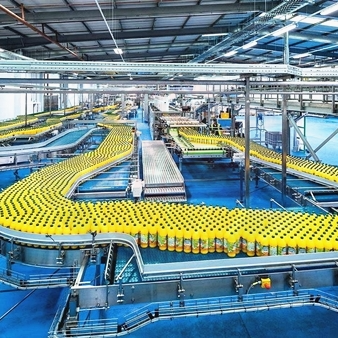
Within this intricate Carbonated Drink Production Line, specific danger zones exist where stability is easily compromised. The primary areas of concern include the turbulent environment of the filler bowl, the mechanical action of the filling valve itself, and the brief millisecond immediately after pressure release before the cap is securely crimped.
Understanding these bottlenecks is vital because the financial toll of liquid waste is staggering. When a batch becomes volatile, operators instinctively throttle down line speeds to prevent bottle overflows. Consequently, this reactive adjustment plummets the overall equipment effectiveness of the plant. Furthermore, erratic fluid behavior leads to rejected under-filled containers, extended clean-in-place recovery times, and ultimately diminished profit margins.
To conquer foam, plant managers must first understand the fundamental physics of gas solubility. This is governed primarily by Henry's Law. In practical terms, the volume of gas you can dissolve into a liquid is directly proportional to the applied pressure and inversely proportional to the liquid temperature. When carbon dioxide is injected under high pressure into a chilled environment, it remains docile and dissolved. Conversely, if the pressure suddenly drops or the temperature creeps upward, the liquid becomes supersaturated. The trapped gas aggressively seeks an escape route.
As the carbon dioxide breaks out of the liquid structure, it actively hunts for nucleation sites. These sites are microscopic imperfections where gas molecules can aggregate to form a bubble. On a factory floor, a nucleation site could be a speck of ambient dust inside an improperly rinsed bottle. It could be a jagged particle of fruit pulp or microscopic mineral scaling inside an aging filler pipe. Once a single bubble forms, it acts as a catalyst. It rapidly expands and rises to the surface to create a thick layer of foam.
In addition, rough mechanical handling applies intense physical shear stress to the beverage. Turbulent flow through sharp pipe bends or the abrupt snapping action of an older mechanical valve violently forces the dissolved gas out of the solution. This kinetic agitation triggers an eruption even if your thermal and pressure metrics appear perfectly dialed in on the control panel.
Maintaining an unbroken cold chain is the bedrock of stable beverage manufacturing. Before the fluid ever reaches the Carbonation Machine, it must be aggressively chilled. Cold liquids possess a naturally higher capacity to lock in dissolved gases. If the ambient warehouse temperature spikes during a summer shift, the beverage warms up. This instantly diminishes its gas holding capacity, resulting in immediate, unmanageable foaming at the filler head.
Equally critical is the orchestration of pressure zones. Modern packaging relies heavily on the principle of counter-pressure filling. Before a single drop of liquid enters the container, the empty bottle or can is flushed and pressurized with pure carbon dioxide. This perfectly matches the internal pressure of the filler bowl. This precise equilibrium ensures that the beverage glides gently into the container driven purely by gravity. It completely bypasses the violent pressure drop that would otherwise cause the gas to expand explosively.
After the container reaches its target fill volume, the excess head-space pressure must be vented before capping. This venting process demands meticulous calibration. If the snift valve releases the pressure too aggressively, the sudden atmospheric exposure will cause the liquid to boil over the rim. Regular auditing and calibration of both temperature probes and pressure transducers are highly recommended to ensure your automated logic controllers are reacting to accurate data.
While mechanical faults are the usual suspects during a breakdown, the chemical architecture of the beverage plays an equally decisive role. The Brix level directly dictates the viscosity and surface tension of the liquid. High-sugar colas or thick energy drinks create a dense syrup matrix that can trap escaping gas bubbles. This results in a thick, slow-dissipating foam head. In contrast, diet sodas lack this heavy density. Their bubbles form, rise, and shatter with aggressive speed, demanding entirely different machine parameters.
Inconsistent Syrup Blending is a frequent yet often overlooked contributor to erratic line behavior. If the treated water and flavored concentrates are not uniformly homogenized in the batching tanks, the resulting fluid will suffer from varying specific gravities. When this poorly mixed liquid hits the filling carousel, the unpredictable density causes turbulent flow rates. This triggers sudden and localized foam eruptions across different filling valves.
Specifically, the physical nature of flavor additives must be managed carefully. Natural fruit pulps, botanical extracts, or certain powdered food colorings serve as highly active nucleation sites. To neutralize this threat, advanced deaeration modules are deployed to strip atmospheric oxygen from the source water prior to blending. Eliminating ambient air stabilizes the final chemical mix and prevents unwanted gas interactions that could destabilize the entire carbonation matrix.
The physical transfer of the beverage from a pressurized sterile pipe into a consumer container is the most vulnerable phase of the operation. The mechanical architecture of your CSD Filling Line directly determines how smoothly this transition occurs. Older cam-driven mechanical valves often jerk open, causing a sudden aggressive rush of liquid. This rapid acceleration creates fluid turbulence, drastically increasing the Reynolds number and causing the gas to shear out of the water.
Modern integrated systems, such as advanced monoblock filling machines, offer a stark contrast. Engineered with high-speed isobaric filling valves, they establish a smooth laminar flow. The liquid is guided to cascade gently down the interior walls of the bottle rather than splashing violently against the bottom. Laminar flow minimizes kinetic agitation, ensuring the beverage settles calmly. High-end equipment features programmable logic controller systems and touch screen interfaces, allowing operators to fine-tune filling speeds based on the specific beverage profile.
Pushing a machine beyond its aerodynamic design limits to meet aggressive production quotas is a recipe for disaster. When fluid velocity exceeds the valve capacity, micro-vortices form. These act as kinetic shockwaves that separate the gas from the liquid. Thermal shock from the containers themselves can also ruin a perfect fill. If empty cans are stored in a sweltering warehouse and fail to receive a chilled water rinse, the sudden temperature differential instantly flashes the carbon dioxide into foam.
Achieving stable carbonation is not merely a brute-force exercise of pumping gas into a tank. It requires precise chemical integration at the molecular level. A highly engineered CO2 Mixer is fundamental to dissolving carbon dioxide so thoroughly that it resists breakout during downstream mechanical handling.
Traditional batch carbonators often inject gas as large buoyant bubbles. These bubbles remain temporarily suspended rather than fully dissolving, making them highly unstable and prone to eruption at the slightest pressure drop. Conversely, a state-of-the-art mixer utilizes microscopic diffusion nozzles and static mixing matrices. This shears the gas into micro-bubbles. This exponential increase in surface area allows the gas to bond deeply with the water molecules, creating a robust liquid matrix.
Inline systems continuously inject gas into the flowing product stream, utilizing highly sensitive mass flow meters to adjust dosing in real-time. This guarantees that every ounce of beverage maintains an identical carbonation profile. Premium mixers feature integrated vacuum deaeration. By actively pulling a deep vacuum to extract competing nitrogen and oxygen from the source water, the system clears molecular space for the carbon dioxide. The result is a remarkably stable, foam-resistant final product.
| Feature | Legacy Mechanical Systems | Modern Automated Lines |
|---|---|---|
| Valve Technology | Cam-driven mechanical valves | High-precision electro-pneumatic isobaric valves |
| Flow Control | Fixed speed, prone to turbulence | Micro-staged increments ensuring laminar flow |
| Deaeration | Basic atmospheric venting | Deep vacuum deaeration systems |
| Foam Risk | High, especially during depressurization | Minimal, controlled via programmable logic controllers |
| System Integration | Isolated units requiring manual adjustments | Synchronized monoblock design with touch screen interface |
Even with impeccable preventative maintenance, mechanical equipment inevitably reaches the end of its functional lifecycle. If your facility experiences chronic foaming despite verifying perfect thermal control and stable pressure curves, the root cause is likely deep-seated mechanical degradation. When evaluating the purchase of new infrastructure, you must move beyond generic specifications and demand concrete performance parameters.
First, prioritize a monoblock design that integrates washing, filling, and capping into a single synchronized unit. This minimizes the physical distance the open container travels, reducing atmospheric exposure. Second, insist on high-precision isobaric filling valves. These valves must support micro-staged opening increments to guarantee laminar flow. Look for systems equipped with advanced programmable logic controllers and variable frequency drives. This allows the machine to adjust flow rates autonomously. For instance, if the filler slows down due to a downstream labeler jam, an integrated system will instantly throttle back the carbonation pressure to prevent over-carbonation.
Ultimately, the return on investment for a modern packaging line is realized rapidly. By eliminating product giveaway, drastically reducing rejected bottles, and empowering the plant to run at maximum rated speeds, a new system pays for itself while elevating the final quality of the consumer product.
When a production line suddenly descends into a foaming crisis, operators must avoid the temptation to haphazardly tweak machine settings. A systematic diagnostic protocol is essential to isolate the root cause efficiently.
Step One: Audit the Cold Chain. The most prevalent cause of breakout is a thermal spike. Do not rely solely on the chiller display panel. Use a calibrated handheld thermometer to verify the actual liquid temperature inside the filler bowl. Ensure glycol levels are optimal and heat exchanger plates are free of fouling.
Step Two: Inspect the Decompression Cycle. Monitor the snift valves closely. If the pressure release is instantaneous rather than a controlled hiss, the valves are likely clogged with sticky syrup residue or suffering from degraded pneumatic seals. Clear all snift channels to restore a gradual decompression curve.
Step Three: Analyze Syrup Homogenization. Investigate the blending tanks for inconsistent Brix readings or undissolved solids. If the syrup matrix is compromised, increase blending agitation times and verify that the specific gravity is uniform before sending the batch to the carbonator.
Step Four: Hunt for Micro-Leaks. Atmospheric air is the enemy of carbonation. Thoroughly inspect all mechanical pump seals, valve gaskets, and flange connections on the suction side of the system. Even if liquid is not visibly dripping, a compromised seal can pull microscopic amounts of air in, acting as an invisible catalyst for severe foaming.
Step Five: Execute an Aggressive Sanitation Cycle. Biological biofilms, residual yeast, or hard water scaling inside the piping create thousands of microscopic jagged edges. Run a comprehensive cleaning cycle, ensuring caustic concentrations and flow velocities are high enough to strip the internal surfaces back to a smooth, sanitary finish.
Empirical data demonstrates that the optimal temperature range for processing sparkling beverages is between 2 and 4 degrees Celsius, which is roughly 35 to 39 degrees Fahrenheit. According to the principles of physical chemistry, chilling the liquid significantly increases its capacity to absorb and retain carbon dioxide. If the temperature rises above this threshold, the molecular bonds weaken, and the gas naturally expands, resulting in severe overflow during the depressurization phase at the filling valve.
While food-grade anti-foaming agents, such as certain silicone-based emulsions, are available and legally permitted in some jurisdictions, they are generally discouraged in premium beverages. These chemical additives function by artificially altering the surface tension of the liquid, which can negatively impact the mouthfeel, flavor profile, and head retention of the drink. It is strongly recommended to address the underlying mechanical or physical variables rather than relying on chemical interventions.
Different beverage formulations possess distinct physical properties. The Brix level, which measures dissolved sugar, significantly impacts the viscosity of the liquid. Diet beverages, utilizing artificial sweeteners instead of heavy syrups, have a lower viscosity and inherently different fluid dynamics, making them highly susceptible to rapid gas breakout. Additionally, flavors containing natural fruit pulp or complex powdered additives introduce microscopic particulates that act as nucleation sites, providing a physical surface for bubbles to form and rapidly expand.
Viscosity directly influences how gas bubbles travel through the fluid matrix. High-viscosity liquids trap bubbles, creating a persistent foam head that takes time to dissipate. Low-viscosity liquids, such as sparkling water, allow bubbles to escape rapidly and aggressively. Adjusting valve flow rates and snift valve decompression times based on the specific viscosity of the beverage is crucial for maintaining a stable fill.
Maximum speed depends entirely on the valve technology and liquid temperature rather than an arbitrary number. Modern isobaric valves can comfortably handle high capacities without foaming, provided the temperature remains strictly controlled and the filling valves are properly calibrated for laminar flow. Legacy mechanical valves will induce foaming at much lower speeds due to their inherently turbulent fluid dynamics.
A standard carbonator typically functions as a basic injection system, forcing gas into a pressurized holding tank which often results in large, unstable bubbles. Conversely, a highly engineered mixer is a comprehensive processing unit. It utilizes vacuum technology to deaerate the water, removing ambient oxygen and nitrogen. It then precisely blends the syrup using mass flow meters and injects the carbon dioxide through microscopic diffusion nozzles, ensuring the gas is dissolved at a molecular level for maximum stability.
Counter-pressure filling is a fundamental mechanical process used to package carbonated liquids without losing gas volume. Before the liquid valve opens, the empty container is sealed against the filling head and pressurized with pure carbon dioxide to precisely match the pressure of the beverage holding tank. Because the pressure inside the container equals the pressure of the liquid, the beverage flows down purely by gravity. This isobaric environment prevents the dissolved gas from expanding and breaking out of the liquid during the fill cycle.
Foaming on a packaging line is rarely a standalone issue. It is a glaring symptom of a deeper imbalance within the manufacturing ecosystem. Whether the root cause stems from a fluctuating chiller, improper syrup homogenization, aggressive depressurization, or worn-out mechanical valves, mastering foam control demands a holistic approach. It requires strict adherence to operational protocols, absolute sanitation, and regular sensor calibration.
However, human diligence can only compensate so much for aging infrastructure. Achieving true high-speed stability necessitates reliable, high-quality machinery engineered for precision. Take the time to audit your current setup to uncover hidden bottlenecks and implement systematic troubleshooting to stabilize your daily runs.
If chronic issues persist and you are ready to eliminate product waste, it is time to upgrade your infrastructure. Explore advanced, fully automated solutions tailored to your specific beverage profile. Visit WFood Machinery to discover the ideal equipment for your facility, protect your product quality, and secure your long-term profitability.