Call Us
+86-15800763021
Send Us
Add
775 Chihua Road, Zhelin Town, Fengxian District, Shanghai
- All
- Product Name
- Product Keyword
- Product Model
- Product Summary
- Product Description
- Multi Field Search
Views: 0 Author: Site Editor Publish Time: 2026-11-27 Origin: Site

The global appetite for dairy products is surging at an unprecedented rate. This presents a highly lucrative opportunity for ambitious manufacturers. However, taking a local dairy brand across international borders is a monumental leap. Many operators quickly discover that their standard commercial setups buckle under the pressure. Cross-border logistics, prolonged shelf-life requirements, and unforgiving global health codes demand a completely different approach.
Specifically, the international dairy sector is witnessing a rapid technological shift. Buyers now demand absolute traceability, extended shelf stability, and zero-defect consistency. This market evolution forces manufacturers to abandon manual batching. To truly compete on the world stage, upgrading to a rigorous industrial standard is no longer optional. This transformation demands integrating high-volume processing equipment, uncompromising hygiene protocols, and smart data tracking. International buyers are not just purchasing a pallet of cheddar. They are investing in the absolute assurance of safety, uniformity, and supply chain reliability. In this comprehensive guide, we will unpack the exact anatomy of an export-ready powerhouse.
Understanding the precise threshold where a facility evolves from a localized processor to a global powerhouse is the first critical step. Commercial setups typically lean on manual intervention, smaller batch sizes, and regional distribution networks. In sharp contrast, an Industrial Cheese facility is engineered for relentless consistency. It guarantees uninterrupted operation and absolute compliance with international mandates.
Step onto the floor of an export-grade dairy plant, and the shift is palpable. The reliance on a master cheesemaker's intuition is replaced by the quiet precision of programmable logic controllers. In the global market, consistency is a non-negotiable metric. International retail chains expect exact moisture content and precise fat percentages. They demand an identical flavor profile in every single wheel they receive. Variations that might charm customers at a local farmers market will trigger immediate shipment rejections at customs.
Furthermore, the most profound operational shift is leaving behind manual batch vats. Historically, workers processed milk in isolated batches. This required labor-intensive draining, scrubbing, and refilling between every cycle. This stop-and-go approach introduces costly downtime. It also exposes raw materials to ambient airborne threats. Conversely, industrial systems seamlessly weave milk processing, pasteurization, and coagulation into a closed loop. This continuous flow exponentially boosts daily output and naturally extends the final product's shelf stability.
| Feature | Commercial Setup | Industrial Export Setup |
|---|---|---|
| Processing Style | Manual, isolated batches | Continuous, closed-loop automation |
| Material Grade | Standard food-grade steel | Sanitary SUS304 or SUS316L stainless steel |
| Cleaning Protocol | Manual scrubbing and rinsing | Fully automated Clean-in-Place networks |
| Quality Control | Human sensory evaluation | Siemens PLC and SCADA real-time monitoring |
Securing a massive international contract is meaningless if you lack the infrastructure to fulfill it. Global shipping logistics dictate that products must move in large, refrigerated container volumes to remain economically viable. Therefore, raw Capacity acts as the beating heart of any export operation. It dictates both production ceilings and resource efficiency.
The sheer scale of industrial equipment dwarfs commercial gear. To be truly export-ready, a facility must comfortably process anywhere from 500 liters per hour up to 10,000 liters per hour. Achieving this requires specialized infrastructure. You need high-velocity centrifugal pumps that do not shear fat globules. You must install colossal insulated storage silos and rapid chilling systems. The piping networks alone must be meticulously upsized using sanitary SUS304 or SUS316L stainless steel to handle relentless throughput without bottlenecking.
When operating at a massive scale, recovering even a fraction of a percent in yield translates to massive annual savings. Advanced operations deploy precision whey separation and recovery technologies. Centrifugal clarifiers and ultrafiltration membranes stop whey from becoming waste. They extract every usable gram of protein and fat. The recovered liquid is then processed into highly profitable secondary items. This closed-loop approach transforms potential waste into a lucrative secondary revenue stream.
Crafting a superior dairy product is only half the battle. Proving its absolute safety to foreign customs authorities is what ultimately unlocks successful Export. Every major global market operates under a strict regulatory framework designed to shield public health. Falling short here results in revoked licenses, stranded containers, and severe financial penalties.
Crossing borders means navigating a labyrinth of regulatory acronyms. For entry into the United States, strict adherence to the Food Safety Modernization Act is mandatory. Meanwhile, European markets demand CE marks on all processing hardware. Globally recognized frameworks like ISO 22000 and HACCP form the baseline for any serious player.
You cannot simply talk your way through a facility audit. The hardware must do the talking. Securing Certification is deeply intertwined with the physical machinery on the floor. Industrial lines feature ultra-smooth, crevice-free welds that deny bacteria a place to hide. More crucially, these systems feature automated Clean-In-Place and Sterilize-In-Place networks. By circulating caustic detergents and acid washes at precise velocities, these systems eliminate human scrubbing errors. They automatically generate the immutable digital cleaning logs that international health inspectors demand.
The physical footprint of a factory is its first line of defense against microbial threats. A haphazardly designed Plant Layout inevitably triggers logistical nightmares and severe cross-contamination risks. When manufacturing for cross-border trade, the architecture itself must proactively protect the product.
Modern dairy plants implement a militant hygienic zoning strategy. The facility is strictly bifurcated into high-risk red zones and high-hygiene green zones. Raw milk reception inherently carries environmental bacteria, so it remains heavily quarantined. Once the milk travels through the pasteurizer heat exchanger, it emerges into the sterile green zone for coagulation and packaging. These areas are physically segregated by heavy-duty barriers and specialized HVAC systems that maintain positive air pressure. If a door opens, clean air aggressively pushes outward, repelling unfiltered airborne spores.
Beyond hygiene, spatial organization dictates operational speed. Turnkey equipment providers now leverage advanced modeling software to design highly efficient, unidirectional workflows. Raw materials enter one end, flow seamlessly through processing, and exit as palletized goods at the shipping docks. This linear progression prevents personnel and materials from ever crossing paths. It drastically reduces internal transit times and energy consumption.
To truly grasp the leap in quality, we must look under the hood of an integrated setup from an engineering perspective. Sourcing the right machinery is not about buying individual parts. It is about configuring a tightly choreographed, sequential ecosystem where each machine communicates flawlessly with the next.
The journey kicks off with thermal precision. Industrial plate heat exchangers execute High-Temperature Short-Time pasteurization. These units rapidly spike the milk temperature to obliterate pathogens, then instantly chill it to the exact degree required for rennet activation. Overheating denatures vital proteins, while underheating violates safety codes. Simultaneously, in-line standardization modules automatically calibrate the fat-to-protein ratio perfectly before the liquid ever reaches the vat.
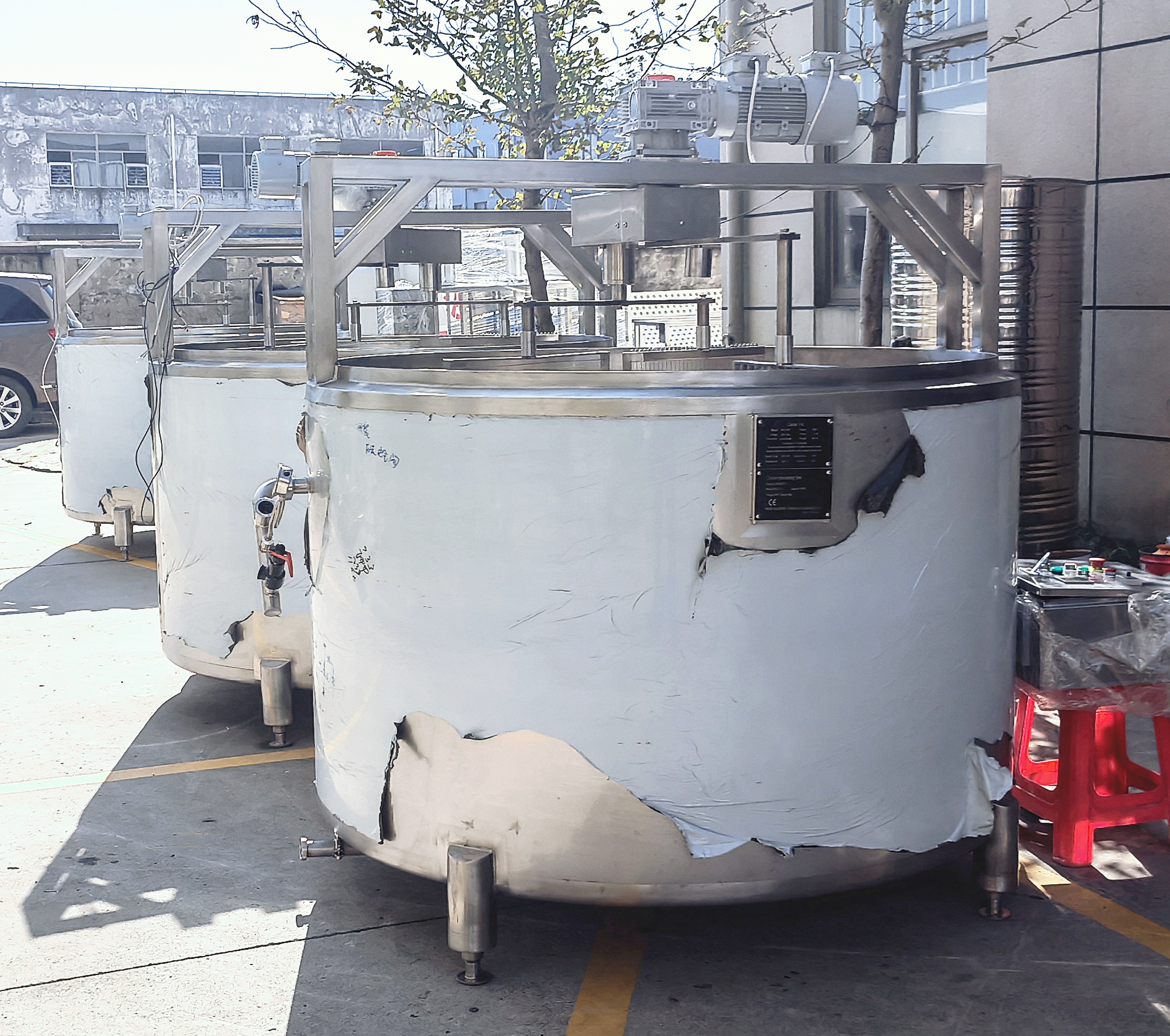
Once primed, the milk flows into fully enclosed, automated cheese vats. These units shield the sensitive coagulation phase from the open air. Mechanized cutting tools, driven by variable-speed motors, slice the curd into perfectly uniform cubes. Following the cooking phase, the curds are pumped into pneumatic pressing stations. Unlike the uneven force of manual presses, pneumatic systems apply mathematically calculated, uniform pressure across every single mold. This guarantees a consistent internal moisture density. This density is the ultimate deciding factor in whether a cheese will survive a four-week ocean freight journey without developing internal mold.
In today's hyper-connected export landscape, the data attached to a product is almost as valuable as the product itself. Driven by acute labor shortages and fluctuating energy costs, modern facilities are leaning heavily into automation. International distributors now demand absolute transparency regarding sustainability and safety.
State-of-the-art facilities run on sophisticated supervisory control systems. Hundreds of sanitary sensors are embedded throughout the piping and vats. They constantly feed real-time data on fluid temperatures, flow rates, and pressure differentials back to a central PLC control panel. If a specific parameter drifts even a fraction of a degree, the system instantly auto-corrects by adjusting valves and pumps. This relentless oversight catches anomalies in seconds.
Digital batch tracking is no longer a luxury. It is a mandatory prerequisite for global trade. Should a food safety recall occur anywhere in the world, manufacturers must possess the capability to trace an isolated block of cheese backward through the entire supply chain. Modern data systems assign unique digital fingerprints to every batch. This level of granular traceability builds immense trust with global retail partners.
Attempting to piece together a production line by sourcing individual machines from scattered vendors is a high-risk gamble. It frequently results in software conflicts, mechanical bottlenecks, and agonizingly delayed launch dates. For ambitious dairy plants eyeing the export market, investing in a holistic, turnkey solution is the most objective path to reliability.
A turnkey approach means a single-source engineering firm designs, fabricates, and integrates the entire ecosystem. Because the pasteurizers, enclosed vats, and packaging machines share a unified communication protocol, the risk of mechanical misfires is virtually eliminated. When the inevitable need for maintenance arises, your technicians only have to interface with one software environment. Spare parts can be expedited from a single vendor, keeping downtime to an absolute minimum.
While the initial capital expenditure for a comprehensive industrial line is substantial, the return on investment is rapidly realized. Reputable turnkey providers conduct rigorous factory acceptance testing before the equipment ever leaves their warehouse. Bypassing months of trial-and-error troubleshooting allows you to start fulfilling lucrative international contracts much faster.
Transitioning from a regional dairy supplier to a global exporter is a complex, demanding journey. It requires far more than just high-quality milk and a traditional recipe. To succeed, you must adopt a highly robust industrial setup characterized by massive processing capabilities, flawlessly engineered architectural layouts, and an unwavering commitment to international safety standards.
Are you ready to insulate your operations from local market volatility and scale your brand for the global stage? By upgrading to sanitary stainless steel infrastructure and intelligent automation, you can meet any international demand. Explore professional turnkey facility designs and custom equipment consultations at WFood Machinery today. Let our engineering team turn your ambitious export goals into a highly profitable reality.
Most industrial setups designed for cross-border trade start at processing 500 to 1,000 liters of milk per hour. Hitting this threshold ensures you can produce enough volume to fill refrigerated shipping containers cost-effectively. This naturally absorbs the high overhead costs associated with international logistics.
International auditors scrutinize the physical architecture of a facility to ensure there is zero risk of crossover between raw materials and finished goods. Strict hygienic zoning, dedicated positive-pressure ventilation, and segregated drainage systems are absolute mandatory requirements for achieving the HACCP and ISO clearances needed for global trade.
Absolutely. Modern turnkey systems are engineered for high versatility. Thanks to adjustable PLC software and modular hardware designs, a single facility can effortlessly pivot between producing hard varieties like Cheddar and semi-hard or soft cheeses. You simply alter the vat programming and pneumatic pressing configurations for a given run.
Relying on manual cleaning introduces the inevitability of human error. This leaves microscopic bacterial biofilms behind. Automated CIP systems guarantee that all internal piping, vats, and valves are sanitized using exact chemical concentrations and sustained temperatures. This creates the flawlessly sterile environment required to achieve an extended shelf-life.
Industrial processing significantly extends shelf life. By utilizing closed-loop continuous systems, HEPA-filtered green zones, and precise moisture control via pneumatic pressing, industrial cheese avoids airborne contaminants. This allows it to survive multi-week ocean transit and remain stable on foreign retail shelves far longer than commercially batched equivalents.
The required footprint varies based on your target capacity. A standard 1,000 liters per hour automated line typically requires a minimum of 300 to 500 square meters of dedicated processing space. This does not include raw milk silos, aging rooms, or utility housing. Proper 3D layout engineering is essential to fit the unidirectional workflow into your available footprint.