
Views: 184 Author: Site Editor Publish Time: 2025-06-19 Origin: Site


The milk production line is a sophisticated, multi-stage process that transforms raw milk from dairy farms into safe, consumable, and high-quality milk products. With modern technology and rigorous hygiene standards, milk production has evolved into a highly controlled industrial system. But what exactly happens from the moment milk is collected until it's packaged and sent to shelves? Let’s explore this in detail.
Milk production doesn't simply involve milking cows and bottling the liquid. It is an intricate process governed by safety protocols, quality control, and automation. Below is a step-by-step explanation of the key stages in the milk production line.
The journey of milk begins at the dairy farm, where cows are milked under sanitary conditions using milking machines. This raw milk is stored in refrigerated stainless-steel tanks to preserve its freshness and prevent bacterial growth. From there, it's transported to processing facilities in insulated tankers that maintain a cold chain—typically at around 4°C (39°F)—to prevent spoilage during transit.
Each batch of milk is assigned a tracking number and is accompanied by documentation stating the source, volume, date, and test results for antibiotic and contaminant residues. Upon arrival at the processing plant, milk samples are tested again to ensure compliance with safety standards. This dual-layer verification maintains traceability and quality assurance at the earliest stage.
Once the raw milk arrives at the factory, it enters the clarification and filtration phase. This stage is designed to remove physical impurities such as dirt, hair, and somatic cells. High-speed centrifuges known as clarifiers are used to separate these particles by density.
In addition to mechanical clarification, fine filtration through mesh sieves ensures the removal of any residual particles. This phase is vital for product purity and aligns with industry requirements for milk intended for human consumption. It’s also the stage at which the milk is often weighed, logged into inventory systems, and designated for specific end-use products.
Milk contains varying levels of fat, which must be standardized to produce consistent products. For instance, whole milk, low-fat milk, and skimmed milk each require precise fat content. This is achieved by separating cream from the milk using a centrifugal separator and then blending it back in specific proportions.
Homogenization follows standardization. During this step, milk is forced through small openings under high pressure, breaking down fat globules into smaller, uniform sizes. This prevents the cream from rising to the top and ensures a smoother, more uniform product. Homogenization significantly improves the texture, taste, and shelf life of the milk.
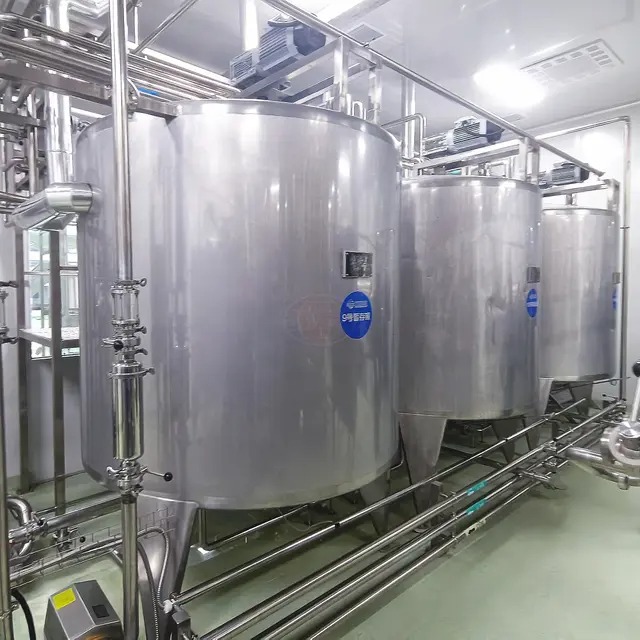
Pasteurization is a heat treatment process aimed at destroying pathogenic microorganisms without compromising nutritional value. In most modern milk production lines, High-Temperature Short Time (HTST) pasteurization is used. This method heats milk to approximately 72°C (161°F) for 15 seconds.
Immediately after pasteurization, milk is rapidly cooled to 4°C to inhibit bacterial growth. This thermal cycle ensures food safety and extends shelf life while preserving the milk's taste and essential nutrients like calcium, riboflavin, and vitamin B12.
Pasteurization is non-negotiable in milk production and is governed by food safety regulations in nearly every country. It represents one of the most critical interventions for consumer protection.
Once pasteurized and cooled, milk proceeds to the packaging stage. This process is highly automated and conducted in sterile conditions to prevent post-process contamination. Depending on the market, milk may be packaged in various forms such as plastic bottles, cartons, pouches, or glass containers.
Advanced filling machines operate with precision, ensuring correct fill levels and secure sealing. Labels with expiration dates, nutritional information, and barcodes are automatically applied during this stage. Some systems also include tamper-evident seals and anti-counterfeit features.
Packaging is more than just a container—it plays a crucial role in maintaining milk's freshness, providing brand identity, and ensuring logistical convenience.
After packaging, milk is stored in cold rooms maintained at 4°C until it is dispatched. Cold storage prevents bacterial growth and ensures the product remains safe and fresh during transportation. Distribution is typically handled via refrigerated trucks that deliver the milk to retail outlets, supermarkets, schools, and hospitals.
The logistics of cold-chain distribution are complex and require real-time monitoring of temperature and humidity. In many modern systems, GPS and IoT sensors are used to track each batch in transit, ensuring traceability and accountability at every step.
Quality assurance is embedded at every stage of the milk production line. From bacterial testing of raw milk to monitoring pasteurization temperatures and assessing packaging integrity, robust protocols ensure product consistency.
Milk is routinely tested for:
Bacterial count
Somatic cell count
Antibiotic residues
Fat and protein content
Foreign matter
Failures at any stage result in immediate halting of production and disposal of the affected batch. Some factories even employ AI systems to detect irregularities in flow rate, temperature, or viscosity during production.
| Stage | Purpose | Key Equipment Used |
|---|---|---|
| Collection & Transport | Gather and chill raw milk | Milking machines, refrigerated tanks |
| Clarification & Filtration | Remove physical impurities | Clarifiers, filters |
| Standardization & Homogenization | Control fat content and consistency | Centrifugal separators, homogenizers |
| Pasteurization & Cooling | Destroy pathogens and cool the milk | HTST pasteurizers, plate heat exchangers |
| Packaging & Sealing | Safely contain milk and apply labels | Filling machines, labeling units |
| Storage & Distribution | Maintain freshness until final delivery | Cold rooms, refrigerated trucks |
Homogenization prevents the separation of cream from milk, improving both the texture and taste. It ensures the milk appears uniform and improves consumer satisfaction. It also enhances digestibility by breaking down fat globules into smaller sizes.
Milk production is regulated by food safety authorities such as the FDA (U.S.), EFSA (EU), and FSSAI (India). These agencies set limits for bacterial counts, enforce pasteurization standards, and require regular testing and sanitation of equipment.
Pasteurized milk typically has a shelf life of 7 to 10 days if stored at 4°C. Ultra-pasteurized (UHT) milk, which is heated to 135°C for 2 seconds, can last for up to 6 months when sealed and stored in aseptic conditions.
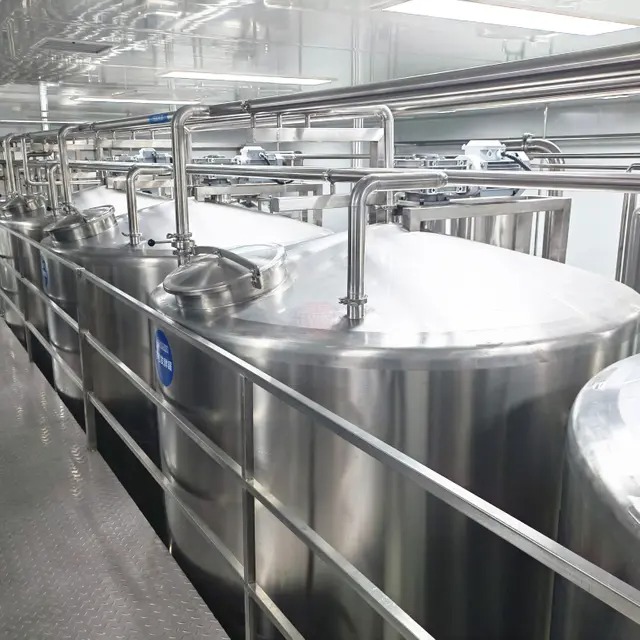
The milk production line continues to evolve with the integration of smart sensors, AI-based quality control systems, and blockchain for traceability. Automation has reduced human error, increased throughput, and improved safety.
Sustainability is also gaining traction. Many producers are adopting energy-efficient heat exchangers, water-reuse systems, and biodegradable packaging to reduce environmental impact.
From robotic milking systems to cloud-based monitoring dashboards, the future of milk production lies in digital transformation and eco-conscious practices.
Understanding the process of the milk production line reveals the complexity behind what seems like a simple product. From the careful milking at the dairy farm to the pasteurization, packaging, and cold chain logistics, every drop of milk undergoes rigorous handling and testing.
This comprehensive approach ensures that when you pour a glass of milk, you're getting a product that is not only nutritious but also safe and consistent. The modern milk production line is a testament to human innovation in food science and safety.