
Views: 0 Author: Site Editor Publish Time: 2026-08-20 Origin: Site


Margin compression and rising raw material costs in commercial beverage manufacturing demand uncompromising operational efficiency, maximum extraction yield, and strict batch-to-batch consistency. Relying on outdated or mismatched machinery creates production bottlenecks, excessive energy and water consumption, high labor costs, and inconsistent product quality, directly eroding profitability. Selecting the right fruit juice processing equipment requires moving beyond basic specifications to evaluate how each component impacts Overall Equipment Effectiveness (OEE), integration feasibility, and long-term cost per liter across the entire juice production line.
Yield vs. Operational Cost: The most efficient equipment balances maximum juice extraction with minimal energy and water usage.
Automation Drives OEE: Integrating advanced automation and High Pressure Processing (HPP) can significantly reduce line labor, minimize waste, and improve safety metrics.
Holistic Line Integration: Upgrading isolated machines without assessing the entire juice production line often shifts bottlenecks rather than eliminating them.
CapEx vs. Lifecycle Costs: Higher initial capital expenditure for high-efficiency machinery is typically offset by a substantially lower cost per liter over the equipment's lifecycle.
Modern beverage facilities measure success through strict operational metrics derived directly from the plant floor. Efficiency involves maximizing output while minimizing resource input, requiring a deep understanding of mass balance and utility consumption. Plant engineers focus on several core criteria when evaluating a Juice Production Line to ensure overall profitability and market competitiveness.
Yield maximization stands as the primary objective. Facilities must extract the highest possible volume of usable liquid per ton of raw fruit without degrading flavor or nutritional quality. Leaving residual moisture in the pomace represents lost revenue and increases waste disposal costs. Efficient presses extract maximum liquid while preserving cellular integrity, ensuring high Brix recovery and optimal viscosity.
Resource reduction directly impacts operational overhead. Legacy equipment often wastes massive amounts of thermal energy through inefficient heat exchangers and uninsulated holding tanks. Older systems also consume excessive wash water during cleaning cycles, driving up wastewater treatment costs due to high Biological Oxygen Demand (BOD). Efficient equipment minimizes heating and cooling energy requirements through regenerative thermal cycles and reduces water consumption during processing and sanitation phases.
Product consistency ensures brand reliability. Consumers expect the exact same flavor profile, color, and mouthfeel in every bottle. Automated controls ensure batch-to-batch uniformity by continuously monitoring pH, titratable acidity, and dissolved oxygen levels. Precision sensors feed data back to programmable logic controllers (PLCs), eliminating human error and standardizing the final output regardless of slight variations in the raw fruit supply.
Facilities evaluate machinery using OEE metrics. OEE measures availability, performance, and quality. Availability tracks machine uptime against planned production hours, highlighting losses from breakdowns and extended changeovers. Performance tracks actual processing speed against the manufacturer's nameplate capacity, revealing micro-stops and idling. Quality tracks the defect rate, including out-of-spec batches and product waste. High OEE scores indicate a highly efficient operation.
Audit current extraction yields against theoretical maximums for specific fruit varietals to identify baseline losses.
Measure baseline utility consumption, specifically tracking steam usage and wash water volume per operating hour.
Track unplanned downtime events over a 90-day period to identify specific mechanical failure points in legacy equipment.
Calculate current OEE percentages to establish a hard benchmark before initiating any equipment upgrades.
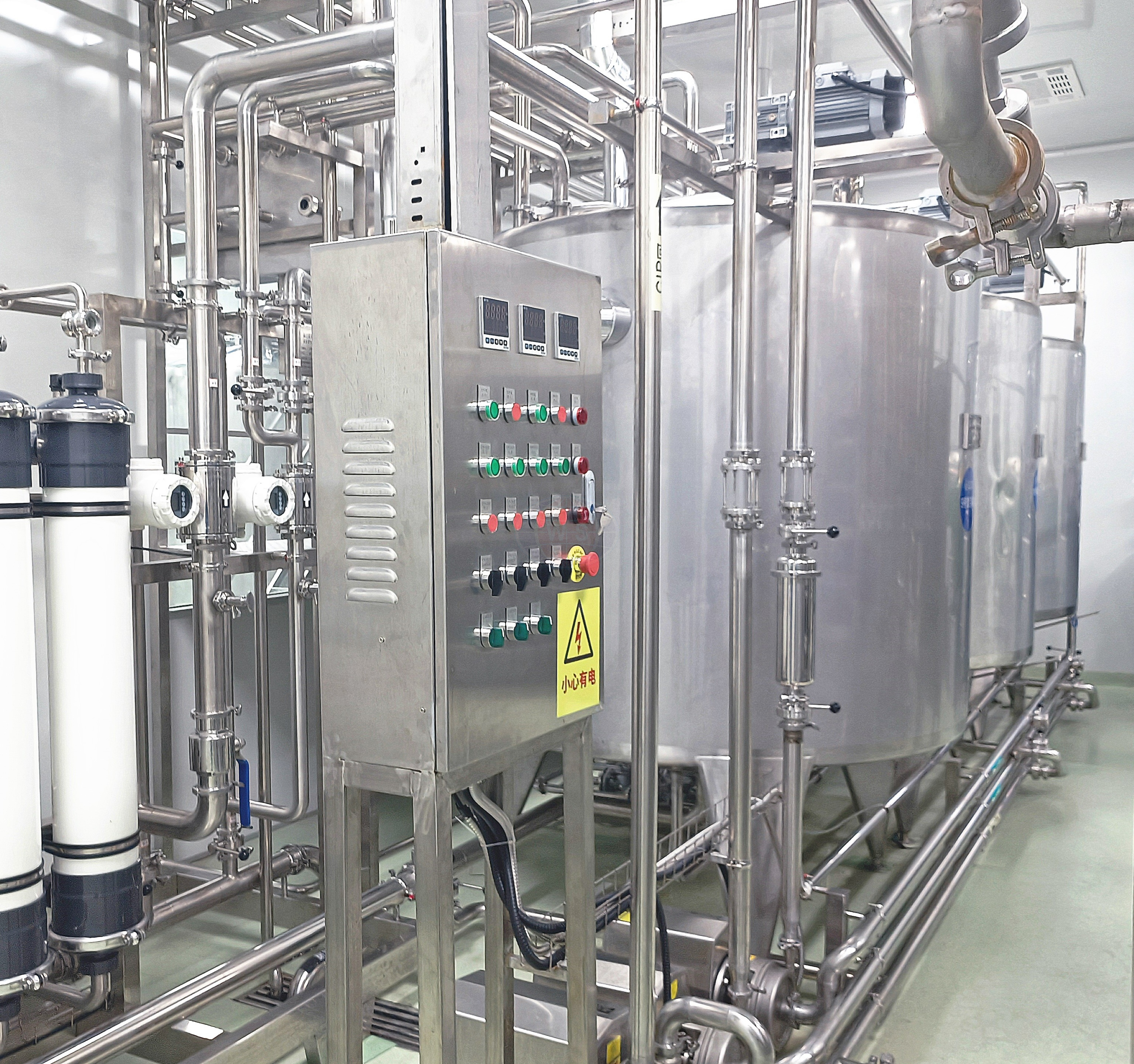
Selecting the correct machinery dictates facility capabilities and determines the types of products you can successfully bring to market. Different raw materials require specific handling methods to optimize yield and quality. A comprehensive setup involves extraction, fluid transfer, and pasteurization systems. Each category offers distinct technological approaches to maximize efficiency on the production floor.
Extraction forms the heart of any beverage facility. The goal is gentle processing combined with high versatility. Press systems must preserve cellular structure and maintain flavor profiles across diverse raw materials. Hard fruits like apples, delicate berries like raspberries, and fibrous vegetables like carrots all require different mechanical approaches to prevent excessive maceration and oxidation.
Belt presses offer continuous operation capabilities. They use pneumatic tension rollers to squeeze macerated fruit between two porous belts. They provide high throughput and a compact footprint, making them ideal for high-volume apple or citrus operations. The belts require continuous high-pressure wash bars to prevent blinding, which must be factored into water consumption calculations.
Screw presses use diminishing pitch flights to squeeze material against a perforated screen. They offer very high yield percentages and handle fibrous materials exceptionally well. Back pressure cones at the discharge end allow operators to adjust the moisture content of the expelled pomace. However, the shearing action of a screw press can sometimes be too harsh for delicate berries, leading to excessive suspended solids in the raw juice.
Rack and cloth presses deliver exceptionally high yields and produce very clear liquid with minimal suspended solids. They use hydraulic rams to press fruit pulp wrapped in porous cloths. Historically, they required intensive manual labor to load and unload the frames. Modern automation retrofits have reduced this labor burden significantly, allowing for semi-continuous operation while maintaining the premium quality associated with cold-pressed products.
Centrifuges handle solid-liquid separation and clarification. They use extreme G-forces to separate heavy pulp from the lighter liquid phase. They offer continuous discharge capabilities and integrate seamlessly into continuous processing environments. Decanter centrifuges handle high-solids loading, while disk stack centrifuges polish the liquid to achieve high clarity.
Extraction System Performance Comparison
| System Type | Yield Potential | Operation Mode | Best Suited For |
|---|---|---|---|
| Belt Press | Medium-High | Continuous | Apples, Carrots, High-Volume Runs |
| Screw Press | High | Continuous | Grapes, Citrus, Fibrous Vegetables |
| Rack and Cloth | Very High | Batch / Semi-Automated | Premium Cold-Pressed, High-Clarity Needs |
| Decanter Centrifuge | Medium | Continuous | High-Solids Reduction, Purees |
Moving liquid between machines requires specialized pumps designed for food-grade applications. Standard centrifugal pumps often create too much shear due to high impeller speeds. This shear degrades pulp texture, introduces unwanted oxygen, and can cause foaming. Lobe pumps provide a superior alternative for delicate, high-value liquids.
Lobe pumps use counter-rotating lobes to move fluid through the casing. Timing gears ensure the lobes never touch each other, preventing metal-on-metal wear and eliminating the risk of metal shavings entering the product stream. They are uniquely suited for handling high-acidity products and low-abrasiveness liquids without shearing or degrading texture. They maintain the structural integrity of suspended solids, preserving the intended mouthfeel.
Sanitary design is a non-negotiable requirement for all fluid transfer systems. Piping and pump casings must feature crevice-free designs with specific surface roughness (Ra) values. Dead legs in piping harbor bacteria and resist cleaning chemicals. Sanitary pumps utilize tri-clamp fittings and self-draining orientations to eliminate contamination zones, drastically reducing required cleaning times and preventing product spoilage.
Pathogen reduction is critical for food safety and shelf-life extension. Traditional thermal pasteurization uses plate or tubular heat exchangers to kill bacteria. While effective, this requires massive energy consumption for steam generation and subsequent chilling. Thermal processing can also degrade heat-sensitive vitamins, alter fresh flavor profiles, and cause Maillard browning in certain juices.
High Pressure Processing (HPP) uses extreme isostatic pressure (up to 87,000 psi) transmitted through cold water. It inactivates vegetative pathogens without using heat. Cold processing preserves nutritional integrity and maintains fresh flavor profiles. It also eliminates the high energy costs associated with heating and cooling cycles, though it requires specialized packaging capable of withstanding the pressure.
HPP automation advancements drive concrete operational benchmarks. Automated loading and unloading systems reduce the manual labor previously required to handle heavy product baskets. Facilities report targeting 15% OEE increases after implementing automated HPP lines. These systems can reduce product waste by over 50% by eliminating thermal burn-on, and automated handling cuts workplace injuries by up to 90%.
Procurement teams must evaluate machinery against specific facility goals and physical constraints. Buying the most expensive machine does not guarantee efficiency if it does not align with your product mix. The equipment must match the desired production outcomes, utility capacities, and floor space. Scalability and food safety represent two primary evaluation dimensions that dictate long-term viability.
Facilities must size equipment accurately based on mass balance calculations. You must balance current throughput limits against projected facility expansion over the next five years. Buying undersized machinery creates immediate bottlenecks, forcing upstream equipment to idle. Buying oversized machinery wastes capital, increases operational overhead, and often leads to product degradation if minimum flow rates are not met.
Integrating continuous processing machinery with batch-based legacy systems requires careful planning and the strategic use of surge tanks. Plant engineers must conduct rigorous bottleneck analysis. A high-speed disk stack centrifuge provides no value if the upstream press cannot feed it fast enough. Throughput must remain balanced across the entire facility, utilizing variable frequency drives (VFDs) to modulate pump speeds and maintain steady states.
Sanitation directly impacts operational efficiency and machine availability. Manual cleaning requires significant downtime, introduces human error, and exposes workers to harsh chemicals. Automated Clean-in-Place (CIP) systems solve this problem by circulating cleaning chemicals, sanitizers, and hot water through the machinery automatically at precise flow rates and temperatures.
Automated CIP integration reduces wash water usage through recovery tanks and conductivity sensors that verify chemical concentrations. It minimizes chemical waste and shortens changeover downtime between different product runs. However, poorly designed CIP systems present severe risks. Improperly executed manual cleaning or flawed CIP design with insufficient turbulent flow can actually increase contamination levels. Dead zones in piping can spread pathogens throughout the entire batch, leading to catastrophic recalls.
Regulatory alignment prevents costly compliance failures. Hygienic equipment design must meet stringent standards set by regulatory bodies. Facilities must comply with FDA and FSMA regulations, requiring comprehensive hazard analysis and risk-based preventive controls. Global food safety standards dictate material choices, such as 316L stainless steel for wetted parts, and specify acceptable weld finishes to ensure cleanability.
Evaluating fruit juice processing equipment requires a long-term financial perspective that looks past the initial purchase order. The initial purchase price represents only a fraction of the total expense over a ten-year lifespan. Operational costs, including utilities, labor, and maintenance, quickly surpass capital expenditure. Efficient machinery justifies its higher upfront cost through daily operational savings and increased yield.
Premium machinery often carries a higher initial capital expenditure (CapEx). Plant managers must justify these upfront costs to stakeholders by calculating the long-term cost per liter of finished product. High-efficiency machines extract more liquid per ton of raw fruit, directly increasing top-line revenue. They consume less electricity through high-efficiency motors and require less water for sanitation.
Calculating ROI requires accurate empirical data and pilot testing. Engineers project energy reductions based on motor efficiency ratings and thermal recovery capabilities. They calculate yield increases based on pilot testing with the specific fruit varietals used in the facility. They also factor in labor reallocation due to automation. A machine that costs 20% more upfront may reduce the cost per liter by 15% over ten years, resulting in a rapid payback period.
Processing environments are inherently harsh. Machinery handles acidic liquids that corrode inferior metals and abrasive solids that wear down moving parts. Citrus processing creates different wear patterns than stone fruit processing due to essential oils and varying peel thicknesses. Facilities must assess the lifespan of wear parts like stators, mechanical seals, and filter belts. Frequent part replacements increase operational overhead and cause unplanned downtime.
Predictive maintenance sensors offer significant value in modern processing lines. They monitor vibration, bearing temperature, and motor load in real-time, feeding data to the central SCADA system. They alert operators to abnormal conditions before a component fails catastrophically. Accessible machine designs also reduce maintenance time. Quick-release clamps, swing-away covers, and slide-out rotor assemblies allow technicians to replace wear parts rapidly and get the line back into production.
Upgrading a facility introduces significant operational risks. New machinery disrupts established workflows and requires new standard operating procedures. Integration failures can halt production entirely, causing missed delivery windows and spoiled raw materials. Facilities must identify these risks early during the engineering phase and implement strict mitigation strategies to ensure a smooth transition from installation to full production.
Software and hardware incompatibility presents a major risk during commissioning. Legacy infrastructure often uses outdated communication protocols or hardwired relay logic. New automated equipment relies on modern industrial networks like EtherNet/IP or Profinet. If the machines cannot communicate handshakes and interlocks, automation fails. This creates isolated islands of automation that require manual intervention to bridge.
Mitigating this risk requires strict standardization. Facilities should standardize PLC controls and network protocols across all machinery specifications before issuing purchase orders. Utilizing open-architecture software prevents vendor lock-in and simplifies data collection. Plant managers should plan phased equipment rollouts, conducting Factory Acceptance Testing (FAT) at the vendor's site and Site Acceptance Testing (SAT) on the plant floor to verify integration before decommissioning old equipment.
Introducing complex machinery changes daily operator routines and requires higher technical competency. This can lead to increased human error during the initial startup phase. It may cause reduced initial throughput as staff learn to navigate new Human-Machine Interface (HMI) screens and adjust setpoints. In worst-case scenarios, unfamiliarity leads to safety incidents, equipment damage, or product contamination.
Mitigation starts with comprehensive education and hands-on experience. Facilities must mandate vendor-supplied training programs for both operators and maintenance technicians. Operators need simulated experience before full production begins. Prioritizing ergonomic machine design reduces physical strain during operation and cleaning. Implementing automated safety fail-safes, such as interlocked guarding and emergency stop networks, prevents operators from bypassing critical safety measures.
True operational efficiency requires holistic optimization across the entire plant floor. Upgrading a single machine rarely solves facility-wide bottlenecks; it usually just moves the bottleneck to the next piece of equipment downstream. Fruit Juice Processing Equipment must balance high extraction yield with gentle handling to preserve product quality. It must simultaneously maintain low resource consumption, ensure strict batch consistency, and integrate seamlessly with existing automation networks.
Procurement teams must apply strict shortlisting logic based on empirical data rather than vendor claims. They should prioritize machinery that directly addresses specific facility bottlenecks identified through rigorous auditing. This might mean targeting thermal energy waste in the pasteurization loop, reducing manual labor dependencies in the extraction area, or fixing inconsistent batch quality caused by outdated fluid transfer systems.
Conduct a comprehensive facility OEE audit to identify exact production bottlenecks and baseline utility consumption.
Request empirical performance data and conduct pilot testing with your specific raw materials before finalizing equipment selection.
Model the projected cost per liter over a ten-year lifecycle, factoring in maintenance, consumables, and utility usage.
Standardize PLC communication protocols and define integration handshakes prior to issuing purchase orders for new automated machinery.
A: Belt presses and modern automated rack and cloth systems offer the best balance. Belt presses provide continuous, high-volume throughput with gentle pneumatic pressure. Rack and cloth systems deliver the absolute highest yield and clarity, making them ideal for premium cold-pressed operations where minimizing suspended solids is critical.
A: Automated High Pressure Processing (HPP) eliminates manual loading bottlenecks. This increases machine availability and throughput speed. Facilities often see a 15% OEE increase, a 50% reduction in product waste by eliminating thermal burn-on, and significantly fewer workplace injuries due to automated material handling.
A: Lobe pumps use counter-rotating lobes governed by timing gears so they never touch. This prevents metal wear and eliminates shear forces. They handle high-acidity liquids without degrading the cellular texture of the pulp, preserving the structural integrity, flavor profile, and intended mouthfeel of the final product.
A: Modern equipment utilizes regenerative heat exchangers to capture and reuse thermal energy during pasteurization. Additionally, advanced automated Clean-in-Place (CIP) systems optimize fluid dynamics and utilize conductivity sensors, drastically reducing the volume of hot water and chemicals required for daily sanitation cycles.
A: ROI timelines vary based on facility scale, product mix, and production volume. However, high-efficiency systems that significantly increase yield, reduce energy consumption, and lower labor costs typically achieve full ROI within 24 to 36 months through lower daily operating costs and increased saleable volume.
A: Automated CIP systems circulate precise concentrations of cleaning chemicals at exact temperatures and flow rates. This turbulent flow eliminates bacteria in piping without requiring manual machine disassembly. It ensures consistent sanitation, verifies cleanliness via sensors, and drastically reduces changeover downtime between different product batches.
A: The primary risks involve the degradation of wear parts, such as porous filter belts, pneumatic tension rollers, and mechanical seals, due to abrasive raw materials. Unplanned downtime occurs if these parts fail during production. Implementing predictive maintenance sensors helps mitigate this by alerting operators to abnormal conditions before failure occurs.