
Call Us
+86-15800763021
Send Us
Add
775 Chihua Road, Zhelin Town, Fengxian District, Shanghai
- All
- Product Name
- Product Keyword
- Product Model
- Product Summary
- Product Description
- Multi Field Search
Views: 0 Author: Site Editor Publish Time: 2026-06-28 Origin: Site

In commercial jam production, minor inefficiencies compound rapidly into massive problems. A slight delay in heating reduces your daily output. Sluggish material transfer creates unnecessary bottlenecks. Prolonged cleaning routines lead directly to significant yield losses. These subtle daily bottlenecks systematically erode your profit margins over time. Production managers and procurement directors constantly face immense pressure. They must optimize plant operations continually. When you evaluate a new Fruit Jam Processing Line, maximum capacity isn't everything. You must look deeper into equipment interaction. Upgrading legacy equipment requires a similar careful approach. True line efficiency demands a calculated balance. You need smart equipment design and seamless continuous automation. Swift hygiene turnaround times ensure maximum uptime. Optimal energy utilization keeps operating expenses low. You will learn how modern vessel designs protect product integrity. We will explore how advanced automation eliminates costly changeover delays.
Processing vessel design (specifically agitation and vacuum cooking) dictates thermal efficiency and prevents product degradation.
Integrating inline quality control (e.g., automated Brix monitoring) reduces batch rejection rates.
Optimized CIP (Clean-in-Place) systems directly impact Overall Equipment Effectiveness (OEE) by minimizing changeover downtime.
Vacuum pan concentration revolutionizes traditional cooking methods. The boiling point drops significantly under a vacuum. We boil fruit mixtures around 60°C instead of 100°C. Lower temperatures protect delicate pectin chains. Natural fruit colors remain bright and vibrant. Energy consumption drops significantly as well. Moisture evaporation occurs much faster under lower atmospheric pressure. Your plant steam boilers work less intensely.
Agitation systems require careful engineering. Scraped-surface agitators represent a massive operational upgrade. They continuously scrape the heated inner walls. This mechanical action prevents stubborn burn-on entirely. Burn-on ruins delicate flavor profiles quickly. Dual-motion blending systems provide another crucial layer of control. They ensure uniform heat distribution across the entire batch. They maintain homogeneous fruit suspension effectively. Heavy strawberry chunks stay evenly distributed throughout the mixture.
Jacketed heating efficiency directly impacts your batch cycle times. Processing vessels utilize double-walled steam jackets. You must ensure absolute steam pressure consistency. Poor steam delivery extends cooking phases unnecessarily. High-quality insulation wraps the external vessel walls tightly. Proper insulation minimizes ambient heat loss inside the factory. Workers stay safer around cooler equipment exteriors. Batch cycle times shorten dramatically.
| Cooking Method | Boiling Point | Pectin Integrity | Energy Efficiency |
|---|---|---|---|
| Traditional Open Kettle | 100°C+ (212°F+) | High risk of thermal degradation | Low (high ambient heat loss) |
| Vacuum Pan Concentration | 60°C - 70°C | Preserved naturally | High (rapid moisture evaporation) |
Batch processing works perfectly for small artisan runs. Commercial facilities eventually outgrow these batch limitations. Transitioning to continuous processing requires careful evaluation. You face a major financial trade-off here. Upfront capital expenditure increases for continuous lines. Long-term operational efficiency improves drastically in return. Continuous lines remove human fatigue from the equation completely. Recipes run through automated heating loops endlessly. Quality remains absolutely identical from morning until midnight.
When should you scale up? Consider these essential factors:
Analyze your daily output volume requirements thoroughly.
Assess the frequency of your flavor changeovers.
Calculate available floor space for larger equipment footprints.
Review your available automation budget constraints realistically.
Material handling often introduces hidden factory bottlenecks. Pumping high-viscosity pectin and sugar slurries proves notoriously difficult. Centrifugal pumps destroy delicate fruit particulates quickly. The high-speed impellers slice soft strawberries into mush. You need properly sized positive displacement pumps. Rotary lobe pumps handle thick jams gently. They use slow rotations to maintain consistent flow rates. The fruit pieces remain beautifully intact.
Synchronization across the entire line remains vital. Downstream equipment must match upstream concentration output perfectly. Piston fillers cannot run faster than your cookers. Cappers and sterilization tunnels need synchronized feed rates. Staging delays cause severe production problems. Holding cooked batches too long causes thermal degradation. Pectin breaks down rapidly over time. Jam loses its desired gel strength.
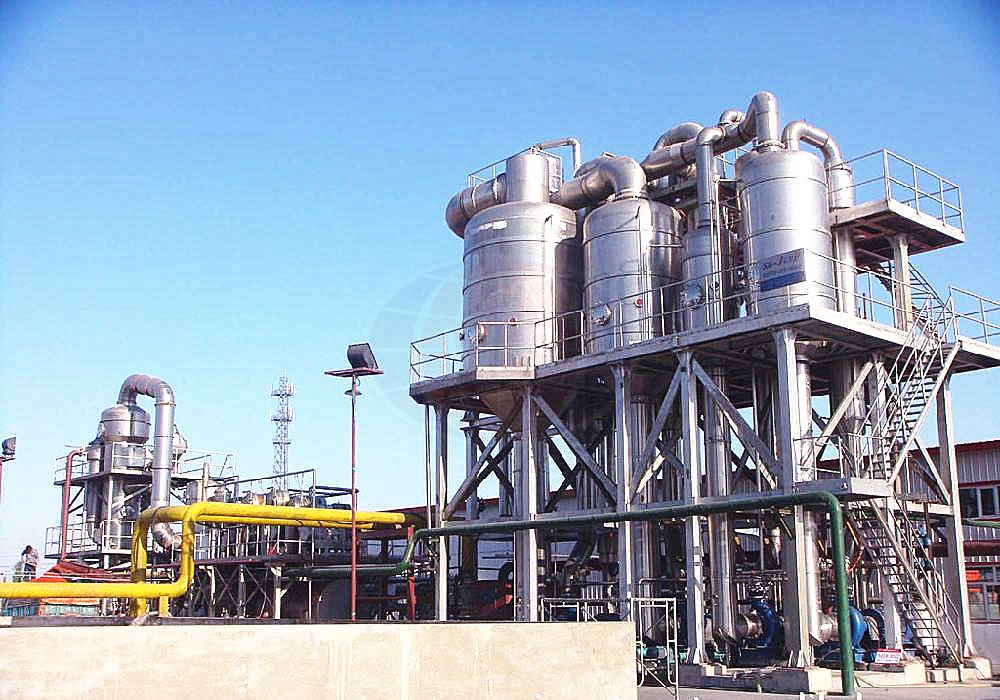
Downtime reduction serves as a primary efficiency lever. Faster cleaning equals more profitable production hours. Manual sanitation wastes valuable daily shift time. Workers spend hours scrubbing large kettles manually. Automated Clean-in-Place systems transform this tedious process. High-pressure spray balls scour kettle interiors aggressively. They reach tricky areas human hands cannot touch. They clean blind spots underneath agitator shafts perfectly.
Sanitary design standards demand strict regulatory compliance. Equipment must eliminate microbial harborage zones completely. Crevice-free welds prevent dangerous bacteria accumulation. Facilities use 316L stainless steel for all contact parts. This grade resists acidic fruit corrosion perfectly. Self-draining pipework ensures no residual wash liquid remains inside.
Resource efficiency improves drastically during automated cleaning cycles. Older cleaning methods send rinse water straight down the drain. Modern automated CIP recovers hot water efficiently. The multi-tank system recirculates cleaning chemicals safely. You reduce massive utility waste easily. Manual labor requirements drop to near zero. Your water bills drop substantially.
Follow these essential sanitation best practices:
Validate your chemical concentration levels daily.
Inspect internal spray ball rotation patterns weekly.
Replace worn transfer pump seals proactively.
Automated Brix and pH monitoring changes everything. Real-time sensor integration provides constant data streams. You prevent dangerous over-concentration entirely. Over-concentration causes literal financial yield loss. Water evaporates unnecessarily from your valuable product. Under-concentration poses a severe spoilage risk instead. Bacteria thrive quickly in low-sugar environments. Inline sensors eliminate pausing the line completely. Manual sampling wastes precious production minutes. The batch over-concentrates quickly while workers test samples manually.
Ingredient dosing precision dictates final product consistency. Mass flow meters ensure exact liquid sugar ratios. Automated load cells weigh dry pectin accurately. Acidulants enter the heated mixture at precise moments. This smart automation prevents costly batch corrections later. Human error disappears from the recipe formulation entirely. Your ingredient waste shrinks dramatically.
Modernization ROI materializes quickly for older lines. Retrofitting legacy systems brings immediate operational benefits. You install modern Programmable Logic Controllers (PLCs). You integrate Supervisory Control and Data Acquisition (SCADA) systems seamlessly. These vital upgrades provide actionable operational data. Managers identify hidden micro-stoppages instantly. They adjust line speeds proactively to maintain flow.
Evaluating a Fruit Jam Manufacturing Line requires strategic thinking. You must move beyond baseline capacity numbers. Matching stated equipment capacity to actual factory throughput proves tricky. A machine rated for 1000 kg/h often produces less practically. Seasonal fruit variations impact processing speeds significantly. Frozen berries process differently than fresh seasonal fruit. Viscosity changes alter pump transfer rates unexpectedly. You must define your specific raw material parameters clearly.
Vendor support dictates your long-term success. Piecemeal equipment sourcing introduces massive integration risks. Connecting different equipment brands creates software communication nightmares. Turnkey integration eliminates these dangerous operational headaches. One vendor supplies the entire interconnected system. One project manager handles equipment delivery and mechanical installation. They guarantee your Overall Equipment Effectiveness (OEE) metrics.
Common mistakes during the vendor selection phase:
Ignoring local spare parts availability completely.
Failing to test specific fruit recipes beforehand.
Overlooking required operator training programs.
Underestimating necessary floor space dimensions.
Maximizing your jam processing line requires a holistic approach. It starts right inside the primary cooking vessel. It extends all the way through automated downstream packaging. You must balance thermal dynamics carefully to protect ingredients. You must streamline material handling effectively to prevent crushing.
We highly advise auditing your current changeover times thoroughly. Monitor your daily energy consumption closely. Gather concrete baseline data before requesting new vendor proposals. You simply cannot improve unmeasured metrics.
Request a detailed technical consultation today. Download a comprehensive equipment spec sheet to compare features. Schedule a professional line-sizing assessment with an expert. Take decisive action to reclaim your lost production margins.
A: It lowers the boiling temperature significantly. This speeds up moisture evaporation. You save substantial energy. It also preserves natural fruit characteristics perfectly. You reduce reliance on artificial additives to fix degraded flavors.
A: The timeline depends entirely on your line size. A fully automated CIP system changes the game completely. It reduces changeover times between different flavor profiles by up to 50%. Manual teardowns simply take too long.
A: Yes, versatile equipment handles both perfectly. Your line must include variable-speed agitation. Low-shear transfer pumps are also absolutely mandatory. These components protect delicate fruit particulate integrity during thick preserve runs.
A: Utility upgrades often surprise buyers. New concentration vessels require larger plant steam boilers. Chilled water requirements might exceed your current capacity. Software integration mismatches between old fillers and new sensors also cause costly delays.