
Call Us
+86-15800763021
Send Us
Add
775 Chihua Road, Zhelin Town, Fengxian District, Shanghai
- All
- Product Name
- Product Keyword
- Product Model
- Product Summary
- Product Description
- Multi Field Search
Views: 0 Author: Site Editor Publish Time: 2026-10-21 Origin: Site

Did you know the wrong blade ruins cheese? Crumbled edges, smeared slices, and uneven blocks are not just aesthetic issues. They cause massive product waste and erode profit margins. When an automated processing line relies on a mismatched cutting tool, the mechanical stress destroys the delicate internal structure of the dairy product.
To prevent this, your production line needs a precise, engineered match. In this comprehensive guide, you will learn the fundamentals of proper blade selection tailored to specific dairy textures. We will explore various blade types, essential material requirements, and critical maintenance tips to keep your facility running smoothly.
Texture Dictates the Blade: Soft, high-moisture cheeses require thin wire or advanced ultrasonic blades, whereas hard, aged cheeses demand robust guillotine or wedge blades to prevent shattering.
Material Matters: Food-grade stainless steel, specifically 304 or 316 grade, is the non-negotiable industry standard. It ensures long-term durability, strict hygiene compliance, and high corrosion resistance against salt and lactic acid.
Application Specificity: The internal configuration changes based on the output. A dicer relies on a specialized multi-blade grid configuration, which is entirely different from a machine built strictly for exact-weight portioning.
Maintenance is ROI: Consistent cleaning protocols, accurate tensioning for wire systems, and scheduled sharpening significantly extend blade life and prevent costly, unexpected production halts.
Recent shifts in the dairy manufacturing sector reveal a distinct industry-wide movement toward yield-optimization technologies. Driven by surging raw milk costs and operational overhead, facility managers can no longer afford the giveaway associated with jagged cuts and excess cheese dust. Consequently, the industry is rapidly transitioning away from generic cutting tools toward highly specialized, vision-guided blade systems. These advanced setups adapt to the unique rheology of each cheese block. They ensure maximum profitability by converting every millimeter of the product into sellable inventory.
In modern dairy processing, the interaction between the cutting mechanism and the automated systems determines overall efficiency. For instance, an automatic cheese cutting machine utilizes pneumatic presses, servo-driven conveyor feeds, and hydraulic cylinders to push cheese blocks through a stationary or moving blade system. The blade must withstand immense mechanical force while maintaining absolute structural integrity. If a blade deflects or bends even slightly under the pressure of a pneumatic piston, the resulting cut will be asymmetrical. Ultimately, this leads to downstream packaging failures, weight discrepancies, and rejected batches.
Beyond strict weight accuracy, clean cuts are vital for retail packaging and consumer satisfaction. Smears, jagged edges, or compressed layers immediately detract from the premium appearance of the cheese on supermarket shelves. In retail environments, consumers equate smooth, uniform slices with freshness and high manufacturing standards. A properly specified blade ensures the cheese retains its natural internal structure, moisture distribution, and visual appeal.
Thin wire blades are the optimal choice for soft, high-moisture cheeses such as Brie, Camembert, or Roquefort. Imagine a high-speed line slicing delicate wheels of blue cheese. These products possess a fragile internal structure that collapses easily under the pressure of a thick, solid knife. Wire blades, typically ranging from 0.5mm to 1mm in thickness, offer the smallest possible surface area during the cut. By drastically reducing this contact zone, wire blades prevent the soft paste from sticking, smearing, or tearing. The high tensile strength of the wire slices cleanly through the moisture-rich center without compressing the delicate mold rinds.
When addressing sticky and semi-hard varieties like Cheddar, Gouda, or Havarti, ultrasonic technology provides an engineered solution to adhesion. Ultrasonic blades are connected to a transducer that generates high-frequency vibrations, typically between 20kHz and 40kHz. These rapid, microscopic movements create a nearly frictionless cutting surface. Because the blade is vibrating thousands of times per second, the sticky cheese proteins and fats simply cannot adhere to the metal. This technology ensures flawless Cheese Portioning, allowing for continuous, high-speed operation without the frustrating need to halt the machine to manually scrape residue off the tooling.
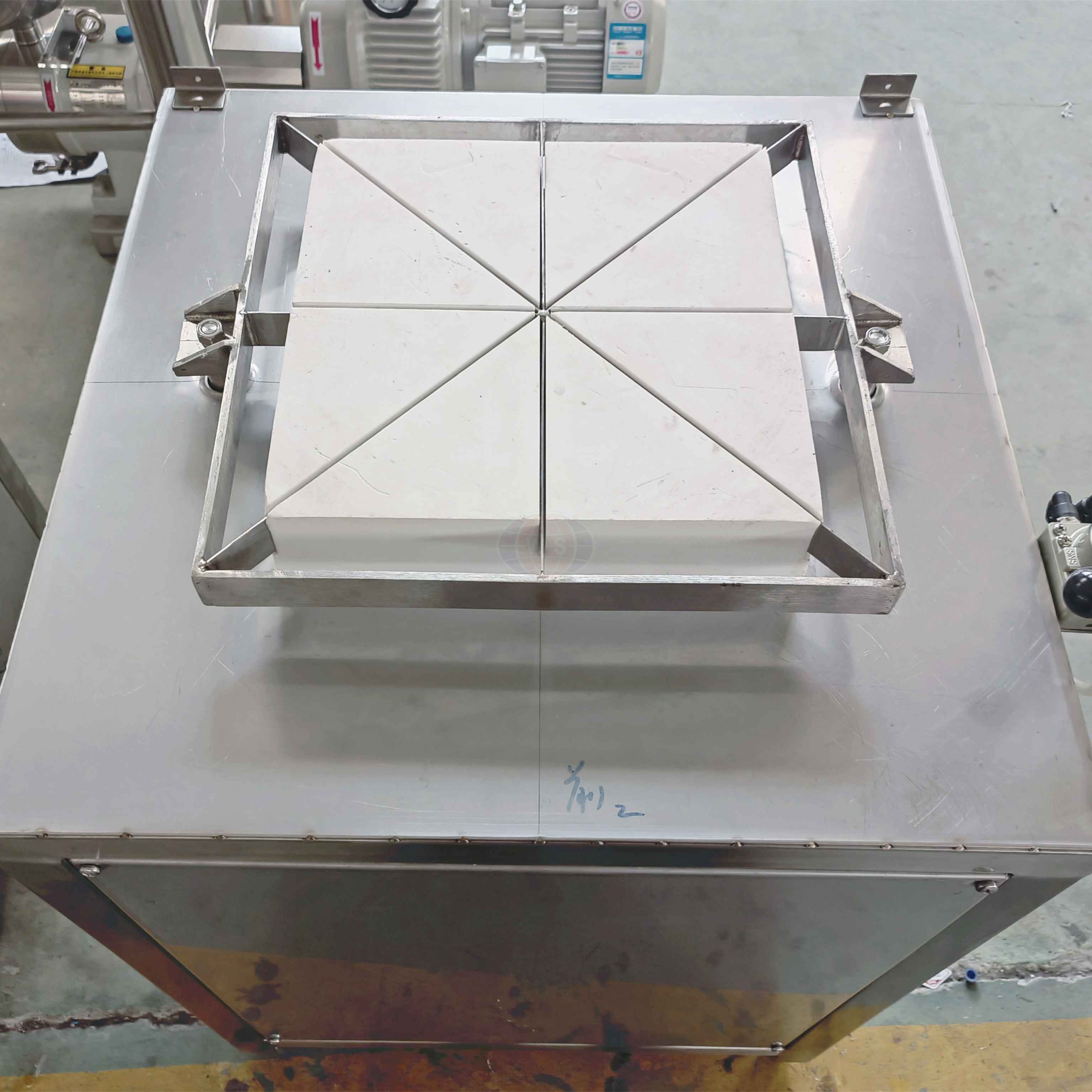
In contrast, hard, aged cheeses such as Parmesan, Pecorino, or aged Asiago possess a dense, crystalline structure that requires extreme force to penetrate. Thin wires will snap instantly, and standard knives will dull within hours. These formidable cheeses require heavy-duty, V-shaped wedge blades or thick guillotine blades. Designed to be driven by powerful pneumatic piston cylinders, these solid blades utilize controlled mechanical force. The wedge shape naturally splits the hard cheese block along its structural fault lines. This separates the product cleanly without shattering the expensive block into unsellable fragments.
| Cheese Texture | Ideal Blade Type | Key Advantage | Recommended Machine Configuration |
|---|---|---|---|
| Soft, High-Moisture | Stainless Steel Wire Harp | Minimal surface contact prevents smearing and rind damage. | Low-pressure pneumatic press with precise tension gauges. |
| Sticky, Semi-Hard | Ultrasonic Titanium Blade | Frictionless cutting eliminates protein adhesion and reduces cleaning downtime. | Servo-driven conveyor with 20kHz to 40kHz transducer integration. |
| Hard, Aged, Crystalline | V-Shaped Wedge or Guillotine | Splits product along natural fault lines to prevent shattering and dust waste. | High-torque hydraulic or heavy-duty pneumatic piston cylinder. |
In commercial food manufacturing, standard carbon steel is entirely unacceptable due to severe rust and contamination risks. Therefore, 304 or 316-grade stainless steel is the preferred material for any commercial Cheese Cutter. These specific austenitic stainless steel grades offer an exceptional balance of tensile strength and edge retention. They easily withstand the dense, repetitive resistance of hard cheeses without warping, micro-fracturing, or losing their calibrated shape. Furthermore, the high chromium and nickel content in these alloys ensures the blade remains rigid and sharp through thousands of automated cutting cycles.
Cheese naturally contains high levels of moisture, salt, and lactic acid. This biochemical combination is highly corrosive to standard metals. Specifically, 316-grade stainless steel contains molybdenum, offering superior resistance to pitting and crevice corrosion caused by these salty, acidic environments. Utilizing food-grade stainless steel ensures full compliance with FDA and CE standards for food-contact surfaces. It guarantees that no metallic oxidation or rust particles will ever contaminate the consumable product, thereby protecting the facility from devastating product recalls.
While polished stainless steel serves as the reliable baseline, highly specific processing applications may benefit from specialized surface treatments. Polytetrafluoroethylene coatings can be applied to solid blades to provide an extra layer of non-stick properties, which is particularly useful for extremely gummy, young cheeses. Alternatively, Titanium Nitride coatings can be applied via physical vapor deposition to harden the cutting edge. This advanced treatment significantly extends the time required between sharpening sessions for facilities processing highly abrasive, aged cheeses.
When the primary production goal is cutting exact-weight wedges or rectangular blocks for retail sale, the machine configuration focuses heavily on single-axis precision. This setup often pairs a highly rigid single blade with advanced automation. Modern systems utilize 3D laser scanners or ultrasonic sensors to measure the exact density and volume of the cheese wheel before the cut even begins. The automated system then dynamically adjusts the stopping point of the blade or the feed rate of the conveyor to ensure every single portion hits the exact target weight. This minimizes giveaway and maximizes profitability per batch.
Operating on a fundamentally different mechanical principle, a Cheese Dicer requires specialized tooling. Instead of a single descending blade, a dicer utilizes a complex multi-blade grid or a synchronized two-stage cutting process. First, a horizontal blade slices the cheese block into flat sheets. Immediately after, a specialized grid of interlocking circular or straight blades cross-cuts those sheets into uniform cubes. The exact spacing of this blade grid is critical. If the blades are spaced incorrectly or lack proper tension, the cheese will extrude through the grid like paste rather than being cut cleanly. Precise blade spacing ensures the uniform cubes essential for commercial salads, frozen pizzas, and snack packaging.
In agile manufacturing facilities, a single production line may process sharp Cheddar in the morning and delicate Brie in the afternoon. This operational flexibility requires swapping from a solid guillotine blade to a wire harp swiftly. A tool-less or quick-release blade system is vital for minimizing machine downtime. Systems that require engineers to unbolt multi-point brackets can halt production for hours. Quick-change pneumatic clamps allow operators to safely swap cutting heads in minutes, maintaining high overall equipment effectiveness.
Hygienic design is a critical engineering requirement that cannot be overlooked. Blades and their mounting brackets must feature smooth, continuous welds with no blind tapped holes, sharp internal corners, or hidden crevices. Bacteria, particularly Listeria monocytogenes, thrive in microscopic scratches and hard-to-reach joints in dairy equipment. Blades specifically designed for Clean-in-Place or easy washdown protocols ensure that alkaline and acid sanitizers can effectively reach all surfaces, completely eliminating biological hazards.
Facility managers are often tempted by cheaper aftermarket alternatives, but compatibility is paramount. Buyers must ensure the Cutting Blade perfectly fits their specific automated machinery. A blade that is even a fraction of a millimeter too thick can cause severe mechanical jams, strain the servo motors, or gouge the cutting bed. Utilizing non-original equipment manufacturer blades without verifying load capacities can also instantly void the machine warranty and compromise internal safety interlocks.
Maintaining a razor-sharp edge requires strict adherence to daily cleaning protocols. Operators should clean blades using industry-standard alkaline detergents to dissolve stubborn milk fats, followed by an acid rinse to remove mineral deposits, commonly known as milk stone. However, abrasive scrubbing pads or steel wool must be strictly avoided. These harsh materials create micro-scratches that dull the edge and harbor dangerous bacteria. Additionally, high-pressure water should be used cautiously on wire blades to prevent stretching or snapping the delicate filaments.
Solid stainless steel blades should be inspected weekly under bright, direct lighting to check for micro-fractures, rolled edges, or dulling. A dull blade forces the pneumatic cylinders of the machine to work harder, accelerating wear on the entire mechanical system. For wire blades, tension is the absolute most critical metric. Wires naturally stretch after repeated use. Operators must use a tensioning gauge daily to ensure the wires remain taut. A loose wire will bow during the downward stroke, resulting in curved, uneven cheese slices that fail quality control.
A proactive maintenance schedule prevents catastrophic mid-shift failures. Relying on a run-to-failure strategy is a costly error. Facility managers should track the mean time between failures for their specific operations. Wire blades in high-volume environments may require weekly replacement due to inevitable metal fatigue. Conversely, solid stainless steel blades might require professional sharpening every three to six months and complete replacement annually, depending entirely on the hardness of the cheese being processed and the daily cycle count.
The most prevalent error in dairy processing is attempting to use a single blade geometry for every type of cheese in the facility inventory. Applying a heavy-duty hard cheese wedge to a soft Camembert will crush the product, extruding the paste and destroying the rind. Conversely, using a delicate wire blade on a block of aged Parmesan will instantly snap the wire, creating a severe safety hazard and contaminating the batch with metal fragments. Blade selection must always be dictated by the internal texture and moisture content of the cheese.
Upgrading to a thicker, heavier blade will not improve cutting performance if the underlying power infrastructure of the machine is insufficient. Heavy-duty guillotine blades require substantial driving force. If the electric servo motor or pneumatic cylinder lacks the necessary torque or pressure to push the heavier blade through the dense cheese block, the machine will stall mid-stroke. This leads to burned-out motors, blown pneumatic seals, and ruined cheese blocks trapped inside the cutting chamber.
Industrial cheese cutting blades operate under hundreds of pounds of pressure and are exceptionally sharp. When upgrading blades or modifying the cutting head to increase throughput, buyers must never bypass the automated safety features of the machine. Category 3 or 4 safety circuits, optical light curtains, and physical polycarbonate blade guards must remain fully operational. Ensuring that the new blade configuration does not interfere with safety interlocks is mandatory for compliance and the physical protection of the workforce.
Choosing the right blade is the ultimate secret to maximizing the return on investment for your dairy processing equipment. It ensures clean, precise cuts, drastically reduces product waste, and maintains the premium visual appeal of your cheese. We highly recommend auditing your current production line to identify waste bottlenecks and assess whether your current tooling matches your product texture.
Always match the blade design to your specific cheese variety. Use wires for soft cheeses, ultrasonics for sticky varieties, and robust guillotines for hard blocks. If you are experiencing inconsistent cuts or frequent downtime, consult with equipment experts to upgrade your machinery safely. Explore high-quality, customizable pneumatic piston automatic cheese cutting machines and specialized blades at www.wfoodmachinery.com today to elevate the efficiency and profitability of your production line.
The optimal configuration for dicing applications is a food-grade stainless steel wire grid or a sharply honed, interlocking circular and guillotine blade set. This multi-stage setup is specifically engineered to slice the cheese block horizontally and then cross-cut it vertically in rapid succession. This precise mechanical action ensures the creation of perfectly uniform cubes without exerting excessive downward pressure that could crush or deform the cheese. Proper blade spacing within the grid is critical to achieving exact target weights for retail snack packaging.
Yes, a single automated machine can process various textures, provided it is engineered with interchangeable cutting heads and highly adjustable mechanical settings. To transition successfully between a delicate Brie and a dense Parmesan, the machine must allow operators to quickly swap a thin wire harp for a robust, rigid guillotine blade. Additionally, the equipment must feature programmable logic controllers that allow technicians to adjust the stroke speed and pneumatic pressure to match the specific resistance profile of the cheese.
Ultrasonic technology utilizes a titanium blade that vibrates at incredibly high frequencies, typically between 20,000 and 40,000 times per second. This rapid microscopic movement creates a nearly frictionless cutting surface. When portioning sticky or semi-hard cheeses, this frictionless environment prevents the dairy fats and proteins from adhering to the metal. As a result, the ultrasonic blade glides through the product without tearing or smearing, ensuring flawless aesthetic presentation and highly accurate portion weights while reducing the need for mid-shift cleaning.
Replacement intervals are entirely dependent on production volume, operational hours, and the relative hardness of the cheese being processed. Thin wire blades endure significant tensile stress and metal fatigue, often requiring replacement every one to three weeks in a high-volume facility to prevent unexpected breakage. In contrast, solid stainless steel guillotine blades possess far greater durability. They generally require professional sharpening every three to six months to maintain their edge geometry and can last over a year before requiring complete replacement.
Cheese shattering typically occurs when processing hard, aged varieties with a blade that is too thin or lacks the proper wedge geometry. When the mechanical force is applied too rapidly without a blade designed to follow the natural fault lines of the cheese, the crystalline structure fractures. Upgrading to a specialized V-shaped wedge blade driven by a steady pneumatic piston resolves this issue, ensuring clean separation rather than brute-force crushing.
Blade temperature plays a significant role when processing high-fat cheeses. If the blade is too warm, it can melt the fats on the cut surface, leading to smearing and a greasy appearance. Some advanced facilities utilize chilled blades or maintain strict ambient temperature controls to ensure the cheese fats remain solid during the high-speed slicing process, resulting in a perfectly clean edge that appeals to retail consumers.