Call Us
+86-15800763021
Send Us
Add
775 Chihua Road, Zhelin Town, Fengxian District, Shanghai
- All
- Product Name
- Product Keyword
- Product Model
- Product Summary
- Product Description
- Multi Field Search
Views: 0 Author: Site Editor Publish Time: 2026-11-26 Origin: Site

Building a new beverage manufacturing plant or upgrading an existing facility is an exhilarating milestone. It requires a massive financial commitment. Business owners and plant managers receive their initial equipment quotes. Naturally, they focus entirely on the primary processing units. The dazzling speeds of rotary filling valves and the sleek stainless steel of modern labelers easily capture the imagination.
However, a standard Machinery List frequently omits critical auxiliary, preparation, and sanitation infrastructure. Vendors often highlight the most visible components to make the total capital expenditure appear more attractive. This tactic leaves buyers vulnerable to incomplete setups. Consequently, missing these crucial parts leads to unexpected hidden costs. It severely delays production launches and creates chronic operational bottlenecks.
This comprehensive guide walks you through the hidden gaps in a typical procurement process. By learning how to spot these omissions, you ensure your final purchase order accounts for everything required. You will be able to take your product from raw ingredients to a market-ready pallet without engineering hiccups.
Before diving into equipment specifics, we must examine the broader market forces driving factory design. Current industry data reveals a massive shift toward flexible, multi-SKU manufacturing. Single-product mega-lines are becoming obsolete. Today's facilities must switch rapidly between carbonated soft drinks, functional waters, and pulpy juices.
Furthermore, sustainability mandates are forcing engineers to rethink utility consumption. Smart factory integration utilizing IoT sensors is no longer a luxury but a baseline requirement. Facilities now demand real-time data on water usage, steam efficiency, and motor load. This evolution means a basic equipment roster is woefully inadequate for modern operational demands. Buyers must demand interconnected systems rather than isolated machines.
Before identifying the gaps in a typical procurement process, we must establish a baseline of what buyers usually encounter. When requesting a proposal from a manufacturer, the initial document usually highlights the most easily understood hardware. This abbreviated inventory forms the undeniable core of any bottling operation. Yet, relying solely on it guarantees an incomplete factory setup.
A standard quote typically focuses on the primary processing hardware:
Moving downstream from these core components, the transition from raw materials to a finished product requires a vast ecosystem of supporting technologies. These critical utility and process modules are noticeably absent from the first draft.
One of the most significant omissions in a preliminary equipment quote is the beverage preparation area. Often quoted as a separate project or entirely overlooked by new manufacturers, this section is fundamental to product quality. The Syrup Room is the operational hub where raw ingredients are precisely measured, blended, and thermally processed. These ingredients include water, liquid sucrose, flavor emulsions, citric acid, and concentrates.
Imagine your high-speed filling equipment sitting idle. Operators are waiting around simply because the product has not been properly mixed or pasteurized. Without a properly engineered preparation area, your entire line stalls. Essential components frequently missing from early-stage quotes include:
In the modern food and beverage industry, manual cleaning processes are archaic and financially unviable for commercial-scale operations. Picture a crew manually scrubbing massive tanks with hoses and harsh chemicals. It is slow, dangerous, and prone to human error. Despite this reality, automated sanitation infrastructure is routinely excluded from entry-level equipment lists.
Recent engineering analyses reveal a sharp pivot toward sustainable, data-driven manufacturing. With global supply chain volatility and rising utility costs, facility managers heavily prioritize IoT-enabled infrastructure. An automated CIP Clean-In-Place system aligns perfectly with these trends. By utilizing smart sensors to monitor chemical concentrations and water temperatures, modern sanitation systems drastically reduce waste. They ensure absolute compliance with strict food safety regulations.
The return on investment for an automated sanitation setup is multi-faceted. It minimizes downtime between flavor changeovers. This allows facilities to swiftly pivot production to meet shifting consumer demands. Furthermore, automated systems log empirical data for every cleaning cycle. This provides the verifiable proof required by health inspectors and major retail auditors.
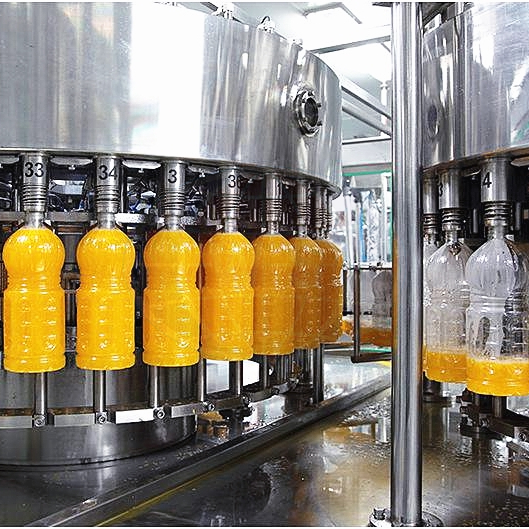
The Filler is undeniably the star of the production line. It is the most complex, precise, and expensive piece of machinery in the facility. However, the illusion of a standard or one-size-fits-all filling machine is a common pitfall for procurement managers. Basic lists specify the number of valves and theoretical output but omit the subtle engineering upgrades necessary for specific beverage categories.
For instance, a commercial juice production line operating at capacities ranging from 2000 to 36000 bottles per hour requires strict thermodynamic management. If your process dictates hot filling at 85 to 90 degrees Celsius, standard ambient filling valves will fail. You must specify SUS304 or SUS316 stainless steel contact parts and high-temperature recirculation loops to maintain the filling bowl temperature.
Current market trends show a massive surge in SKU proliferation. Brands constantly launch new bottle sizes and limited-edition flavors to capture niche audiences. To accommodate this, buyers must look for the following frequently overlooked features:
| Production Stage | Standard Vendor Quote Often Includes | Comprehensive Engineering Setup Requires |
|---|---|---|
| Preparation | Basic mixing tank, simple agitator | High-shear mixers, HTST pasteurizer, deaerator, homogenizer |
| Filling | Gravity filler, standard capping heads | Isobaric valves, hot-fill recirculation, HEPA enclosures, SUS316 parts |
| Sanitation | Manual cleaning ports | Fully automated multi-tank CIP system with PLC dosing control |
| Packaging | Manual packing tables | Automated shrink wrapper, wrap-around case packer, robotic palletizer |
| Utilities | Not included | High/low-pressure compressors, industrial chillers, steam boilers |
Production line efficiency is dictated by its slowest component. A common engineering oversight occurs when plant managers heavily invest in high-speed processing. They then severely underfund the end-of-line packaging logistics. The bottleneck effect is a harsh reality. Alarms will blare constantly if a filling machine capable of processing 10,000 bottles per hour chokes a downstream Packer that can only aggregate 5,000 bottles per hour.
Relying on manual labor for high-speed packing introduces ergonomic liabilities, inconsistent throughput, and hidden recurring costs. A comprehensive roster should specify the exact type of secondary packaging automation required based on your retail strategy:
Beginner equipment lists focus heavily on the machines that make the product. However, they rarely include the apparatus that protects the brand. Quality control and inspection modules are the invisible protectors of your facility. They ensure that defective or aesthetically flawed products never reach the consumer.
Major retail chains enforce strict quality tolerances. A single leaking bottle can compromise an entire pallet. This leads to costly shipment rejections and damaged vendor relationships. To mitigate these risks, prudent operators include automated inspection modules:
Industrial hardware cannot operate in a vacuum. A critical oversight during the procurement phase is treating facility utilities as a separate, secondary concern. The most sophisticated manufacturing assets are entirely useless without the utilities required to power, cool, heat, and pressurize them. Vendors frequently exclude these from initial proposals because requirements vary drastically based on your building existing infrastructure.
Failing to account for these systems can lead to catastrophic budget overruns. A complete engineering evaluation must account for:
Recognizing the gaps in a vendor quote is only the first step. Procurement managers must adopt a systematic engineering approach to evaluating proposals and finalizing the contract. Entering negotiations with a structured methodology ensures no critical fluid dynamics or automation components are overlooked.
Follow this actionable, step-by-step technical checklist when reviewing vendor quotes:
Step 1: Map Your Fluid and Mass Balance
Do not rely on the vendor to define your process. Create a flowchart that traces the product journey from raw municipal water intake all the way to the warehouse pallet. Identify every physical transformation, thermal process, and packaging step required. Calculate your exact flow rates and viscosity parameters.
Step 2: Match Utility Consumption to Facility Capacity
Place your internal workflow map next to the vendor proposed roster. Line by line, verify that there is a specific piece of equipment designated for every step of your process. Ensure downstream equipment has a slightly higher capacity buffer to absorb micro-stops and prevent cavitation in pumps.
Step 3: Audit PLC and SCADA Integration
Isolated machines do not make a production line. Communication does. Ask specific, technical questions regarding data integration. For example, inquire if the filling monoblock Siemens or Mitsubishi PLC communicates directly with the downstream packaging bay to automatically modulate speeds based on bottlenecks.
Step 4: Mandate FAT and SAT Protocols
Ensure the final contract explicitly includes Factory Acceptance Testing FAT, Site Acceptance Testing SAT, and operator training. Furthermore, demand a comprehensive list of recommended spare parts to prevent extended downtime during the first year of operation.
A successful beverage plant operates as an interconnected ecosystem. Overlooking preparation tanks or automated sanitation systems causes major delays that ripple throughout the entire facility. Missing a robust packaging bay or failing to specify critical thermodynamic filling upgrades will inevitably cost more to retrofit later.
Always demand a transparent and fully inclusive equipment roster. Partner with comprehensive, end-to-end beverage machinery manufacturers who supply integrated systems rather than just selling isolated machines. If you are planning a new facility or upgrading an existing line, ensure your engineering specifications are flawless. Explore comprehensive, turnkey solutions and find the exact equipment tailored to your capacity needs at WFoodMachinery to protect your capital investment and maximize operational efficiency from day one.
In almost all scenarios, the filling monoblock is the most capital-intensive piece of equipment on the roster. High-speed rotary fillers are marvels of modern engineering. They require extreme precision to handle thousands of bottles per minute. The cost increases exponentially when you add specialized hygienic features or electronic volumetric flow meters. Following closely behind is the preparation area. This section demands massive amounts of high-grade sanitary stainless steel and sophisticated automation.
While technically possible, retrofitting automated cleaning systems at a later date is highly discouraged from an engineering and financial perspective. It requires shutting down your active production line, cutting into existing sanitary piping, and re-welding new routing matrices. Furthermore, your entire PLC network would require extensive reprogramming. Including a properly sized, fully automated cleaning system in your initial capital expenditure is always more cost-effective.
Preparation equipment is almost always quoted as a separate module because beverage recipes and rheology vary wildly. A facility bottling purified municipal water requires zero mixing tanks and no pasteurization. Conversely, a plant producing a craft soda or functional energy drink requires complex high-shear powder mixers and jacketed heating tanks. Vendors isolate this equipment to provide accurate, customized pricing based on your exact formulation needs.
The selection of your end-of-line packaging equipment is dictated entirely by your retail distribution strategy. If your primary channel is bulk warehouse clubs, a simple shrink film wrapping machine is often sufficient. However, if your product is destined for premium grocery store shelves, retailers often demand Retail Ready Packaging RRP. This requires a highly complex wrap-around carton machine that folds rigid cardboard boxes around your bottles.
A turnkey solution refers to a procurement strategy where a single supplier assumes total responsibility for the entire manufacturing ecosystem. From the initial raw water filters to the final robotic palletizer, the turnkey provider engineers, sources, installs, and integrates every single component. This approach mitigates risk by eliminating communication issues between different vendor machines. It ensures single-source responsibility for overall line efficiency.
Facility planners frequently underestimate the footprint required for utilities. As a general engineering rule, you should allocate at least twenty to thirty percent of your total production floor space specifically for auxiliary equipment. Boilers, industrial chillers, and high-pressure air compressors require substantial clearance for safe operation, ventilation, and routine maintenance access.
Procuring a fully integrated line is a complex engineering project. From the moment the purchase order is signed to the final Site Acceptance Testing, the process typically takes between six to ten months. This timeline accounts for custom engineering, manufacturing of specialized stainless steel components, software programming, shipping, and on-site installation and commissioning.