
Call Us
+86-15800763021
Send Us
Add
775 Chihua Road, Zhelin Town, Fengxian District, Shanghai
- All
- Product Name
- Product Keyword
- Product Model
- Product Summary
- Product Description
- Multi Field Search
Views: 0 Author: Site Editor Publish Time: 2026-08-13 Origin: Site

Scaling ice cream manufacturing introduces severe technical vulnerabilities. Minor fluctuations in temperature or pressure during processing compound into catastrophic texture defects, such as coarse ice crystals or buttering. Plant managers and production engineers struggle to maintain consistent overrun and structural stability when transitioning from batch to continuous processing. This instability often stems from mismatched aging capacities and imprecise freezing controls.
Mitigating these risks requires a rigorously specified Ice Cream Production Line. Achieving repeatable product quality demands precise engineering across every processing stage. This guide breaks down the technical criteria for evaluating aging vats, homogenizers, and continuous freezers to ensure scalable, repeatable product quality.
Homogenization is the foundation of stability: Utilizing a high pressure homogenizer ensures fat globule reduction (typically<1 micron), preventing fat separation and churning during the mechanical stress of freezing.
Aging dictates freezing efficiency: Proper hydration of stabilizers and milk proteins during the aging phase (minimum 4-12 hours at 2-4°C) is non-negotiable for optimal air incorporation (overrun).
Equipment architecture must match scale: An ice cream integrated machine suits pilot plants or low-volume artisanal scaling, while high-throughput facilities require modular, continuous systems with automated Clean-in-Place (CIP) capabilities.
Refrigeration load is a hidden bottleneck: Evaluating the thermal dynamics of the continuous freezer cylinder is critical to preventing premature wear on dasher blades and ensuring a consistent draw temperature.
Mapping the critical path of an industrial production facility establishes the baseline for equipment selection. The standard sequence flows sequentially. You start with blending raw ingredients. Next comes pasteurization to eliminate pathogens. Then, the mix moves through homogenization, cooling, and aging. Finally, it enters continuous freezing, inclusion blending, packaging, and hardening. Each phase depends entirely on the precise execution of the preceding step. A failure in cooling efficiency directly degrades aging performance.
Operators must establish strict success criteria before equipment procurement. Target overrun variance should remain within ±2% to maintain structural integrity and yield predictability. Draw temperature consistency dictates the load placed on the hardening tunnel. Turnaround time for Clean-in-Place (CIP) operations directly impacts overall equipment effectiveness. You cannot afford extended downtime for manual cleaning in a high-throughput facility.
Evaluating heat regeneration efficiency is a primary engineering task. Assess the plate heat exchanger (PHE) design utilized for pasteurization. Aim for greater than 90% thermal regeneration efficiency. High regeneration minimizes the utility loads placed on both the facility boiler and the chilled water system. This optimizes the thermal loop and reduces utility strain.
Two-stage homogenization forms the mechanical foundation of ice cream mix preparation. The first stage applies immense mechanical shear to break down fat globules into uniform, sub-micron particles. The second stage applies lower pressure to separate any fat clusters that form immediately after the initial shear. This dual action creates a stable oil-in-water emulsion.
Integrating a high pressure homogenizer prevents fat coalescence during the intense mechanical agitation of the continuous freezer. It improves the whipping quality of the mix. The resulting structural stability yields a demonstrably smoother mouthfeel and retards the perception of iciness during storage. Without proper homogenization, the mechanical stress of the freezer dasher will churn the fat, resulting in buttering.
Valve metallurgy dictates maintenance intervals and wear resistance. Processing high-solids or abrasive mixes requires robust materials. You must match the valve material to your specific formulation.
| Valve Material | Wear Resistance | Ideal Application |
|---|---|---|
| Standard Stainless Steel | Low | Basic dairy mixes with low total solids. |
| Tungsten Carbide | High | High-fat dairy, standard chocolate mixes. |
| Stellite | Very High | High-solids mixes, fruit purees. |
| Synthetic Diamond | Extreme | Highly abrasive plant-based suspensions (e.g., oat, almond). |
Evaluation metrics center on operating pressure capacities and control mechanisms. Standard processing requires 150–200 bar for the first stage and 30–50 bar for the second stage. Assess whether the ice cream homogenizer utilizes automatic hydraulic pressure adjustment or manual mechanical tensioning. Hydraulic systems provide superior consistency across long production runs. They automatically compensate for minor fluctuations in mix viscosity.
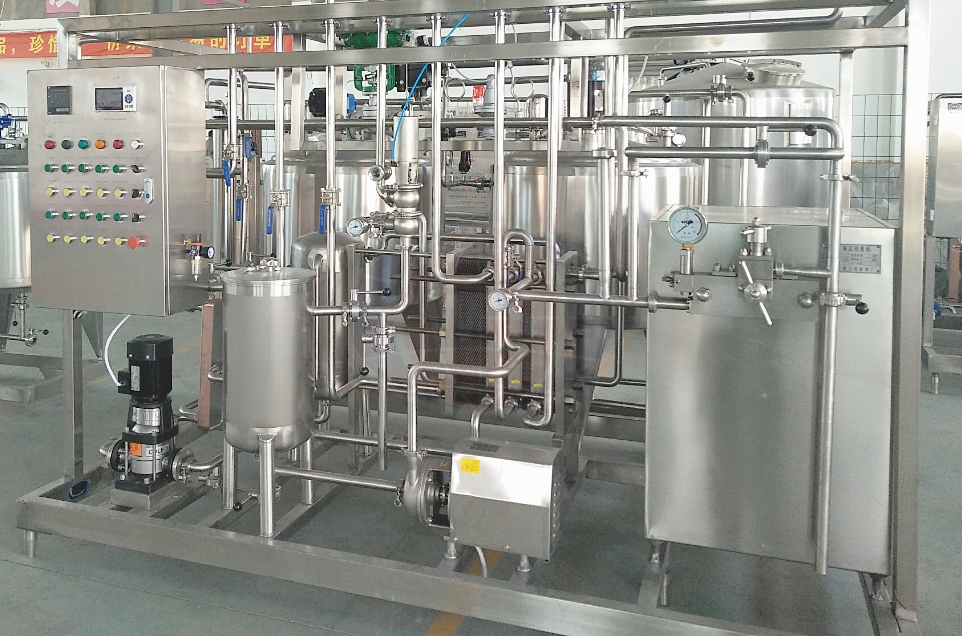
Holding the pasteurized mix at 2-4°C is a non-negotiable processing parameter. This thermal hold allows liquid fat to crystallize properly. Simultaneously, it provides the necessary time for stabilizers and milk proteins to fully hydrate. Incomplete hydration leads to free water in the mix. That free water subsequently forms coarse ice crystals during freezing.
Cooling jacket efficiency determines temperature stability during the aging period. Evaluate the heat transfer coefficients of dimple jackets versus half-pipe coil configurations. Dimple jackets generally offer superior surface area contact. Polyurethane insulation thickness directly influences energy consumption. Proper insulation prevents localized temperature spikes near the tank walls, which can cause premature bacterial growth.
Agitator design must balance thermal uniformity with shear protection. Scrape surface agitators prevent localized freezing against the cooling jacket. Propeller agitators induce bulk flow. The goal is to prevent localized temperature gradients without inducing excessive shear that could prematurely damage the fat emulsion.
Formulation adaptability requires flexible agitation and cooling parameters. High-viscosity mixes, premium high-fat recipes, and plant-based alternatives exhibit distinct stabilizer hydration behaviors. Vegan bases often require higher torque agitation to maintain suspension uniformity compared to standard dairy mixes. You must size the agitator motor to handle the highest viscosity mix in your portfolio.
Sizing considerations dictate facility throughput. Aging capacity must strictly exceed freezing capacity to prevent production bottlenecks. A continuous freezer cannot wait for a mix to finish aging. Facilities typically require multiple aging vats operating in a staggered rotation. This ensures a continuous supply of fully aged mix to the freezer pumps.
Calculate the maximum hourly throughput of your continuous freezer.
Multiply that throughput by your longest required aging time (e.g., 12 hours).
Add a 20% buffer volume to account for CIP changeovers and transfer times.
Divide the total volume across at least three separate aging tanks to establish a continuous rotation.
The heat exchange efficiency of the freezing cylinder defines the final product texture. Rapid freezing is required to generate microscopic ice crystals. Slow freezing results in a coarse, icy texture that degrades consumer acceptance. The ammonia or freon expansion jacket must remove latent heat instantaneously.
Dasher design influences both heat transfer and mechanical shear. Open dashers suit standard formulations. Solid dashers displace more volume, increasing the velocity of the mix against the cylinder wall. Scraper blade materials determine wear resistance, scraping efficiency, and the resulting impact on motor torque.
| Blade Material | Characteristics | Maintenance Impact |
|---|---|---|
| Hardened Stainless Steel | Standard industry choice, good heat transfer. | Requires frequent sharpening to maintain edge. |
| Nickel Alloys | High durability, resistant to corrosive CIP chemicals. | Longer lifespan, higher replacement cost. |
| PEEK Plastic | Low friction, prevents scoring on the cylinder wall. | Cannot be sharpened, requires complete replacement when worn. |
Air injection systems dictate overrun accuracy. Mass flow controllers provide precise, mass-based air metering regardless of ambient temperature or pressure fluctuations. Volumetric pumps offer a simpler mechanical alternative. However, they lack the precision required for tight overrun tolerances.
Pump engineering affects stable backpressure. Assess the performance of continuous freezer pump configurations. Piston pumps handle high-viscosity inclusions well. Rotary lobe and gear pumps provide consistent flow rates for standard mixes. The pump must maintain stable cylinder pressure while preserving the delicate fat structure of the aged mix. Cavitation in the mix pump will destroy overrun consistency.
Precise air metering directly impacts yield and structural integrity. Yield depends on hitting exact overrun targets. Over-aeration compromises the melt-down rate and structural stability. Under-aeration wastes raw materials and produces a dense, unappealing texture. You must calibrate the air injection system weekly.
The integrated approach consolidates pasteurization, homogenization, cooling, and sometimes aging into a single, compact footprint. Utilizing an ice cream integrated machine simplifies piping and reduces installation complexity. It operates as a self-contained thermal processing unit. You connect utilities to a single skid.
Ideal use cases include R&D laboratories, pilot plants, and mid-sized regional producers. These environments prioritize minimizing the physical footprint. They also require lower initial capital expenditure. Integrated systems allow operators to test formulations without tying up high-capacity industrial lines.
Trade-offs exist with integrated architectures. They offer limited throughput compared to decoupled systems. Operators have less flexibility for custom overrun profiles or complex multi-stage cooling. A failure in one component creates a single-point-of-failure risk that halts the entire production sequence. If the homogenizer on the integrated skid fails, you cannot pasteurize.
The modular approach decouples the processing stages. It utilizes independent high pressure homogenizers, multi-tank aging stations, and multi-cylinder continuous freezers. This architecture provides maximum flexibility and scalability for high-volume manufacturing environments. You can upgrade individual components as demand grows.
Industrial-scale operations requiring greater than 1,000 liters per hour throughput rely on modular systems. These facilities demand continuous, uninterrupted operation across multiple shifts. Modular lines accommodate complex piping matrices and automated routing valves. They integrate seamlessly with automated ingredient dosing systems.
Advantages include built-in redundancy and easier integration of complex inclusion feeders. Modular setups allow for independent CIP zoning across the ice cream production line. Operators can clean the aging vats while the pasteurizer processes the next batch. This maximizes equipment uptime and overall plant efficiency.
| Feature | Integrated Machine | Modular System |
|---|---|---|
| Footprint | Compact, single skid design. | Large, requires extensive floor space. |
| Throughput Capacity | Low to Medium (Pilot/Artisanal). | High (>1,000 L/hr, Industrial). |
| CIP Flexibility | Usually single-zone cleaning. | Multi-zone, simultaneous cleaning. |
| Redundancy | Low (Single point of failure). | High (Decoupled components). |
Equipment must adhere to strict sanitary standards, such as EHEDG or 3-A certifications. These standards dictate the physical geometry of the processing equipment to ensure cleanability. Non-compliant equipment harbors microbial growth. This leads to product recalls and severe operational downtime.
Evaluate piping and tank designs for dead legs where product can stagnate. Surface finishes must achieve Ra values less than 0.8 μm to prevent bacterial adhesion. Automated CIP sequencing capabilities minimize chemical usage. They reduce water consumption and lower downtime costs while guaranteeing microbial safety. Verify that all valves are self-draining.
Assess the facility utility upgrades required to support the processing line. Compare the thermal efficiency and regulatory compliance of Freon, Ammonia, and CO2 refrigeration systems. The continuous freezer places massive, instantaneous thermal loads on the plant's refrigeration infrastructure. You must ensure your compressors can handle the peak draw.
Calculate compressed air requirements for overrun injection systems. The air must be sterile and strictly regulated. Evaluate the peak electrical loads required for large motors. Pay special attention to the main drive of the homogenizer and the dasher motor of the continuous freezer. Voltage drops during startup will trip breakers and halt production.
Evaluate Programmable Logic Controller (PLC) capabilities for comprehensive recipe management. Modern systems require real-time overrun monitoring and automated draw temperature adjustments. SCADA integration provides historical data logging for traceability and quality assurance audits. You need data to prove pasteurization compliance.
In-line quality control relies on advanced sensor integration. Analyze the implementation of Coriolis mass flowmeters and in-line viscometers. These instruments provide continuous density feedback. They allow the PLC to execute automated overrun compensation without operator intervention. This reduces waste during startup and shutdown phases.
A severe risk occurs when the continuous freezer outpaces the ingredient feeder or the packaging line. This mismatch causes line stoppages. When the freezer stops, the mix remaining in the cylinder degrades. The ice crystals grow, leading to texture defects and product loss.
Mitigate this risk by implementing buffer systems between critical stages. Install variable frequency drives (VFDs) on transfer pumps to modulate flow rates dynamically. Conduct holistic line-balancing audits prior to procurement. Ensure all downstream equipment can handle the maximum output of the freezer.
Premature wear on homogenizer valves or freezer blades frequently results from improper assembly or delayed maintenance. Dull scraper blades fail to remove the frozen layer from the cylinder wall efficiently. This insulates the mix and destroys heat transfer rates. The compressor works harder, but the draw temperature rises.
Require vendor-supplied preventative maintenance schedules. Mandate specialized training for operators regarding blade sharpening and replacement protocols. Ensure readily available OEM spare parts are stocked on-site. Prevent minor wear issues from escalating into catastrophic equipment failures.
Inspect scraper blades weekly for burrs or uneven wear patterns.
Check homogenizer oil levels and hydraulic pressure stability daily.
Calibrate mass flow air controllers monthly to ensure overrun accuracy.
Perform a visual inspection of all CIP spray balls quarterly to ensure no clogging.
Conduct a comprehensive utility audit of your facility to verify refrigeration, electrical, and compressed air capacities before selecting equipment.
Define your exact mix viscosity parameters and overrun targets to accurately size the homogenizer and continuous freezer pumps.
Request strict performance guarantees from equipment manufacturers, specifically regarding draw temperature consistency and overrun variance under full load.
Implement a staggered multi-tank aging setup to ensure the continuous freezer receives an uninterrupted supply of fully hydrated mix.
A: Typically, a two-stage process is used: 150–200 bar (2100–2900 psi) for the first stage to break down fat globules, and 30–50 bar (400–700 psi) for the second stage to prevent clustering.
A: Industry standard requires aging the mix for 4 to 12 hours at 2-4°C to allow fat crystallization and complete hydration of stabilizers.
A: Batch freezers process a set volume at a time and manually fold in air, resulting in lower, variable overrun. Continuous lines constantly pump mix and inject metered air under pressure, yielding highly consistent overrun and smaller ice crystals.
A: Yes, provided the integrated homogenizer is rated for the necessary pressures and the cooling deck can handle the thermal load, though throughput will be significantly lower than modular systems.
A: Coarse texture is usually caused by dull scraper blades, insufficient mix aging, inadequate homogenization, or a refrigeration system failing to maintain a rapid temperature drop inside the cylinder.
A: Overrun (the percentage of air incorporated) directly dictates yield. Precise control via mass flow air injection ensures you meet volume targets without violating legal weight-per-volume regulations or compromising texture.