
Call Us
+86-15800763021
Send Us
Add
775 Chihua Road, Zhelin Town, Fengxian District, Shanghai
- All
- Product Name
- Product Keyword
- Product Model
- Product Summary
- Product Description
- Multi Field Search
Views: 0 Author: Site Editor Publish Time: 2026-09-01 Origin: Site

The global appetite for premium, specialty, and commercial cheeses is surging. For dairy business owners and plant managers, successfully scaling operations to meet this soaring demand requires far more than just high-quality milk and an expert recipe. It demands a highly reliable technological backbone. Transitioning from a pilot-scale creamery to full commercial production involves critical capital expenditure decisions. These choices will dictate your plant's efficiency, yield, and profitability for decades.
Choosing the wrong hardware can severely disrupt daily operations. From an engineering perspective, inadequate machinery frequently leads to inconsistent product quality, poor whey expulsion, and compromised hygiene. Ultimately, it results in wasted capital. In a strictly regulated food sector, equipment failure or bacterial contamination can trigger catastrophic product recalls. This permanently damages a brand's reputation.
This guide serves as a comprehensive, objective roadmap to help you build a seamless manufacturing environment. By diving into technical specifications, capacity requirements, and system integration capabilities, you will be fully equipped to select the optimal machinery for your specific operational goals.
Identify Your Scale: Matching your hardware to your specific production volume is the crucial first step in facility planning.
Know the Core Components: A functional line fundamentally requires a temperature-controlled vat, a reliable press, and a precision cutter.
Prioritize Hygiene: Always opt for food-grade stainless steel (SUS304 or 316L) equipped with automated Clean-In-Place (CIP) capabilities.
Focus on Long-Term ROI: Look well beyond the initial acquisition price. Factor in automation, energy efficiency, and after-sales support.
Before requesting quotes or browsing manufacturer catalogs, facility managers must conduct a rigorous internal audit. Hardware that performs flawlessly for a boutique creamery will inevitably cause severe bottlenecks in a high-volume commercial plant. Properly assessing your needs requires a granular understanding of your utility drops, floor space, and specific product portfolio.
The sheer size of your operation dictates the physical footprint and continuous-flow capabilities of the systems you require. Artisan or small-batch craft production typically involves processing milk volumes ranging from 100 to 1,000 liters per day. At this more intimate scale, operational flexibility is often more valuable than outright speed. Artisan producers generally favor multi-purpose vessels. This allows the cheesemaker to manually intervene, visually inspect curd formation, and adjust biochemical parameters on the fly.
Conversely, commercial-scale production processes tens of thousands of liters daily. This necessitates continuous, high-volume processing lines. In this demanding environment, manual intervention introduces unacceptable variables. Industrial-grade setups rely heavily on Programmable Logic Controllers (PLCs) to completely automate heating curves, stirring speeds, and curd cutting. The primary objective shifts toward maximizing throughput and guaranteeing that batch number 1,000 is identical to batch number one.
Different cheeses undergo vastly different biochemical and physical transformations. A universal, one-size-fits-all setup simply does not exist. The specific processing units you select must align perfectly with the biochemical requirements of your target product.
Hard cheeses, such as Cheddar or Gouda, require extensive whey expulsion. This necessitates robust cutting mechanisms to mill the curd finely, followed by heavy-duty pressing systems. Soft varieties, like Brie or Camembert, demand much gentler handling. Aggressive stirring can easily shatter fragile curds, leading to severe fat loss in the whey. For instance, Mozzarella requires specialized cooker-stretchers with dual augers rather than traditional presses to achieve its signature fibrous texture.
A highly functional manufacturing plant operates as an intricately interconnected ecosystem. While auxiliary units handle raw milk preparation, the actual transformation from liquid milk to a packaged solid relies heavily on three primary mechanical pillars.
The coagulation process begins in the vat, making it arguably the most critical investment in your facility. This vessel handles heating the milk, integrating starter cultures, and precisely cutting the coagulated gel. When evaluating a commercial cheese vat, impeccable temperature control is non-negotiable. Modern iterations utilize double-jacketed walls where steam or hot water circulates. Look for capacities ranging from 200L to 10,000L, ensuring perfectly even heat distribution without scorching delicate milk proteins.
Furthermore, prioritize units equipped with variable-speed planetary agitators (typically 0-36 rpm). These mechanisms must stir gently during the initial culturing phase, then seamlessly switch to specialized, razor-sharp blades to slice the coagulated mass uniformly. Uneven cutting leads to irregular moisture retention, directly impacting the final mouthfeel of the product.
Once curds are separated from the whey and transferred into molds, they must be pressed to knit together into a solid block. For commercial applications, pneumatic systems have become the undisputed industry standard. Unlike traditional manual spring presses, a high-quality cheese press provides constant, measurable, and highly adjustable pressure.
Consider the practical application on the plant floor. As a block of Cheddar shrinks over several hours, a pneumatic cylinder automatically adjusts its stroke to maintain a uniform pressure (often adjustable between 0.1 to 0.6 MPa). This relentless consistency prevents microscopic mechanical openings inside the wheel where unwanted molds could thrive.
At the end of the aging phase, bulk blocks must be portioned for retail distribution. Hand-cutting is entirely unfeasible in a commercial setting due to exorbitant labor costs and unavoidable inaccuracy. Therefore, integrating a precision cheese cutter is essential for standardizing weight and eliminating profit-killing product giveaway.
The ideal cutting technology depends heavily on the density of your product. Heavy-duty hydraulic wire grids are highly effective for semi-hard blocks. However, for sticky, high-moisture varieties, traditional wires cause smearing. In these scenarios, ultrasonic blades vibrating at high frequencies create a nearly frictionless surface that slices cleanly through crumbly textures.
The core production units rely on a sophisticated network of auxiliary systems. Before raw milk enters the coagulation vessel, it must be thermally conditioned. This involves plate heat pasteurizers to eliminate pathogenic bacteria and centrifugal cream separators to standardize the exact fat-to-protein ratio. Hygienic centrifugal pumps and a labyrinth of SUS304 piping are also required to transport fluids safely without inducing shear stress on the milk.
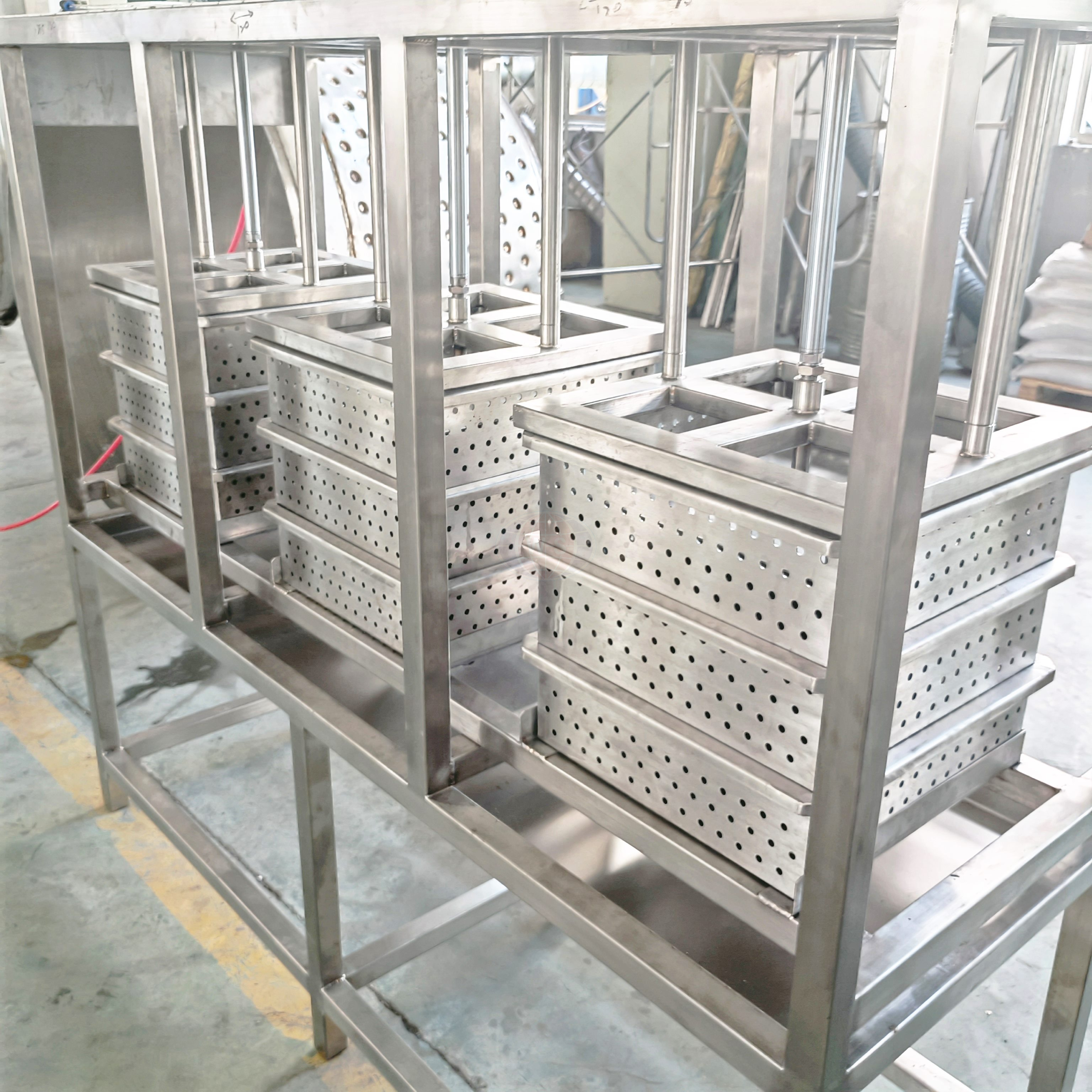
Selecting the right setup goes far beyond identifying basic machine types. It requires a critical evaluation of engineering tolerances, material science, and digital integration capabilities.
Industry Trend Analysis: Recent market shifts highlight a definitive move toward data-driven, sustainable manufacturing. With rising raw milk costs and chronic labor shortages, modern creameries are rapidly adopting Industry 4.0 standards. Facilities are integrating IoT-enabled sensors to monitor pH drops and whey expulsion rates in real-time, effectively eliminating the guesswork of manual titrations. This evolution underscores a broader push toward maximizing yield while minimizing energy and water footprints—a critical dynamic to consider when evaluating next-generation hardware.
The manufacturing environment is notoriously harsh. Lactic acid, high-salinity brines, and aggressive caustic cleaning chemicals create a highly corrosive atmosphere. Consequently, constructing all contact surfaces from premium food-grade stainless steel is an absolute requirement.
While SUS304 stainless steel serves well for general structural frames, components exposed directly to high-acid whey or brining solutions must be fabricated from SUS316L. The addition of molybdenum in the 316L alloy drastically increases resistance to pitting. Crucially, all internal welds must be ground completely flat and mechanically polished to a surface roughness of Ra ≤ 0.4 µm. Even microscopic crevices can harbor dangerous pathogens like Listeria.
The uncompromising demand for batch-to-batch consistency has accelerated the adoption of automated control systems. Contemporary units feature advanced Human-Machine Interface (HMI) touch panels tethered to robust PLCs (such as Siemens or Omron). These smart systems empower operators to program exacting thermal curves and staged pressing pressures.
Beyond operational ease, automated data logging facilitates flawless traceability. By recording exact pasteurization holding times, plant managers can instantly provide documented proof of process during stringent regulatory audits.
Capital equipment is rarely purchased in a vacuum. When sourcing new hardware, you must rigorously evaluate how it will interface with your current physical infrastructure. New vessels must feature compatible sanitary fittings (such as standard Tri-Clamp or DIN connections). From a digital standpoint, modern dairy processing machinery should communicate with your central facility software, allowing you to track yield metrics across the entire plant floor.
Procuring machinery that is too small instantly creates production bottlenecks. Conversely, drastically over-sizing your equipment wastes expensive utilities and valuable floor space. Accurate capacity planning relies on solid dairy mathematics.
The physical dimensions of your machinery are dictated by your daily raw milk intake, not your final packaged output. As a reliable industry baseline, it requires approximately 10 liters of whole cow's milk to yield 1 kilogram of hard cheese (a 10% yield ratio). If your daily production goal is 500 kilograms of Cheddar, you must process roughly 5,000 liters of milk. Therefore, your coagulation vessel must have a working capacity of at least 5,000 liters, with adequate headspace to prevent spillage during aggressive agitation.
| Production Scale | Daily Milk Capacity | Recommended Vat Size | Automation Level |
|---|---|---|---|
| Artisan / Boutique | 100L - 1,000L | 200L - 500L (Batch) | Manual to Semi-Auto |
| Mid-Scale Commercial | 1,000L - 5,000L | 1,000L - 3,000L | PLC Controlled / HMI |
| Industrial Processing | 5,000L+ | 5,000L - 10,000L+ | Fully Automated / CIP Integrated |
Upgrading your infrastructure is a substantial financial commitment. Replacing a primary vessel after only two years because demand outpaced capacity is a costly misstep. When engineering your floor plan, it is highly prudent to factor in a 15% to 20% buffer in production capacity. A slightly oversized, well-engineered vat can still process smaller batches effectively, allowing your facility to absorb sudden spikes in market demand.
Procurement strategies in the food manufacturing sector should never be driven solely by the lowest initial purchase price. A truly comprehensive financial assessment accounts for the Total Cost of Ownership (TCO) calculated over the expected 15-to-20-year lifespan of the hardware.
Machinery featuring heavy-gauge stainless steel fabrication and precision electrical components will naturally command a higher initial premium. Budget-tier alternatives frequently suffer from micro-fractures in substandard welds, inconsistent thermal jackets, and premature sensor failures. These mechanical defects inevitably lead to downgraded product batches and crippling unplanned downtime. Investing in robust technology guarantees a significantly faster Return on Investment (ROI) by maximizing daily yield.
The day-to-day operational expenses of running a creamery can quickly eclipse the initial capital outlay. Scrutinize utility consumption closely. How efficiently does the double jacket transfer steam heat? Are the pneumatic cylinders designed to minimize compressed air leakage? Additionally, evaluate the accessibility of consumable replacement parts, such as agitator shaft seals and sanitary butterfly valves. Systems engineered for tool-less maintenance drastically reduce expensive labor hours during routine servicing.
Because milk is a highly nutritious medium, it is exceptionally susceptible to rapid microbial proliferation. The hardware you select must adhere to uncompromising international sanitary standards to protect public health.
Manual scrubbing of industrial-scale vessels is notoriously inefficient and highly prone to human error. Modern installations must feature fully automated Clean-In-Place (CIP) compatibility. This entails the integration of strategically positioned rotary spray balls offering 360-degree coverage, self-draining internal geometries, and crevice-free connections. A properly engineered CIP system allows highly concentrated detergents to circulate at scalding temperatures, guaranteeing the eradication of organic soils.
Depending on your target export markets, your facility must comply with specific regulatory frameworks. Demand documented proof from the manufacturer that their equipment meets or exceeds standards set by the FDA, 3-A Sanitary Standards, or CE directives. Having this compliance documentation readily available is essential for passing unannounced facility inspections.
The manufacturer you ultimately select becomes a critical, long-term technical partner. The daily reliability of your entire operation is directly tethered to the engineering competence of your chosen supplier.
No two creameries are perfectly identical. Variations in available floor space, ceiling clearances, drainage trench placements, and proprietary recipes demand tailored engineering solutions. A premier manufacturer will possess the in-house engineering capabilities to customize their baseline models. This might mean altering the height of a drainage table or configuring the footprint of a cutting machine to fit seamlessly into a tight layout.
The procurement journey does not end when the crates arrive at your loading dock. Proper leveling, sanitary welding, and digital calibration are critical. Evaluate potential manufacturers heavily based on their ability to provide expert on-site commissioning and comprehensive operator training. Guaranteed, expedited access to technical troubleshooting and a robust inventory of spare parts is a non-negotiable requirement for any serious enterprise.
Conclusion
Building a successful, scalable dairy business hinges on making informed, strategic investments in your production infrastructure. By accurately assessing your capacity needs, prioritizing uncompromising hygiene standards, and investing in high-quality core components, you establish a foundation for long-term profitability. Remember that the right cheese making equipment is not just a capital expense; it is a direct investment in the consistency and safety of your brand. Equip your facility with the best tools available, and ensure every wheel of cheese you produce meets the highest standards of excellence.
Ready to upgrade your facility? Explore WFoodMachinery's complete range of high-quality, customizable cheese processing solutions today to build your ideal production line and maximize your plant's efficiency.
Space requirements depend entirely on your target capacity and workflow. While a small artisanal setup might fit comfortably within a 500-square-foot room, industrial-scale processing requires extensive, dedicated zoning for wet processing, mechanical pressing, brining pools, and climate-controlled aging vaults.
Yes, a versatile, double-jacketed vessel equipped with adjustable temperature controls and variable-speed agitators can successfully accommodate a wide variety of recipes. However, highly specialized products, such as stretched-curd Mozzarella, often achieve superior consistency when processed in dedicated, purpose-built machinery.
When constructed from premium SUS304 or 316L stainless steel and properly maintained, high-quality processing hardware can easily operate efficiently for 15 to 20 years or more. Achieving this longevity requires strict adherence to routine mechanical maintenance schedules and flawless execution of daily CIP cleaning protocols.
For any commercial-scale operation, upgrading to a pneumatic or fully automated pressing system is highly recommended. Manual alternatives simply cannot guarantee uniform pressure over extended periods, whereas automated systems ensure consistent moisture expulsion, superior rind formation, and a drastic reduction in physically demanding labor.
Costs vary drastically based on capacity, automation levels, and material grades. A basic artisanal vat might start around a few thousand dollars, while a fully automated, multi-unit commercial line with CIP integration and PLC controls can range from $50,000 to well over $500,000. It is crucial to evaluate the Total Cost of Ownership (TCO) rather than just the initial sticker price.
Food-grade stainless steel is the undisputed standard. Specifically, SUS304 is excellent for structural components and outer jackets. However, for any parts coming into direct contact with acidic whey, curds, or high-salinity brine, SUS316L stainless steel is required due to its superior resistance to pitting and chemical corrosion.