Call Us
+86-15800763021
Send Us
Add
775 Chihua Road, Zhelin Town, Fengxian District, Shanghai
- All
- Product Name
- Product Keyword
- Product Model
- Product Summary
- Product Description
- Multi Field Search
Views: 0 Author: Site Editor Publish Time: 2026-10-10 Origin: Site

Global demand for high-quality milk powder is surging at an unprecedented rate. Evolving dietary habits and the growing need for shelf-stable dairy constantly drive this growth. Meeting this massive demand is not simply a matter of sourcing premium raw milk. It requires a highly precise, hygienic, and efficient industrial setup. I have seen poorly configured lines inevitably lead to severe operational headaches on the plant floor. These issues include soaring energy costs, stubborn product clumping, and compromised nutritional value.
To resolve these bottlenecks, modern Milk Powder Production Equipment functions as a sophisticated, multi-stage ecosystem. Recent industry trends show a definitive shift toward energy recovery and predictive maintenance. Plant managers are moving away from reactive fixes and are now demanding smart factory integrations to protect tight profit margins. This machinery safely removes moisture while preserving delicate proteins and vitamins. In this comprehensive guide, we will walk through the exact configuration of a contemporary production line. We will cover everything from the initial raw milk reception to the final hermetic packaging, helping you make highly informed purchasing decisions.
A modern dairy processing facility is far more than a mere collection of isolated machines. It represents a highly synchronized and continuous ecosystem. The layout of such a facility must meticulously account for fluid dynamics, thermodynamics, and strict sanitary zoning. You must prevent cross-contamination between raw liquid and the finished dry product at all costs. Industry analysts observing recent manufacturing trends note a significant shift toward Industrial Internet of Things sensors. These sensors monitor equipment health predictively. This seamless data flow is just as important as the physical product flow.
Specifically, the standard workflow follows a precise linear progression. Raw milk reception is followed by pasteurization, then concentration, thermal drying, and finally powder filling. Each phase relies heavily on the flawless execution of the previous one. Centralized automation is paramount to maintain this delicate operational balance. Programmable Logic Controllers and Supervisory Control and Data Acquisition systems integrate throughout the entire configuration. Picture a control room where operators watch real-time digital twins of the machinery. These digital panels continuously monitor critical parameters like steam temperature, pipe pressure, and flow rates. This ensures uniform product quality batch after batch without manual interference.
High-quality powder starts the exact second raw liquid hits the unloading bay. You cannot fix bad milk downstream. This initial pre-processing phase stabilizes the volatile raw material, filters out physical impurities, and establishes the precise fat-to-protein ratio required for your final product.
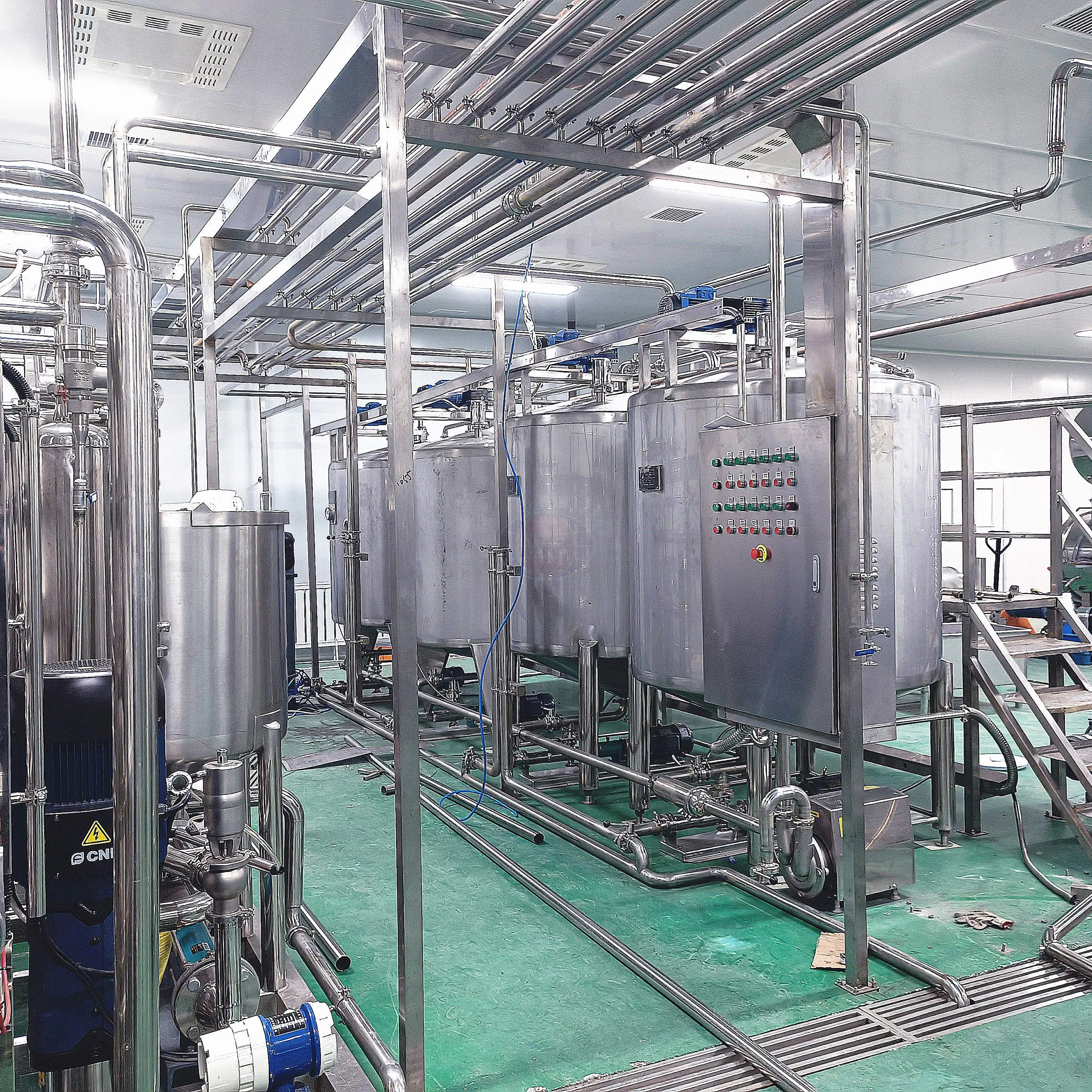
Upon arrival, raw milk is swiftly pumped from transport tankers through initial filters and cooling heat exchangers. It is chilled immediately to 4°C or roughly 39°F and routed into massive, double-walled insulated storage silos. Inside these towering stainless-steel tanks, gentle agitators rotate slowly. This prevents the milk fat from separating and rising to the top, all while holding a strict thermal baseline to halt bacterial proliferation.
Furthermore, the raw milk must be purified before any heat treatment occurs. The liquid feeds into centrifugal separators. These high-speed rotating bowls utilize intense centrifugal force to separate particles based on density. This equipment serves a dual purpose. First, it acts as a clarifier to remove microscopic impurities. Second, it separates the lighter butterfat from the heavier skim milk. Once standardized to the desired fat content, the milk undergoes High-Temperature Short-Time pasteurization. The liquid rushes through a plate heat exchanger, rapidly heating to at least 72°C for 15 seconds before flashing back to a cool state. This thermal configuration is meticulously designed to destroy pathogenic bacteria without denaturing heat-sensitive whey proteins.
Trying to dry raw milk directly in a chamber is a rookie engineering mistake. Raw milk contains roughly 87 percent water. Boiling all that away with hot air destroys the proteins and skyrockets your utility bills. Therefore, Milk Concentration is a mandatory intermediate step designed to remove the bulk of the water content efficiently.
The multi-effect falling film evaporator takes on this heavy lifting. It systematically strips up to 85 percent of the water from the pasteurized milk. By concentrating the liquid to a total solid content of 45 to 50 percent, the workload on the subsequent drying equipment drops dramatically. In this towering configuration, milk pumps to the top of vertical tubes and cascades downwards as a thin, continuous film along the inner walls. External steam provides the necessary heat.
Crucially, this entire process occurs under a strict vacuum. Lowering the atmospheric pressure inside the vessel reduces the boiling point of the milk from 100°C down to a gentle 60°C. Boiling at this lower threshold prevents the Maillard reaction, avoiding undesirable browning, and protects the nutritional integrity of amino acids. In addition, modern evaporators integrate advanced energy recovery systems like Thermal Vapor Recompression. These systems capture the boiled-off water vapor, compress it to raise its temperature, and recycle it back into the heating loop. This effectively slashes energy consumption by up to 50 percent.
The dramatic transition from a thick, concentrated liquid to a highly soluble, stable dry powder occurs within the Spray Dryer. This massive structure is arguably the most complex and critical piece of equipment in the entire facility. Its internal configuration directly dictates the bulk density, moisture content, and reconstitution properties of the final product.
Here is how the fluid dynamics unfold in real-time. The concentrated milk pumps under extreme pressure to the top of a silo-like drying chamber. It passes through an atomizer. This is either a high-speed rotary disc spinning at thousands of RPMs or a precise matrix of high-pressure nozzles. This atomizer shatters the thick liquid into millions of microscopic droplets, creating a fine, swirling mist. Simultaneously, filtered hot air, typically blasting between 180°C and 200°C, forces into the chamber through an air disperser.
As the delicate mist collides with the turbulent hot air, the immense surface area of the microscopic droplets allows for near-instantaneous evaporation. Within fractions of a second, the trapped water flashes into vapor. Because this phase change absorbs latent heat, the actual temperature of the milk particle remains surprisingly low. It stays around 70°C to 80°C, perfectly protecting the powder from scorching.
Depending on the target product, facilities utilize either single-stage or multi-stage drying. Single-stage drying discharges the powder directly from the main chamber. This is suitable for standard-grade, fine powders. In contrast, multi-stage drying incorporates fluid bed technology. The powder exits the main chamber slightly moist and drops into a vibrating fluid bed dryer at the base. Warm air blows up through the powder bed, gently removing the final residual moisture while promoting agglomeration. This causes fine particles to clump into larger, porous granules. It creates the premium instant milk powder highly sought after by consumers.
Once the powder is perfectly dried and cooled, it becomes highly vulnerable to environmental contamination, moisture absorption, and oxidation. The final phase relies on meticulous handling and advanced packaging technologies to lock in product integrity.
Enclosed pneumatic conveying systems manage the transition from the dryer to the packaging hall. Utilizing dehumidified, filtered air, these systems transport the sensitive powder through seamless stainless-steel pipelines. This isolation prevents the powder from contacting ambient plant humidity. Exposure to humidity would cause immediate and catastrophic clumping.
Modern Powder Filling lines are highly automated and configured for extreme precision. Because dairy powders vary slightly in bulk density, standard volumetric filling is often inadequate. Instead, industry-grade auger fillers combine servo-driven screws with integrated load cells. They dispense the exact required mass into the receptacle. Whether filling 400g consumer tin cans or 25kg bulk kraft bags, the dosing equipment ensures strict regulatory weight compliance while minimizing costly product giveaway.
Furthermore, premium packaging lines integrate Modified Atmosphere Packaging technology to prevent lipid oxidation. This oxidation causes butterfat to turn rancid. Before the container hermetically seals, a deep vacuum extracts the ambient oxygen. The system then immediately flushes the headspace with high-purity nitrogen gas. By dropping residual oxygen levels below 2 percent, this technology effectively halts oxidative degradation. It extends the shelf life up to 24 months without a single chemical preservative.
For plant managers looking to upgrade, understanding the limitations of older machinery is essential. Let us look at a direct comparison of how modern equipment solves traditional plant floor headaches.
| Operational Aspect | Legacy Systems | Modern Configuration | Commercial Value |
|---|---|---|---|
| Energy Efficiency | Single-pass steam evaporators; massive heat loss. | Multi-effect falling film with Thermal Vapor Recompression. | Reduces steam usage by up to 50 percent, directly boosting profit margins. |
| Powder Sticking | Poor airflow causes powder to bake onto chamber walls. | Computational fluid dynamics design with automated air sweepers. | Eliminates scorched particles and drastically reduces manual cleaning downtime. |
| Moisture Control | Manual sampling leads to over-dried or wet batches. | Inline near-infrared moisture sensors linked to the PLC. | Guarantees exact spec compliance and prevents bacterial growth. |
| Sanitation | Manual dismantling of pipes and valves. | Fully automated Clean-in-Place integration. | Ensures pharmaceutical-grade hygiene and slashes labor costs. |
Procuring and configuring a new facility requires careful strategic planning. The capital expenditure is significant. The specifications of the machinery must align perfectly with your commercial objectives and local regulatory environment. Here is a practical engineering checklist to guide your selection.
Finally, choosing the right manufacturer is paramount. The extreme complexity of fluid dynamics and powder handling means piecing together machines from different vendors often results in integration failures. Decision-makers should heavily prioritize turnkey solution providers who offer 3D layout planning, professional installation, and operator training.
Setting up a highly functional dairy processing facility is a precise engineering task. It relies heavily on the seamless integration of pre-processing units, the falling film evaporator, the spray dryer, and the powder filling machinery. When these critical components synchronize perfectly, they ensure exceptional energy efficiency and superior product quality. Investing in the proper configuration secures long-term profitability by minimizing waste and operational downtime. If you are planning a facility upgrade or a new build, do not leave your configuration to chance. Explore the robust, high-efficiency equipment options available at WFood Machinery. Request a custom engineering quote today to take your dairy manufacturing capabilities to the next level.
While all parts of the synchronized facility are essential, the spray dryer is universally recognized as the most critical. It acts as the technological heart of the operation. It dictates the physical properties of the powder such as particle size, bulk density, wettability, and solubility. If the drying parameters are poorly calibrated, the final product's market value drops significantly due to poor reconstitution properties.
An evaporator handles liquid concentration because removing water through vacuum evaporation is significantly cheaper and faster than relying solely on hot air. By operating under a vacuum, the evaporator gently boils off up to 85 percent of the water at low temperatures. This concentrates the milk to a 45 to 50 percent solid content. It drastically reduces the thermal workload of the subsequent drying phase while protecting heat-sensitive nutrients.
Modern filling configurations prevent spoilage by utilizing a process called nitrogen flushing. Because milk powder contains high levels of butterfat, oxygen exposure causes rapid lipid oxidation and rancidity. The packaging machinery vacuums the oxygen out of the can or pouch and replaces it with inert nitrogen gas. This effectively halts oxidation and extends shelf life up to two years.
Yes, a well-engineered, highly automated production line is inherently versatile. It can adjust to manufacture various types of dairy powders, including whole milk powder, skimmed milk powder, infant formula, and whey powder. Switching products typically requires adjusting the centrifugal separation process to standardize fat content, alongside recalibrating the thermal profiles via the centralized control software.
A Clean-in-Place system is an automated sanitation network integrated directly into the architecture of the production line. Instead of requiring technicians to manually dismantle pipes and tanks for scrubbing, the system circulates heated alkaline detergents and acid sanitizers through the sealed machinery at high velocities. This ensures pharmaceutical-grade hygiene while minimizing production downtime.
It typically takes between 8 to 8.5 liters of liquid whole milk to produce just 1 kilogram of whole milk powder. If you are producing skimmed milk powder, the ratio is slightly higher, requiring about 11 liters of raw skim milk per kilogram of powder. This ratio is a critical factor when calculating the required capacity for your holding tanks and evaporators.
When manufactured with high-grade SUS304 or SUS316L stainless steel and maintained properly, an industrial spray drying chamber can easily last 15 to 20 years. The longevity heavily depends on strict adherence to automated sanitation routines and regular predictive maintenance on moving parts like the rotary atomizer and exhaust fans.