Call Us
+86-15800763021
Send Us
Add
775 Chihua Road, Zhelin Town, Fengxian District, Shanghai
- All
- Product Name
- Product Keyword
- Product Model
- Product Summary
- Product Description
- Multi Field Search
Views: 0 Author: Site Editor Publish Time: 2026-10-05 Origin: Site

Moisture content is arguably the single most defining factor in dairy processing. It acts as the invisible architect of texture. This exact water ratio dictates whether a batch of milk ultimately transforms into a spreadable Brie or a crystallized wheel of Parmesan. For decades, achieving this precise moisture level manually presented massive operational hurdles. Artisanal guesswork is labor-intensive and highly inconsistent. Growing dairy businesses simply cannot afford these costly errors when attempting to scale production.
Recent market analyses reveal a dramatic shift in how modern dairy plants tackle this challenge. The sector is rapidly moving toward Industry 4.0 standards. Processors are increasingly integrating inline sensors and IoT-connected logic controllers to monitor moisture metrics in real-time. Why the sudden urgency? A mere one percent deviation in moisture can translate to massive annual losses through diminished yield or premature spoilage. This technological evolution replaces subjective manual "thumb tests" with strict, programmable quality control. Modern equipment serves as the ultimate solution for precise, scalable moisture management. This comprehensive guide explores the entire manufacturing workflow, detailing exactly how automated systems manipulate thermal dynamics, cutting physics, and mechanical pressure to lock in the perfect moisture ratio.
In the realm of dairy engineering, moisture is evaluated through the critical metric of water activity. This measurement quantifies the unbound, free water available within the matrix that actively supports bacterial growth and enzymatic reactions. Operators must strike a delicate balance. High moisture levels facilitate rapid ripening and create luscious textures. However, they simultaneously shorten shelf life by providing a hospitable environment for spoilage organisms. Soft varieties typically retain moisture levels reaching up to 80 percent. Conversely, hard cheeses are purposefully engineered to maintain a low moisture content hovering around 30 percent. This arid internal environment stabilizes the product for long-term aging.
Failing to regulate these water levels accurately carries a heavy financial burden. If a batch retains excessive moisture, the cheese becomes highly susceptible to premature spoilage, unwanted mold proliferation, and structural collapse during packaging. This inevitably leads to failed quality compliance and rejected shipments. On the other end of the spectrum, aggressively expelling too much moisture means the facility yields significantly less finished product per gallon of raw milk. Unnecessary dehydration translates directly into diminished profit margins. Hitting the exact target moisture percentage remains the most critical operational metric for maximizing your return on investment.
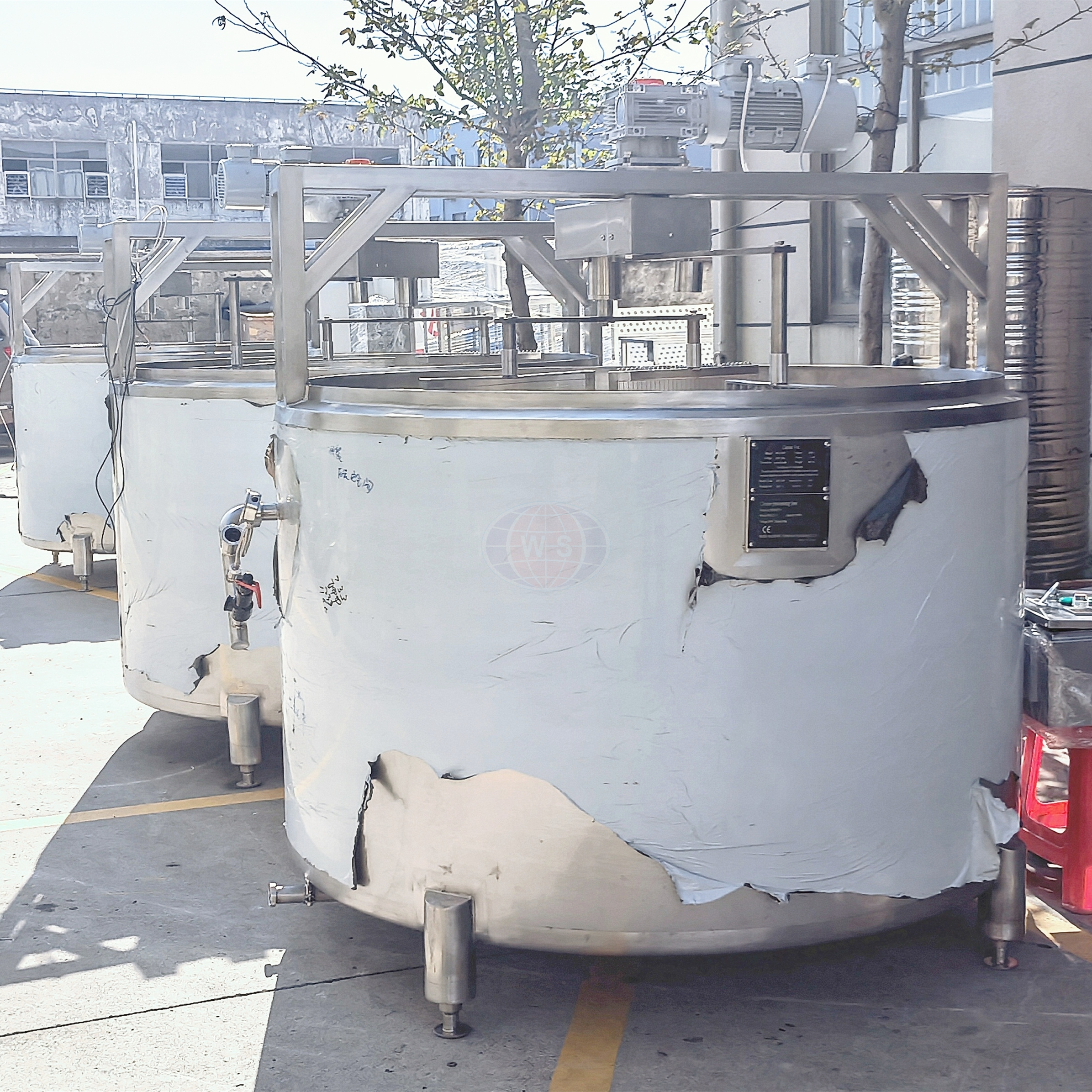
Moisture manipulation starts the second pasteurized milk enters the Cheese Vat. Think of this vessel as a highly tuned biological reactor. It provides an absolutely stable environment where milk, rennet, and starter cultures interact. Operators watch closely as the liquid milk gradually transforms into a firm, custard-like solid known as the coagulum. Precise control of ambient conditions allows the casein proteins to bond effectively. Should this coagulation occur too rapidly or at an incorrect pH level, the resulting curd structure will be inherently flawed. Irregular pockets will form, trapping whey and preventing even moisture release during subsequent processing steps.
Building upon the initial coagulation, temperature manipulation becomes the primary mechanism for water regulation. Contemporary vats are masterfully engineered with double-jacketed walls constructed from food-grade SUS304 or 316L stainless steel. This design allows hot water or low-pressure steam to circulate evenly around the vessel. As the temperature inside the vat systematically rises, the thermal energy triggers a critical physical reaction called syneresis. The protein matrix actively contracts and physically squeezes out the trapped liquid whey. By utilizing Programmable Logic Controllers, the machinery executes precise heating curves. Maintaining a strict delta-T between the heating jacket and the milk prevents sudden temperature spikes. This eliminates "case hardening," a disastrous defect where the exterior of the curd seals prematurely and traps unwanted water in the core.
Once the milk coagulates into a resilient gel, the next phase of extraction relies entirely on physical geometry. The underlying physics are straightforward. Dividing a large solid mass into smaller pieces exponentially increases the total exposed surface area. Because whey can only escape from the exposed edges of the curd, greater surface area equates directly to higher moisture expulsion. To achieve this, a specialized Curd Cutter is deployed. Often integrated directly into the vat as a series of rotating wire knives or sharpened stainless steel blades, this equipment slices the gel into uniform cubes. For high-moisture cheeses, the curds are left large. For low-moisture hard cheeses, they are cut as fine as grains of rice to drive out maximum liquid.
Historically, this delicate task was performed manually using hand-held harps. Human intervention, however, introduces dangerous variability into the production line. Irregular curd sizes mean smaller pieces dry out rapidly while larger chunks retain excess water. This ultimately leads to a mottled, inconsistent final product. Furthermore, aggressive manual handling often shatters the fragile curds. This shattering creates microscopic dust, causing valuable butterfat to escape into the whey and drastically reducing the final yield. Automated cutting systems eliminate these risks entirely. Engineered with precise planetary cutting gears and Variable Frequency Drive controls, the machinery ensures perfectly uniform cuts. This maximizes whey expulsion while safeguarding the total volume of your yield.
After the cutting phase concludes, the curds must remain constantly suspended in the surrounding liquid to prevent them from matting together. If allowed to settle at the bottom of the vat, the pieces will quickly clump. This premature clumping drastically reduces the exposed surface area, permanently trapping moisture deep within the center of the mass. To counteract this, mechanical agitators provide continuous, gentle stirring. The sweeping motion of overhead or bottom-driven paddles is carefully calibrated. The RPM must be fast enough to keep the particles separated and floating, yet gentle enough to prevent structural damage. This kinetic energy ensures each individual curd continues to expel moisture at an identical rate.
For semi-hard and hard cheese varieties, this mechanical stirring is seamlessly paired with a secondary heating phase known as scalding. While the agitator paddles keep the mixture moving, the heating jackets gradually raise the temperature of the whey. This potent combination of thermal and kinetic energy forces a rapid, final expulsion of moisture just before the draining phase. The outer layer of the curd begins to firm up into a semi-permeable membrane. This allows water to exit while securely locking the essential fats and proteins inside. Precision timing here is absolutely critical to hitting the exact firmness required before molding.
Once the curds are properly cooked and drained of free-floating whey, they are transferred into specific molds for the final stage of liquid extraction. This requires the application of external, downward mechanical force. While older artisanal setups relied on physical cast-iron weights or manual screw mechanisms, modern commercial facilities depend almost exclusively on the automated Cheese Press. Utilizing compressed air, pneumatic cylinders deliver perfectly uniform, highly adjustable pressure across multiple molds simultaneously. As the cheese wheel compresses and loses volume, the pneumatic cylinders automatically extend to maintain constant pressure. This ensures a repeatable moisture expulsion rate across hundreds of wheels.
A common operational misconception is that maximum pressure should be applied immediately to wring out the water. In practice, applying too much force too quickly causes the outer layer of the cheese to compress and seal instantly. This impenetrable rind traps the remaining whey inside the center of the wheel, inevitably leading to internal rotting and severe structural defects during aging. To circumvent this, automated presses utilize a programmed pressing curve. The machinery begins with a gentle hiss of low pressure—often around 0.2 MPa—to allow surface whey to drain. It then gradually steps up the force over a period of hours to 0.6 MPa or higher. This calculated progression guarantees a uniform moisture gradient, allowing water to migrate from the core to the edge before the rind is permanently formed.
Moisture management extends far beyond the pressing stage. During maturation, the cheese continues to interact dynamically with its environment, losing moisture through natural evaporation. The aging room functions as a vital extension of the production workflow. The specific rate at which this moisture evaporates dictates the development of the protective rind, the complex concentration of internal flavor compounds, and the ultimate texture of the finished product.
To strictly control this ongoing evaporation, specialized climate-control machinery must be deployed. Industrial HVAC and ultrasonic humidification systems work in tandem to maintain precise relative humidity levels. These typically range between 85 percent and 95 percent depending on the recipe. If the ambient air becomes too dry, the cheese loses moisture too rapidly, resulting in deep, unappealing structural cracks. Conversely, if the humidity spikes too high, moisture remains trapped on the surface, encouraging the proliferation of harmful spoilage molds. Automated climate control ensures a stable, predictable environment for optimal curing.
Even with highly advanced technology, operational anomalies can occasionally occur. Properly troubleshooting these defects requires analyzing data from the Cheese Making Line to identify the root cause of the deviation.
| Defect Indicator | Probable Root Cause | Mechanical/Parameter Adjustment |
|---|---|---|
| Excessively Dry / Crumbly Texture | Curds cut too small or scalding temp too high. | Decrease cutter RPM via VFD; lower peak jacket temperature by 1-2 degrees. |
| Weeping Liquid / Rapid Spoilage | Insufficient pressing time or pressure drops in cylinders. | Calibrate pneumatic sensors; extend the final high-pressure phase in the pressing curve. |
| Hard Exterior, Mushy Wet Core | Case hardening in the press or poor vat agitation. | Reduce initial pressing pressure to 0.2 MPa; ensure vat agitator paddles are free of obstruction. |
When a batch yields a product that is excessively dry, chalky, or low in overall weight, it strongly indicates that too much whey was expelled early in the process. The root cause often lies in the cutting or scalding parameters. The curds may have been cut too small, exposing excessive surface area, or the cooking temperature may have been calibrated too high. To rectify this, operators should access the digital interface to program a larger curd cut size and lower the peak heating temperature.
If the final product is overly soft, weeps liquid inside its packaging, or develops off-flavors rapidly, it has retained an excess of unbound water. This typically points to insufficient whey expulsion during the later processing stages. The pneumatic cylinders may be experiencing pressure drops, or the pressing duration was too short. Additionally, excessively high humidity in the maturation room can prevent necessary evaporation. Facility managers must calibrate the air pressure sensors on the press and rigorously inspect the aging room's HVAC dehumidifiers.
For dairy producers looking to transition from semi-automated batches to commercial volumes, upgrading infrastructure is an unavoidable operational step. Relying on human judgment for temperature control and pressing weights inherently introduces dangerous variability. In the competitive commercial dairy landscape, variability is the absolute enemy of profitability. Investing in high-grade equipment guarantees batch-to-batch consistency. Standardizing moisture content through smart machinery allows facility managers to optimize milk procurement, drastically reduce waste, and accurately forecast revenue.
When evaluating machinery upgrades, specific engineering features separate standard equipment from high-performance systems. Decision-makers should prioritize centralized PLC touchscreen interfaces—such as Siemens or Allen-Bradley systems—that allow operators to save and execute specific recipe parameters with a single input. Furthermore, Clean-in-Place compatibility is non-negotiable for maintaining the strict sanitation required to prevent bacterial contamination. Finally, all contact surfaces must be constructed from food-grade SUS304 or 316L stainless steel to resist corrosion from acidic whey. Investing in comprehensive Cheese Production Machinery provides a centralized, automated approach to strict moisture control from initial milk intake through to the final packaging stage.
Moisture control is a remarkably delicate balance of biological chemistry, thermal dynamics, and physical force. Traditional methods relied heavily on the intuition of the cheesemaker. However, modern dairy technology handles this complex process with extreme, data-driven precision. From the initial coagulation in the vat to the calculated pressure of the pneumatic cylinders, every single machine plays a distinct and vital role in the success of the final product. By evaluating your current setup and identifying areas prone to human error, you can take actionable steps toward improvement. Ready to scale your operations and eliminate costly yield variations? Finding the right automated systems will lock in the ideal moisture for your specific recipes. Explore industrial-grade solutions and select the perfect equipment for your facility at WFoodMachinery to safeguard your product quality and your bottom line.
A cheese vat controls moisture primarily through precise, indirect temperature regulation. By gently heating the milk and curds using double-jacketed walls, the vat encourages syneresis. This is a critical chemical process where the protein matrix of the curd shrinks and naturally expels liquid whey without causing the exterior to harden prematurely.
The curd cutter strictly determines the surface area of the cheese curds. Smaller curds release significantly more whey due to their increased exposed surface area, resulting in a harder, lower-moisture cheese. Conversely, larger curds retain more internal whey, providing the perfect foundation for producing softer, creamier cheeses.
While a cheese press applies essential mechanical force to squeeze out remaining whey and shape the final wheel, it cannot completely salvage a batch if the initial cooking and cutting phases failed to expel enough moisture. Effective moisture control must be a cumulative, step-by-step process executed flawlessly across the entire production line.
Automated machinery utilizes programmable logic controllers to ensure that exact temperatures, stirring speeds, cutting times, and pressing weights are applied identically to every single batch. This technological precision eliminates the human error and timing variations that traditionally lead to wildly fluctuating moisture levels.
Once the cheese is formed and pressed, it enters a dedicated maturation room. Here, specialized climate control machinery maintains specific relative humidity levels to dictate exactly how much residual moisture evaporates from the cheese as it ages. This controlled dehydration directly impacts its final texture, flavor concentration, and proper rind development.
Modern dairy facilities utilize inline microwave resonance sensors and near-infrared technology to measure moisture continuously. Unlike traditional methods that require taking physical samples to a lab, these sensors scan the curd and whey mixture in real-time within the vat or piping. This allows the PLC system to instantly adjust stirring speeds or temperatures if the moisture deviates from the programmed recipe.
Before milk even enters the cheese vat, it undergoes standardization to achieve a specific protein-to-fat ratio. If the fat content is too high, it can coat the protein matrix and physically block whey from escaping during syneresis, leading to a higher moisture cheese. Standardizing the milk ensures a consistent starting point, allowing the downstream machinery to expel moisture predictably.