
Views: 0 Author: Site Editor Publish Time: 2026-06-27 Origin: Site


Transitioning from small-scale batch boiling to an automated industrial system requires careful planning. You must balance high-throughput efficiency alongside strict product quality preservation. Facilities need to protect delicate fruit flavors, vibrant colors, and pectin integrity at scale. A profitable processing setup must ensure standardized brix levels while minimizing thermal degradation of the raw fruit. Furthermore, operators face the critical challenge of maintaining rigorous food safety compliance. You must meet stringent FDA and GFSI standards daily to remain competitive.
This guide provides plant managers, investors, and operational directors a transparent, engineering-focused breakdown. We show you exactly how these complex thermal and fluid-handling systems function. We also offer an actionable framework. You can use it to evaluate equipment critically during facility upgrades or new plant builds.
Modern lines rely on vacuum concentration rather than open atmospheric boiling to protect fruit characteristics and reduce energy consumption.
A complete line is modular, comprising preparation, extraction, thermal processing, and aseptic or hot filling stages.
Procurement evaluation must factor in Clean-in-Place (CIP) capabilities, automation levels, and integration with existing facility utilities (steam, water, compressed air).
Scaling production introduces implementation risks, particularly around utility load miscalculations and changeover downtime between different fruit varieties.
We must deconstruct the physical workflow of a Fruit Jam Processing Line. Think of it not as a simple culinary recipe. Instead, view it as an engineered system designed for maximum yield and absolute consistency.
The production cycle begins by receiving raw fruit. Automated washing systems utilize aggressive bubble or brush washers. They effectively scrub the exterior skin to remove dirt. Optical sorting machines then scan the raw materials automatically. They instantly remove debris and defective fruit. This prevents contamination early in the production cycle. It guarantees only premium ingredients enter your extraction system.
Next, the machinery initiates the controlled breakdown of fruit. Operators must strike a careful balance here. You often need homogenous pulp for standard smooth spreads. Conversely, premium textured jams require retaining specific fruit piece sizes. Specialized crushers allow you to adjust the internal cutting blades. They provide optimal particle size distribution based on your exact product specifications.
Vacuum evaporation stands as the most critical technological upgrade in modern facilities. Traditional open kettles boil fruit at 100°C. This high heat destroys delicate flavor compounds rapidly. Vacuum evaporators work differently. They actively lower the atmospheric pressure inside the heating vessel. This allows water to boil at much lower temperatures, typically between 60°C and 70°C. Lower temperatures prevent severe caramelization. They preserve natural colors and retain higher nutritional value compared to traditional high-heat methods.
Once concentrated, the mixture moves into specialized formulation tanks. Here, automated systems execute the precision dosing of sugar, liquid pectin, and citric acid. Real-time monitoring plays a vital role in this phase. Automated Brix sensors continuously measure dissolved sugar content. Inline pH monitoring probes ensure optimal acidity levels. These integrated instruments guarantee tight batch-to-batch consistency. They remove human error from the complex formulation process.
Finally, the blended jam undergoes rapid sterilization. Commercial systems utilize tube-in-tube or scraped surface heat exchangers. These units heat the viscous product quickly. They achieve commercial sterility without overcooking the fruit matrix. Scraped surface heat exchangers work particularly well for preserves. They physically prevent highly viscous products from burning onto the hot pipe walls.
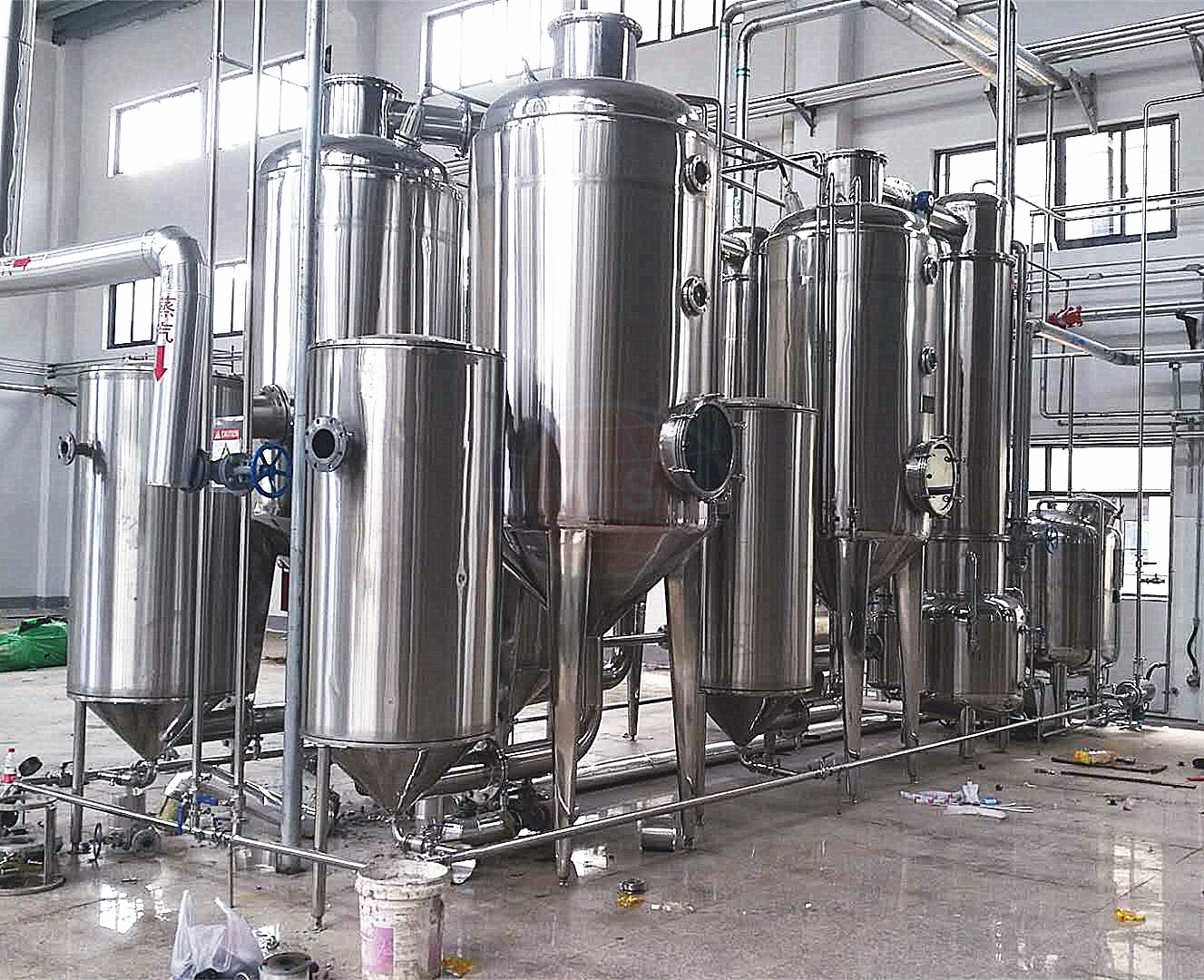
Understanding a Fruit Jam Production Line requires mapping process stages to actual equipment. Buyers must procure a connected ecosystem of modules.
Raw materials require robust physical transport solutions. Facilities use sanitary bucket elevators to lift heavy fruit loads safely. Inline destemmers remove unwanted stems and leaves automatically. Sorting conveyors spread the washed fruit out evenly. They allow sensors and human inspectors to perform final quality checks before crushing.
The thermal core drives the entire manufacturing operation. Jacketed mixing kettles provide gentle, indirect heating for sensitive mixtures. Vacuum concentrators remove excess water rapidly under negative pressure. Homogenization units blend the pectin and sugar evenly into the fruit matrix. These modules require precise steam and pressure controls to function safely.
Once cooked, the jam moves quickly to packaging. Hot filling machines dispense the product safely into rigid containers. Capping machines secure the jar lids tightly. Cooling tunnels then gradually lower the container temperature. This slow cooling prevents glass breakage and stops the internal cooking process. Finally, labeling lines apply brand packaging. Standard retail distribution uses glass jars. Conversely, bulk B2B distribution relies on aseptic pouch or drum filling mechanisms.
To clarify the equipment ecosystem, we have summarized the modules below:
| Process Stage | Primary Equipment Ecosystem | Core Engineering Function |
|---|---|---|
| Preparation | Washers, Sorting Conveyors, Destemmers | Clean raw material physically and remove agricultural defects. |
| Extraction | Adjustable Crushers, Pulpers | Break down whole fruit to the desired final particle size. |
| Thermal Processing | Vacuum Concentrators, Heat Exchangers | Evaporate excess water gently and sterilize the mixture. |
| Packaging | Hot Fillers, Capping Units, Cooling Tunnels | Seal product hermetically and stabilize internal temperature safely. |
Facility managers must evaluate modernization based on empirical quality metrics. Marketing claims rarely justify massive capital expenditure alone. Real operational value comes directly from measurable product improvements.
Upgraded pulpers gently separate seeds and skins. They do not crush the bitter internal components. Low-temp evaporators measurably improve the structural integrity of the jam. By reducing heat stress, the natural pectin network remains entirely intact. This creates a firmer, more appealing gel structure in the final retail jar.
Advanced sterilization technologies directly reduce product spoilage rates. Hermetic sealing systems lock out airborne contaminants completely. These targeted upgrades extend shelf life significantly. You achieve this stability without relying on excess artificial preservatives. Retail consumers demand clean-label products. Modern equipment makes clean-label production highly viable and profitable.
Transitioning to modern multi-effect evaporators drastically reduces utility consumption. They recycle waste heat into the next vacuum concentration stage. This engineering design directly lowers your steam and cooling water requirements. It impacts daily Operational Expenditure (OpEx) immediately and permanently.
Here is a comparative chart outlining quality metrics before and after modernization:
| Quality Metric | Traditional Setup | Modernized System |
|---|---|---|
| Fruit Color Preservation | Poor (Darkens due to heavy caramelization) | Excellent (Bright natural colors retained) |
| Nutritional Retention | Low (Vitamins destroyed by 100°C heat) | High (Processed gently at 60-70°C) |
| Energy Consumption | High (Single-stage open boiling waste) | Low (Multi-effect vacuum recycling) |
| Preservative Need | High (Relies heavily on chemical additives) | Minimal (Uses hermetic and aseptic sealing) |
Buyers evaluating multiple vendors need a skeptic-friendly decision framework. A shiny brochure does not guarantee long-term operational success. You must scrutinize the engineering details thoroughly.
Automation vs. Manual Intervention: Assess the integrated PLC (Programmable Logic Controller) systems. Ask if the line offers automated recipe management. Does it feature real-time data logging? You need precise digital records for GFSI and FDA compliance tracking.
Sanitary Design and CIP Integration: Evaluate the inclusion of automated Clean-in-Place systems. Lines without dedicated CIP require constant manual teardowns. Manual cleaning increases labor costs drastically. It also elevates bacterial contamination risks significantly.
Material Standards: Scrutinize the metal grades used across the machinery. Ensure all food-contact surfaces feature 304 or 316L stainless steel. Inspect the equipment closely for food-grade sanitary welds. Rough or porous welds harbor dangerous bacteria over time.
Capacity Scalability: Determine exactly how to match machine capacity to your needs. A 500 kg/h unit suits artisan batch runs. A 5,000 kg/h system serves global retail distribution. Ensure the equipment footprint fits your current facility. Also, verify it allows future modular expansion.
Installing industrial food machinery introduces serious implementation risks. We see many projects fail entirely due to poor facility planning and incorrect assumptions.
A processing setup is only as effective as the facility housing it. Your boiler and chiller capacity dictate actual production speed. Underestimating steam pressure will throttle the crucial cooking phase. Insufficient cooling water flow delays the cooling tunnels. You must calculate these thermal loads perfectly before attempting installation.
Pumping highly viscous, particulate-heavy jam proves incredibly difficult. It requires specific positive displacement pumps. You must use robust lobe or progressive cavity pumps. Using standard centrifugal pumps causes severe product shear. The fast-spinning impellers destroy delicate fruit pieces. They also suffer frequent mechanical failure under high-viscosity stress.
Producing multiple flavors carries a massive hidden operational cost. Changeover downtime severely impacts overall profitability. Complex piping networks take much longer to flush out. You must sanitize the entire network safely between different batches. This dead time reduces your Overall Equipment Effectiveness (OEE). Smart sanitary design minimizes pipe length and eliminates dead legs.
A modern fruit processing plant operates as a highly sophisticated thermal and fluid-handling system. Your success depends entirely on precise temperature control and rigorous sanitary design. Protecting the natural properties of the fruit ensures your market competitiveness.
To move forward effectively, we recommend these action-oriented next steps:
Conduct a comprehensive utility audit of your current facility before contacting any vendors.
Request detailed P&ID (Piping and Instrumentation Diagrams) from shortlisted manufacturers.
Demand written capacity guarantees and specific energy consumption metrics before issuing any purchase order.
Schedule a site visit to observe the manufacturer's equipment operating safely in a live environment.
A: Batch production handles lower volumes and serves premium artisan lines. Operators process one kettle at a time. Continuous production supports high-throughput, standardized commercial output. Raw ingredients flow constantly into the system, and finished jars exit without interruption.
A: The footprint varies drastically based on target capacity and packaging modules. A 500 kg/h system might require 150 square meters. A 5,000 kg/h continuous system needs significantly more floor space. Always account for vertical space, as many systems utilize gravity-fed processing stages.
A: Yes, operators can process both efficiently. However, the system requires integrated bypass valves. These valves allow preserves to skip the aggressive pulpers and homogenizers. You also need specialized filling nozzles. These prevent large fruit particulates from clogging the packaging machinery.
A: Facilities need several essential industrial utilities. You must supply high-pressure industrial steam for the heating kettles. Chilled water is critical for cooling tunnels and vacuum condensers. The machinery requires stable 3-phase electrical power. Finally, you need clean compressed air for operating pneumatic valves.