
Call Us
+86-15800763021
Send Us
Add
775 Chihua Road, Zhelin Town, Fengxian District, Shanghai
- All
- Product Name
- Product Keyword
- Product Model
- Product Summary
- Product Description
- Multi Field Search
Views: 0 Author: Site Editor Publish Time: 2026-06-29 Origin: Site

Maintaining industrial food equipment goes far beyond basic daily hygiene routines. When you run continuous production batches, effective upkeep becomes the backbone of product consistency. It directly drives facility profitability and overall equipment effectiveness (OEE). Processing high-sugar, highly acidic, and viscous materials creates severe operational stress on machinery. Elements like pectin and concentrated fruit acids degrade stainless steel components quickly over time. This harsh manufacturing environment causes rapid wear on vital mechanical seals. It also triggers sudden sensor drift and stubborn, hardened residue buildup inside pipes. We provide a transparent, standard-aligned framework for preventative maintenance in this guide. You will discover automated sanitation routines and detailed, module-specific troubleshooting strategies. Implement these core practices to ensure continuous, safe, and compliant production across your entire facility.
Sanitation is structural: Effective maintenance relies on integrated Clean-In-Place (CIP) systems that manage the extreme stickiness and acidity of fruit jams without requiring full equipment teardowns.
Component-level focus: Preventative care must target high-friction and high-heat zones, particularly pulper blades, vacuum concentrator scrapers, and filler O-rings.
Calibration dictates yield: Regular calibration of inline Brix meters and temperature probes prevents over-boiling, pectin degradation, and batch rejection.
Maintenance informs procurement: Modern facility upgrades should prioritize standardized wear parts and toolless access to minimize scheduled downtime.
Unplanned maintenance in continuous jam production brings severe financial consequences. It leads directly to burned product inside boiling kettles. It compromises sterilization protocols. It also causes massive material waste during line stoppages. When a Fruit Jam Processing Line stops unexpectedly, the residual heat degrades the pectin structure. This ruins entire batches before they even reach the filling station.
A successful maintenance program shifts your facility from reactive fixes to predictive upkeep. Your primary target should be achieving 95% or higher uptime during peak harvest seasons. Peak seasons leave no room for ordering emergency spare parts. Facilities must keep critical seals, bearings, and sensors in local inventory.
Maintenance protocols must strictly align with HACCP and FDA/CE food safety standards. You must prioritize food-grade lubricants across all mechanical drives. You must avoid cross-contamination from degraded rubber components. A fraying conveyor belt or a cracked O-ring can introduce foreign materials into the jam. These events trigger costly product recalls and damage brand reputation.
| Maintenance Approach | Financial Impact | Operational Reality |
|---|---|---|
| Reactive Fixes | High material waste, expensive rush shipping for parts. | Frequent line stoppages and compromised sterilization. |
| Predictive Upkeep | Maximized yield, controlled labor costs. | Scheduled downtimes, stable 95%+ seasonal uptime. |
Fruit jam residue poses a unique challenge. It hardens quickly upon cooling. It is also highly acidic due to natural fruit juices and added citric acids. This creates a serious corrosion risk. Even premium stainless steel will pit if operators leave acidic sugars uncleaned for extended periods.
You must implement a rigid, automated cleaning sequence. Manual scrubbing cannot reach the internal cavities of heat exchangers or lengthy pipe runs.
Follow this standard CIP sequence to guarantee sanitation:
Pre-rinse with warm water: Use warm water to flush out loose pulp and unbonded sugars. Never use boiling water here. Boiling water bakes the sugars onto the metal walls.
Caustic wash (Alkaline): Circulate an alkaline solution to dissolve heavy organic buildup and stubborn pectin layers.
Intermediate water rinse: Flush the system thoroughly to remove all caustic chemicals.
Acid wash: Circulate a mild acid solution. This neutralizes any remaining alkaline residues. It also removes hard mineral scale from local water supplies.
Final sanitization and high-temperature water flush: Run a high-temperature flush to achieve thermal sterilization before the next production run.
Verification is non-negotiable. You must perform daily titration checks on your cleaning chemicals. Monitor flow rates during the CIP cycle closely. Low flow rates indicate poor pressure. Poor pressure creates "dead-legs" or stagnant zones in the piping. Bacteria thrive in these unwashed dead-legs and spoil subsequent batches.
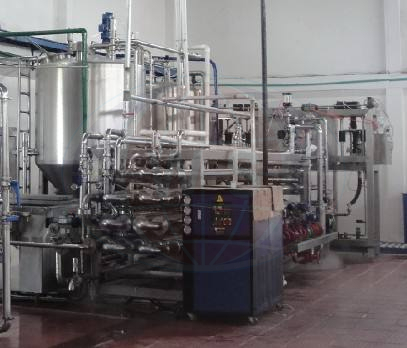
A proactive approach requires you to isolate equipment into specific modules. Each stage handles different stresses. You must customize your daily and weekly checks accordingly.
Harvested fruits carry dirt, leaves, and field debris. You must inspect water circulation pumps frequently. Check filter screens for debris blockages twice a shift. Blocked filters reduce spray pressure, leaving dirt on incoming fruits. Additionally, check conveyor belts for tension loss. Inspect tracking mechanisms for physical wear. A slipping belt disrupts the feed rate to the crushing module.
These modules endure extreme mechanical friction. You must establish a strict replacement schedule for pulping sieves and rotary blades. Do not wait for blades to break. Replace them before dulling impacts your extraction yield. Dull blades tear the fruit instead of cutting it, releasing bitter compounds from seeds. You must also inspect bearing housing seals. Failed seals allow acidic juice ingress into mechanical parts, destroying bearings within hours.
Boiling kettles evaporate excess water to reach the target sugar concentration. Monitor and replace Teflon wall-scrapers regularly. Worn scrapers leave thin layers of jam against the hot metal. This causes localized product burning and alters the final flavor profile. Furthermore, check vacuum pump oil levels weekly. Inspect mechanical seals for minute pressure leaks. Even tiny leaks drastically increase boiling times.
Packaging zones require absolute precision. You must inspect a Fruit Jam Processing Machine’s filling nozzles daily. Check food-grade O-rings to prevent messy dripping. Dripping causes inaccurate dosing and fouls the jar sealing area. Conduct pressure tests on tubular or scraped-surface heat exchangers every quarter. These tests detect micro-cracks before cooling water can cross-contaminate your sterile jam.
Yield and quality depend entirely on accurate data. Sensors drift over time due to vibration, heat, and chemical exposure. You must audit them systematically.
Calibrate thermocouples and vacuum pressure gauges every single month. Temperature control is the heart of pasteurization. Even a minor 2°C drift during heating can result in spoiled batches. Conversely, overheating compromises the pectin matrix, preventing proper gel formation. Maintain strict logs for these calibration events to satisfy food safety auditors.
Brix meters measure the sugar concentration. You must clean and recalibrate inline refractometers weekly. Sugar crystallization builds up on sensor prisms constantly. This buildup leads to false readings. An inaccurate Brix reading guarantees off-spec product. You will either overcook the jam, wasting energy, or undercook it, risking fermentation.
Test pneumatic actuators regularly. Check flow-divert valves for instant response times. These automated fail-safes must function perfectly during sterilization. If temperatures drop below the critical limit, the divert valve must instantly reroute the product back to the heating tank. Slow valves allow unsterilized jam to reach the filler.
Even with excellent preventative care, isolated issues will arise. Plant managers must diagnose bottlenecks swiftly to resume production.
| Symptom | Potential Cause | Required Maintenance Action |
|---|---|---|
| Loss of Vacuum | Faulty flange gaskets or leaking seals. | Inspect and replace Teflon/silicone seals. Check vacuum pump performance. |
| Inconsistent Fill Weights | Trapped air or worn pneumatic cylinders. | Bleed air from the product line. Replace worn filler seals. |
| Premature Pump Wear | Cavitation from large seeds or particulates. | Upgrade to lobe pumps. Check feed lines for blockages. |
Vacuum concentrators lower the boiling point of the jam. This preserves natural colors and fruit flavors. If the system takes too long to reach the required Brix level, suspect a vacuum leak immediately. Guide your technicians to diagnose faulty flange gaskets. Check condenser water flow issues next. Inadequate cooling water prevents proper vapor condensation. Finally, evaluate degraded vacuum pump performance due to dirty oil or worn internal vanes.
Weight variations trigger regulatory fines and customer complaints. Frame this issue as a symptom of mechanical failure. It usually indicates fluctuating hopper pressure. It can also point to trapped air pockets in the viscous product line. Frequently, the root cause involves worn pneumatic cylinder seals on the volumetric filler. Replace these seals and recalibrate the stroke length.
Pumping highly viscous liquids stresses impellers and stators. Address the risks of cavitation carefully. Cavitation destroys pump internals rapidly. Rotor and stator degradation in progressive cavity pumps happens when you process jams with large, hard fruit particulates or heavy seeds. Ensure you select the correct pump type. Lobe pumps handle delicate fruit pieces much better than standard centrifugal options.
Eventually, aging equipment requires replacement. When evaluating new machinery, buyers must assess the long-term maintenance burden. You cannot look at production capacity alone. Evaluate the total operational friction the new system will introduce.
Ask vendors direct questions about their design philosophy. Machinery designed for easy maintenance pays for itself through increased uptime. Complicated, hard-to-reach components will be ignored by sanitation crews. Ignored components breed bacteria and cause catastrophic failures.
Toolless disassembly: Can operators access critical zones without heavy tooling? Pump heads, filter screens, and filler valves should break down by hand. Toolless clamps save hundreds of labor hours annually.
Standardized vs. Proprietary Parts: Opt for machinery utilizing globally available motors, sensors, and seals. Specifying common brands like Siemens or SKF prevents vendor lock-in. It also eliminates disastrously long lead times for proprietary spare parts.
CIP Integration: Does the system require manual pipe jumpering? Look for systems where the CIP process is fully automated via the central PLC. Automated CIP reduces human error and guarantees consistent chemical contact times.
Effective maintenance remains a proactive discipline. It combines strict CIP regimens, localized mechanical checks, and highly accurate sensor calibration.
The lifespan and overall profitability of your facility depend entirely on respecting the abrasive, sticky, and corrosive nature of the fruit products you process.
Encourage plant managers to audit their current maintenance SOPs immediately.
Review your critical spare parts inventory to ensure you have backup seals, scrapers, and sensors on hand.
Consult with an equipment engineer to modernize aging lines. Focus on toolless disassembly and automated CIP to make daily upkeep effortless.
A: Full CIP is required at the end of every production run. You must also run it immediately when switching between different fruit recipes. This prevents dangerous cross-contamination and unwanted flavor mixing between distinct product batches.
A: Scraper blades in the boiling kettles require frequent replacement. You will also regularly replace pulping meshes, internal pump stators, and food-grade rubber or silicone O-rings in the filling module.
A: This typically indicates a drop in vacuum pressure caused by leaking seals. It can also point to degraded heating jacket efficiency from scale buildup on steam lines. Finally, worn internal scrapers may be failing to agitate the viscous jam effectively.
A: Yes, but it requires specific mechanical adaptations. You must switch to lobe pumps, which protect fruit integrity. You also need wider-bore filling nozzles. Maintenance protocols must adjust to inspect for particulate blockages constantly.