Call Us
+86-15800763021
Send Us
Add
775 Chihua Road, Zhelin Town, Fengxian District, Shanghai
- All
- Product Name
- Product Keyword
- Product Model
- Product Summary
- Product Description
- Multi Field Search
Views: 0 Author: Site Editor Publish Time: 2026-11-28 Origin: Site

In the fast-paced world of beverage manufacturing, downtime is the ultimate profit killer. A machine sits idle. Output drops. Labor costs rise. Juice manufacturers face a tougher battle than standard water bottling plants. Sticky liquids, high Brix levels, varying pulp content, and strict hygiene standards make continuous flow a mechanical nightmare. How do you stop the bleeding? You invest in a complete juice production filling line. This comprehensive approach eliminates bottlenecks and prevents costly unplanned stops. By seamlessly integrating advanced machinery from the initial rinsing station to the final palletizer, bottling plants push their Overall Equipment Effectiveness to the absolute limit. Whether upgrading an aging facility or building a greenfield site, mastering the mechanical nuances of continuous production is the definitive key to scaling operations.
In commercial beverage manufacturing, unplanned downtime degrades operational efficiency faster than any other factor. Line stoppages frequently occur due to mechanical misalignments. Crushed PET bottles jam conveyor rails. Capping chucks fault. Photoelectric sensors throw false errors. Juice production introduces unique complexities. Because fruit juices contain high natural sugar levels, organic acids, and varying degrees of pulp, they require highly specialized handling.
Recent market analyses reveal a definitive industry shift. Plant managers are aggressively moving away from isolated equipment upgrades. The current trend focuses on holistic, IoT-enabled smart-line architectures. Modern facilities prioritize systemic communication over raw individual machine speed. The goal is maintaining a continuous, self-regulating flow. If a downstream machine slows down, the upstream equipment automatically adjusts its speed rather than halting completely. This proactive speed modulation is the new standard for maintaining continuous output.
When a minor spill occurs on a legacy line, the high sugar content evaporates rapidly. It leaves a highly viscous residue on the machinery. Picture a puddle of high-Brix orange juice on a conveyor belt. Within minutes, it hardens into an abrasive glue. This blinds optical sensors. It misaligns guide rails. Subsequent bottles tip over. Furthermore, product foaming during high-speed liquid transfer causes inaccurate fill levels. This triggers automatic rejection systems and forces the entire line to halt.
The financial impact of sudden stoppages extends far beyond the immediate pause. In high-speed environments, micro-stops quietly accumulate over an eight-hour shift. This results in hours of lost production time. The old engineering adage that small leaks lead to big losses is remarkably accurate here.
Consider a production line operating at 600 bottles per minute. A mere five-minute stoppage results in 3,000 unproduced units. Beyond the lost retail revenue, manufacturers must account for wasted raw materials. Packaging components like crushed labels are ruined. Factory energy consumption continues during the idle period. Optimizing the line architecture to prevent these micro-stops is absolutely essential for maintaining healthy profit margins.
Within high-volume beverage manufacturing, accumulation refers to the engineered mechanical capacity to temporarily store products while the line runs. It is statistically improbable that every machine operates at 100% efficiency for an entire shift. Minor interruptions are inevitable. An operator might need to clear a fallen bottle or replenish adhesive.
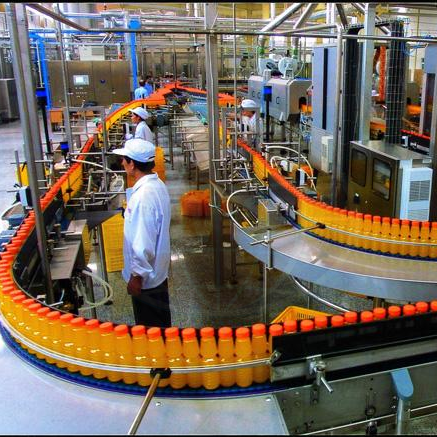
To combat this, a well-designed Accumulation system acts as a mechanical safety net. Instead of forcing a hard stop when a downstream machine pauses, specialized conveyor designs provide extra physical space. Mass flow bidirectional tables and serpentine single-file tracks enable upstream machines to continue discharging filled bottles. Low-friction chains ensure containers do not exert excessive back-pressure on one another. This prevents scuffing and label damage.
While accumulation handles physical gathering, a Buffer zone functions as an operational shock absorber between critical machine centers. In a fully synchronized factory, machines require brief pauses. If a labeling machine needs 45 seconds to splice a new roll of film, the buffer table collects the continuous flow of bottles exiting the upstream stations.
Without this critical zone, that 45-second pause immediately triggers a proximity sensor to halt the upstream liquid processing equipment. Stopping and restarting a high-speed liquid filler causes liquid sloshing and foaming. By implementing a properly sized buffer zone, operators successfully isolate these micro-stops. The core filling process continues uninterrupted. Once the downstream equipment resumes operation, it typically runs at a slightly faster surge speed to clear the stored inventory.
The beating heart of any beverage facility is its liquid dosing technology. Advanced turnkey projects easily handle capacities ranging from 2,000 to 24,000 bottles per hour. Depending on the specific viscosity and preservation requirements, modern juice production utilizes gravity flow, volumetric piston, or mass flow meter systems. You need a high-precision Filler engineered with specialized anti-drip nozzles and proportional flow valves.
These precise controls are absolutely vital. They maintain a strict ±2mm liquid level accuracy. A clean fill effectively eliminates the sticky spills that foul downstream sensors and trigger mechanical jams. Investing in high-quality dosing machinery designed specifically for pulpy liquids is the foundational step toward ensuring volumetric accuracy across millions of cycles.
The transition from the filling station to the capping station is highly vulnerable. Bottles are full of liquid right to the brim but remain completely unsealed. Any sudden jerky movement on the conveyor belt inevitably causes the product to spill.
To entirely eliminate this risk, modern facilities utilize a unified 3-in-1 monoblock design. The filling carousel and the Capper integrate into a single continuous rotary unit. Bottles hand off directly from the filling star-wheel to the capping star-wheel in absolute perfect synchronization. Because both components run on perfectly synced servo motors, the timing is flawless. This precision eliminates the risk of bottles tipping over. Every filled container is immediately secured with consistent sealing torque.
End-of-line packaging is often mistakenly viewed as a secondary process. In reality, it holds immense power over total plant efficiency. A complete juice production filling line operates through a strict domino effect. If the case packing process jams due to deformed cardboard, the finished bottles have nowhere to go.
Eventually, the upstream accumulation tables reach their maximum capacity. Once the programmable logic controller detects full conveyors, it automatically shuts down the highly sensitive liquid filling operations to prevent a massive pile-up. A slow or unreliable packaging station artificially limits the output of the entire facility.
To prevent frustrating downstream backups, modern juice plants integrate a high-speed automated Packer. Depending on the retail format, these can be wrap-around case packers, robotic arm pick-and-place units, or shrink wrappers.
Specifically, the key to maintaining continuous flow is utilizing continuous-motion packaging technology. Intermittent-motion machines cause stuttering. Continuous-motion packers do not stop to physically load the bottles. Instead, they smoothly match the velocity of the incoming conveyor. Engineers typically design this end-of-line equipment with a 15% to 20% surge capacity. This speed differential allows the packer to quickly clear out any backlog of bottles. The line always maintains a smooth rhythm.
Fruit juice is a highly sensitive biological product. Natural sugars, vitamins, and organic compounds make it susceptible to spoilage from yeast and airborne bacteria. If a single batch becomes contaminated, the entire production line must halt immediately for a massive emergency sanitation protocol. This results in severe downtime and devastating product loss.
To mitigate this immense risk, manufacturers employ advanced hot filling and aseptic processing technologies. In a hot fill scenario, the juice is heated to temperatures typically between 85°C and 95°C before injection into heat-resistant PET or glass bottles. The residual heat effectively sterilizes the inside of the bottle and the cap upon inversion. Alternatively, aseptic technology sterilizes the beverage and the packaging separately. They are brought together inside a completely sterile environment. Both methods drastically reduce biological contamination risks. This eliminates the need to halt operations for emergency cleaning.
Flavor changeovers are a necessary reality of beverage manufacturing. Traditionally, they require significant planned downtime for machine disassembly and manual scrubbing. Transitioning from a dark pulpy grape juice to a clear crisp apple beverage demands absolute cleanliness to prevent cross-contamination.
Modern complete lines solve this historical bottleneck through automated Clean-in-Place systems. A CIP system automatically circulates water, caustic detergents, and acid sanitizers through the internal piping and holding tanks at highly controlled temperatures. By fully automating the sanitation cycle, plants confidently reduce flavor changeover times from several grueling hours to under forty-five minutes. This significantly boosts daily production availability.
Proactive troubleshooting is the most effective strategy for avoiding catastrophic line failures. Plant operators must conduct rigorous daily visual and auditory inspections. A very small leak in a pneumatic valve or a slightly worn O-ring on a filling nozzle might seem insignificant at the start of a shift. However, it will have severe cascading effects.
As juice slowly leaks, the water content evaporates. It leaves behind a hardened sugar residue. This residue acts exactly like an abrasive glue. It prematurely wears down moving metal parts, binds rotary joints, and blinds critical optical sensors. Catching and fixing a minor seal leak during a scheduled shift change prevents the machinery from jamming during peak operational hours.
Moving from a reactive fix-it-when-it-breaks mindset to a disciplined preventative maintenance strategy saves beverage manufacturers thousands of dollars monthly. A preventative schedule ensures wear-and-tear components are replaced based on run-hours rather than visible failure.
| Component | Maintenance Frequency | Task Description | Impact on Uptime |
|---|---|---|---|
| Filler Valves | Daily / Post-Shift | Inspect O-rings. Verify ±2mm fill level. Run rigorous CIP cycle. | Prevents sticky residue buildup and volumetric dosing inaccuracies. |
| Capper Chucks | Weekly | Calibrate torque settings. Clean magnetic clutches of debris. | Avoids misaligned caps, cross-threading, and subsequent line jams. |
| Buffer Conveyors | Monthly | Lubricate bearings. Check belt tension. Replace wear strips. | Ensures smooth bottle transitions without tipping or scuffing. |
| Packer Sensors | Weekly | Wipe down optical lenses. Check Siemens PLC sensor logs. | Prevents false fault triggers and catastrophic packaging crashes. |
Before committing capital to new machinery, plant managers must objectively audit their current setup. Stop guessing and look at your operational data. First, define your target output. If your demand is under 5,000 bottles per hour, linear equipment might suffice. If you are scaling beyond 10,000 bottles per hour, a rotary 3-in-1 monoblock is mandatory for mechanical stability.
Next, analyze your liquid characteristics. High-pulp juices require volumetric piston or mass flow meter dosing to prevent valve clogging. Clear juices run perfectly fine on standard gravity flow systems. If you plan to hot fill, ensure the machinery is rated to handle sustained temperatures up to 95°C without thermal deformation.
The most critical decision in upgrading your facility is choosing the right equipment partner. Buying disparate machines from different vendors guarantees integration nightmares. Software communication errors and inefficient physical handoffs will plague your line.
In contrast, manufacturers must partner with a trusted supplier providing end-to-end turnkey solutions. A single-source supplier ensures the PLCs communicate seamlessly. The mechanical pitch between machines is perfectly aligned. A unified control system automatically modulates the speed of the entire line. If the end-of-line packaging falls behind, the system gently slows upstream equipment instead of forcing a hard stop. Prioritizing robust engineering builds a highly resilient production environment designed for maximum uptime.
Avoiding stops in beverage manufacturing is not about pushing individual machines beyond their mechanical limits. It is about engineering a smarter, more cohesive workflow. A complete juice production filling line achieves this by perfectly balancing the speed of every component. It utilizes smart accumulation and buffer zones to effortlessly absorb minor hiccups. Ready to eliminate bottlenecks and scale your operations? Explore high-quality turnkey solutions at WFoodMachinery to find the exact machinery matched to your capacity and product requirements. By investing in fully integrated technology, juice producers significantly reduce product waste and secure the high profit margins that only come from continuous, uninterrupted production.
A: A complete juice production filling line is an integrated system of machinery designed to take empty bottles, wash them, fill them with juice, cap them, label them, and pack them into cases. Because all components are engineered to communicate and work together, the system operates smoothly with minimal operator intervention and drastically fewer stops.
A: A buffer zone acts as a temporary storage area on the conveyor belt. If a downstream machine pauses briefly to reload materials, the bottles coming from the upstream processing equipment safely accumulate in the buffer zone. This crucial space allows the core liquid dosing process to keep running without shutting down the entire factory line.
A: The transition phase is where bottles are completely open and most vulnerable to movement. If the machines are not perfectly synchronized, the liquid easily spills over the edges. This leads to a sticky residue that blinds machine sensors, ruins labels, and ultimately causes the line to stop for emergency cleaning.
A: Upgrading to a line equipped with an automated Clean-in-Place system allows operators to flush and sanitize the internal piping and valves quickly. You do not need to manually dismantle the machinery. This technological upgrade significantly reduces planned downtime when switching between different juice batches.
A: The most common causes include physical bottle jams, misaligned caps, packaging material shortages at the end-of-line equipment, and sensor errors due to sticky liquid spills. A lack of proper accumulation space also causes the whole line to back up. Implementing regular preventative maintenance resolves the vast majority of these issues.
A: High pulp content requires specialized volumetric piston fillers or mass flow meters rather than standard gravity fillers. These advanced dosing systems use wider proportional valves that prevent pulp from clogging the nozzles, ensuring a continuous flow and highly accurate fill levels without stopping the machine to clear blockages.
A: The ideal speed depends entirely on your market demand and facility size. Entry-level automated lines typically run between 2,000 and 5,000 bottles per hour. Medium to large-scale commercial operations utilize rotary monoblock systems that comfortably operate between 12,000 and 24,000 bottles per hour while maintaining perfect synchronization.