Call Us
+86-15800763021
Send Us
Add
775 Chihua Road, Zhelin Town, Fengxian District, Shanghai
- All
- Product Name
- Product Keyword
- Product Model
- Product Summary
- Product Description
- Multi Field Search
Views: 0 Author: Site Editor Publish Time: 2026-11-27 Origin: Site

Losing whey down the drain means flushing away significant facility profits. In modern dairy operations, handling massive volumes of this aqueous byproduct requires precision engineering, high-speed processing, and uncompromising hygiene. Upgraded machinery solves these complex fluid dynamics issues effectively, turning a historical waste stream into a lucrative commodity. Read on to explore the mechanical principles and equipment configurations driving this transformation.
To understand the engineering behind modern dairy facilities, we must first define the primary byproduct of the milk coagulation process. Whey is the aqueous fraction of milk that remains after the casein proteins and butterfat have coagulated and been strained away. Industry professionals generally classify this liquid into two categories. Sweet whey is derived from rennet-coagulated cheeses like cheddar and Swiss. Acid whey is a byproduct of acid-coagulated products such as cottage cheese or Greek yogurt.
Historically, dairy plants viewed this liquid as a severe environmental liability. Discharging it directly into municipal water systems poses extreme ecological risks due to its massive Biochemical Oxygen Demand and Chemical Oxygen Demand. Such practices incur heavy environmental compliance fines. However, the global dairy sector is currently undergoing a massive structural shift. Driven by strict environmental regulations and booming consumer interest in sports nutrition, facilities are aggressively pivoting toward zero-waste architectures.
Recent market analyses highlight a rapid compound annual growth rate for high-purity whey protein isolates and pharmaceutical-grade lactose. This surging demand dictates that every drop of byproduct must be captured and valorized. From an engineering standpoint, this trend pushes equipment manufacturers to design highly specialized fluid handling systems. These modern setups must process capacities exceeding tens of thousands of liters per hour while maintaining delicate protein structural integrity. Standard fluid handling setups often fail here because excessive agitation causes unwanted foaming and degrades the very proteins processors want to harvest.
The journey of byproduct recovery begins the moment the milk coagulation phase concludes. The Curd Drain process represents the very first physical separation stage on the factory floor. At this juncture, the vat contains a warm, aromatic mixture of solid curds and liquid. The primary engineering objective is to separate these two phases efficiently without shattering the fragile curd matrix.
In contemporary dairy operations, manual draining has been entirely replaced by automated machinery. Depending on the scale of the facility and the specific cheese variety, plants utilize automated draining belts, prepresses, or specialized draining vats. When the curd and liquid mixture is pumped out of the coagulation vat, it flows onto a continuous, perforated stainless-steel belt. Gravity forces the liquid to fall through micro-perforations into collection troughs below. The solid curds remain safely on the surface.
The speed of this conveyor belt is a critical operational parameter. If the belt moves too quickly, excessive moisture remains trapped within the curd matrix, leading to texture defects in the final cheese block. Moving too slowly causes the curds to become overly dry, immediately reducing the total yield. Advanced machinery uses variable frequency drives and moisture sensors to adjust the draining speed in real-time. This dynamic adjustment ensures optimal syneresis, which is the expulsion of liquid from the gel network, maintaining strict quality control over the final product.
Even after the primary separation phase is meticulously calibrated, physical separation is rarely perfect. During the initial drainage, microscopic particles of coagulated protein inevitably wash away with the liquid stream. These suspended solids, commonly referred to as cheese dust or fines, represent a direct loss of marketable product. Left unmanaged, they also pose a significant fouling risk to downstream processing equipment.
To mitigate this volume loss, facilities integrate a specialized piece of equipment known as a Fines Saver. Positioned immediately downstream from the primary draining belts, this unit acts as a high-efficiency filtration checkpoint. The liquid rushes over a vibrating parabolic screen or a rotary sieve equipped with a precision-engineered SUS304 stainless-steel mesh. Typically sized between 40 and 100 microns, this mesh gently intercepts the micro-curds while allowing the clarified liquid to pass through.
Once captured, these solid particles are mechanically scraped and conveyed back into the main cheese mass. This mechanical interception serves a dual purpose. It directly increases the overall yield, translating to substantial volume recovery over an annual production cycle. It also protects subsequent machinery. Fine particulates are notorious for clogging sanitary pumps, fouling plate heat exchangers, and blinding delicate filtration membranes. Removing these solids early ensures the liquid moving forward is clean, thereby reducing the frequency of maintenance shutdowns.
Once the solid fines are removed, the remaining liquid is still not entirely free of valuable components. Standard runoff typically retains a small but economically significant percentage of butterfat, usually ranging from 0.2% to 0.5%. Extracting this fat requires high-speed centrifugal force.
Operating on the principles of Stokes Law, a dedicated Whey Separator spins the liquid at extreme speeds, often exceeding 7,000 to 10,000 revolutions per minute. Because butterfat has a lower density than the surrounding aqueous skimmed liquid, the intense G-forces drive the heavier liquid to the outer edges of the spinning bowl. Simultaneously, the lighter fat globules concentrate at the center of the rotational axis. This precise mechanical separation allows dairy plants to extract the cream continuously without interrupting the production flow.
The recovered cream is highly versatile. It can be sold as a standalone commodity or churned in-house to produce butter, creating an entirely separate revenue stream. Clarification is also a non-negotiable prerequisite for advanced processing. Fat molecules can quickly foul semi-permeable membranes and reduce the shelf life of dried protein powders through lipid oxidation. Standardizing the liquid through a high-performance centrifuge is absolutely essential for maintaining the longevity of downstream equipment.
After clarification and fat removal, the purified liquid must be securely stored before it is routed to the next processing phase. Because cheese making often operates in batch cycles while downstream filtration systems operate continuously, a robust buffer system is required to synchronize flow rates across the facility.
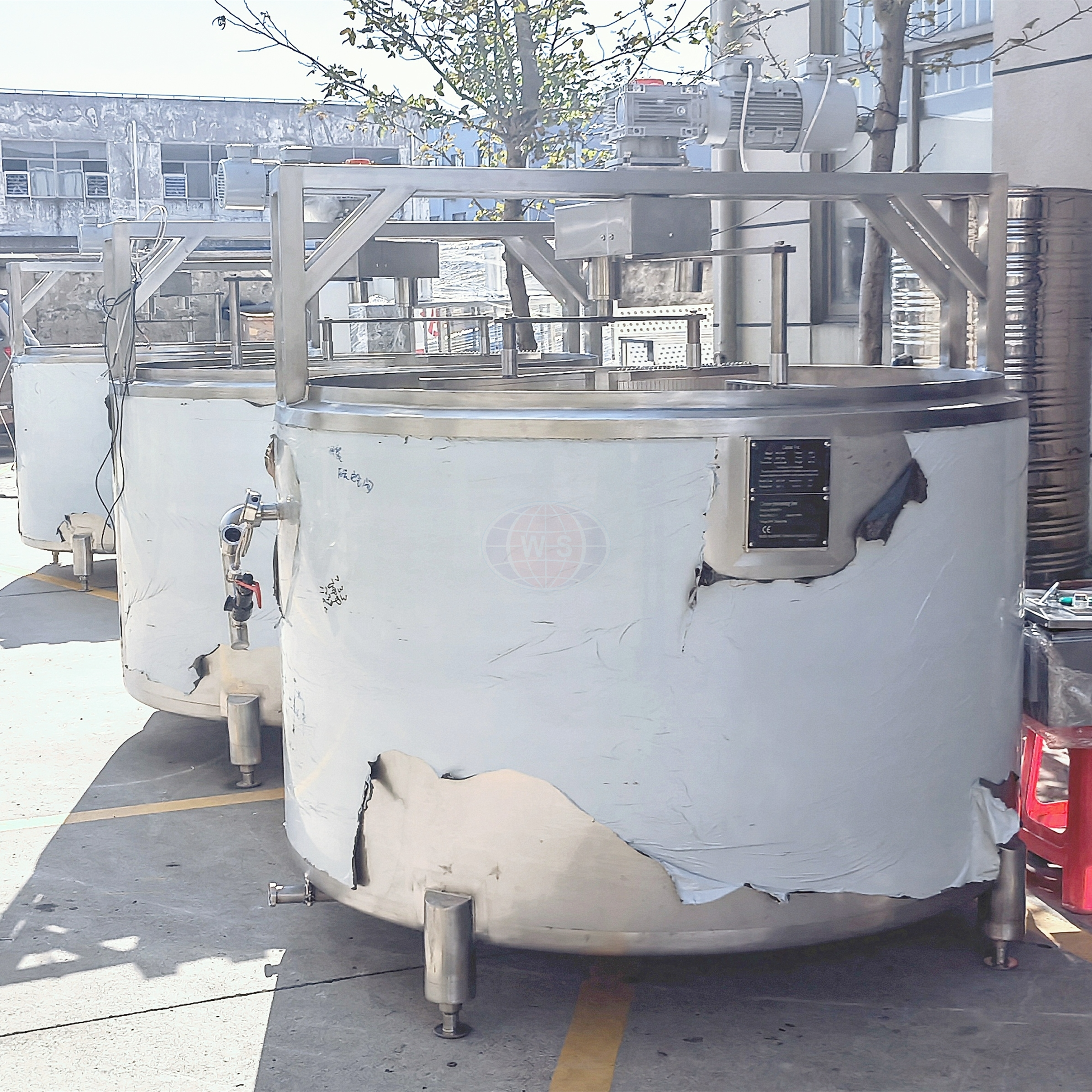
A modern Whey Tank is engineered specifically for this vulnerable stage. In an industrial setting, these are highly engineered, double-jacketed, heavily insulated stainless-steel silos. The biochemical nature of the liquid makes it highly perishable. It is rich in lactose and nutrients, providing an ideal substrate for thermophilic bacteria. Left at ambient temperature, bacterial metabolism will rapidly convert the lactose into lactic acid, dropping the pH and permanently degrading protein quality.
When the liquid enters the silo, integrated cooling jackets circulating chilled glycol or ice water kick in. This rapidly reduces the temperature to below 4 degrees Celsius. Rapid chilling halts bacterial proliferation and stabilizes the fluid. Maintaining absolute hygiene is equally paramount. Industrial tanks feature low-shear internal agitators, often rotating at a gentle 36 RPM, to keep the liquid homogeneous without causing protein denaturation. To meet stringent 3A sanitary standards, these silos are fully integrated with automated Clean-In-Place systems. Strategically placed spray balls ensure the interior surfaces are thoroughly sterilized with caustic and acid washes between batches.
The final transformation from a byproduct into a high-value commodity occurs during the concentration and dehydration stages. Total Whey Recovery involves a series of sophisticated membrane filtration processes designed to isolate and concentrate specific proteins and lactose at a molecular level.
The most common membrane technologies include Reverse Osmosis, Nanofiltration, and Ultrafiltration. Reverse osmosis is typically deployed first to remove water. This drastically reduces the total volume of the liquid and lowers subsequent transportation or evaporation costs. Ultrafiltration serves as the critical step for protein extraction. By utilizing high-pressure pumps to force the liquid through semi-permeable membranes, facilities allow water, dissolved minerals, and lactose to pass through while retaining the larger, valuable protein molecules.
This sequenced continuous flow system enables the production of highly sought-after nutritional ingredients, such as Whey Protein Concentrate and highly purified Whey Protein Isolate. Operating these complex membrane systems requires a fully integrated machinery line. Flow rates, pressures, and temperatures must be continuously monitored and synchronized by a central programmable logic controller to ensure a consistent, high-quality powder output.
For plant managers and B2B equipment buyers, evaluating current facility capabilities and planning for capital upgrades is a critical strategic exercise. Operating with outdated handling equipment limits potential revenue, increases utility costs, and elevates hygiene risks. The decision to modernize should be driven by measurable improvements in yield, sanitation, and operational efficiency.
When evaluating new equipment, several technical parameters must be carefully considered to ensure a high return on investment. First, evaluate the material specifications. Machinery handling acid whey must be constructed from SUS316L stainless steel rather than standard SUS304 to prevent long-term corrosion. Next, assess the scalability of the system. Your machinery should easily accommodate future capacity increases through modular designs, allowing for the addition of extra filtration membranes or larger holding tanks without a complete footprint redesign.
Sanitation standards dictate operational uptime. All new equipment must adhere to recognized global sanitary design standards, such as EHEDG or 3-A, eliminating dead legs and blind spots where bacteria can hide. Automated Clean-In-Place integration across all components minimizes manual labor and reduces the risk of human error. Seamless communication between processing units is also essential. The clarification centrifuge, holding tanks, and filtration skids should operate on a unified industrial control platform. This integration ensures flow rates automatically adjust, preventing bottlenecks, tank overflows, or pump cavitation.
| Feature Category | Legacy Systems | Modern Upgraded Systems | Operational Impact |
|---|---|---|---|
| Control & Automation | Manual valve adjustments and physical monitoring. | Fully automated PLC controls with real-time data logging. | Reduces operator error, ensures consistent product quality, and prevents overflows. |
| Sanitation & Hygiene | Manual cleaning required for complex valves and standard pumps. | Integrated CIP with automated chemical dosing and high-impact spray balls. | Lowers contamination risks and significantly decreases downtime between batches. |
| Energy & Resource Efficiency | High electricity and water consumption during separation phases. | Optimized VFD motors and water-saving membrane technology. | Significantly lowers utility overhead during the entire recovery process. |
Investing in high-quality separation and filtration equipment directly impacts the bottom line. Efficient systems maximize the extraction of valuable proteins and fats while minimizing utility consumption. Prioritizing advanced fluid handling technology is a proven engineering strategy for maintaining competitiveness in the global dairy market.
Modern fluid processing turns raw dairy runoff into highly profitable commodities. This rigorous process demands efficient physical separation, high-speed clarification, and highly secure, sanitary storage. A specialized holding silo carefully preserves the biochemical quality of the liquid, while advanced membrane systems maximize your overall plant revenue. Managing this byproduct properly ensures a sustainable, zero-waste dairy operation. Evaluate your current machinery to identify flow bottlenecks and improve daily yields. If you are looking to upgrade your processing lines and turn liquid liabilities into liquid gold, explore the robust, sanitary-grade solutions available at Wfoodmachinery to find the exact equipment specifications that meet your facility's needs.
A centrifugal separator is a specialized machine used to remove residual butterfat and clarify the liquid after the solid cheese curds have been removed. By spinning the liquid at extremely high speeds, it separates the lighter fat molecules from the heavier skimmed liquid. This process purifies the fluid for further membrane filtration and allows the facility to recover valuable dairy cream, which can be sold or processed into butter.
During the initial draining process, tiny pieces of coagulated protein often wash away with the liquid. A specialized interception unit utilizes fine vibratory mesh screens or rotary sieves to catch these microscopic particles and gently return them to the main cheese batch. This mechanical action directly increases the total volume of cheese produced per batch and prevents solid particles from causing blockages in downstream processing equipment.
The runoff liquid is highly perishable because it is rich in nutrients and naturally warm after the curdling process, making it an ideal breeding ground for bacteria. A modern storage vessel uses double-jacketed cooling systems to lower the liquid's temperature rapidly. This chilling process halts bacterial growth and prevents the development of excessive lactic acid, ensuring the chemical stability of the proteins before they undergo concentration or drying.
Yes. While large-scale commercial plants utilize massive membrane filtration systems to produce protein powders, small-to-medium operations can still benefit from scaled-down processing machinery. Compact draining belts and smaller centrifugal separators allow artisanal or regional plants to clarify and stabilize their liquids. This stabilized fluid can then be sold to larger processors or agricultural partners, transforming a disposal cost into a modest revenue stream.
The initial draining is the very first physical separation step in the process, where large, solid cheese curds are separated from the bulk liquid using gravity or gentle pressing on perforated belts. In contrast, centrifugal separation is utilized later in the process. It applies high-speed mechanical force to remove microscopic fat molecules and remaining dust-like solids from the liquid that has already passed through the initial draining phase.
The ratio of liquid byproduct to solid cheese is substantial. On average, producing one kilogram of cheese generates roughly nine liters of liquid whey. This massive 9-to-1 ratio underscores exactly why efficient, high-capacity fluid handling machinery is absolutely critical for plant profitability and environmental compliance.
Yes, from an engineering perspective, handling acid whey requires specific material upgrades. Because acid whey has a significantly lower pH, it is highly corrosive to standard metals over time. Equipment processing acid whey should be constructed using SUS316L stainless steel rather than standard SUS304 to prevent pitting and corrosion, ensuring the longevity and sanitary compliance of the machinery.