Call Us
+86-15800763021
Send Us
Add
775 Chihua Road, Zhelin Town, Fengxian District, Shanghai
- All
- Product Name
- Product Keyword
- Product Model
- Product Summary
- Product Description
- Multi Field Search
Views: 0 Author: Site Editor Publish Time: 2026-11-19 Origin: Site

Have you ever wondered how your favorite soda maintains the exact same taste, sweetness, and fizz in every single bottle? The secret lies in the precise, almost microscopic engineering of the manufacturing process.
For beverage manufacturers, achieving consistent flavor and stable bubbles presents a massive daily challenge. Inconsistent blending ruins drinks. Too much syrup leads to an overly sweet, sticky texture. Too little results in a flat, watery disappointment. A high-quality carbonated beverage manufacturing system is specifically designed to solve this exact problem through automated, highly controlled mixing and filling processes.
In this comprehensive guide, we will explore exactly how a modern processing facility balances syrup, purified water, and carbon dioxide. From the initial ingredient preparation to the final pass through the thermal tunnels, you will learn the step-by-step workflow that guarantees identical beverage quality for both small-scale startups and massive, fully automatic plants.
Key Takeaways
Walking onto a factory floor, you immediately notice the massive stainless steel tanks and the hum of high-speed pumps. A carbonated drink processing facility is not just about mixing liquids. It is a strict balancing act of fluid dynamics and thermal management. Its primary objective is straightforward yet highly technical. It transforms raw treated water, concentrated flavor essences, and gaseous carbon dioxide into a homogenous, shelf-stable consumer product. Achieving this requires strict adherence to operational parameters to ensure the formulation remains mathematically identical from the first bottle to the millionth.
Looking at the broader beverage manufacturing landscape, we see a distinct shift toward smart, data-driven processing. Modern facilities are increasingly moving away from reactive quality control. Instead, they are adopting predictive AI monitoring systems that analyze syrup viscosity and CO2 dissolution rates in real time. This technological evolution is particularly crucial right now. Consumer preferences are pivoting rapidly toward low-sugar, functional sparkling waters and craft sodas. These modern recipes demand significantly tighter blending tolerances than traditional, high-fructose beverages. A minor deviation in a zero-sugar formulation is instantly noticeable to the consumer.
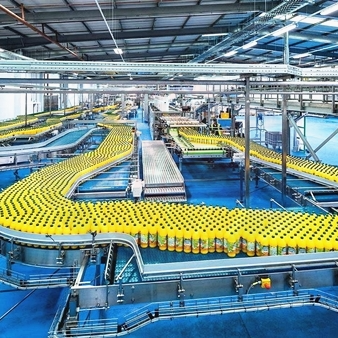
The liquid undergoes several distinct physical and chemical transformations as it moves across the factory floor. The process is strictly linear. Each phase builds upon the stability of the previous one. Whether an operator is managing an entry-level facility producing 2,000 bottles per hour or overseeing a fully automatic plant outputting 36,000 bottles per hour, the fundamental physics of fluid blending remain identical. Smaller lines may utilize semi-automated controls or compact block systems. Massive industrial lines rely on modular, highly specialized stations driven by advanced Programmable Logic Controllers.
Before any blending can occur, the raw ingredients must be formulated into a dense, concentrated liquid. During this initial syrup batching equipment phase, operators and automated dosers combine sweeteners, flavor oils, food-grade acids, and purified water inside massive stainless steel preparation vats.
Achieving the exact concentrate formulation is absolutely non-negotiable. If this initial batch is flawed, downstream equipment cannot magically correct the taste profile. When viscous sugars or heavy corn syrups are poured into the tanks, high-shear agitators immediately go to work. These powerful mechanical mixers prevent heavy flavor compounds from stratifying or sinking to the bottom. They ensure the entire batch becomes a perfectly uniform aqueous solution.
In the commercial beverage sector, Brix is the universal standard for measuring dissolved sugar content. One degree Brix equals one gram of sucrose in 100 grams of solution. To maintain this crucial metric, automated refractometers continuously scan the liquid inside the vats. These optical sensors measure how light bends as it passes through the thick liquid, providing instant data on sugar concentration.
If the system detects that the mixture is too thick, it triggers dosing valves to inject precise bursts of treated water. Conversely, if it is too diluted, more sweetener is added. This stringent, real-time quality control guarantees that the concentrate leaving the mixing room meets exact recipe specifications.
The transition from a thick, concentrated base to a refreshing, drinkable beverage happens at the blending stage. The core mechanical junction responsible for this transformation is the highly precise inline beverage mixer, often referred to as a beverage proportioner. This is the exact point where purified, deaerated water and the finished concentrate collide.
Historically, manufacturers relied on traditional batch mixing. They prepared huge, stagnant vats of the final, diluted soda before carbonating it. This outdated method required massive floor space and was highly susceptible to human error, oxidation, and batch-to-batch inconsistency. In contrast, modern engineering utilizes continuous inline blending. Instead of sitting in a static tank, the liquids are mixed dynamically as they flow through a closed-loop piping system.
Let us look at a direct comparison between the two methodologies to understand why inline blending has become the industry standard.
| Feature | Traditional Batch Mixing | Modern Inline Blending |
|---|---|---|
| Footprint | Requires massive storage tanks | Compact, closed-loop piping |
| Accuracy | Prone to human error and stratification | Real-time Coriolis mass flow precision |
| Oxidation Risk | High exposure to ambient air | Fully sealed, deaerated environment |
| Changeover Time | Slow, requires extensive tank cleaning | Rapid, automated cleaning compatibility |
To execute flawless blending, the system relies on sophisticated Coriolis mass flow meters. These instruments measure the exact mass and density of the liquids moving through the pipes at high velocities. Based on the target recipe, such as a strict ratio of five parts water to one part syrup, the system controllers automatically manipulate the dosing valves.
Furthermore, if there is a sudden drop in water pressure from the municipal supply or the purification room, the valves instantly restrict the syrup flow to match. This dynamic compensation ensures that the water-to-sweetener balance remains mathematically perfect throughout the entire production run. It completely eliminates the risk of weak or overly sweet output.
Once perfectly proportioned, the flat liquid mixture must be infused with its signature fizz. The blended beverage flows directly into the high-performance carbonator, a specialized, highly pressurized vessel designed specifically to force carbon dioxide into the liquid structure.
From a thermodynamic standpoint, the process of carbonation is governed by Henrys Law. This principle dictates that gas solubility is inversely proportional to temperature and directly proportional to pressure. Simply put, carbon dioxide dissolves fastest, and stays trapped longest, in liquids that are freezing cold and under immense pressure.
To maximize gas absorption, the equipment typically routes the blended liquid through an ammonia or glycol heat exchanger. This plunges its temperature to a frigid 2 to 4 degrees Celsius. Simultaneously, purified CO2 is injected through specialized venturi diffusers. These injectors shatter the gas stream into microscopic bubbles, exponentially increasing the surface area for absorption.
Because the vessel is maintained under strict pressure, the gas molecules are physically forced to bind with the water molecules. This precise environmental control leads to high bubble stability. Consequently, the beverage retains a sharp, biting fizz and resists going flat immediately after a consumer twists off the cap.
Before moving to the bottling hall, the system must hold this volatile mixture in a pressurized buffer tank. This holding area maintains the exact same atmospheric pressure as the carbonation vessel. It prevents the dissolved gas from aggressively breaking out and keeps the heavier sugars from separating from the water.
Perhaps the most violent mechanical challenge in the entire factory occurs during the bottling stage. Forcing a highly pressurized, freezing-cold, carbonated liquid into an empty, ambient-pressure bottle creates massive turbulence. If left uncontrolled, this sudden pressure drop causes severe foaming. It spills product everywhere, ruins the carefully calibrated syrup ratio, and results in massive CO2 loss.
To circumvent this physical limitation, modern facilities rely on an isobaric filler. Isobaric translates to equal pressure. By artificially equalizing the pressure between the overhead holding tank and the empty bottle, the machine tricks the liquid into flowing naturally via gravity, without releasing its trapped gas.
The isobaric filling cycle follows a strict, highly synchronized mechanical sequence. First, a pneumatic cylinder lifts the empty bottle, pressing its neck tightly against a rubber centering bell to create an airtight seal. Next, pure CO2 is injected into the empty bottle until its internal pressure perfectly matches the overhead beverage tank, typically around 3 to 4 bar.
Upon equalization, a liquid valve springs open. The beverage cascades gently down the interior walls of the bottle. Because the pressures are identical, there is zero turbulence and no disruptive foaming. Finally, before the bottle can be unsealed and capped, the high internal pressure must be slowly bled off into the atmosphere through a snifting exhaust process. This controlled depressurization prevents the liquid from violently expanding when the seal is finally broken.
By maintaining this strict equilibrium during the transfer, the equipment ensures that the perfectly homogenized liquid remains completely stable. The resulting packaged drink delivers the exact sweetness and carbonation volume intended by the original recipe.
After the bottles are successfully filled and securely capped, the liquid inside remains at its frigid carbonation temperature. While great for the beverage, this creates a logistical nightmare for downstream packaging operations.
When a near-freezing PET or glass bottle hits the warm, humid air of a standard factory floor, thermodynamics take over immediately. Moisture from the air rapidly condenses on the cold exterior, causing the bottles to sweat profusely. If these soaking wet containers are sent directly to the labeling station, the results are disastrous. Paper labels will slide off. Industrial adhesives will fail to cure on the damp plastic. Cardboard shipping cartons will absorb the moisture, potentially collapsing during transit.
To entirely eliminate this condensation problem, the production line utilizes an industrial bottle warmer tunnel. Positioned immediately after the capper, this massive structure is equipped with multiple thermal zones. As a conveyor belt slowly transports the cold bottles through the tunnel, overhead nozzles drench them in recirculated water.
The water temperature gradually increases across the different zones. It starts cool to prevent thermal shock, which could shatter glass or warp plastic, and ends warm. By the time the bottles emerge from the other side, the internal beverage has been safely raised to ambient room temperature, around 25 degrees Celsius. Powerful air knives then blast away any remaining surface droplets. The exterior is now perfectly dry, ensuring a pristine surface ready for high-speed labeling, shrink-wrapping, and secure palletizing.
Investing in commercial bottling infrastructure requires careful analysis of operational goals, budget constraints, and engineering specifications. For businesses entering the beverage market or upgrading from manual operations, selecting the appropriate machinery dictates both product consistency and long-term profitability.
The first crucial step is determining the required output capacity, universally measured in Bottles Per Hour. A frequent mistake made by newer producers is purchasing a high-speed filling block while severely under-sizing the upstream syrup processing equipment. If the batching vats and proportioners cannot supply blended liquid fast enough, the filler will constantly pause. This leads to inefficiencies and potential variations in carbonation. Equipment must be harmoniously matched so that water treatment, blending, and filling operate in perfect synchronization.
When auditing potential machinery suppliers, prioritize the quality of core components over superficial aesthetics. Here are the actionable standards you should verify.
Syrup batching is the initial preparation phase where concentrated flavor bases, granular or liquid sugars, acids, and treated water are combined in large preparation tanks to create a thick concentrate. Inline mixing is the subsequent automated process of continuously blending that thick concentrate with additional purified water at a highly precise ratio as the liquids flow dynamically through the pressurized piping system.
According to the principles of thermodynamics, carbon dioxide dissolves much more efficiently and remains stable in cold liquids. If the beverage is too warm during the processing and bottling phases, the CO2 will rapidly escape its dissolved state. This causes excessive, uncontrollable foaming during the filling process and ultimately results in a beverage that tastes flat to the consumer.
It utilizes an isobaric or equal pressure filling method. The mechanical valve seals the empty bottle and pressurizes it with pure CO2 to exactly match the internal pressure of the beverage holding tank. Because the pressure is artificially equalized before any liquid is introduced, the dissolved gas is physically prevented from escaping the beverage during the turbulent transfer.
Yes, it is practically mandatory if you are applying commercial paper labels, using industrial adhesives, or packing the finished product in cardboard cartons. Because sparkling drinks are filled at near-freezing temperatures to preserve gas, the bottles will immediately sweat when exposed to warmer room-temperature air. The warming tunnel safely brings the beverage to ambient temperature, keeping the exterior dry for reliable downstream packaging.
Absolutely. Modern small-scale and entry-level production lines utilize the exact same advanced mass flow meters, automated dosing valves, and continuous inline blending technology as massive industrial plants. This ensures highly accurate flavor profiles, stable Brix levels, and consistent beverage quality, regardless of the overall production volume or the physical footprint of the facility.
The ratio is calculated based on the desired target Brix level of the final beverage compared to the Brix level of the concentrated syrup. Engineers program the target parameters into the central logic controller. The inline proportioning system then uses mass flow meters to continuously adjust the dosing valves, ensuring the exact mass of water mixes with the exact mass of syrup in real time.
Beverages typically lose their carbonation due to temperature fluctuations or improper pressure management. If the chiller fails to keep the liquid between 2 and 4 degrees Celsius, or if the isobaric filler valves leak and fail to maintain the required 3 to 4 bar of pressure, the carbon dioxide will aggressively break out of the solution before the bottle is securely capped.
A modern beverage manufacturing system does far more than just put liquid into a bottle. It is a synchronized dance of chemistry and engineering that connects careful ingredient preparation with precise mixing technology. Freezing temperatures and high pressures lock in the perfect fizz, while isobaric technology prevents messy foam and gas loss. Finally, thermal adjustment prepares the product for flawless retail presentation. Proper machinery protects your brand reputation, ensuring every single sip pleases your customers. Whether you are scaling up a craft soda brand or designing a high-capacity industrial plant, choosing the right turnkey project is vital. Explore high-performance equipment tailored to your specific output needs at https://www.wfoodmachinery.com to secure your product quality and optimize your production efficiency today.