Call Us
+86-15800763021
Send Us
Add
775 Chihua Road, Zhelin Town, Fengxian District, Shanghai
- All
- Product Name
- Product Keyword
- Product Model
- Product Summary
- Product Description
- Multi Field Search
Views: 0 Author: Site Editor Publish Time: 2026-11-24 Origin: Site

Energy consumption remains a formidable operational hurdle in the fruit processing sector, where steam generation typically accounts for the lion's share of utility expenses. For facility managers and factory owners, the pressure to optimize energy utilization without degrading product quality or safety standards is constant. Stepping onto the floor of an older processing plant, one might hear the constant hiss of overworked boilers and feel the ambient heat escaping from poorly insulated pipes—a visceral reminder of vanishing profits. By implementing advanced thermal technologies, heat recovery frameworks, and precise mechanical engineering, contemporary processing equipment can substantially decrease this heavy steam dependency. This analysis examines the mechanisms through which state-of-the-art facilities reduce steam usage, improve thermal efficiency, and support sustainable operational margins.
The transformation from fresh orchard apples to a dense, shelf-stable concentrate involves several distinct mechanical and thermal stages. The process begins with rigorous washing and sorting, followed by crushing and pressing to extract the raw juice. After filtration and clarification, the liquid enters the evaporation stage, where the water content must be drastically reduced.
Steam functions as the primary thermal medium throughout this industrial journey. It is critical for the initial pasteurization and enzymatic deactivation—a rapid heating step that prevents oxidation and browning, preserving the product's natural color and flavor. More importantly, steam provides the massive influx of latent heat required to boil off tons of water from the raw juice.
Industry-wide, the trend is moving toward aggressive decarbonization. Recent market shifts suggest that processors are increasingly sensitive to volatile energy pricing, pushing facility owners to prioritize energy recovery over raw capacity expansion. Rather than relying on simple fossil-fuel burning, the focus has shifted toward intelligent, data-driven systems that minimize thermal leakage at every stage of the Juice Production Line.
In thermal processing, achieving an optimal ratio between steam input and water evaporation is the ultimate performance metric for your facility's health. This ratio, often referred to as Steam Economy, is the yardstick for your operational costs. A higher ratio indicates that your facility is wringing more value out of every unit of energy consumed.
Traditional single-effect systems usually operate with an efficiency ratio near 1:1, meaning one kilogram of live steam evaporates only one kilogram of water. Modern multi-effect configurations, however, easily achieve ratios of 4:1 or higher. This shift is not merely about machinery; it is about adopting a philosophy where heat is considered a recirculating asset rather than a consumable expense.
| System Configuration | Typical Steam Economy Ratio | Primary Energy Source | Thermal Efficiency |
|---|---|---|---|
| Single-Effect Evaporator | 0.9 : 1 to 1 : 1 | Live Steam | Low |
| Multi-Effect with TVR | 3 : 1 to 5 : 1 | Live Steam + Recycled Vapor | High |
| MVR System | Up to 20 : 1 (Equivalent) | Electricity | Very High |
Because it is responsible for removing the vast majority of water from the juice, the Evaporator serves as the beating heart of your production line. Optimization here yields the most profound reductions in fuel dependency. Falling film technology, for instance, allows liquid to flow as a microscopic film along vertical tubes. This design requires lower temperature differentials and ensures that the juice maintains its quality during the rapid transition to concentrate.
Furthermore, Thermal Vapor Recompression (TVR) technologies have revolutionized the process by capturing secondary vapor that was previously vented. By mixing this captured vapor with high-pressure motive steam, the system creates a revitalized heating medium. Mechanical Vapor Recompression (MVR) takes this a step further by using electrical power to compress secondary vapor, effectively decoupling the production process from a constant demand for high-pressure fossil-fuel steam.
During the boiling phase, volatile fragrance compounds are easily lost to the vapor phase. The Aroma Column is designed to fractionate and condense these delicate essences. In legacy systems, this recovery unit was often an isolated energy consumer. However, modern designs integrate the column directly into the main evaporation plant.
By routing the vapor exiting the aroma recovery process back into the initial heating stages of the evaporator, modern systems turn a potential energy loss into a pre-heating advantage. This symbiotic thermal loop ensures the entire aroma recovery phase operates with virtually zero additional steam, effectively treating the "by-product" energy as a primary resource.
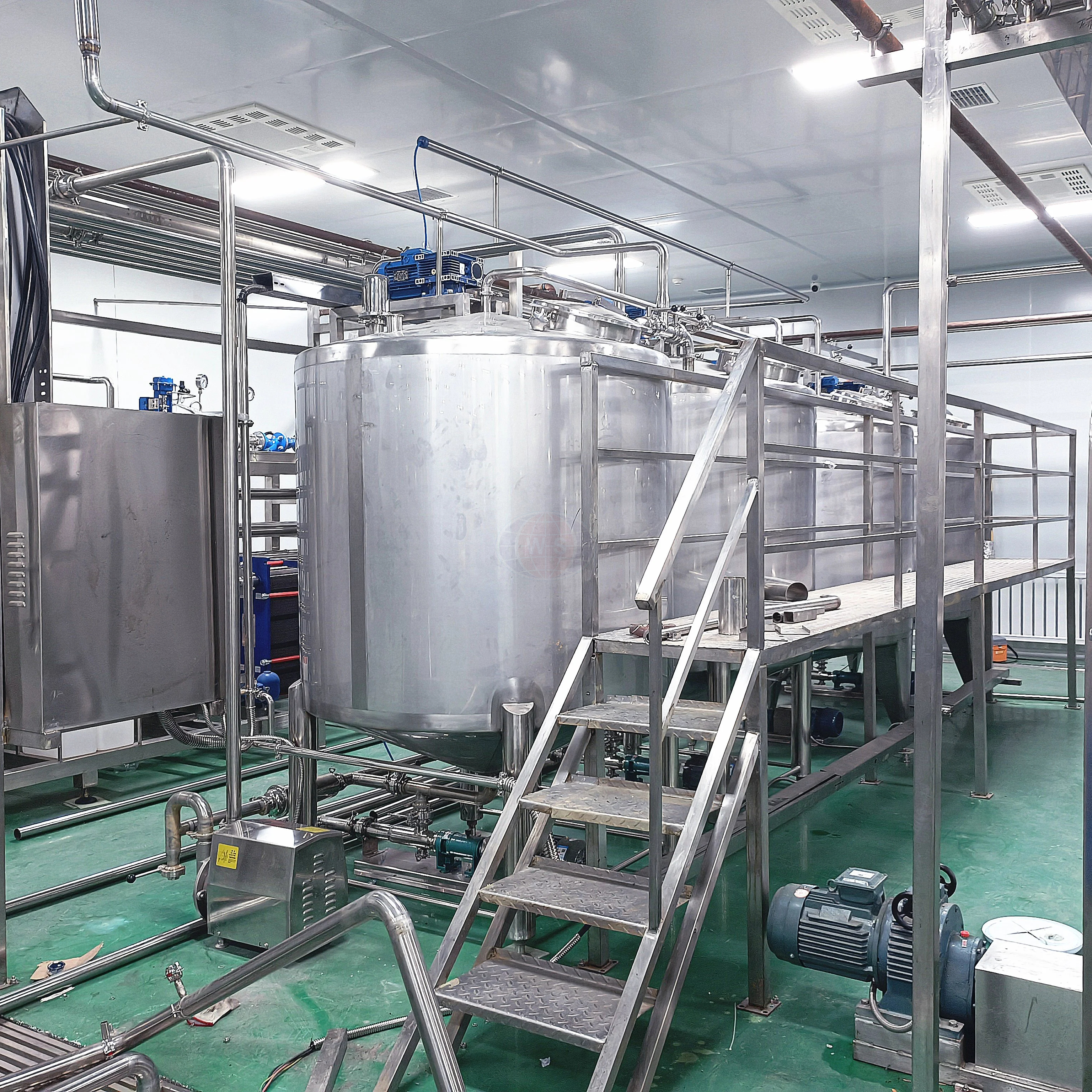
Once the liquid reaches its target Brix concentration, precise thermal handling is essential to prevent degradation. The Concentrate Tank utilizes vacuum insulation to maintain required viscosity with minimal external heating. Between the tank and the final filler, corrugated plate heat exchangers capture energy from the flash-cooling process, transferring it back to the incoming cold juice.
Finally, before sealing the product into an Aseptic Drum, the concentrate must undergo sterilization. By employing regenerative tube-in-tube heat exchange, where hot sterilized juice pre-heats the cold feed, facilities can recover up to 85% of the thermal energy that would otherwise be lost to the cooling water, drastically cutting the steam required for the final sterilization burst.
Evaluating the move to new equipment requires a pragmatic comparison between initial capital expenditure and the monthly savings in boiler fuel. Modern processing lines often pay for themselves within just a few years due to the cumulative reduction in utility overheads. Decreasing steam demand also reduces the strain on industrial boilers, leading to fewer maintenance shutdowns and extended equipment life.
Beyond hardware, success rests on diligent upkeep. Steam traps, pressure valves, and insulation must be checked regularly, as invisible leaks can quietly undermine your steam economy. Furthermore, maintaining clean heat transfer surfaces ensures that mineral scaling doesn't act as an insulator, forcing the system to work harder than necessary. When production staff are trained to interpret real-time sensor data from their PLCs, they can fine-tune the system to maintain optimal efficiency even during heavy seasonal production.
Energy efficiency has transitioned from a boardroom goal to a operational necessity in the fruit processing industry. By upgrading to multi-effect evaporation and integrating smart thermal loops throughout the line, factory owners can achieve a rapid financial return while meeting the demands of an eco-conscious global market. We invite you to conduct an energy audit and explore how modern equipment can help secure your facility's long-term profitability.
A: A high-efficiency multi-effect evaporator with TVR typically reaches a steam economy ratio of 4 to 5. MVR systems, by shifting the primary energy source to electricity, can achieve equivalent performance ratios of up to 20:1, representing the current benchmark for low-steam operation.
A: In a modern integrated system, the aroma column functions as part of the total thermodynamic cycle. It uses waste vapors to pre-heat incoming product, meaning it does not require a dedicated, wasteful steam supply and instead operates with near-zero additional steam cost.
A: Falling film evaporators provide rapid, efficient heat transfer with very short residence times. This prevents the delicate apple juice from caramelizing or losing its natural color, all while requiring lower temperature differentials and less overall steam pressure compared to older forced-circulation designs.
A: Before filling, the system uses regenerative heat exchange in the sterilizer unit. By using the heat of the sterilized concentrate to warm up the incoming juice, up to 85% of the thermal energy is recycled, drastically lowering the fresh steam requirement for the final pasteurization step.
A: Yes. While a full system replacement offers the highest efficiency, many older plants see significant improvements by retrofitting TVR thermocompressors to existing evaporators, improving tank insulation, and installing modern corrugated plate heat exchangers to capture waste heat.