Call Us
+86-15800763021
Send Us
Add
775 Chihua Road, Zhelin Town, Fengxian District, Shanghai
- All
- Product Name
- Product Keyword
- Product Model
- Product Summary
- Product Description
- Multi Field Search
Views: 0 Author: Site Editor Publish Time: 2026-11-21 Origin: Site

Demand for safe, fresh-tasting commercial orange juice is surging globally. Yet, delivering that perfect glass involves a complex balancing act. Manufacturers must constantly weigh the demand for extended shelf life against the need to preserve delicate nutritional profiles. When setting up or upgrading a facility, plant managers inevitably face a critical bottom-of-funnel dilemma. Is investing in advanced thermal processing an absolute necessity, or merely an optional luxury?
This comprehensive guide breaks down the exact role of thermal processing in your facility. We will explore how it seamlessly integrates with upstream machinery. Ultimately, this breakdown will help decision-makers determine if their specific orange juice production line truly requires this technology to remain competitive, profitable, and compliant.
Before diving into equipment specifics, we must look at current market dynamics. The global beverage sector is experiencing a massive shift toward clean label products. Consumers actively avoid chemical preservatives. Meanwhile, regulatory bodies are enforcing stricter food safety guidelines than ever before. Industry analysts note a sharp rising adoption curve for continuous thermal processing systems in mid-sized juice facilities.
Thermal processing bridges a critical operational gap. It allows manufacturers to drop artificial preservatives to achieve a clean label. Simultaneously, it meets the rigorous pathogen reduction mandated by federal health inspectors. Facilities failing to adapt to this standard often find themselves locked out of lucrative wholesale distribution channels.
To make informed equipment purchasing decisions, plant managers must first understand the holistic workflow of modern citrus processing. A commercial facility is a highly synchronized environment. Each piece of machinery directly impacts the efficiency and quality of the subsequent steps.
Picture the receiving bay of a bustling processing plant. Tons of raw citrus arrive daily, carrying field debris and microbial loads that must be neutralized. The journey from orchard to retail shelf involves a multi-stage engineering process designed to maximize yield while minimizing contamination. Raw oranges are unloaded, visually inspected, and mechanically sorted. Next, the fruit undergoes rigorous washing using brush rollers and food-grade detergents.
Once sanitized, the fruit enters the extraction phase. Here, a specialized Extractor separates the internal liquid from the bitter white pith and seeds. This raw, pulpy liquid then passes through filtration systems to achieve the desired pulp ratio. Following filtration, the liquid is pumped into a vacuum chamber to remove dissolved oxygen. Only after these rigorous preparatory steps does the juice reach the thermal treatment stage, followed immediately by rapid chilling and aseptic packaging.
Consequently, pasteurization acts as the ultimate checkpoint. It is strategically positioned near the very end of the processing sequence. This unit serves as the final kill step before the product is sealed. At this stage, the filtered liquid is precisely heated to a target temperature and then rapidly cooled.
Positioning this thermal treatment immediately prior to filling is absolutely critical. If it occurs too early, subsequent processing steps could easily reintroduce environmental contaminants. By acting as the final barrier against microbial activity, this intervention dictates the final market viability of the product.
For facility operators upgrading their infrastructure, understanding the thermodynamic principles behind thermal processing equipment is essential. This technology represents a massive engineering leap forward from historical batch boiling methods.
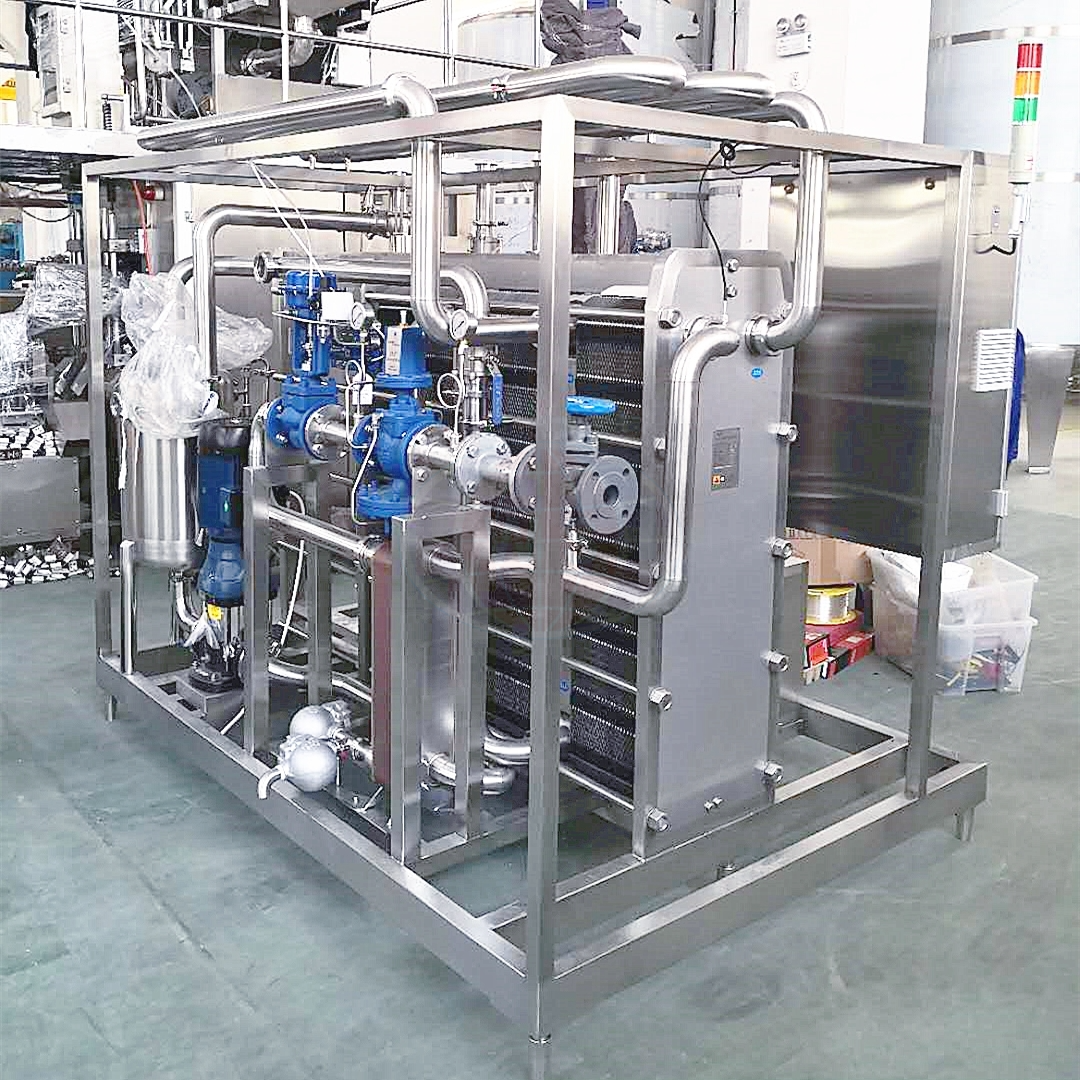
The core principle driving modern beverage safety is the High-Temperature Short-Time method. Instead of heating a large vat of liquid slowly, this system pumps the liquid continuously through a highly efficient heat exchanger. In commercial citrus processing, an industrial Flash Pasteurizer rapidly elevates the liquid to a specific temperature range. Usually, this falls between 71 degrees Celsius and 85 degrees Celsius.
The liquid remains at this elevated temperature for a fleeting duration. Typically, this ranges from 15 to 30 seconds. Immediately following this brief heat exposure, chilled water or glycol rapidly drops the temperature back down to around 4 degrees Celsius. This swift thermal shock is highly lethal to vegetative bacteria, yeasts, and molds. Importantly, it is fast enough to prevent the caramelization of natural fruit sugars.
The success of this rapid heating method relies entirely on a specific, mathematically engineered component. Once the liquid exits the heating section, it enters the Holding Tube. The fluid dynamics of this piping segment are calculated with absolute precision.
Its length and internal diameter are tailored to the flow rate of the feed pump. This ensures that the fastest-moving particle of liquid remains at the exact target temperature for the legally required number of seconds. If the liquid travels too quickly, pathogens may survive the process. Conversely, if it travels too slowly, the product degrades nutritionally. A properly calibrated tube guarantees the precise residence time required to destroy harmful microorganisms without overcooking the delicate citrus profile.
If you have established that thermal processing is necessary, the next decision is choosing the right methodology. While traditional batch pasteurization has lower upfront equipment costs, modern continuous-flow systems are universally recognized by engineers as the superior choice.
| Processing Metric | Traditional Batch Pasteurization | Flash Pasteurization High-Temperature Short-Time |
|---|---|---|
| Temperature & Time | 65 degrees Celsius for 30 minutes | 71 to 85 degrees Celsius for 15 to 30 seconds |
| Vitamin C Retention | Poor. Prolonged heat causes massive oxidation. | Excellent. Rapid thermal cycle locks in nutrients. |
| Flavor & Color | Develops a cooked, jammy flavor and brownish tint. | Maintains fresh-squeezed taste and vibrant yellow-orange color. |
| Energy Efficiency | Low. Heats entire large vats simultaneously. | High. Utilizes regenerative heat exchange up to 90 percent. |
| Production Scale | Limited to small artisanal batches. | Continuous flow supports massive commercial output. |
Consumers purchase citrus beverages primarily for their health benefits, specifically their high ascorbic acid content. Unfortunately, this vitamin is highly sensitive to thermal degradation. The rapid nature of continuous processing mathematically minimizes this thermal degradation, yielding a far healthier final product.
To truly elevate a commercial beverage facility from standard to premium, engineers look beyond basic pathogen control. Advanced systems incorporate secondary technologies to optimize the sensory experience of the final product.
The signature aroma of fresh citrus is generated by a complex matrix of volatile aromatic compounds. These molecules are incredibly unstable. Even a brief 15-second heat exposure can cause these delicate compounds to evaporate and flash off into steam. If these vapors are vented into the atmosphere, the resulting beverage will lack the vibrant aroma consumers expect.
To solve this problem, modern facilities integrate an Essence Recovery system directly into the thermal processing loop. As the liquid is heated and volatile compounds evaporate, this system captures the vapors before they escape. Using specialized condensation technology, the machinery condenses these natural flavor fractions. They are then carefully folded back into the cooled liquid just before packaging, ensuring a premium taste profile.
Perhaps the most critical companion to a thermal processing unit is the Deaerator. During extraction and filtration, the liquid inevitably absorbs atmospheric oxygen. If this dissolved oxygen remains in the liquid as it enters the heating chamber, a severe chemical reaction occurs.
The combination of high heat and trapped oxygen triggers rapid oxidation. This destroys the remaining nutrients and causes enzymatic browning. The deaerator solves this by passing the liquid through a vacuum chamber prior to heating. It forcefully strips the dissolved oxygen, ensuring oxidation cannot occur during the heating phase.
Selecting the correct thermal processing equipment is a critical engineering decision. A poorly sized or incorrectly configured machine can create massive operational bottlenecks. You must evaluate specific technical parameters to ensure long-term operational efficiency.
1. Capacity and Flow Rate Matching: Your heating equipment must perfectly match the processing speed of your upstream machinery. Commercial units typically range from 500 liters per hour for mid-sized plants up to 20,000 liters per hour for industrial operations. Oversizing leads to short-cycling and pump wear, while undersizing creates dangerous holding tank bottlenecks.
2. Material Specifications: Acidic citrus juice is highly corrosive. Ensure the heat exchanger plates and holding tubes are constructed from food-grade SUS304 or SUS316L stainless steel. This guarantees longevity and prevents metallic off-flavors from leaching into the product.
3. Plate vs. Tubular Heat Exchangers: Plate exchangers offer incredible thermal efficiency and a compact footprint, perfect for clear liquids. However, if your product contains high pulp content, a tubular heat exchanger is mandatory. The wider pathways of concentric stainless steel tubes allow thick, particle-rich liquids to flow smoothly without causing pressure spikes or blockages.
4. Automation and Control Systems: Strict adherence to food safety protocols requires precision. Look for equipment featuring PLC control panels with PID temperature regulation. Automated systems ensure the temperature never fluctuates, and they often include integrated Clean-in-Place functionality to drastically reduce manual sanitation labor.
Any commercial facility looking to scale operations, guarantee consumer safety, and maintain a premium flavor profile absolutely requires advanced thermal processing. This essential equipment ensures regulatory compliance and massively extends shelf life without sacrificing the nutritional integrity of the citrus.
Investing in a high-quality heating unit is a direct investment in your brand reputation and product longevity. Plant managers are highly encouraged to consult with food machinery experts to design a customized, automated production line. For industrial-grade, SUS304 stainless steel thermal processing solutions tailored to your specific capacity and budget, explore the professional equipment available at Wfoodmachinery to secure your facility's operational success.
Yes, but only under very strict, limited conditions. A facility can operate without thermal processing if it exclusively produces raw or cold-pressed juices. However, these unpasteurized products carry a high risk of bacterial contamination and have an extremely short shelf life. For commercial wholesale distribution, thermal processing is practically required to ensure a 5-log reduction of dangerous pathogens.
The holding tube is arguably the most critical component for food safety within the entire thermal processing system. After the liquid reaches its target kill temperature, it enters this specialized section of piping. The tube is engineered to ensure the liquid remains at that exact high temperature for a precise number of seconds. This sustained heat exposure is what actually destroys harmful bacteria.
A deaerator functions as a vital preparatory step by utilizing a vacuum chamber to extract trapped and dissolved oxygen from the raw liquid before it enters the heating phase. If oxygen remains in the liquid when it hits high temperatures, rapid thermal oxidation occurs. Removing the oxygen first protects the nutritional integrity and vibrant color.
No, it will not ruin the taste, provided you use the correct high-temperature short-time methodology. Traditional batch heating methods degrade the flavor and create a distinct cooked taste. Modern technology rapidly heats the liquid for only 15 to 30 seconds before immediately cooling it down, preserving the natural flavor profile.
Handling pulp requires matching your thermal equipment to your specific product formulation. If your target market prefers a heavy-pulp beverage, standard plate heat exchangers will quickly clog with fruit fibers. Instead, you must install a tubular heat exchanger. The unobstructed pathways allow highly pulpy liquids to flow seamlessly through the system.
For optimal results using continuous flow systems, engineers typically target a temperature range between 71 degrees Celsius and 85 degrees Celsius. The exact set point depends on the specific microbial load of the raw fruit and the desired shelf life. This range provides maximum pathogen lethality while remaining below the threshold that causes sugar caramelization.
While the initial capital expenditure for a SUS304 automated system is significant, the return on investment is realized rapidly. By extending the refrigerated shelf life from a few days to several months, facilities virtually eliminate batch spoilage losses. Furthermore, it allows the brand to secure lucrative regional wholesale contracts that require strict shelf-life guarantees.