Call Us
+86-15800763021
Send Us
Add
775 Chihua Road, Zhelin Town, Fengxian District, Shanghai
- All
- Product Name
- Product Keyword
- Product Model
- Product Summary
- Product Description
- Multi Field Search
Views: 0 Author: Site Editor Publish Time: 2026-10-10 Origin: Site

Are hidden mineral deposits slowly ruining your processing infrastructure? When raw milk, dense cheese curds, or sticky ice cream bases flow through your facility's pipelines, they leave behind stubborn organic and inorganic residues. Combatting this buildup requires a calculated, engineering-driven approach. We will explore why acidic solutions are vital, how they interact with alkaline detergents, and the best ways to optimize your sanitation protocols for maximum operational efficiency.
Key Takeaways
Picture the intricate web of 304 and 316L stainless steel piping, holding tanks, and heat exchangers in a modern processing facility. To maintain the strict hygiene standards required in food production, these facilities rely heavily on automated sanitation technologies. A well-designed Dairy Plant CIP Cleaning System allows plants to sanitize the interior surfaces of this complex equipment without requiring operators to manually disassemble a single valve. This autonomous process relies on a precise combination of thermal energy, kinetic shear force from turbulent fluid flow, and chemical reactions.
Dairy processing presents a unique challenge compared to other beverage sectors like water or juice production. Milk and its derivatives contain complex matrices of high butterfat, dense whey proteins, and heavy mineral concentrations. When subjected to the intense heat of pasteurization, these components undergo structural changes, adhering tightly to stainless steel surfaces. The ultimate goal of this automated sanitation is to achieve absolute food safety. By effectively eradicating these complex soils, the facility prevents bacterial contamination, eliminates cross-contamination between product batches, and ensures the maximum possible shelf life for the final consumer product.
From an engineering standpoint, the answer is an absolute necessity. While alkaline-based detergents do the heavy lifting for organic materials like fats, they are completely ineffective against inorganic mineral scaling. You simply cannot achieve a sterile, audit-ready environment without addressing both types of residue.
During processing, thermal energy causes the calcium phosphate naturally present in milk to precipitate. As the temperature rises inside a tubular or plate heat exchanger, the solubility of these minerals decreases. Consequently, they bake onto the hot stainless steel plates, creating a tough, calcified layer. Skipping the acidic step carries severe operational and safety consequences. First, mineral scale acts as an insulator. This drastically reduces heat transfer efficiency, forcing your boilers to consume more steam energy to reach safe pasteurization temperatures. More dangerously, these mineral deposits create a microscopic, porous environment that harbors resilient pathogens like Listeria monocytogenes. Over time, the localized chemical environment beneath these deposits can also trigger pitting corrosion, permanently ruining expensive stainless steel hardware.
To achieve a truly sanitary surface, a facility must address both organic and inorganic soils. This necessitates a two-pronged chemical approach, utilizing both alkaline and acidic solutions in a synergistic sequence.
The Caustic Wash acts as the primary line of defense against organic dairy soils. Typically utilizing sodium hydroxide, this highly alkaline solution operates at elevated temperatures—often between 70°C and 80°C—to aggressively break down fats and proteins. The chemical process involves saponification, where the alkaline liquid reacts with dairy fats, converting them into water-soluble soaps. Simultaneously, the high pH environment peptizes complex milk proteins, breaking their peptide bonds so they can be easily flushed down the drain. Despite its aggressive nature against organics, caustic soda has zero impact on mineral deposits.
This is where the secondary chemical step becomes critical. Acids are introduced to neutralize any lingering alkaline residues and to dissolve inorganic soils. Operating at a lower pH, the acidic solution reacts with calcium and magnesium deposits, converting them into soluble salts that are effortlessly rinsed away by water. Without this crucial step, the mineral matrix remains intact, acting as a foundation for future soil accumulation.
| Feature | Caustic Wash (Alkaline) | Acid Wash |
|---|---|---|
| Target Soil | Organic fats, heavy whey proteins | Inorganic minerals, calcium, milkstone |
| Typical Chemical | Sodium Hydroxide | Nitric Acid, Phosphoric Acid |
| Operating Temperature | 70°C - 80°C | 55°C - 65°C |
| Primary Mechanism | Saponification, Peptization | Dissolution, Salt Conversion |
| Risk if Skipped | Bacterial growth, massive fat buildup | Scale insulation, pitting corrosion |
In the dairy industry, the most persistent enemy of equipment hygiene is milkstone. This hard, white, porous deposit is composed of un-removed milk proteins bound tightly together by inorganic minerals. When operators visually inspect a pipe, a surface coated in milkstone might just look slightly dull. Under a microscope, it resembles a rugged, cavernous landscape.
Alkaline solutions fail completely when confronted with this matrix. Exposing milkstone to high-heat caustic solutions without a subsequent acidic flush can actually bake the deposit further, hardening the structure and making it exponentially more difficult to remove later. The primary risk here is microbiological. These microscopic crevices provide the perfect physical shield for bacteria. When chemical sanitizers are pumped through the system, the liquid simply flows over the top of the milkstone, leaving the bacteria hidden inside completely unharmed. As soon as the next batch of fresh milk flows through, these surviving microbes are pulled back into the product stream, leading to sudden, unexplained spikes in microbial counts.
To effectively break down both organic and inorganic soils, a standard Clean In Place protocol follows a strict sequence of events. Altering this sequence can lead to chemical neutralization or the permanent setting of soils.
The cycle begins with a warm water rinse, usually hovering around 35°C to 45°C. The immediate goal is to push out loose dairy debris, recover usable product, and melt soft fats without denaturing the proteins. Temperature control is vital here; if the water is too hot, proteins will instantly bake onto the surface.
A hot alkaline solution is then circulated through the loop. The turbulent flow, combined with high heat and chemical action, saponifies the fats and breaks down the proteins over a period of 20 to 45 minutes, depending on the specific equipment's soil load.
Clean, ambient water is flushed through the system to remove all suspended organic soils and caustic chemicals. This crucial transition prevents the incoming acid from neutralizing upon contact with leftover alkaline solution, which would render the next step useless.
The acidic solution is circulated at a moderate temperature, generally around 55°C to 65°C. During this 10 to 20-minute phase, the chemical breaks the bonds of inorganic deposits, dissolving the mineral scale and eradicating any forming milkstone.
Cold, microbiologically safe water is circulated to remove all traces of the acidic cleaner. This leaves the stainless steel surface completely bare, chemically neutral, and visually spotless.
Just before the next production run begins, a chemical sanitizer is applied. Because the surface is now entirely free of milkstone and organic soil, the sanitizer can effectively penetrate and eliminate any remaining trace microorganisms.
Recent developments in the dairy processing sector highlight a massive shift toward sustainable sanitation. Environmental regulations regarding wastewater discharge are tightening globally. Consequently, plant managers are moving away from rigid, calendar-based cleaning schedules. The current industry trend leans heavily into data-driven protocols. Facilities now utilize advanced inline sensors and ATP swab data to optimize chemical dosing. This approach minimizes the volume of acidic effluent sent to municipal treatment plants while maintaining absolute food safety.
Given the rising costs of industrial chemicals and the environmental burden of wastewater treatment, a frequent operational question is whether an acidic cycle must be executed during every single sanitation run. While the chemical is strictly necessary, its frequency can often be adjusted based on empirical data and the specific processing environment.
Assessing your specific production line is the first step. High-heat equipment like High-Temperature Short-Time milk pasteurizers generate massive amounts of mineral scale rapidly. These thermal systems require a full acidic cycle every single day. In contrast, cold-process hardware, such as raw milk storage silos or chilled ice cream aging vats, experience very little mineral precipitation.
In specific low-risk, cold-processing scenarios, many modern facilities have successfully transitioned to running a caustic-only cycle daily, while implementing a comprehensive caustic-and-acid cycle only once or twice a week. This optimization significantly reduces chemical procurement costs and lowers the volume of acidic effluent discharged. Any reduction in cleaning frequency must be strictly validated. Plant managers should utilize ATP swabbing, visual inspections under ultraviolet light, and total plate count microbiological testing to monitor the equipment. If tests show an upward trend in microbial activity, the facility must immediately return to a more aggressive cleaning schedule.
Selecting the appropriate Acid Wash formulation depends heavily on your specific soil load, equipment metallurgy, and local wastewater treatment regulations. Nitric acid remains the most common choice in heavy-duty dairy processing. It is a highly aggressive oxidizing agent, making it exceptionally effective at dissolving stubborn milkstone. Furthermore, it helps passivate stainless steel, maintaining the protective chromium oxide layer that prevents rust. Phosphoric acid is frequently utilized as a milder alternative. It is significantly gentler on equipment seals and internal valve components, reducing long-term maintenance costs.
Relying on outdated or manual cleaning protocols introduces severe risks to a dairy facility. Manual chemical dosing is inherently flawed. It relies on operator estimation, which frequently leads to either under-dosing or over-dosing. Upgrading your infrastructure to a fully automated CIP Cleaning system is the most effective way to eliminate these variables.
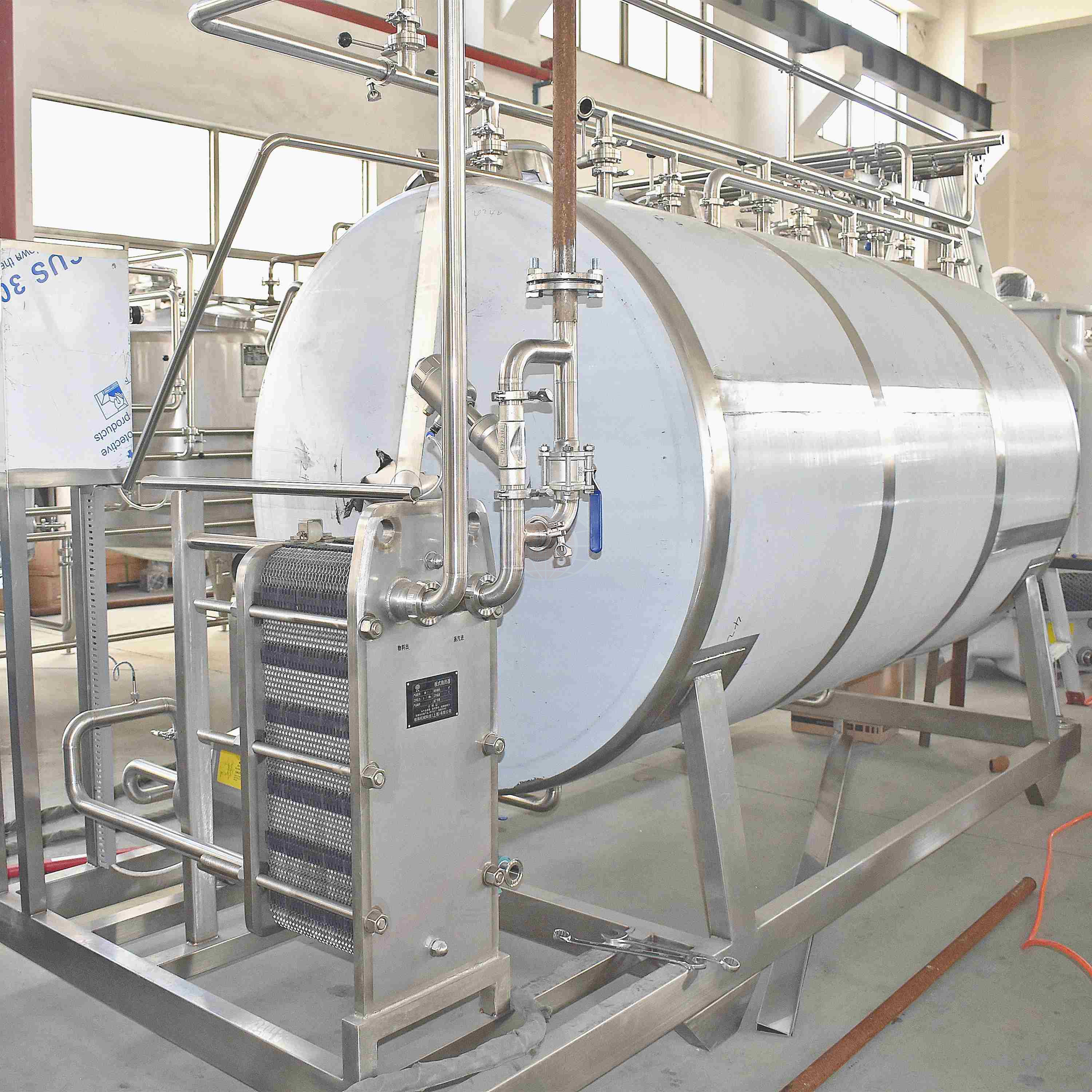
A state-of-the-art integrated system utilizes programmable logic controllers and highly sensitive in-line conductivity sensors. For instance, modern multi-tank configurations often feature independent acid, alkali, hot water, and pure water tanks with capacities ranging from 1000L to 5000L. Equipped with pneumatic diaphragm valves and PID temperature control via tubular heat exchangers, these systems measure the exact strength of the fluid in real-time. If the concentration drops, the system automatically triggers pneumatic dosing pumps to inject precise micro-amounts of raw chemical until the optimal target setpoint is restored. This multi-tank setup allows the facility to recover and reuse wash water and detergents for multiple cycles, drastically reducing utility overhead.
A dairy processing facility's sanitation program is fundamentally incomplete without an acidic cycle. While alkaline detergents effectively handle the heavy burden of fats and proteins, acidic solutions are the only proven method to defeat milkstone and inorganic mineral buildup. Without this crucial step, mineral deposits will inevitably harbor dangerous bacteria, threatening product integrity and brand reputation. By understanding the underlying chemistry of your sanitation protocols and investing in modern, automated equipment, dairy processors can guarantee product safety, extend the life of their infrastructure, and optimize their chemical usage. If you are looking to upgrade your facility's hygiene standards, explore the advanced, fully automated CIP systems at Wenzhou Wanyuan Food Machinery Factory to find the exact configuration that matches your production needs.
It is specifically designed to dissolve inorganic mineral deposits, such as calcium phosphate and milkstone. These hard, scale-like residues are left behind during processing, particularly in high-heat environments like pasteurization. Alkaline cleaners are highly effective at breaking down fats and proteins, but they are completely ineffective against these mineral scales. The acidic step ensures the stainless steel surfaces are entirely free of inorganic buildup.
You cannot eliminate it entirely from your sanitation program. While certain cold-processing lines, such as raw milk storage or ice cream mixing vats, might not require it every single day, it must still be performed on a regular, validated schedule. High-heat equipment requires daily acidic flushing. Skipping it entirely will inevitably lead to severe mineral accumulation, equipment inefficiency, and dangerous bacterial contamination.
For most dairy processing equipment, the acidic solution is typically circulated at a moderate temperature ranging between 55°C and 65°C. This temperature range provides enough thermal energy to rapidly dissolve inorganic mineral deposits without causing excessive degradation to internal rubber gaskets and elastomeric seals.
A complete automated cycle generally takes between 60 to 90 minutes from start to finish. This timeframe includes the initial pre-rinse, the 20 to 45-minute caustic wash, intermediate rinsing, a 10 to 20-minute acidic circulation, and the final pure water rinse and sanitization phases. The exact duration depends heavily on the specific equipment's soil load and pipe length.
The most common chemicals utilized in the industry are nitric acid, phosphoric acid, or a carefully formulated blend of the two. Nitric acid is highly favored because of its aggressive ability to break down milkstone and its secondary benefit of passivating stainless steel. Phosphoric acid is often blended in to provide a milder cleaning action that is safer for rubber gaskets and internal seals.
If milkstone is allowed to accumulate, it creates a rough, highly porous surface on the inside of the processing equipment. This porous structure acts as a microscopic shield, harboring dangerous bacteria and protecting them from chemical sanitizers. Over time, this leads to sudden spikes in microbial counts, spoiled dairy products, drastically shortened product shelf life, and the severe risk of foodborne illness outbreaks.
Modern automated systems utilize advanced conductivity sensors to continuously measure the chemical concentration of the fluid in real-time. If your facility relies on manual dosing or outdated equipment without sensor feedback, there is a high probability that operators are overdosing chemicals to be safe. Upgrading to a fully automated system ensures precise, sensor-driven dosing, which eliminates chemical waste, saves operational costs, and prevents premature corrosion of your processing infrastructure.