
Call Us
+86-15800763021
Send Us
Add
775 Chihua Road, Zhelin Town, Fengxian District, Shanghai
- All
- Product Name
- Product Keyword
- Product Model
- Product Summary
- Product Description
- Multi Field Search
Views: 0 Author: Site Editor Publish Time: 2026-10-07 Origin: Site

Building a commercial beverage facility requires serious capital. When procurement managers get that first proposal, a common question arises. Is this price set in stone? In industrial engineering, a quote usually estimates the entire scope. It covers plant layout, machinery fabrication, site installation, and final commissioning.
However, complex industrial realities often disrupt these initial numbers. Quotes frequently fluctuate before signing. Sometimes they even shift during project execution. Why does this happen? Grasping the root causes helps you budget accurately. It prevents hidden fees and ensures better contract negotiations for your facility.
Quotes serve as baselines: Initial pricing for a manufacturing facility acts as a budgetary starting point. Final costs depend on detailed engineering and site specifics.
Customization drives expenditures: Modifying a standard setup to include high-performance equipment significantly alters the original estimate.
Macroeconomic factors matter: Supply chain shifts, raw material volatility, and shipping rates cause rapid estimate changes.
Site readiness is crucial: Unforeseen infrastructure needs at the physical plant often lead to unexpected price adjustments during installation.
Price locks are possible: Buyers can mitigate changes by securing fixed-price contracts after finalizing a comprehensive User Requirement Specification.
To understand price fluctuations, we must first break down the baseline proposal. The turnkey concept means the equipment supplier handles the project from end to end. They design, build, install, and commission the line. But this relies on standard assumptions.
The foundation of any facility quote is the engineering phase. Standard proposals include a basic 2D plant layout, Process and Instrumentation Diagrams, and 3D equipment modeling. This phase ensures the machinery physically fits within your building constraints and operates efficiently.
The core investment revolves around the physical machinery. A baseline estimate covers standard-capacity equipment for the entire production cycle. This includes washing machines, extraction units, filtration systems, and blending tanks. When evaluating the proposal for your Turnkey Fruit Juice Processing Plant, note the specific throughput sizing. Standard setups typically handle 1,000 to 5,000 liters per hour using SUS304 food-grade stainless steel suitable for low-acid environments.
Beyond hardware, a comprehensive quote accounts for human capital. This encompasses labor costs for specialized engineers traveling to your site. They assemble the equipment, weld sanitary piping, integrate electrical systems, and conduct the initial startup using real fruit to ensure operational readiness.
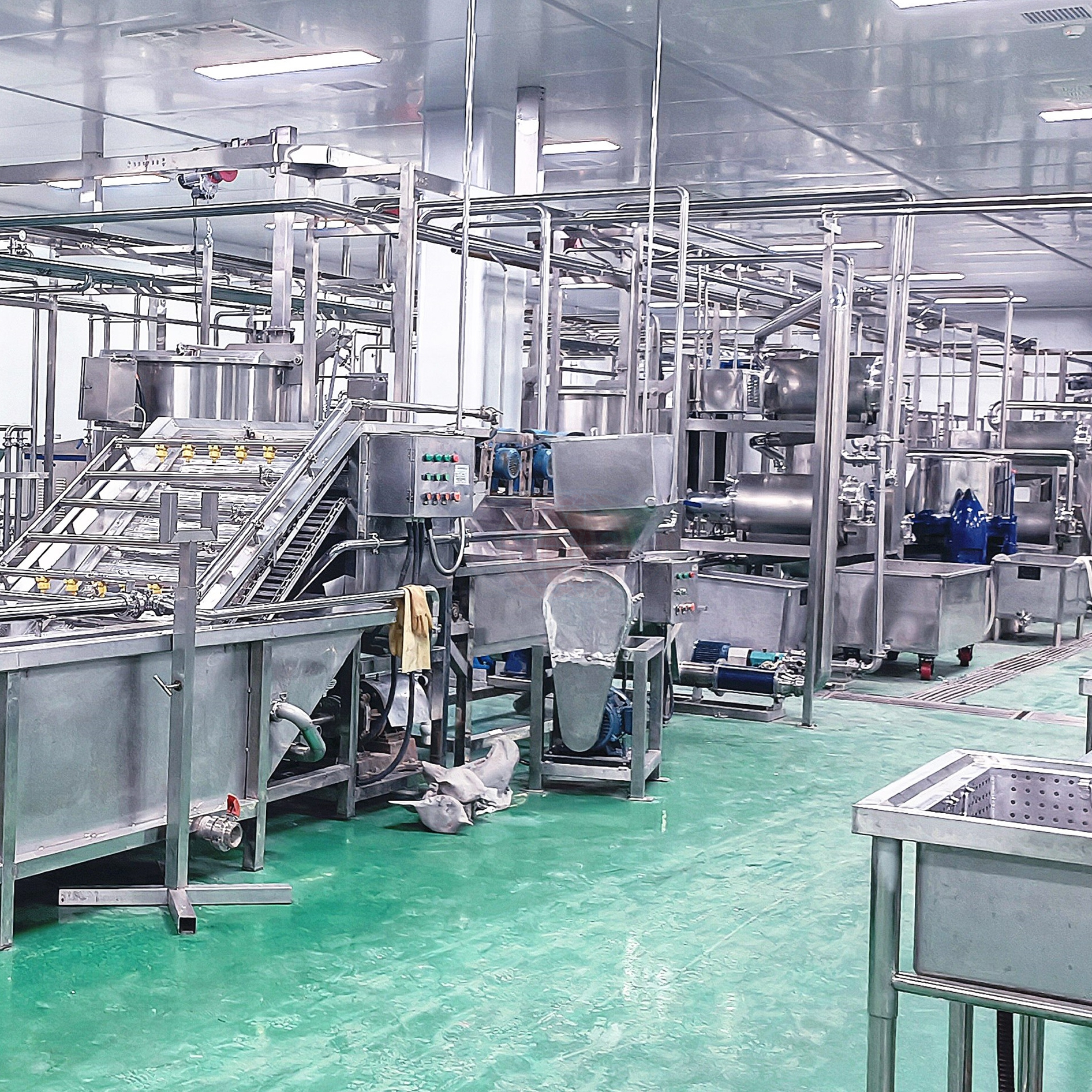
The transition from a rough budgetary estimate to a binding contract is where fluctuations occur. A Turnkey Project integrates materials, labor, and logistics. All these elements remain subject to ongoing market volatility.
Industrial food processing equipment relies heavily on food-grade stainless steel, primarily SUS304 and SUS316L. Global exchanges trade the raw commodities making up these alloys daily. If a manufacturer provides an estimate in January but you sign in April, a spike in nickel prices forces an adjustment. The supplier must cover the increased manufacturing costs for storage tanks and piping.
Cross-border engineering projects are highly sensitive to currency shifts. If a supplier calculates labor and material costs in their local currency but issues the proposal in US Dollars, exchange rate changes will disrupt the math. Any significant shift between the quoting period and the signing date necessitates a price adjustment to maintain operational margins.
Because of material and currency volatility, commercial engineering proposals come with strict validity periods. These typically range from 30 to 60 days. If your procurement team takes longer to secure financing, the original quote legally expires. The supplier then recalculates costs based on current market conditions.
Recent market data shows a distinct shift in how beverage equipment is priced. Global supply chain constraints and inflationary pressures make long-term fixed pricing incredibly risky for manufacturers. Consequently, suppliers now utilize dynamic pricing models tied to real-time commodity indexes. Furthermore, there is a strong industry push toward modular processing lines. Modular designs allow buyers to phase their investments, starting with a basic capacity and expanding later. This trend directly impacts initial quotes. Modular readiness requires different upfront engineering and specialized manifold designs compared to traditional fixed-capacity setups.
Suppliers generate initial quotes using standard equipment templates based on baseline production capacities. When buyers request specific customizations to meet unique product formulations, the financial scope inevitably shifts.
Consider a standard setup designed for clear apple juice at 2,000 liters per hour. If you decide to introduce a highly viscous mango puree into the same cycle, the engineering requirements change drastically. The supplier must upgrade to stronger positive displacement pumps. They must utilize larger diameter piping to prevent clogging and install specialized scraping agitators in blending tanks. Every deviation requires additional engineering hours and robust hardware.
To make informed decisions, buyers must understand how specific parameter upgrades impact the budget. Below is a core comparison showing how upgrading your Juice Line alters the technical and financial scope.
| Component | Standard Configuration | Advanced Customization | Cost Impact |
|---|---|---|---|
| Material Grade | SUS304 Stainless Steel | SUS316L for high-acid or corrosive environments | Moderate Increase |
| Production Capacity | 1,000 - 3,000 Liters/Hour | 5,000 - 20,000 Liters/Hour | Significant Increase |
| Control System | Semi-automatic button control | Fully automatic Siemens PLC with touchscreen | High Initial Cost, Better Long-term ROI |
| Cleaning System | Manual or basic CIP | Fully automated multi-tank CIP system | Moderate Increase |
Beverage safety, regulatory compliance, and shelf-life requirements dictate your thermal treatment and packaging technology. Upgrading these technical systems is a major reason preliminary estimates experience upward revisions.
Thermal processing is critical. A basic proposal might include a standard tubular heat exchanger suitable for conventional hot-fill processes. However, if your product requires precise thermal profiles to preserve delicate flavors at ambient temperatures, you must upgrade. Implementing an advanced Ultra-High Temperature continuous Juice Pasteurizer demands robust engineering. It utilizes energy recovery sections and precise holding tubes, triggering a major revision of the standard quote.
Packaging technology is the most complex segment of the production process. Producing preservative-free beverages with a long ambient shelf life requires sterile environments. Integrating Aseptic Filling into a facility comes at a premium. The system includes sterile filling chambers, hydrogen peroxide sterilization modules, and high-efficiency particulate air filtration. Creating this commercially sterile cleanroom transforms a basic plant into a high-tech facility.
A common misconception is that a turnkey project covers building construction. In reality, the physical facility and underlying infrastructure remain the buyer's sole responsibility. Deviations from structural assumptions lead to unexpected expenses.
Industrial processing requires specific environmental controls. Facilities must have sloped drainage systems, typically a 1% slope with stainless steel trench drains, to handle massive CIP water volumes. If existing drainage is inadequate, modifications must happen before installation begins. This leads to costly delays and change orders.
Processing machinery is useless without robust utilities. The initial estimate assumes you will provide adequate steam from a boiler, chilled water from a chiller, and clean compressed air directly to the connection points. If your existing utilities are undersized, the supplier must source and integrate auxiliary equipment into the package.
Moving massive industrial equipment from the manufacturing floor to your facility introduces variables outside the supplier's direct control.
A complete plant requires multiple high-cube shipping containers. Ocean freight costs fluctuate wildly based on global fuel prices and port congestion. A quote generated under CIF terms during low freight rates will not hold if shipping costs double. Additionally, import duties and tariffs determined by Harmonized System codes can add unexpected tax burdens.
Extended installation times caused by local permit delays or labor disputes increase the daily per diem costs for the engineering team. Furthermore, buyers often realize late in the process that they require comprehensive spare parts packages or extended on-site operator training. These are typically excluded from bare-bones budgetary quotes.
While financial fluctuation is natural in complex engineering, buyers are not powerless. Taking a proactive, detailed approach to procurement protects your capital budget.
The most effective way to prevent quote revisions is eliminating ambiguity. Develop a comprehensive User Requirement Specification. Detail exact product recipes, pH levels, viscosity, packaging formats, and precise capacity requirements. Quoting against a highly detailed specification leaves virtually no room for vague assumptions.
Never accept a final binding quote without a physical facility audit. An audit allows the engineering team to assess floor loading, measure clearance heights, and evaluate existing utility capacities. Catching infrastructure issues early ensures costs are calculated into the firm quote rather than appearing as expensive surprise change orders later.
Plant quotes naturally evolve during the planning phase. Rough concepts become highly detailed engineering plans tailored to your specific facility. Treat the quoting process as a collaborative dialogue with your engineering partner rather than a one-time price tag.
Maintain transparency about your specific equipment needs from day one. Mentioning advanced requirements early saves time and prevents budget shocks. For accurate, detailed, and transparent pricing tailored to your exact specifications, you can explore professional solutions and secure reliable equipment directly from WFoodMachinery to guarantee the success of your next industrial investment.
Most industrial equipment manufacturers provide quotes valid for 30 to 60 days. After this period, the estimate is subject to change due to fluctuating global raw material costs and shifting international shipping rates.
Yes. Sterile packaging requires highly specialized sterilization technology, precise engineering, and cleanroom environments. Upgrading from standard hot-fill machinery to this advanced technology noticeably increases the total capital cost.
Not necessarily. While it covers the design, manufacturing, and installation of processing machinery, buyers remain responsible for site preparation, structural modifications, utility setups, and local building permits.
Modular equipment requires specialized upfront engineering and flexible manifold designs to allow for future expansion. While the initial quote might be slightly higher to accommodate this flexibility, it saves massive retrofit costs when you decide to scale up production later.
Upgrading to a fully automated PLC system increases your initial quote, but it drastically improves long-term Return on Investment. Automation reduces manual labor costs, minimizes human error in recipe mixing, and ensures highly efficient, repeatable cleaning cycles that prevent product spoilage.