
Call Us
+86-15800763021
Send Us
Add
775 Chihua Road, Zhelin Town, Fengxian District, Shanghai
- All
- Product Name
- Product Keyword
- Product Model
- Product Summary
- Product Description
- Multi Field Search
Views: 0 Author: Site Editor Publish Time: 2025-09-25 Origin: Site

Have you ever wondered how bottled water reaches store shelves? The journey involves intricate processes and technology. Understanding bottled water production is crucial for ensuring quality and safety. In this post, you'll learn about the complete bottled water production lines, from water sourcing to packaging, ensuring a reliable product for consumers.
Selecting a high-quality water source is the foundation of bottled water production. Options include natural springs, wells, or municipal supplies. Each source offers different characteristics in taste, mineral content, and purity. For example, spring water comes naturally filtered through rock layers, often prized for its mineral balance. Municipal water, on the other hand, usually requires extensive treatment before bottling.
Choosing the right source depends on factors like water quality, sustainability, and regulatory compliance. The source must be able to provide a consistent volume to meet production needs. It should also be economically viable, considering the costs of extraction and transportation.
Once the source is selected, water is collected and stored in large tanks close to the bottling facility. These tanks are typically made from stainless steel to avoid contamination. Proper storage prevents exposure to external pollutants and maintains water quality before treatment.
The collection system often includes pipelines and pumps designed to minimize contamination risks. For natural sources like springs or wells, the intake structures are sealed and secured to prevent intrusion by debris or wildlife. Storage tanks are regularly cleaned and sanitized as part of routine maintenance.
Water sources for bottled water must meet strict regulatory standards to ensure safety and purity. In the US, the Food and Drug Administration (FDA) sets guidelines for bottled water quality, including microbial limits and chemical contaminants. Other countries have similar regulatory bodies with their own standards.
Additionally, many bottled water producers follow industry standards set by organizations such as the International Bottled Water Association (IBWA). These standards often exceed government requirements and include regular inspections and water testing.
Water sources are routinely tested for bacteria, heavy metals, pesticides, and other potential contaminants. Documentation of source water quality is essential for regulatory compliance and consumer confidence.
Pre-filtration is the first step in treating collected water. It removes large particles like sand, dirt, and debris that could clog or damage later equipment. Common pre-filters include mesh screens or cartridge filters with pore sizes around 5 microns. This stage ensures smoother operation for subsequent treatment steps and improves overall water clarity.
After pre-filtration, coagulation and flocculation help remove smaller suspended particles. Chemicals such as alum or ferric chloride are added to water. These chemicals bind tiny particles into larger clumps called flocs. Gentle mixing during flocculation encourages these clumps to grow. This process makes it easier to separate impurities from water during sedimentation.
Once flocs form, the water moves to sedimentation tanks. Here, flocs settle to the bottom due to gravity, leaving clearer water on top. This step removes a significant amount of suspended solids. The clearer water then passes through fine filters, often sand or activated carbon filters. These filters trap remaining particles, organic compounds, and chlorine, improving taste and odor.
For purified bottled water, advanced treatment follows basic filtration. Reverse Osmosis (RO) pushes water through a semi-permeable membrane, removing dissolved salts, metals, and microorganisms. RO can eliminate up to 99% of contaminants. After RO, UV sterilization exposes water to ultraviolet light, killing or inactivating any remaining bacteria and viruses. Sometimes, ozone treatment is used as an additional disinfectant, breaking down organic matter and ensuring microbial safety without leaving residues.
Spring water bottlers often aim to preserve natural minerals that give the water its unique taste and health benefits. Instead of using RO, they rely on filtration and ozonation to disinfect water while keeping mineral content intact. This approach maintains the natural balance of calcium, magnesium, and other beneficial minerals. Bottlers carefully monitor treatment to avoid altering the water's natural profile.
Tip: Tailor water treatment steps to your source and product type to balance purity, taste, and mineral content effectively.
PET preforms are the starting point for making plastic water bottles. They look like small, thick test tubes made from polyethylene terephthalate (PET) plastic. These preforms are produced by melting PET resin and injecting it into molds. The result is a sturdy, uniform shape that can later be expanded into a full bottle.
Many bottled water companies buy preforms from specialized manufacturers rather than making them in-house. This approach saves time and reduces equipment costs. However, large-scale producers often have their own preform production lines to control quality and customize bottle shapes.
Once the preforms are ready, the bottle blowing process begins. The preforms are heated to a specific temperature to make the plastic soft but not melted. Then, they move into a blow molding machine.
Inside the machine, compressed air inflates the heated preform inside a mold cavity. The plastic expands to fill the mold, taking the shape of the final bottle. This technique is called stretch blow molding and is widely used because it produces strong, lightweight bottles.
The blowing machine can be set to create bottles of different sizes and shapes by changing the molds. This flexibility helps manufacturers meet various market demands without major equipment changes.
After blowing, bottles undergo thorough quality checks. Visual inspections identify defects such as thin walls, bubbles, or uneven shapes. Automated systems use cameras and sensors to detect these issues quickly.
Physical tests check bottle strength, flexibility, and sealability. For example, pressure tests ensure bottles can withstand transportation stresses without cracking or leaking.
Rejected bottles are removed from the production line to prevent contamination or packaging problems. Maintaining high bottle quality is crucial to protect water purity and customer satisfaction.
Before filling, bottles must be thoroughly cleaned to avoid contamination. Rinsing removes dust, debris, and any residual particles from the bottle's interior. Most bottling lines use automated rinsing machines that spray sterilized water or filtered air inside each bottle. This step ensures the bottle is sanitary and ready for filling.
Some plants use multiple rinsing stages, starting with a coarse rinse to flush out large particles, followed by a fine rinse with purified water. The rinsing water is often recycled after treatment to reduce waste. Proper rinsing is critical to maintaining product safety and extending shelf life.
After rinsing, bottles move to the filling station. Modern bottling lines use automated filling machines to speed up production and maintain hygiene. These machines precisely fill each bottle with the correct volume of treated water, minimizing spillage and waste.
There are several types of filling systems:
● Gravity Fillers: Use gravity to fill bottles; suitable for still water.
● Vacuum Fillers: Create a vacuum to draw water into bottles; common for carbonated water.
● Piston Fillers: Use a piston to push water into bottles; ideal for viscous liquids but sometimes used for water.
Automated systems often include sensors and controls that detect bottle presence, volume, and flow rate. This automation reduces human contact, lowering contamination risk and improving consistency.
Immediately after filling, bottles proceed to the capping station. Caps must be clean and sterile to ensure the water stays pure. Caps are typically sterilized by heat, UV light, or chemical disinfectants before application.
Capping machines place and tighten caps securely. Proper sealing prevents leaks and protects against microbial contamination. Some lines use tamper-evident caps that provide consumers with visible proof the bottle hasn't been opened.
After capping, bottles may pass through additional sterilization tunnels or UV chambers to further reduce microbial presence on the bottle surface and cap.
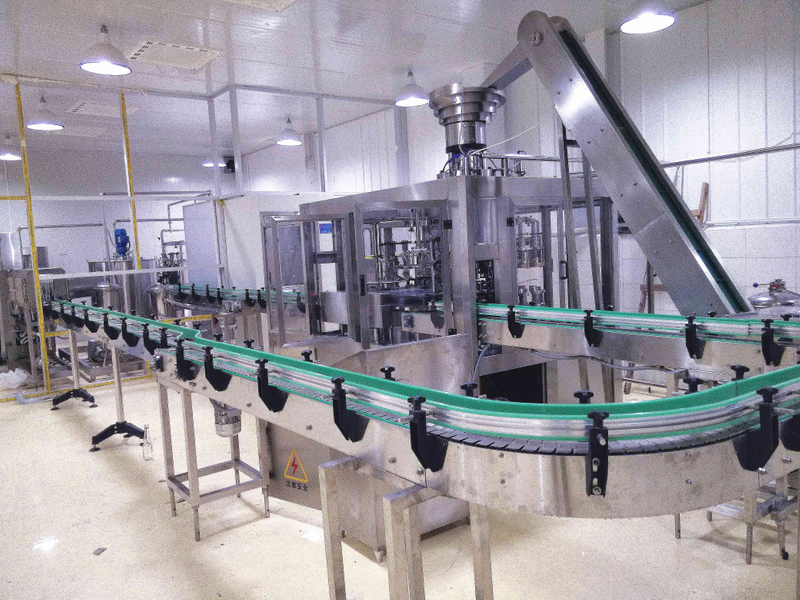
After filling and capping, bottles move to the date coding stage. This step prints essential production information such as manufacturing date, batch number, and expiration date on each bottle or label. Date coding helps manufacturers track products through the supply chain, manage inventory, and quickly identify batches if recalls are necessary.
Modern date coding machines use inkjet or thermal transfer printing technology. Inkjet printers spray tiny droplets of ink onto the bottle surface, while thermal transfer printers apply heat to transfer ink from a ribbon onto the label or bottle. Both methods ensure clear, durable codes that resist smudging or fading during handling and transportation.
Tracking systems often integrate with production management software, enabling real-time monitoring of production batches. This integration supports compliance with regulatory requirements and improves traceability from production to point of sale.
Labeling is crucial for branding, regulatory compliance, and consumer information. Bottled water labels provide details such as brand name, water source, nutritional information, and certifications. Labels also enhance product appeal on retail shelves.
There are several label application methods:
● Pressure-sensitive labels: Stickers with adhesive backing applied by machines. They offer quick application and strong adhesion.
● Heat-shrink labels: Plastic sleeves that wrap around bottles and shrink tightly when heated. They provide 360-degree coverage and a tamper-evident seal.
● Glue-applied labels: Paper or plastic labels glued onto bottles. This traditional method is less common due to slower application speeds.
Automated labeling machines align bottles precisely, apply labels uniformly, and adjust for different bottle sizes or shapes. Quality control systems verify label placement and print quality to avoid mislabeling or defects.
Once labeled, bottles proceed to packaging for shipment. Packaging protects products during transport, facilitates handling, and supports branding.
Common packaging methods include:
● Shrink wrapping: Groups of bottles wrapped tightly in plastic film. Shrink wrapping bundles bottles into packs of 6, 12, or 24 for easier handling and display.
● Corrugated cartons: Cardboard boxes hold shrink-wrapped packs or loose bottles. Cartons provide extra protection and stack easily on pallets.
● Palletizing: Cartons or packs are stacked on pallets and wrapped with stretch film for stability during transport.
Packaging materials must be sturdy enough to prevent damage but lightweight to reduce shipping costs. They also should comply with environmental regulations and sustainability goals, such as using recyclable or biodegradable materials.
Proper packaging ensures bottled water arrives at retailers and consumers in perfect condition, maintaining brand reputation and customer satisfaction.
Quality control starts with regular sampling during production. Bottled water samples are taken at various stages: from the source water, after treatment, and from the finished product. These samples undergo rigorous testing to ensure safety and compliance with regulatory standards.
Tests include:
● Microbiological Analysis: Checking for bacteria, viruses, and other pathogens.
● Chemical Testing: Measuring levels of heavy metals, pesticides, and other contaminants.
● Physical Inspection: Assessing clarity, color, and odor.
Many facilities use automated systems to collect samples and analyze data quickly. Results guide adjustments in treatment or production processes to maintain consistent quality.
Ensuring the bottle seal is intact is critical. A proper seal prevents contamination and leakage, protecting water purity and shelf life. Quality control uses several methods to verify seal integrity:
● Visual Inspection: Automated cameras detect improperly sealed or missing caps.
● Pressure Testing: Bottles are subjected to pressure changes to reveal leaks.
● Vacuum Testing: Checks for seal tightness by measuring internal vacuum levels.
Any bottle failing these tests is removed from the production line immediately. This step minimizes risk of contamination reaching consumers.
Accurate filling is essential for consumer trust and regulatory compliance. Bottles are weighed and measured to confirm they contain the correct volume of water. Automated scales and sensors check each bottle on the line.
Common checks include:
● Weight Consistency: Ensures bottles are not underfilled or overfilled.
● Volume Accuracy: Confirms the amount dispensed matches label claims.
This process reduces product waste and prevents customer dissatisfaction due to incorrect fill levels.
After labeling and packaging, bottled water moves to the secondary packaging stage. Here, bottles are grouped into packs according to customer or retail requirements—commonly in sets of 6, 12, or 24. Grouping makes handling easier and prepares products for shipment.
Shrink wrapping is the most popular method for secondary packaging. A plastic film wraps tightly around the grouped bottles. Then heat is applied, causing the film to shrink and cling securely to the pack. This process keeps bottles together, protects them from dust and damage, and improves shelf presentation.
Shrink films come in different materials, such as polyethylene or polyolefin, chosen based on durability and environmental considerations. Some manufacturers opt for biodegradable or recyclable films to meet sustainability goals.
Automated shrink wrapping machines speed up the process, reducing labor costs and maintaining consistent packaging quality. These machines can adjust to different pack sizes and shapes, allowing flexible production runs.
Once packs are shrink-wrapped, they are stacked onto pallets for easier transport and storage. Palletizing organizes products into stable, uniform layers, maximizing space efficiency in warehouses and trucks.
Automated palletizers use robotic arms or conveyor systems to pick and place packs onto pallets with precision. They can build pallets to exact height and weight specifications, ensuring safe stacking without crushing bottles.
After stacking, pallets are wrapped with stretch film to secure the load and prevent shifting during transit. This wrapping also protects against moisture and dirt.
Pallets are usually made of wood or plastic. Plastic pallets are favored for hygiene-sensitive products like bottled water because they are easier to clean and resist moisture absorption.
After palletizing, products move to storage areas or shipping docks. Proper storage conditions are vital to maintain product quality. Bottled water should be stored in a clean, dry environment away from direct sunlight and extreme temperatures.
Inventory management systems track pallet locations and monitor stock levels. This organization helps ensure timely distribution and reduces the risk of expired or damaged products.
Before shipping, pallets undergo final quality checks for packaging integrity and correct labeling. Proper documentation accompanies shipments to comply with regulatory and customer requirements.
Efficient secondary packaging and palletizing streamline logistics, protect products, and support smooth distribution from factory to retailer.
Bottled water production involves selecting high-quality sources, effective treatment, and advanced packaging methods. Ensuring quality and safety is crucial, with rigorous testing and automated systems maintaining product integrity. Future trends focus on sustainability and efficiency. WeiShu excels in providing premium bottled water, ensuring purity and taste through innovative processes. Their commitment to quality and customer satisfaction sets them apart, offering exceptional value in every bottle.
A: Complete bottled water production lines encompass the entire process from water source selection to bottling, including water treatment, bottle production, filling, capping, labeling, and packaging.
A: Complete bottled water production lines ensure water purity through rigorous treatment processes like reverse osmosis and UV sterilization, along with regular quality control checks for contaminants.
A: Choosing the right water source is crucial for complete bottled water production lines because it affects water quality, taste, and regulatory compliance, impacting the final product's safety and consumer trust.
A: The cost of setting up complete bottled water production lines varies based on factors like scale, equipment, and location, but can range from hundreds of thousands to millions of dollars.
A: Complete bottled water production lines benefit manufacturers by streamlining operations, ensuring consistent product quality, and enhancing efficiency from source collection to packaging.