Call Us
+86-15800763021
Send Us
Add
775 Chihua Road, Zhelin Town, Fengxian District, Shanghai
- All
- Product Name
- Product Keyword
- Product Model
- Product Summary
- Product Description
- Multi Field Search
Views: 0 Author: Site Editor Publish Time: 2026-11-25 Origin: Site

The beverage industry is fiercely competitive. Packaging dictates brand perception, product quality, and consumer safety. Plastic certainly has its place in the market. Yet, the premium appeal, sustainability, and chemical stability of glass make it the empirical gold standard for high-end beverages. Recent market data reveals a massive industry pivot. Driven by aggressive environmental regulations and a consumer backlash against single-use plastics, glass packaging is experiencing a robust global resurgence. Premium brands are moving away from PET. They actively seek automated solutions capable of handling fragile glass at high velocities without destroying operational efficiency. If you want to scale, manual handling will kill your margins.
Handling glass at scale demands exact precision and specialized machinery. Enter the automatic glass bottle beverage production filling line. This transformative system washes, fills, seals, and processes glass containers with zero human intervention. Are you a growing juice brand scaling up operations? An established brewery optimizing a legacy facility? Upgrading to an automated system is a pure bottom-line decision. This comprehensive guide breaks down the core components, maintenance protocols, and precise procurement strategies you need to know.
Before analyzing intricate mechanical specifications, you must grasp the architectural philosophy making this machinery a baseline requirement for modern beverage plants.
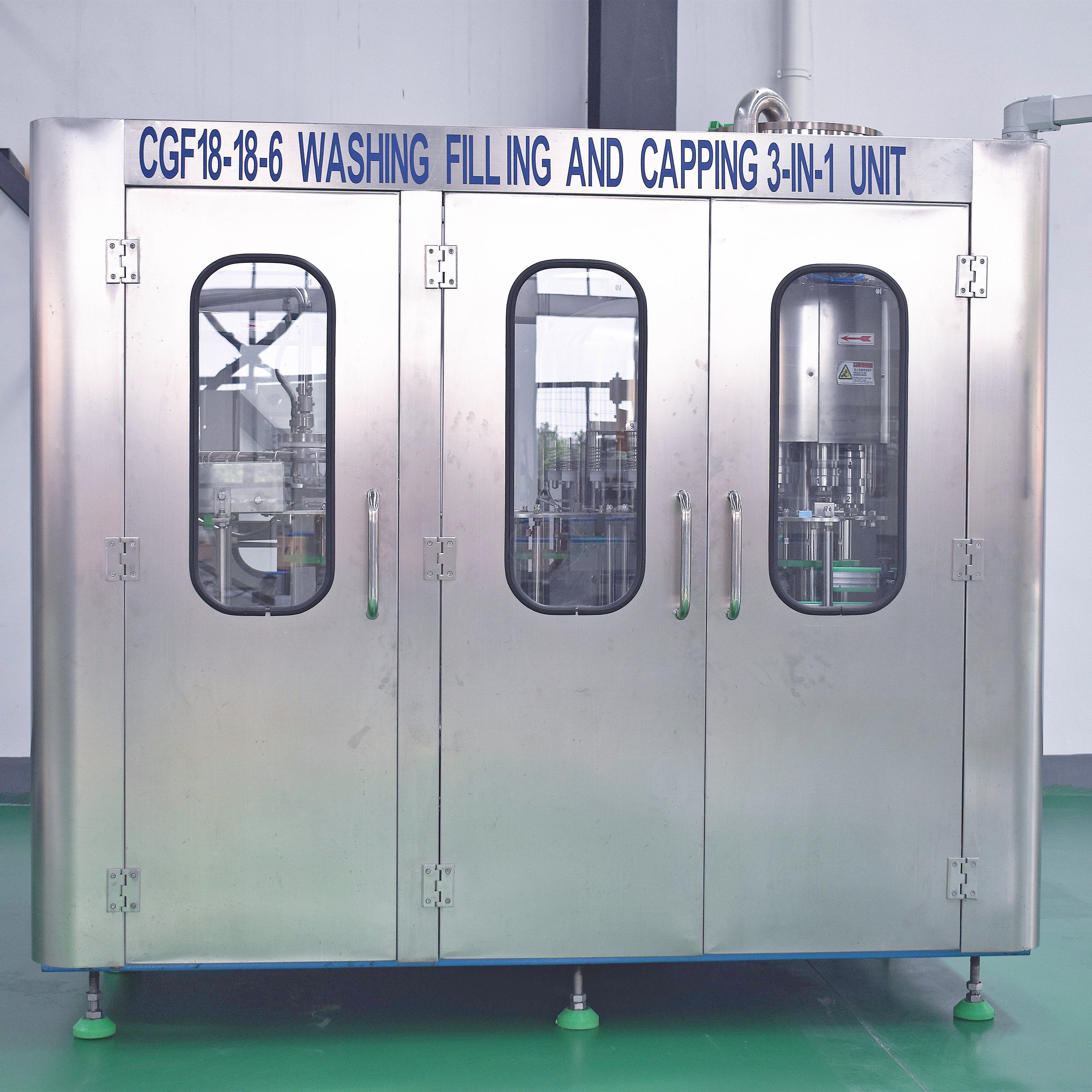
In industrial beverage packaging, an automatic system utilizes a monoblock architecture. Specifically, a 3-in-1 monoblock system physically combines the rinsing, filling, and capping stations into a single enclosed rotary unit. This compact design shrinks the physical footprint on the factory floor. Furthermore, it perfectly synchronizes the mechanical drive systems. Centralized programmable logic controllers and high-resolution rotary encoders remove human hands from the delicate fluid-handling zones. This mechanical isolation drastically reduces airborne contamination risks. It standardizes volumetric accuracy and maintains a continuous, rhythmic operational flow that semi-automatic systems simply cannot replicate.
Despite the widespread proliferation of plastics, glass remains the undisputed champion for premium packaging. From a purely chemical standpoint, it is completely inert and impermeable. It never leaches synthetic chemicals into the beverage. It blocks oxygen ingress and carbonation egress. Consequently, the exact flavor profile is preserved, naturally extending shelf life. Environmentally, glass boasts infinite recyclability without structural degradation. This aligns perfectly with modern eco-conscious market trends. For the end consumer, the tactile weight and thermal retention of a glass container communicate a premium aesthetic. This tangible quality historically justifies higher retail price points.
A high-functioning production line operates as a synchronized matrix of specialized machines working in absolute unison. The central monoblock typically consists of three critical stations. Each is engineered for a highly specific phase of the packaging cycle.
The packaging journey initiates at the Rinser. Imagine a continuous stream of fragile containers entering a rotary carousel via a precision-machined star wheel. Mechanical grippers securely, yet gently, clamp the neck of each bottle. A cam track mechanism physically inverts the container 180 degrees over a stainless-steel collection trough. Once fully inverted, high-pressure nozzles inject sterile water, ozonated water, or specialized sanitizing solutions deep into the internal cavity. This hydrodynamic blast aggressively dislodges microscopic dust, shipping debris, or potential microbial contaminants. After a designated draining phase, the cam track smoothly reverts the bottle to an upright position. This initial sanitation phase forms the absolute foundation for meeting strict global food safety standards.
Undoubtedly the most technologically complex component, the filling module adapts to the unique fluid dynamics of your beverage. Facilities deploy entirely different filling valves based on the specific liquid. Gravity systems handle free-flowing, still liquids like premium water. Vacuum systems manage viscous liquids or expensive spirits to prevent wasteful dripping. Isobaric counter-pressure valves are mandatory for carbonated beverages to prevent carbon dioxide breakout and violent foaming. Modern automated systems utilize highly calibrated flow meters or precise level sensors. By integrating a state-of-the-art Filler, plant managers ensure volumetric accuracy within plus or minus 2 millimeters. This exact dosing mathematically minimizes costly product giveaway and eliminates consumer complaints regarding underfilled bottles.
Immediately after liquid dosing, the container must be sealed instantly to prevent oxidation and atmospheric contamination. The Crown Capper handles this high-stakes task. Bulk metal crowns feed into a rotary unscrambler above the machine. Magnetic sorting plates or mechanical chutes orient the caps perfectly. As the filled bottle passes under the capping head, a specialized crimping die descends. The machine applies a highly calibrated, uniform downward pressure to flare and crimp the metal edges securely around the glass locking ring. Precision is vital here. Insufficient pressure results in micro-leaks and flat beverages. In contrast, excessive force causes catastrophic micro-fractures in the glass neck, leading to line jams and massive product loss.
Beyond the primary 3-in-1 monoblock, a truly automated line requires secondary auxiliary equipment to prepare the product flawlessly for commercial distribution.
Thermodynamics play a surprisingly crucial role in beverage packaging. Carbonated soft drinks and craft beers are typically filled at near-freezing temperatures, often between 2 and 4 degrees Celsius. This maximizes carbon dioxide solubility and suppresses foaming. However, the ambient factory environment is significantly warmer. When ice-cold bottles exit the filler, atmospheric moisture condenses rapidly on the exterior glass. Heavy condensation is disastrous for downstream packaging because wet glass rejects adhesives. A dedicated Bottle Warmer elegantly solves this issue. It conveys cold bottles through a continuous thermal tunnel. Inside, progressively warmer zones of water spray the glass. By the time bottles exit, their internal temperature is safely elevated above the ambient dew point. The exterior is bone dry and primed for labeling.
Once the exterior is thoroughly dry, bottles seamlessly enter the labeling station. Automated labeling machines configure intricately for cold-glue paper labels, hot-melt wrap-around labels, or pressure-sensitive stickers. High-speed optical sensors detect the exact positioning of the bottle. They reference embossed glass notches to ensure perfectly aligned application without a single wrinkle. Following labeling, laser coders or continuous inkjet printers apply batch numbers, production dates, and expiration codes directly onto the glass. This ensures full regulatory traceability from the factory floor to the retail shelf.
For production managers and plant engineers, mapping the exact workflow is key to optimizing factory layout and identifying potential bottlenecks.
The process initiates at the depalletizing station. Bulk pallets of empty glass containers are mechanically swept onto a wide accumulation conveyor. Bottles gradually funnel into a single-file line using variable-speed conveyors and acoustic dampening guide rails. This minimizes clinking noise and glass abrasion. They travel toward the monoblock, utilizing a localized timing screw to establish exact mathematical spacing between each container just before engaging the rapid infeed star wheel.
Synchronized star wheels transfer bottles seamlessly through the three primary phases without allowing fragile glass to clash. First, they invert and aggressively flush in the rinsing zone. Next, they are purged of oxygen, filled to the exact millimeter, and allowed to settle. Finally, they are immediately sealed to lock in internal pressure. This entire sequence happens in a matter of seconds.
Exiting the enclosed monoblock, securely sealed bottles pass through the warming tunnel. High-velocity air knives blast away any residual surface water pooling on the caps. Dry bottles are meticulously labeled, date-coded, and conveyed to end-of-line packaging systems. Automated case packers group bottles into desired formats, load them into sturdy cardboard cartons, seal the boxes with hot melt glue, and palletize them for immediate warehouse storage.
Transitioning from a manual setup to a fully automated infrastructure represents a major paradigm shift. The empirical operational advantages easily justify the capital allocation.
| Operational Metric | Semi-Automatic Setup | Automated 3-in-1 Monoblock |
|---|---|---|
| Production Speed | 500 to 1,000 Bottles Per Hour | 3,000 to 30,000+ Bottles Per Hour |
| Filling Accuracy | Highly inconsistent, operator dependent | Plus or minus 2 millimeters precision |
| Hygiene Standard | Moderate biological contamination risk | Enclosed positive pressure with automated cleaning |
| Labor Requirement | 4 to 6 active operators | 1 to 2 line supervisors |
| ROI Timeline | Stagnant growth | Typically 12 to 18 months |
The most immediate metric of improvement is throughput. An entry-level automated monoblock easily sustains 3,000 to 5,000 Bottles Per Hour without operator fatigue. High-capacity industrial lines exceed 30,000 Bottles Per Hour. This exponential increase in production density allows growing brands to fulfill massive purchase orders and confidently expand into new geographical markets.
Not all liquids behave the same way under pressure or temperature. The complex engineering configuration of your production line must be specifically tailored to the unique physical and chemical properties of the beverage.
Fruit juices containing pulp require specialized handling. To ensure commercial sterility, juices are pasteurized and filled at high temperatures, typically between 85 and 92 degrees Celsius. This hot filling process requires the glass container to be carefully pre-heated to prevent thermal shock. Cold glass shatters violently upon contact with boiling liquid. Filling valves must feature wider internal clearances to handle particulate matter without clogging.
Dissolved carbon dioxide introduces extreme volatility into beer and soda packaging. If a highly carbonated liquid is exposed to standard atmospheric pressure during filling, it violently foams. To counter this, the filler utilizes isobaric counter-pressure technology. The machine pressurizes the empty bottle with carbon dioxide to perfectly match the overhead filling tank pressure. Once pressures equalize, the liquid flows gently down the interior walls of the glass.
Still liquids like premium spirits and vintage wines demand absolute volumetric precision. Consumers subconsciously expect the liquid level in every single bottle on the retail shelf to be perfectly uniform. Vacuum filling systems deploy here. For wines, an additional nitrogen purging step displaces ambient oxygen, preventing premature oxidation and preserving the delicate tannin structure.
Procuring industrial packaging machinery is a complex engineering and financial decision. Facility managers must evaluate technical parameters meticulously.
The foundational metric is your required Bottles Per Hour. Do not just calculate current daily requirements. Aggressively project your growth trajectory over the next five years. Purchasing a machine that exactly meets current demand creates a costly bottleneck tomorrow. Calculate a realistic Overall Equipment Effectiveness, typically between 75 and 85 percent, to determine actual daily output capabilities.
Look for hard technical specifications. Top-tier machinery utilizes 304 or 316L stainless steel for all fluid contact parts to resist corrosion. Main motor power typically ranges from 2.2KW to 7.5KW depending on the scale of the monoblock. Ensure the manufacturer integrates globally recognized electronic components, such as Siemens or Mitsubishi logic controllers. Robust, accessible after-sales support and readily available spare parts are non-negotiable for long-term success.
To protect the substantial capital investment, strict adherence to maintenance protocols is mandatory. Industrial machinery degrades rapidly without proactive care.
At the conclusion of every production shift, operators must engage the automated Clean-in-Place system. This process systematically flushes the entire fluid pathway. It circulates heated caustic solutions and sterile water from the bulk holding tanks, through the intricate manifolds, and out of the filling nozzles. This dissolves sticky organic residue and completely eliminates bacterial biofilms. Neglecting these protocols leads to immediate product spoilage.
Mechanical wear and tear are inevitable in high-speed rotary equipment. Maintenance technicians must establish a preventative schedule. Regularly grease the central bearing of the monoblock. Inspect rubber O-rings in the filling valves for chemical degradation. Check the tension on conveyor drive chains. Operating with worn or misaligned components is the leading cause of glass breakage and critical machine jamming.
Investing in an automated packaging infrastructure is one of the most impactful decisions a beverage manufacturer can make. By integrating advanced components like a precision rinser, an accurate dosing filler, and a secure capper, facilities dramatically increase daily output while maintaining pristine quality. Whether you are bottling fresh pulpy juice, highly carbonated craft beer, or delicate sparkling water, automation is the definitive key to scaling securely and profitably. Ready to modernize your facility? Start by mapping your floor space, defining your capacity, and selecting the right Glass Bottle production line engineered for your exact specifications.
The physical footprint varies significantly based on target capacity and auxiliary equipment. A standard, compact 3-in-1 monoblock system might only occupy 10 to 15 square meters. However, a high-speed line including automated depalletizers, a large-capacity thermal tunnel, extensive conveyors, and automated carton packers requires a dedicated, expansive factory floor. Always consult your equipment manufacturer for precise CAD layout drawings before modifying your facility.
Yes. Modern automated filling systems are highly versatile. Manufacturers achieve this flexibility using interchangeable change parts, such as custom-machined star wheels, timing screws, and bottle guide rails. If your facility produces beverages in 330ml, 500ml, and 1-liter containers, operators efficiently swap these parts during a scheduled changeover with minimal downtime.
The primary distinction lies in human intervention. A semi-automatic filler relies on manual labor to place containers under nozzles and transfer them to capping stations. A fully automated system utilizes intelligent sensors, logic controllers, and motorized conveyors to manage the workflow autonomously. It operates continuously, drastically increasing throughput while virtually eliminating biological contamination risks.
Carbonated beverages are processed at near-freezing temperatures to maintain carbonation and prevent foaming. When these ice-cold containers enter a warmer room temperature environment, heavy condensation rapidly forms on the glass. If left wet, paper labels blister and fail to adhere. A warming tunnel sprays containers with tempered water, raising their surface temperature above the dew point and ensuring the glass is perfectly dry for labeling.
When constructed from premium 304 or 316L stainless steel, industrial packaging machinery is exceptionally durable. A well-maintained automated line reliably operates for 15 to 20 years. The key to maximizing lifespan is strict adherence to preventative maintenance, including running automated cleaning protocols and promptly replacing wearable items like rubber seals.
Power consumption scales directly with the machine's capacity and auxiliary integrations. A standard 3,000 Bottles Per Hour monoblock might utilize a main drive motor of 2.2KW to 3KW. However, when factoring in the warming tunnel pumps, conveyor drives, and labeling stations, total line consumption often ranges between 15KW and 25KW. Industrial three-phase power infrastructure is strictly required.
Modern high-speed fillers feature automatic wash-down and safety protocols. If a defective glass bottle bursts under pressure during the filling cycle, optical sensors instantly detect the fault and halt that specific filling valve. Simultaneously, high-pressure water jets automatically flush the shattered glass fragments and spilled liquid from the carousel into a drainage trough. This prevents machinery jams and eliminates cross-contamination risks for subsequent bottles.