
Call Us
+86-15800763021
Send Us
Add
775 Chihua Road, Zhelin Town, Fengxian District, Shanghai
- All
- Product Name
- Product Keyword
- Product Model
- Product Summary
- Product Description
- Multi Field Search
Views: 0 Author: Site Editor Publish Time: 2026-05-29 Origin: Site
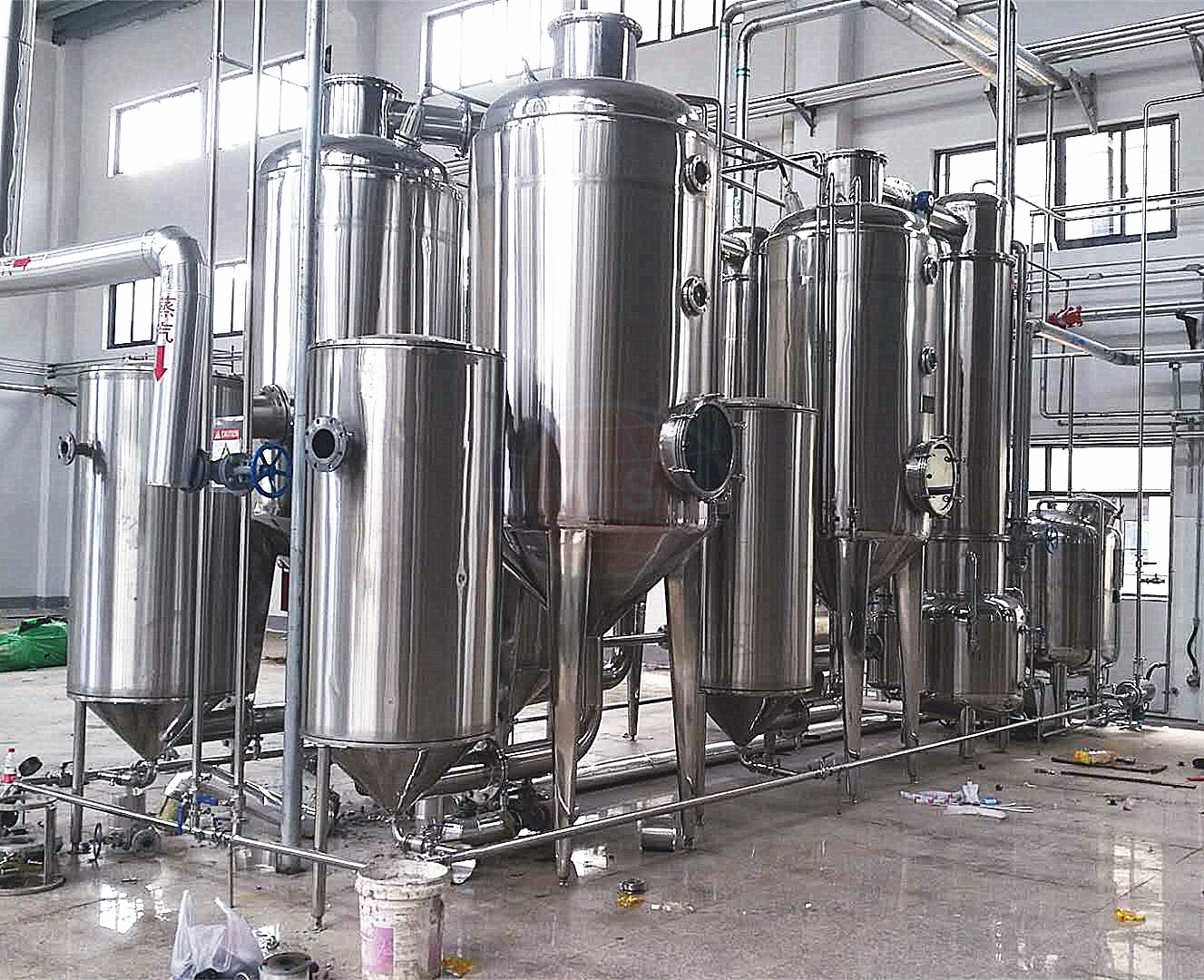
Investing in commercial food equipment requires massive capital. Buying the wrong machinery can derail your entire operation. A bad purchase decision drains resources quickly. Procuring a reliable system is inherently complex. Many buyers grasp the basic production stages quite well. Yet, critical errors happen during vendor evaluation and equipment specification.
Standard machine specs look robust on paper. They often fail in real-world scenarios. Equipment must align perfectly alongside specific recipe requirements. High-Brix levels demand particular thermal handling capabilities. Facility constraints and strict sanitation protocols dictate physical layouts. We see many operators struggling because they ignored these nuances.
This guide bypasses surface-level procurement advice. We deconstruct the operational, mechanical, and financial blind spots you must avoid. You will learn how to secure long-term operational success. We will help you maintain strict safety compliance. You can avoid costly downtime during peak seasonal production.
Match machinery to formulation: Viscosity, particulate size, and Brix targets dictate the necessity for specific components like piston fillers and vacuum evaporators.
TCO over initial CapEx: Hidden costs from poor CIP integration, excessive energy consumption, and spare part delays often eclipse upfront savings.
Facility compatibility is non-negotiable: A high-end fruit jam manufacturing line will underperform without adequate steam, utility compatibility, and proper facility drainage.
Integration over isolation: Purchasing standalone units rather than an integrated, communicative line leads to production bottlenecks and inconsistent pasteurization.
Vendors often quote standard equipment packages. These baseline machines routinely fail. They cannot handle the specific physical chemistry of commercial fruit preserves.
The Risk: Gravity fillers create severe production issues. High-viscosity jams contain whole fruit chunks. Standard volumetric fillers crush these delicate fruit pieces. This structural damage ruins product texture. It also leads to wildly inconsistent jar volumes. You lose money on product giveaway.
The Solution: You must specify specialized piston fillers. They should feature heavy-duty rotary valves. These valves gently pass large fruit particulates. Your Fruit Jam Processing Line needs anti-drip nozzles. Hot filling happens around 85–95°C. Dripping product contaminates jar threads. Contaminated seals cause vacuum failures and rapid spoilage.
Common Mistake: Operators often run high-viscosity products through narrow standard nozzles. This causes intense shear stress. It destroys the natural fruit appearance.
Best Practice: Always test your thickest recipe formula on the vendor test bench. Confirm volume accuracy before finalizing any purchase order.
The Risk: Many processors use atmospheric open kettles. This works fine for artisan batches. However, high-volume production requires different physics. Open boiling risks severe sugar caramelization. Fruit color degrades rapidly under prolonged heat. You also lose highly volatile flavor compounds into the surrounding air.
The Solution: Evaluate industrial vacuum evaporators. They boil fruit mixtures at significantly lower temperatures. Lower temperatures protect sensitive natural pigments. Require vendor quotes to include aroma recovery systems. These units capture volatile flavors during evaporation. They seamlessly reintroduce them back into the finished product. Also, request in-line deaeration systems. They effectively remove trapped oxygen bubbles. Oxygen causes rapid oxidation. It also creates ugly aesthetic defects inside clear glass jars.
| Feature | Atmospheric Open Kettle | Vacuum Evaporator |
|---|---|---|
| Boiling Temperature | High (~100°C+) | Low (~60-75°C) |
| Color Preservation | Poor (High browning risk) | Excellent (Retains natural hues) |
| Flavor Retention | Low (Volatiles escape) | High (Enables aroma recovery) |
| Oxygen Exposure | High (Constant air mixing) | Minimal (Deaerated environment) |
A connected system is only as efficient as its tightest bottleneck. It must handle inconsistent raw inputs gracefully. Isolated thinking creates disastrous production flaws.
The Risk: Buyers often purchase premium pulpers. They might buy a disparate pasteurization tunnel from another vendor. They ignore continuous flow mechanics. This creates massive thermal bottlenecks. Jams sit too long in holding tanks. This leads to overcooked batches and destroyed pectin structures.
The Solution: Mandate a centralized control system architecture. The throughput of your crushing stage must perfectly synchronize. It needs to match the exact holding capacity of homogenizing tanks. An integrated control panel allows seamless communication. It speeds up or slows down upstream pumps automatically. This prevents downstream pasteurizers from running dry or backing up.
The Risk: Processing equipment undergoes testing using perfectly ripe produce. Real harvest conditions differ greatly. Climacteric fruits like peaches arrive at facilities in various states. Non-climacteric fruits exhibit different firmness levels. Machines jam easily when handling underripe fruit. Overripe fruit turns to mush prematurely.
The Solution: Ensure your optical sorting machines feature highly adjustable parameters. Pulping screens must utilize variable sieves. They need the tolerance to handle overripe and underripe variations. Proper calibration prevents mechanical jamming. It also reduces excessive organic waste during the pulping stage.
Common Mistake: Buying fixed-mesh pulpers. They handle ripe berries beautifully but fail completely when processing firm, early-harvest apricots.
Best Practice: Ask vendors for multi-screen setups. Quick-change sieves allow operators to adapt machinery based on daily incoming fruit quality.
Top-tier equipment will fail safety audits if the environment lacks proper support. Aggressive sanitation requires specific physical conditions. Do not overlook your building layout.
The Risk: Upgrading to a high-capacity Fruit Jam Manufacturing Line changes your utility load drastically. It increases the demand for high-pressure steam. Electrical loads spike significantly. Wastewater discharge multiplies. Weak infrastructure causes immediate line shutdowns.
The Solution: Audit facility utilities before signing a purchase order. Ensure factory floors utilize heavy-duty polyurethane coatings. Standard epoxy peels under extreme heat. Install industrial slot drain systems. They handle extreme hot-water washdowns safely. They manage aggressive chemical runoff from CIP cycles. They also withstand heavy Class F equipment loads rolling overhead.
The Risk: Accepting standard 304 stainless steel poses serious dangers. High-acid environments use heavy citric acid additions. High-salinity formulations attack basic steel. This leads to rapid pitting. Pitted metal creates microscopic bacterial harbors. Product recalls usually follow soon after.
The Solution: Demand SS316 for all product-contact surfaces. Verify the line features a strict zero-dead-leg design. Dead legs allow stagnant product to rot. Insist on fully automated CIP capabilities. Check for polished interior welds. These features guarantee strict HACCP and USDA/FDA compliance.
Short-term procurement metrics obscure lifetime maintenance realities. Looking only at the sticker price guarantees future operational failure. You must evaluate long-term viability.
The Risk: Selecting the lowest bidder brings immediate satisfaction. It frequently results in hidden proprietary wear parts. Vendors withhold critical documentation. Poor thermal efficiency drains your utility budget daily. Cheap equipment breaks down during peak harvest seasons. Replacements take weeks to arrive.
The Solution: Build a comprehensive financial model. Include expected energy consumption per ton of product. Calculate exact CIP downtime durations. Verify the availability of localized technical support. Estimate the annual cost of routine wear parts. This includes pump stators and filler seals. Refuse vendors unwilling to supply detailed electrical schematics upfront. Demand transparent maintenance manuals before making a down payment.
Common Mistake: Ignoring pneumatic schematics during procurement. Maintenance teams cannot troubleshoot air-valve failures later without them.
Best Practice: Tie final payment milestones to the delivery of complete, translated, and certified technical documentation.
Moving from evaluation to procurement requires actionable steps. Do not rely solely on sales brochures. Use this framework to finalize your vendor selection.
Require Proof of Concept (PoC): Ask vendors to test your specific fruit puree. Include your exact pectin formulation. Run this on their pilot equipment. This proves their Brix monitoring accuracy. It also verifies their viscosity handling claims.
Audit the Automation Layer: Verify machine intelligence natively. Check if the line includes smart sensors. Real-time Brix and pH monitoring prevent manual sampling errors. Avoid systems requiring costly third-party sensor integration later.
Review the Service Level Agreement (SLA): Establish crystal-clear contractual terms. Define strict commissioning timelines. Outline operator training responsibilities clearly. Demand emergency parts dispatch guarantees in writing.
Purchasing a reliable fruit processing system means looking past basic production speed metrics. Raw output numbers do not guarantee product quality.
Success hinges on matching mechanical realities directly to your recipe. Vacuum cooking, piston filling, and CIP readiness must align with your exact facility constraints.
Shift your internal procurement conversations. Stop focusing entirely on isolated machine costs. Look at the entire production lifecycle.
Partner exclusively with suppliers engineering integrated, end-to-end lines. They must prove long-term sanitary compliance, high energy efficiency, and reliable yield consistency.
A: Vacuum evaporators lower the boiling point of the mixture. This allows rapid water evaporation without exposing the fruit to extreme heat. It preserves natural colors beautifully. It prevents sugar caramelization entirely. It also retains volatile flavor compounds essential for high-quality jams.
A: A piston filler equipped with a rotary valve serves as the industry standard. It pushes highly viscous products accurately. It operates without crushing whole fruit particulates. It utilizes anti-drip nozzles to ensure exceptionally clean jar seals.
A: Automated CIP systems reduce manual labor significantly. They minimize harsh chemical usage and water waste. They drastically cut downtime between batch changeovers. While the upfront cost runs higher, long-term returns accumulate rapidly through increased production uptime and guaranteed microbiological safety.
A: Inline Brix refractometers continuously measure sugar concentration during the cooking phase. This automation eliminates slow manual sampling. It ensures every single batch meets strict legal standards. It guarantees recipe consistency for preservation and taste before moving to the filling stage.